Tag Archives: food aid

The Candy Bombers is More Than A History Lesson

Former Defense Secretary Robert M. Gates, left, and Mike Rhodes, greet retired Air Force Col. Gail Halvorsen, right, prior to the dedication of the Defense Humanitarian Relief Corridor in the Pentagon, May 19, 2009. During the Berlin Airlift, Halvorsen earned the nickname "Candy Bomber" for his dropping candy-laden parachutes from his aircraft to Berlin children. (DoD photo by Navy Petty Officer 1st Class Molly A. Burgess

Former Defense Secretary Robert M. Gates, left, and Mike Rhodes, greet retired Air Force Col. Gail Halvorsen, right, prior to the dedication of the Defense Humanitarian Relief Corridor in the Pentagon, May 19, 2009. During the Berlin Airlift, Halvorsen earned the nickname “Candy Bomber” for his dropping candy-laden parachutes from his aircraft to Berlin children. (DoD photo by Navy Petty Officer 1st Class Molly A. Burgess

At at time when budget cuts by Congress threaten aid to the needy overseas, The Candy Bombers brings history to life while offering lessons for the present. By Andrei Cherny, it tells the story of the Berlin Airlift of 1948, during the early years of the Cold War. After the guns of World War II fell silent Germany lay in ruins and was occupied by the Allies and Soviet Russia. The capital city of Berlin rested deep inside the Soviet-held area of Germany.

In June, 1948, the Soviets cut off ground access to Berlin, which meant no supplies could get in. What would America do? Using force to get the supplies in meant the threat of World War III. A retreat from Berlin, and allowing the Soviets to take over, would be a disaster.

Instead America chose to airlift supplies into the city. The book tells about how this plan came into action and how it saved Berlin from starvation. It also tells a tale of what the Berlin Airlift meant to children who received magical air drops filled with candy from American planes.

German children who were terrified of American planes during the war now celebrated them. A letter from one child read: “Suddenly we saw about ten white parachutes coming out of the sky! One of them set down at the roof of our house. There were three stripes chocolate in the parachute. My sister, mother, and grandma were very glad about the chocolate too! I want to thank you for your love to the German kids.”

The book is not just about telling the history of major event of the Cold War. It reminds people to apply past to present, at a time when we need some guidance and leadership. The introduction of the book tells about how when the 9/11 disaster struck there was such sadness and outpouring of support for America coming from Berlin. They remembered when America came to their aid after the war. As one woman, who was a child during the Berlin Airlift, said, ” I love Americans.”

America sent food, CARE packages, school meals, reconstruction projects through the Marshall Plan all along months of Berlin Airlift supplies. These acts saved Germany, changed the world and remind us that peace is obtained through reaching out a helping and caring and giving hope.

Article first published as The Candy Bombers Is More Than a History Lesson on Blogcritics.
Leave a comment

Filed under Books, global hunger

Let’s Get the Map Out to End Global Hunger

Rep. Sam Farr of California: “Hunger is a threat to our national and fiscal security. Our national leaders understand that we cannot have a stable world with out addressing the root causes of poverty and hunger.”
Credits: World Food Program USA photo

Humanitarian groups are calling on the United States to fully adopt the Roadmap to End Global Hunger, a series of strategic steps to rescue the nearly one billion suffering people who cannot access basic food.

The Roadmap, first introduced in 2009, calls for the US to increase its funding for hunger relief programs. While this might seem a challenge in the current cash-strapped environment, the Roadmap notes that jumping to $5 billion a year on global hunger relief “is just over one tenth of one percent of the US budget, yet would support increased food security for hundreds of millions of people worldwide.”

Currently, US hunger-fighting programs like Food for Peace and the McGovern-Dole school lunch program do not even add up to $2 billion in funding a year. To further compare, the annual cost of the U.S. nuclear weapons program is estimated to be $52 billion.

Bill O’Keefe, the vice president for advocacy at Catholic Relief Services, says, “This Roadmap makes clear that we as a country have to do more if we are going to end global hunger. In the current Congress, we have fought hard just to maintain current spending levels and still face the possibility of significant cuts. The Roadmap shows that spending to end hunger is a good investment that is supported by a majority of the American people. Hunger around the world can be significantly reduced if we follow these recommendations.”

An increase in funding would give U.S. food assistance programs far more reach. Add the increase in funding to more local purchasing of food in developing countries and the budget can stretch even further. Food purchased in developing countries generally provides a savings compared with shipping the food from the United States.

The key provision of the Roadmap, though, lies in leadership. That has to start at the top, with the appointment of a Global Food Security Coordinator. The Roadmap states, “The US should ensure coordination and integration of food security programs by appointing a Global Food Security Coordinator responsible for overseeing development and implementation of the government-wide global food security strategy, with corresponding budget authority over all global food security programs.”

There has to be someone in charge, and someone visible in charge. Global hunger is escalating and drought has sent countries into famine or near-famine levels numerous times the last few years. Conflicts in Sudan, Syria, and other areas have also increased the ranks of the hungry.

Not only does the government have to be fully mobilized to fight global hunger; so too does the public. We can effectively do this if we have a “food ambassador” in view every day leading the way. Congress and the President need to take action on this provision of the Roadmap right away.

“If you want to end global hunger, follow this Roadmap,” said Congressman James McGovern of Massachusetts. “We can ensure no child wakes up [and] goes to school or goes to bed hungry. This report tells us how to do it. I want to drive down this road to end hunger.”

Article first published as Let’s Get the Map Out to End Global Hunger on Blogcritics.

Leave a comment

Filed under global hunger

An Interview with David Green of Feeding Children Everywhere

Group of volunteers preparing meals which Feeding Children Everywhere will ship to the hungry both at home and abroad. The meal contains rice, protein (lentils), vegetables, vitamins and minerals.

Feeding Children Everywhere is a charity based in Florida that is taking on the hunger and malnutrition crisis both at home and abroad.

Founded by Don Campbell in 2010, Feeding Children Everywhere quickly brought 250,000 meals into Haiti to help earthquake victims. Since then they have continued and expanded hunger relief efforts.

Feeding Children Everywhere hosts meal packing events where volunteers gather to prepare food that will be shipped to those in need. David Green, the Chief Operating Officer, recently took time to discuss the charity’s accomplishments and vision.

How many meals has your organization made and shipped here in the United States and around the world?

We were founded in August of 2010. In 19 months we’ve shipped 7.2 million meals to hungry kids around the world.

What are some of the communities in the U.S. that have received meals from Feeding Children Everywhere?

We’ve sent a large number or meals to crisis food pantries in Florida’s public schools. We now have events planned for public schools in Georgia, California, Colorado, Texas, New York, and Arizona. Our goal is that by 2015 we will be providing 100 million meals a year to crisis food pantries in public schools around the U.S.

Is your organization involved with supporting summer feeding for children who no longer have access to meals provided through school feeding?

We support programs year round. We believe that Children always need sustainable access to food.

When we send meals to a school it is targeted to last an entire year. We want to make sure the program is consistent and reliable year round.

The meals go in the crisis food pantry at the school. If the school is closed then there is nobody there to distribute meals.

What countries have you sent meals?

A lot. Most recent or upcoming would be:

Kenya, Ghana, Haiti, Guatemala, Honduras, Ethiopia, India, Dominican Republic, U.S.

Where do you receive funding to produce the meals?

Our funding comes primarily from the 25 cents per meal that meal packing event sponsors donate to fund a project. In 2011, 93% of the donations we received went directly to meals for kids.

How can some get involved with Feeding Children Everywhere?

Volunteer at a local packing event in their area, become an intern, sponsor a meal packing event, donate, or become one of our “Hunger Heroes.”

For more information visit Feeding Children Everywhere.

Leave a comment

Filed under global hunger, Hunger in America

Yemen’s Instability Could Be Fixed by Food Aid

The Road to End Hunger in Yemen (WFP/Maria Santamarina)

Yemen is in the midst of a humanitarian disaster and little is being done to heed the warnings. Already the poorest country in the Middle East, Yemen has child malnutrition rates that rival famine-ravaged Somalia.

Maria Calivis, regional director of UNICEF says, “This year alone, half a million children in Yemen are likely to die from malnutrition or to suffer lifelong physical and cognitive consequences resulting from malnutrition if we don’t take action. Malnutrition is preventable. And, therefore, inaction is unconscionable.”

This level of suffering, on top of political instability, has the potential to plunge the country into complete chaos, a chilling prospect considering al Qaeda’s presence there.

Yemen remains key in the struggle to defeat al Qaeda and extremism, much the same as Korea, Greece, Germany and others were in the struggle to win the Cold War and push back communism. In Korea and Germany, millions of children were given meals in their schools as part of our policy of backing those nations. In fact, General Lucius Clay thought school meals for German kids was about the most important act we did in reconstruction.

During the Cold War, the U.S. helped initiatives to boost agricultural production and build roads in South Korea. Today in Yemen, similar projects are much needed to strengthen the country, but they do not have enough funding to go forward.

In the case of Greece, the U.S. supplied aid, but not just military. Special focus was given hunger relief, both during World War II and in the reconstruction. Greece was plundered during World War II by the Germans. The retreat of the Nazis was not the end, as civil war broke out. Communist forces threatened to take over.

With this chaos and violence came suffering for the people. Former president Herbert Hoover, who organized aid for Greece, said Greece’s people “are sick and hungry.” Enter the United Nations, UNICEF, CARE, Greek relief committees and the Marshall Plan. All of these provided humanitarian aid to help Greece through a period of severe hunger and conflict.

A 1947 U.S. report warned that if the flow of relief supplies to Greece stopped, “chaos would result.” Humanitarian aid fortunately continued.

The newly created UNICEF, for instance, provided milk to Greek schoolchildren as part of an effort to build a nationwide school feeding program. UNICEF was founded on the belief that rehabilitation of children needed to be an international priority.

Today, UNICEF is trying to provide plumpy’nut, a special peanut paste to save Yemeni children from potentially deadly malnutrition. However, low funding prevents them from reaching the vast majority of mouths.

Low funding has forced the UN World Food Programme to scale back food programs for children as well as other hunger relief efforts. In the summer of 2010, the White House admitted that relief efforts in Yemen were “woefully underfunded.” The U.S. has not been able to rally enough international efforts to meet this growing crisis, despite the strategic significance of keeping Yemen afloat.

Congress, meanwhile, is threatening to reduce funding for the Food for Peace program. This would greatly harm U.S. foreign policy as hunger can easily lead to chaos.

Counterterrorism advisor John Brennan says, “As we have seen from Afghanistan in the 1990s to Yemen, Somalia and the tribal areas of Pakistan today, al Qaeda and its affiliates often thrive where there is disorder or where central governments lack the ability to effectively govern their own territory.”

Disorder has no better ally than hunger. How can we expect Yemen to build a peaceful, stable future when the population suffers from dangerous malnutrition that crushes mind and body? For any country to flourish, the most important ally in their quest for peace is food.

Originally published at History News Network

Leave a comment

Filed under global hunger

Top Foreign Policy Goal for 2012: Feeding the Children of Drought and Conflict

As the State of the Union is upon us for 2012, let’s look briefly at history to tell us what should be atop the foreign policy agenda.

When the fighting of World War One came to an end on November 11th, 1918, there still was an “enemy” who remained on the offensive. The war had ruined agriculture and food supply systems, thereby unleashing the most unrelenting of foes–hunger and malnutrition.

Lieutenant Harwood Stacy saw in Poland such terrible conditions with infants that “looked terribly emaciated.” He said a basic item like milk “was as precious as gold.” A Polish hospital director pleaded for food for children “so we may supply the needs of these little ones who cannot comprehend why they are not fed.”

The American Relief Administration, backed by Congressional funding as well as donations from citizens, came to the rescue. Millions of children were spared a lifetime sentence from malnutrition that damages both mind and body. Without this aid World War One, which leveled enough suffering, would have led to millions more lives being lost.

All it took was providing the children meals, even similar to the “penny lunch” programs that had been pioneered in Cincinnati, Ohio in the early 1900s by teacher Ella Walsh. Another Cincinnati “penny lunch” organizer, Alice Wheatley, was also a supporter of the Red Cross during World War One. It was the Red Cross which provided school meals to thousands of children in France during the World War One years.

Now, nearly 100 years later, a different hunger crisis is unfolding that demands to be the top foreign policy priority. For hunger has started a new powerful offensive against the poor and vulnerable. Last year a massive drought occurred in East Africa placing over 13 million people at risk of starvation. That crisis is still ongoing and humanitarian aid has to keep flowing. However, there is also drought striking large parts of West Africa as well.

People in Niger, Chad, Mauritania and other parts of the Sahel region of Africa are feeling the effects of reduced harvests and high food prices. A massive humanitarian disaster waits around the corner if we do not act now.

In some parts of Yemen, a country known in the U.S. as a haven for Al Qaeda, child malnutrition rates rival those of famine-ravaged Somalia. Aid agencies, who rely on voluntary donations, cannot keep up with the growing tragedy.

In the new nation of South Sudan, conflict among tribes continues to leave many people hungry and displaced. Peace has not yet been achieved with neighboring Sudan. To add to this, drought has struck. In North Darfur, the UN World Food Programme says the “overall food security situation has considerably deteriorated compared to November 2010.” Poor harvests and high food prices now strike at a population trying to build peace.

In Afghanistan, a country devastated by years of conflict, drought hit 14 provinces last year. Low funding for aid agencies led to a reduction in food and agricultural assistance to the needy population. Food for peace therefore has a limited reach when it’s most needed.

In 2012 America’s top foreign policy objective should be to rehabilitate the children of drought and conflict across the globe. For if we do not, we give up on peace and stunt the future of so many suffering countries.

This is not an insurmountable challenge. It is far less expensive than war. But it needs to get on the agenda of our leaders in Washington and in the public conscience as it did after World War One, World War II and the Korean War. Feeding the children of “drought and conflict” is the U.S. foreign policy mission for this new year.

Article first published as Top Foreign Policy Goal for 2012: Feeding the Children of Drought and Conflict on Blogcritics.

Leave a comment

Filed under global hunger

Singing Telegrams, Congress and Food Aid

Congress is debating whether to reduce international food aid even as famine continues in East Africa (photo credit: World Food Program USA)

Western Union was in the news this week with its revival of the singing telegram – although updated to include e-mail delivery.

This company of course has a deep history of sending telegrams, whether the most urgent kind or the singing variety. One day in 1962 a Western Union telegram was sent to Congress urging them to save a program that provided school meals to children in Poland and Yugoslavia.

In June 1962, during the Kennedy administration, Congress was considering termination of aid to Poland and Yugoslavia, both under Communist control. Hugh D. Farley, the director of Church World Service, was upset with this prospect and sent a telegram to three Senators.

Farley urged the senators not to cut food aid programs in these two countries that were reaching over two million children with school meals. Orphanages and homes for aged were also receiving food support. Farley told the senators the cutting of aid would be “difficult for children to understand” and that “people to people” programs should be continued.

He also alerted George McGovern about the telegram. McGovern had been appointed by President Kennedy as the director of the Food for Peace program that oversaw these food aid initiatives. Food for Peace was started by President Dwight Eisenhower and President Kennedy continued and strengthened this program, placing special emphasis on school feeding.

McGovern wrote back to Farley the next day telling him of an amendment approved by the Senate “providing presidential authority for continued food assistance to Poland and Yugoslavia.” McGovern wrote, “I am sure that your expression to the Senators was helpful.”

Saving meals for children was the right thing to do in 1962 and it is right again in 2011. Church World Services is urging the same type of advocacy by citizens to tell Congress not to cut food aid programs in the upcoming budget. The Food for Peace program, as well as the McGovern-Dole school lunch program, are at risk of budget cuts.

With famine in East Africa and many other hunger crisis points unfolding, food aid needs to be bolstered, not reduced.

Church World Service says, “Further cuts to humanitarian foreign assistance will result in countless additional people going hungry and many more children losing their lives to preventable and treatable diseases. Preserving robust, well-targeted foreign assistance will save millions of lives, build self-reliance among the world’s most vulnerable, and help protect our own national security in the process.”

There is also quite a controversy over why Congress is making cuts to food aid since it already is such a relatively inexpensive program. Food aid makes up less than one tenth of one percent of the federal budget. International assistance programs, such as food aid and other programs like malaria treatments, come out to around 1 percent of the total budget. The relatively low cost of these aid programs is not widely known either.

Church World Service reports, “Polls show that many Americans believe that international assistance is 25 percent or more of U.S. spending. That makes it an easy target for members of Congress. But in fact, when these same Americans are asked how much U.S. aid for poor families abroad should be, they support levels between 6-10 percent!”

Save the Children, World Vision, the World Food Program USA and other agencies are urging Congress to save food aid from budget cuts. They are asking citizens to make their voices heard before it’s too late. Calls, e-mails, tweets, faxes are all being urged for reaching your representatives. A singing telegram? Well, if it works. Why not?

Article first published as Singing Telegrams, Congress and Food Aid on Blogcritics.

Leave a comment

Filed under global hunger, History

Thanksgiving, the Friendship Train, The Silent Guest…and Free Rice

The Friendship Train in November of 1947 collecting food for the hungry in Europe (Ames Historical Society)

Happy Thanksgiving!

My oped This Thanksgiving feed a silent guest and help build world peace is published today in newspapers.

It features the famous Friendship Train that collected food for the hungry in Europe after World War II.

Here are some links to the article:

San Francisco Chronicle

Wichita Eagle

Cleveland Plain Dealer

History News Network

Buffalo News

There are nearly one billion hungry people worldwide. There is hunger in Africa, Asia, the Middle East and even hungry people even here in the United States. Please consider feeding a “silent guest” this Thanksgiving, one of the world’s hungry people. You can donate the cost to feed that “silent guest” to a charity fighting hunger. Here is a list of some hunger fighting agencies.

Even a donation of one dollar can buy close to a week’s worth of meals for a child.

Another way to help is to play the online game Free Rice. It’s free for you to play. The donations of rice are paid for by advertisers on the site. The more you play the more you can help end world hunger!

Have a great holiday!!

William Lambers

FreeRice has two goals: Provide education to everyone for free. Help end world hunger by providing rice to hungry people for free.

Leave a comment

Filed under global hunger

Afghanistan Hunger Crisis Deepens, Donors Not Responding

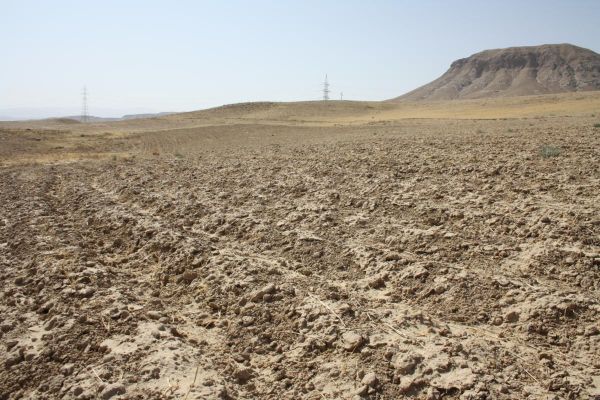
Fields of Dust: This should be a wheat field, but nothing has been harvested from here this year. The poorest farmers don’t have any irrigation systems for their fields and rely entirely on rain – which came late and sparse in the winter of 2010/2011. In the 14 provinces of Afghanistan affected by the drought, farmers have lost an average of 80 percent of the rain-fed harvest. (WFP/Silke Buhr)

The hunger crisis is dangerously escalating in Afghanistan. Drought has struck 14 provinces putting over two million people at risk of severe hunger and malnutrition. The response of international donors has been poor despite warnings being issued by aid agencies. Only 7% of the UN drought appeal has been funded to this point.

Earlier this fall Oxfam warned that in the 14 drought-affected provinces, “Many people in these areas were already suffering from chronic hunger. Nearly three quarters of the people living in the affected areas told relief agencies in August that they would run out of food in less than two months.”

Today a joint statement from Oxfam and other aid agencies said the drought and food shortages are taking their toll in communities, “from the closure of schools, forced migration in order to find food and work and already vulnerable families forced deeper into debt in order to get through the winter.”

Manohar Shenoy, the Afghanistan country director for Oxfam says, “Time was already running short. With snow falling in the highlands, the situation for many people has now become critical.”

Many Afghan children had already lost their school feeding ration earlier this year when low funding for the UN World Food Programme forced cutbacks.

Shenoy says, “To survive, already vulnerable people are pushing themselves and their families to the extreme: sliding even deeper into debt and selling all rather than just some of their livestock. Meanwhile the chronic child labour problems in Afghanistan are being exacerbated, as younger children are being forced to work more, for less money. In the worst cases, destitute families are forced to marry off young girls and sell teenage sons to agents who then send them to work in cities. This not only causes anguish, but reverses important gains that Afghan society has made.”

Funding for the United Nations World Food Programme (WFP), the lead agency in fighting hunger, has been low all year. WFP depends entirely on voluntary donations from the international community.

Silke Buhr of WFP says, “What is really worrying is the fact that for 2012 alone, we will need about US$390 million of which we have so far received nothing. Given that it takes between three and six months from the moment of pledge until beneficiaries actually receive the food, we will almost certainly have pipeline breaks…in early 2012.”

Afghanistan is looking at not only a severe hunger winter but suffering through 2012 and even beyond. Two things have to happen. One is to fund current relief operations to gain control of the hunger situation facing the country. This interim aid needs to be followed by a comprehensive plan to build resiliency among Afghan communities so droughts do not take such a toll.

It’s critical to note that even before the drought took hold, Afghanistan was already facing a hunger crisis with over seven million people listed as “food insecure” and many others on the brink. Poverty and malnutrition rates were already high.

The drought has sunk an already hungry and malnourished population deeper into the pit of suffering. Of all the threats facing Afghanistan, it is hunger which has become the most powerful. Hunger, if left unchecked, will crush hopes for peace for the war-devastated country.

Farhana Faruqi Stocker, the managing director of Afghanaid, says, “The international community, the Afghan authorities and development organizations need to assess why millions of Afghans remain vulnerable to hunger and find long term and sustainable solutions to solve this problem.”

Article first published as Afghanistan Hunger Crisis Deepens, Donors Not Responding on Blogcritics.

Leave a comment

Filed under global hunger

McGovern’s The Third Freedom Essential Reading as Congress Debates Food Aid

George McGovern, author of the Third Freedom, was named the United Nations World Food Programme's first global ambassador against hunger. (WFP photo)

Former Democratic senator George McGovern’s The Third Freedom: Ending Hunger in Our Time highlights ways Congress can work to fight malnutrition at home and abroad, and why it’s so important we win this struggle against hunger.

His book takes on special meaning right now as Congress is proposing reductions in funding to food aid programs both here and abroad.

McGovern, who ran for President in 1972, was the Food for Peace director under President  Kennedy. This program sends U.S. food overseas to fight hunger and build stability.

McGovern also has a long track record helping feed the hungry in the United States. In a Friends of the World Food Program teleconference, the question was once posed to him: why fight hunger abroad when there are hungry people here? His reply was: Why not do both? Fight hunger whether it’s in the US or overseas.

In The Third Freedom he talks about the Food for Peace program which was supported by both President Dwight Eisenhower (a Republican) and then Democratic President John F. Kennedy. Since then, it has been the main weapon of the U.S. against world hunger.

Food for Peace though is currently at risk of significant budget cuts by Congress, despite the fact that there are tremendous hunger crisis points such as famine in East Africa, drought ravaging Afghanistan, and nations like Haiti who need food to bolster reconstruction.

The charity Save the Children says the House of Representatives is proposing $1.04 billion for Food Peace in the upcoming FY 2012 budget, a significant dropoff from this year’s funding level of nearly $1.5 billion.

One of the key bipartisan initiatives discussed by McGovern in the book is the McGovern-Dole global school meals program. Along with Republican Senator Robert Dole, McGovern developed this initiative.

McGovern-Dole funds school meal projects in developing countries. The UN World Food Programme, Catholic Relief Services, World Vision and other charities provide meals using McGovern-Dole funds. This program is among those at risk in current budget discussions in the Congress.

McGovern also writes about bipartisan congressional committees, which helped improve the U.S. domestic school lunch program. Today’s representatives need to keep up the fight to ensure needy children in the U.S. can access food. For instance, school lunch and summer feeding program enhancements made by McGovern and his colleagues in the Congress need to be followed through by the current representatives.

The bipartisan cooperation that McGovern writes about is especially critical as hunger rates in the U.S. are rising. Vicki Escarra, President of Feeding America says: “The need for food assistance has increased dramatically during the prolonged and severe recession. Hunger hits every state and county in America, with one in six people facing food insecurity… strong federal nutrition assistance programs will continue to be essential.”

Funding for domestic and overseas food aid is very much on the line currently in Congress. McGovern’s book offers hope in this difficult period by reviewing past achievements in the struggle to end hunger. At the same time, he is looking forward to what should be done next to defeat man’s ancient enemy

Originally published as McGovern’s The Third Freedom: Ending Hunger in Our Time is Essential Reading as Congress Debates Food Aid at Blogcritics Magazine

Leave a comment

Filed under Books, global hunger

Practice Your Spanish and Help End Global Hunger

Playing the online game Free Rice leads to donations for the United Nations World Food Programme (WFP) to fight global hunger . Every correct answer means 10 grains of rice donated to WFP, the largest food aid organization.

There is a great new way students or anyone else can practice Spanish vocabulary. Now, if you are already fluent in Spanish, please skip ahead to the last paragraph. If not, stick around.

What does the Spanish word Marzo mean? Does El Cobre mean copper or hat? What does the word tarde mean in Spanish? Hint: hopefully you have never been this going to school or work.

These are just a few examples of Spanish vocabulary questions available at the award winning online game Free Rice. To get started, you go to Freerice.com and click on Spanish under the languages section. There are also sections for many other subjects too.

You can answer hundreds of Spanish vocabulary questions. For each answer you get right, 10 grains of rice will be donated to the United Nations World Food Programme to fight hunger. The rice is paid for by advertisers on the site. You will see the rice being added to a bowl in the right hand corner of the screen every time you get an answer right.

The World Food Programme runs the site with its two stated goals: To “Provide education to everyone for free” and “Help end world hunger by providing rice to hungry people for free.”

So you can practice your Spanish vocabulary while at the same time helping fight hunger which afflicts nearly 1 billion people worldwide. It’s a great tool for learning, humanitarianism and social responsibility.

Click on the groups section and create your own team for your class, school or organization. You might even be able to set up a tournament between schools.

Yes, back to those who have already mastered Spanish. There are Free Rice sections for German, Italian and French. Bonne chance!!

To get started playing, visit FreeRice.com

Article first published as Practice Your Spanish and Help End Global Hunger on Blogcritics.

Free Rice is currently helping feed children in Cambodia, where massive floods have struck recently. See below a video from the World Food Programme.

Leave a comment

Filed under global hunger