Quiz: Hunger and Malnutrition in Yemen

WFP also hopes to run a Food for Education program to give Yemeni children rations and encourage class attendance. This program has suffered from such a lack of funding that WFP has reduced its planned beneficiaries (photo courtesy Yemen Post)

Hunger and malnutrition is something that you do not hear much about when Yemen is discussed in the news. The United Nations World Food Programme (WFP) just released findings from a preliminary survey of hunger and malnutrition (food insecurity) in Yemen. Test your knowledge on the results. You can check your answers at the conclusion of the quiz.

For the answers click here.

Read more about hunger in Yemen:

Leave a comment

Filed under global hunger, Uncategorized

Quiz Answers: Hunger and Malnutrition in Yemen

1.) Hunger and malnutrition in Yemen

Leave a comment

Filed under Uncategorized

Famine Warnings: Alarming Hunger Crisis Demands Quick Action

Food Crisis in the Sahel Region of Africa. This map shows food security projections for July-September 2012. Without enough intervention the hunger crisis could quickly descend into the emergency and famine stages. Food Crisis in the Sahel Region of Africa. This map shows food security projections for July-September 2012. Without enough intervention the hunger crisis could quickly descend into the emergency and famine stages. Photo credit: USAID FEWSNET

Drought and conflict are combining to potentially create another summer of famine threatening the lives of millions.

The United States warned last week that East Africa, which suffered from famine and drought last year, may be in for another crisis. Low rainfall amounts are harming food production by farmers in Somalia, Ethiopia and Kenya. The U.S. Famine Early Warning System says, “Poor rains would likely negatively affect food security in a region still recovering from a devastating drought and famine in 2011.”

The U.S. just pledged 50 million dollars in aid for drought hit areas. It is clear though that more donations from the entire international community will be needed. The UN World Food Programme (WFP), the largest food aid agency, is currently experiencing huge funding shortages in East Africa. WFP said in a report last week that its 12 month shortfall for the region is $408 million.

WFP revealed this week that “assessment findings in Buhoodle, Somalia, indicate very high levels of food insecurity.” Somalia has been hardest hit by the hunger crisis since last year. But so too are its neighbors which have taken in many Somali refugees, as well as contending with hunger among its own population.

In Kenya, WFP warns of rising food prices and that over 2 million people will need aid. A WFP report said, “Vulnerability is still high in parts of Kenya after two to three successive failed seasons. For farmers in marginal agricultural areas, it is the fourth consecutive poor harvest.”

Refugee camps in Ethiopia, where many Somalis fled after famine struck last year, also revealed that about 24 percent of the population have borderline or poor food consumption.

A drought emergency has been taking place for months in the Sahel region of Africa. This region includes the countries of Niger, Mali, Mauritania, Chad and Burkina Faso.

The greatest danger lies ahead between the traditional harvests. The U.S. states, “In areas of the Sahel most affected by poor crop production, high cereal prices, or conflict, some very poor and poor households will require targeted emergency assistance during the peak lean season (July/Sep) to meet minimum food needs and prevent increases in already high background levels of acute malnutrition.”

If strong action is not taken now, famine looms. The World Food Programme is pleading for help to avoid such a disaster in the Sahel. The agency said in a report, “additional resources are urgently required, given long lead times and the upcoming rainy season hampering access. Significant shortfalls in cereals of approximately 124,900 mt could seriously constrain WFP’s crisis response in all affected countries.”

Following a U.S. donation late last month WFP needs about 300 million dollars for its relief activities throughout the Sahel.

In Afghanistan, the massive hunger crisis there has had severe repercussions. While U.S. Food for Peace donations have helped reduce the impact of a drought last year, a protracted relief and recovery operation to help Afghans remains only 10 percent funded. WFP says “a lack of resources is significantly hampering the organization’s ability to implement relief and recovery assistance.”

There are positive signs such as Canada and the U.S. making donations to help start a biscuit factory in Kabul. This helps increase food production in Afghanistan, benefiting farmers, schools and shops. The biscuits are a part of WFP’s nationwide school feeding programs.

More food security projects like this are needed within Afghanistan. Until hunger and malnutrition are dealt a significant blow, the country will not achieve peace or development.

In South Sudan, the World Food Programme “faces a significant financial shortfall of US$145 million.” The country is reeling from conflict with Sudan as well as internal fighting in the Jonglei state between the Lou Nuer and Murle tribes. Drought has ruined crop production and around 4.7 million people are facing hunger. Should conflict escalate, famine could strike South Sudan.

In Yemen, the fight against hunger is key for the country to build internal stability and develop. The country has suffered the last two years through political unrest and fighting in the South between Al Qaeda and the government. The World Food Programme says that 22 percent of the population now suffers from severe hunger. WFP though is short nearly 50 percent of its funding requirement to help Yemen fight hunger.

The growing hunger crisis is going to require the U.S. to build up its Food for Peace program, which is critical for saving lives and improving global stability.

As Secretary of State Hillary Clinton said last week, “the United States has provided almost $1 billion in humanitarian assistance that has saved countless lives from malnutrition, starvation, and disease. And our sustained commitment has demonstrated the best of America, helping to undermine the extremist narrative of terrorist groups like al-Shabaab in Somalia.”

Article first published as Famine Warnings: Alarming Hunger Crisis Demands Quick Action on Blogcritics.

Leave a comment

Filed under global hunger

This Easter, Let’s Remember the World’s Hungry

Imagine Easter with no chocolate or candy or egg hunts. In 1947 in Europe, this was just the case in countries struggling in the ruins of World War II. Newspapers reported a scarcity of everything but faith.

This Easter there will be nearly 1 billion people worldwide suffering from hunger. They are in earthquake-recovering Haiti, war-torn countries Afghanistan, Sudan,  and in the drought hit areas of the Sahel and East Africa.

Developing countries need school feeding programs to fight malnutrition and give their children an education. Not enough emphasis is placed on these vital programs. (WFP/Ramin Rafirasme)

All too often in the discussion of world affairs, the basic needs of food and agriculture are forgotten. Then strategy makers and analysts ponder over how to solve the crisis, often ignoring the obvious. Food supply and accessibility are the foundation all nations need to thrive and have peace.

What needs to change? World leaders need to get more involved in the fight against hunger. Many times their efforts are piecemeal. It’s very important that citizens write their representatives in government about fighting hunger both at home and abroad.

Internet technology offers several ways for people to get involved too. If you visit the sites of the World Food Programme, Save the Children, Feeding America, Catholic Relief Services and others, you will find all kinds of tools and information that you can use to take action against hunger. These agencies want you to get involved and bring your talents and expertise to the table.

What may look dark today can turn around. For Europe’s 1947 Easter, the situation looked quite desperate. But fast forward to the Easter of 1949 and you will find a different tale. Newspapers reported joyful celebrations in Western Europe “from their own labor and the efforts of the European Recovery Program,” known as the Marshall Plan.

This Easter remember the hungry and suffering, and see what you can do to help them.

Article first published as This Easter, Let’s Remember the World’s Hungry on Blogcritics.

Read a newspaper article about the Argosy Easter Ship that help feed children in Belgium during the First World War.

Leave a comment

Filed under global hunger, History

South Sudan and the War of 1812

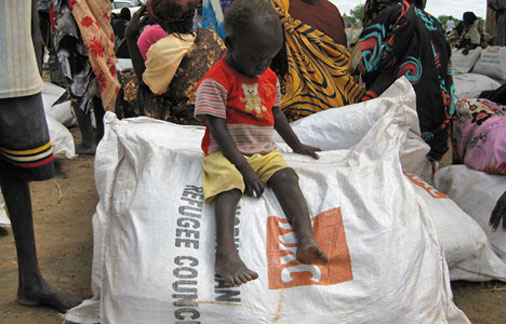
This child in Sudan is receiving food aid from the Norwegian Refugee Council (NRC). Many more children in the world are in need of food safety nets. (NRC Sudan)

At a Senate hearing in March, actor and Sudan activist George Clooney was asked about how to keep Americans, especially youth, engaged with the conflict and hunger in South Sudan. Can people here in the U.S. feel a sustained connection to a country many thousands of miles away?

Imagine for a moment a country that has recently gained its independence. War, territorial and boundary disputes, and the inability of the young government to cope with emergencies are the tragic realities.

Cities and towns have come under assault from their northern neighbor, forcing civilians to flee their homes in terror. Farmers have been forced away from their land by armies, thus ruining food production.

What you just read would describe South Sudan today. The description could also fit the United States during the War of 1812.

For when the United States was a young nation, like South Sudan now, it experienced war on its soil. This year is the 200th anniversary of the War of 1812, which President Obama and British Prime Minister David Cameron talked about at their White House meeting in March. During that war the British burned the White House to the ground. After the War of 1812 had ended, little by little the two sides moved away from conflict and toward partnership.

The Rush-Bagot Agreement of 1817 disarmed the Great Lakes and Lake Champlain, which during the war were the scene of naval battles and fierce bombardments on coastal towns. A naval arms race was averted. This allowed the U.S. border with the British colony of Canada to develop in peace rather than diverting resources into costly warships which might have provoked a new war.

One of the most tense standoffs between Britain and the U.S. in the decades after the War of 1812 was over who owned the Oregon Territory of the Northwest. In 1846 veteran diplomat Albert Gallatin, one of the peace commissioners during the War of 1812, published an essay urging calm between the two rivals. His words for peace were what any standoff needs to get resolved.

Today, South Sudan is faced with building peace with their neighbor Sudan. The two sides fought a civil war that ended in 2005 with the Comprehensive Peace Agreement. But this agreement has a long way to go before becoming a genuine peace.

Last summer, fighting erupted between South Sudan and Sudan over the disputed territory of Abyei. A United Nations Security Force has been dispatched for the demilitarizing of Abyei and to ensure protection and humanitarian aid for civilians.

In South Kordofan and Blue Nile, fighting is raging. U.S. Ambassador Princeton Lyman says “conflict has been raging there since last May, arising from issues never fully resolved in the civil war because people in those states, particularly in the Nuba mountains, fought with the South.”

There is also internal conflict in South Sudan between rival tribes, the Lou Nuer and the Murle, that has displaced many thousands of people in the Jonglei state. These two tribes have repeatedly attacked each other over the years through cattle raids and kidnappings. The scale of their battles, though, has increased substantially in recent months.

In May a peace conference is set to begin to deal with this deadly rivalry. Archbishop Daniel Deng Bul, head of the Peace, Reconciliation and Tolerance in Jonglei Committee, says, “I am expecting everybody who loves peace to participate in this process because we have lost so many people. I hope everybody will come, sit together and try to find a lasting solution for the problems.”

There is an initiative underway to collect the guns that have proliferated in Jonglei and there are plans for a buffer zone between the Lou Nuer and the Murle to help transition to peace.

Deng Bul says, “It is important for all citizens not to carry arms because the arms are tempting [people] to unnecessary actions. If we want to have development in Jonglei, we must make sure that everybody is not carrying a gun.”

South Sudan desperately needs its own peacemakers before it’s too late. The internal and external conflict has harmed the region’s food supply. Drought has also struck. These two elements, combined with preexisting poverty, are creating a hunger crisis approaching famine. The UN World Food Programme, which relies on voluntary funding, says nearly five million people in South Sudan are suffering from hunger. Food is desperately needed to reinforce the peace process.

South Sudan needs the United States and others to stay with them during these rough waters as it tries to build a road to peace.

As we mark the 200th anniversary of the War of 1812, students and other citizens can take time to reflect on the peace with Britain that emerged from the ashes. This learning adventure in American history can also offer a way for students and others to connect with South Sudan. How can this newly independent nation build their own road to peace?

For what the governor of Ohio, Thomas Worthington, proclaimed after the War of 1812 rings true. Worthington said we must seek the day “when bloody wars engendered in pride and wickedness, and prosecuted in fury and unrighteousness, shall forever cease, and when every human being, in the true spirit of humanity, meekness and charity,shall do justly, love mercy, and walk humbly with his God.”

Article first published as South Sudan and the War of 1812 on Blogcritics.

Leave a comment

Filed under global hunger, History

Hunger Games Movie Inspiring Food Drives Across Country

A Hunger Games Design of a MockingJay set up for a food drive
Credits: Manna Food Bank

The Hunger Games movie is rallying support for the fight against hunger in the U.S. and abroad. The movie, which is set in the future after North America has suffered famine, is partnering with Feeding America and the World Food Programme .

The Manna Food Bank of North Carolina is holding a Hunger Games food drive. A sculpture based on the film was even set up at the nearby theater.

The West End Library in Washington, DC is conducting a food drive with the film’s release. The library’s web site states it hopes to draw attention to child hunger in the District. Feeding America states, “The District of Columbia (32.3%) and Oregon (29.2%) had the highest rates of children in households without consistent access to food.”

KHAS TV in Nebraska says that Hastings High School held a Hunger Games Food Drive. The students came up with the idea and set up a canned good collection at the Hastings Imperial Theater.

WSLS TV in Virginia reports that two high school classes carried out a food drive to benefit a local pantry in connection with their own “Hunger Games” trivia competition. WCYB TV reports that movie goers have been asked to bring in canned goods to the theater which will be donated to the Second Harvest Foodbank of Northeast Tennessee.

The owner of a movie theater in Temecula, California has also set up a Hunger Games food drive. Also in California, the Monterey Free County Libraries are hosting a food drive in conjunction with the opening of the film.

Lisa Hamler-Fugitt of Ohio Association of Second Harvest Foodbanks says she believes more such events are underway in her state. She says that the Cleveland Food Bank is also helping spread the word about a Sundance independent film about hunger called Finding North .

The Hunger Games has an opportunity to inspire action against the famine currently threatening the Sahel region of Africa as well as Sudan. East Africa was struck by famine last year and is still recovering. Afghanistan, Yemen, Syria and other countries are also facing severe hunger.

At the same time the President and the U.S. Congress are committing a low amount of funding for the Food for Peace program, the country’s main tool in fighting global hunger since the Eisenhower administration. The World Food Program USA is asking citizens to call on Congress to increase funding for Food for Peace from $1.4 billion to $2 billion to meet the growing crisis.

The Hunger Games, although fiction, has a chance to do some real world good if it inspires action and interest into hunger issues. Sometimes film is what it takes. An academy award winning film, The Seeds of Destiny, once inspired people to act against hunger in the wake of World War II. President Truman’s Cabinet Committee on World Food Programs even set up a viewing of the film.

With the fact that hunger is growing worldwide this kind of activism could not come at a more important time.

1 Comment

Filed under global hunger

Crisis in Syria: an interview with Abeer Etefa of the UN World Food Programme

file photo of WFP distributing food in Syria

The fighting in Syria between rebels and the government has claimed thousands of lives. Another tragedy is also fast emerging within the country: hunger and malnutrition.

Food supply systems have been disrupted by the conflict. The UN World Food Programme (WFP), the largest food aid organization, is responding to this emergency.

Abeer Etefa, the senior spokesperson from the WFP Middle East headquarters, provides us an update on the humanitarian crisis taking place now in Syria.

How many people are in need of food aid right now in Syria?

According to the latest Emergency Food Security and Nutrition Assessment conducted by WFP in 2010, prior to the unrest, 1.4 million people were considered to be food insecure in areas which have become conflict hotspots (Homs, Hama, rural Damascus, Daraa and Idleb). The concern is they now have become even more vulnerable. We are concerned that the longer the conflict continues, hunger will increase, and we estimate that 1.5 million people may potentially need food assistance.

How is WFP responding to the emergency?

WFP launched an emergency operation in December to cover the food needs of vulnerable people affected by the unrest in Syria. The project is currently underway until the end of 2012, in partnership with the Syrian Arab Red Crescent (SARC) and is targeting each month 100,000 beneficiaries living in areas that have been most negatively impacted. Our food assistance has so far reached rural Damascus, Hama, Homs, Dara’a, Quneitra, Lattakia, Tartous, Deir Ezzor, Idleb, and Al-Hasakeh in Syria, yet, access remains challenging in some areas due to insecurity.

WFP is also launching a 3-month Special Operation to support the above mentioned project and further enable us to respond to operational disruptions in Syria as well as to respond timely to any openings in humanitarian space. Under the special operation, WFP is strengthening its logistics capacity within Syria to respond to any increases in needs including capacity building for WFP’s implementing partner, SARC, as well as filling any identified gaps for delivering assistance for humanitarian partners. We will also be increasing staffing capacity and prepositioning necessary equipments within Syria to ensure operations are conducted safely within the country.

On a contingency basis, we are also preparing for scaling up our humanitarian intervention in Syria as concerns grow about the deteriorating humanitarian situation.

WFP is also part of UNHCR’s Regional Response Plan (RRP) that aims to support refugee coordination and provide food assistance to those who fled to Turkey, Lebanon, and Jordan.

Are we seeing higher food prices throughout Syria because of the conflict? Could hunger escalate even in areas outside of fighting?

Due to limited access, WFP has not been able to conduct a comprehensive assessment to determine and update the food security situation since our last assessment in late 2010, which found that insecurity and a lack of funds was already limiting people’s ability to buy food.

In urban areas of Damascus, food is available and bakeries are still functioning, but with reduced hours and limits on how much bread each person can buy. Outside of Damascus, a bread shortage has been reported several times during periods of conflict. However, there is no doubt that people’s livelihood and food security throughout the country has further been affected by the unrest, coupled with high food prices, a lack of purchasing power, and internal displacements. On the other hand, the unrest has also hit families already affected by a prolonged drought in north-eastern Syria – the grain basket of the country – where more than half of the country’s poorest population lives. Indeed, WFP is deeply worried that hunger will increase the longer the conflict continues.

WFP relies on voluntary donations. Is funding for the humanitarian response in Syria an issue?

WFP has appealed for USD 20 million to fund its ‘Emergency Food Assistance to People Affected by Unrest in Syria’ project. Our shortfall for this project stands at 45%. We are also requesting USD 4.7 million to fund our Special Operation and USD 10.5 to fund our assistance for the Syrians who fled to neighboring countries as part of UNHCR’s Refugee Response Plan (RRP).

What is the best way for individuals to get involved with WFP and help Syria?

To help us respond to the Syrian and other emergencies:

https://www.wfp.org/donate/emergencies

Leave a comment

Filed under global hunger

How an Idea of Ike’s Could Help Settle India/Pakistan Nuclear Tensions–And Help Us Win the War on Terrorism

India and Pakistan, two nuclear weapons states, need to build a lasting peace. The two nations suffer from extreme hunger and poverty. This will persist as long as they pour their resources into a costly arms race.

Back in 2004 I wrote about one confidence building measure the two rivals should adopt on the road to peace. Hopefully in 2012 it will take place.  Here is a copy of the article as it appeared on History News Service and History News Network.

How an Idea of Ike’s Could Help Settle India/Pakistan Nuclear Tensions–

And Help Us Win the War on Terrorism

There’s encouraging news about ending the decades-old conflict between India and Pakistan. At the United Nations, the leaders of both nations recently expressed their desire for peaceful coexistence, and called for confidence-building measures.

How crucial is this development for the United States? Extremely. The war against terrorism cannot be won without stability in South Asia. Now is the time for the United States to intensify its efforts to help establish peace between the two rivals.

India and Pakistan are both armed with nuclear weapons. The two nations have frequently exchanged gunfire in the region of Kashmir, which both claim. In 2002, when hundreds of thousands of Indian and Pakistani troops massed on their respective borders, war seemed imminent. South Asia was on the brink of a nuclear catastrophe. The crisis subsided but the urgent need for peace between the two adversaries remained.

How can the United States aid the Indian-Pakistani peace process? By means of an old Cold War initiative, originally proposed by the United States. In 1955, in the midst of the Cold War, President Eisenhower presented a diplomatic surprise to the Soviet Union. Why not allow both the Americans and Soviets to fly unarmed aerial observation missions over each other’s military facilities? Such a move, the president surmised, could reduce the possibility of secret military preparations and help build trust through transparency. As Eisenhower stated, “Open Skies” would have the effect of “lessening danger and relaxing tension” between the two heavily armed rivals.

The Soviets didn’t accept Eisenhower’s idea in 1955. In fact, it took nearly 40 years to implement it. In 1992 the United States, Russia and other European nations signed the Open Skies Treaty allowing unarmed aerial observation missions over the respective territories of each nation.

A similar arrangement would benefit India and Pakistan, who fear each other’s military might. Open Skies missions would provide that Indian and Pakistani officials work together on observation flights. This type of cooperation would set the groundwork for future disarmament agreements.

Increased cooperation was Eisenhower’s intention when he unveiled Open Skies. He said at the time, “What I propose, I assure you, would be but a beginning.” His proposal was not by itself going to end the Cold War. It was a confidence-building measure similar to what India and Pakistan have called for at the United Nations.

A joint Indian-Pakistani statement emphasized that such measures could develop “an atmosphere of trust and mutual understanding.” This was the very basis of Eisenhower’s original Open Skies proposal during the Cold War.

The security of the United States is greatly affected by relations between India and Pakistan. A successful war on terrorism cannot be carried out without stability in South Asia. Pakistan and Afghanistan form the major front on the war against terrorists. The remnants of al-Qaida, and possibly Osama bin Laden himself, are in that area. For the international community to finish off al-Qaida, uninterrupted cooperation from Pakistan is a necessity. An escalating conflict with India would only draw Pakistani attention and resources from the war on terrorism.

The United States must use its best diplomatic tools, such as Open Skies, to assist India and Pakistan. The use of diplomatic measures, great and small, cannot be overlooked as an essential tool against terrorism. The furthering of peace and economic prosperity worldwide will make terrorism less likely to prosper.

There are other reasons for the United States to be heavily active in promoting peace between India and Pakistan. The gravest risk facing South Asia is nuclear war. Both India and Pakistan tested nuclear weapons in 1998 and possess effective missile capability. One nuclear strike could kill millions and bring about a nightmare of unimaginable proportions. A step-by-step process toward nuclear disarmament in South Asia is imperative.

Clearly, a stable Pakistan at peace with India is in the best interests of the entire world. Adopting an Open Skies agreement will help create the atmosphere India and Pakistan need to resolve their disputes. Its successful implementation would set a formidable model for arms control and peace that other regions of the globe could emulate. The United States and NATO can offer considerable expertise to help formulate the agreement.

An Open Skies initiative will help lay the foundation for amicable relations between India and Pakistan. This is one of many steps that will be needed to achieve peace in South Asia. The stakes are high. A failure to resolve the differences between India and Pakistan will prolong tension in South Asia, increase the chance for war and rob valuable time and resources from the fight against terrorism.

Article originally distributed in 2004 by the History News Service.

Leave a comment

Filed under nuclear weapons

An Interview with David Green of Feeding Children Everywhere

Group of volunteers preparing meals which Feeding Children Everywhere will ship to the hungry both at home and abroad. The meal contains rice, protein (lentils), vegetables, vitamins and minerals.

Feeding Children Everywhere is a charity based in Florida that is taking on the hunger and malnutrition crisis both at home and abroad.

Founded by Don Campbell in 2010, Feeding Children Everywhere quickly brought 250,000 meals into Haiti to help earthquake victims. Since then they have continued and expanded hunger relief efforts.

Feeding Children Everywhere hosts meal packing events where volunteers gather to prepare food that will be shipped to those in need. David Green, the Chief Operating Officer, recently took time to discuss the charity’s accomplishments and vision.

How many meals has your organization made and shipped here in the United States and around the world?

We were founded in August of 2010. In 19 months we’ve shipped 7.2 million meals to hungry kids around the world.

What are some of the communities in the U.S. that have received meals from Feeding Children Everywhere?

We’ve sent a large number or meals to crisis food pantries in Florida’s public schools. We now have events planned for public schools in Georgia, California, Colorado, Texas, New York, and Arizona. Our goal is that by 2015 we will be providing 100 million meals a year to crisis food pantries in public schools around the U.S.

Is your organization involved with supporting summer feeding for children who no longer have access to meals provided through school feeding?

We support programs year round. We believe that Children always need sustainable access to food.

When we send meals to a school it is targeted to last an entire year. We want to make sure the program is consistent and reliable year round.

The meals go in the crisis food pantry at the school. If the school is closed then there is nobody there to distribute meals.

What countries have you sent meals?

A lot. Most recent or upcoming would be:

Kenya, Ghana, Haiti, Guatemala, Honduras, Ethiopia, India, Dominican Republic, U.S.

Where do you receive funding to produce the meals?

Our funding comes primarily from the 25 cents per meal that meal packing event sponsors donate to fund a project. In 2011, 93% of the donations we received went directly to meals for kids.

How can some get involved with Feeding Children Everywhere?

Volunteer at a local packing event in their area, become an intern, sponsor a meal packing event, donate, or become one of our “Hunger Heroes.”

For more information visit Feeding Children Everywhere.

Leave a comment

Filed under global hunger, Hunger in America

Feeding America to Hold Twitter Chat on Nutrition

North Texas Food Bank, located in Dallas, TX, runs a BackPack Program for children at risk of hunger. Feeding America’s BackPack Program, administered through network food banks, provides food to kids for weekends and school vacations.Credits: Feeding America

The charity Feeding America is hosting a twitter chat about nutrition and is inviting everyone to participate in this important discussion. This event is part of National Nutrition Month. Feeding America hopes to engage the country to advocate for nutrition and an end to hunger.

A group of nutrition experts will take part including celebrity chef Ellie Krieger, Lizbeth Silvermann and Dr. Robert Post of the U.S. Department of Agriculture, and David Weaver, Director of South Plains Food Bank in Texas.
The twitter chat will take place on Tuesday from 12-1 eastern time. You can follow the chat by using the hashtag #BetterFood.
Feeding America (twitter account @FeedingAmerica) is the nation’s largest charity fighting the hunger and food insecurity afflicting about 49 million people. Their network includes 200 emergency food banks and thousands of partner agencies that feed the nation’s hungry.

1 Comment

Filed under Hunger in America