Tag Archives: World Food Programme

The Battle of the Bulge and Fighting Global Hunger

Troops of the United States 7th Armored Division advance along a road towards St. Vith in Belgium, retaken in the final liquidation of the Battle of the Belgian Bulge., 02/09/1945 Credits: National Archives

It was December, 1944 when the Battle of the Bulge started in World War II. Germany launched its last big offensive against the surging allied armies which had landed in Europe on D-Day. While this massive battle unfolded, another war was also taking place in Europe, a war against hunger and famine.

Hunger was everywhere. At Christmas time, a Belgian father published an open letter to General Eisenhower and the American soldiers. He thanked them for sharing food from their ration kits with hungry Belgian children.

At nearly the same moment in Finnmark (northern Norway) the Allies were rushing humanitarian aid to help those left homeless and hungry after the Nazis burned the region while in retreat. The charities American Relief for Norway, the Red Cross and Save the Children also came to the rescue of Norway for emergency aid and reconstruction.

The Netherlands, occupied by the Nazis, was entering what is known as the “hunger winter” of 1944-1945 as it waited for liberation. In December of 1944, General Dwight Eisenhower issued orders for relief supplies to be built up and ready to distribute in the Netherlands as soon as liberation took place.

The Battle of the Bulge caused such suffering that food supplies had to be diverted to Belgium to feed the hungry there. The Netherlands’ supply had to be built back up. As the war continued into early 1945, conditions deteriorated in the Netherlands with people dying from starvation.

In April of 1945 the Allies reached agreement with the German occupiers to begin airlifting food supplies into the Netherlands. Truck convoys of aid soon followed. Germany surrendered in May 1945. The famine in the Netherlands would have claimed far more lives if the Allies had not stored enough food supplies to enact a huge relief operation.

Hunger relief continued long after the guns fell silent in World War II. One lesson learned from World War II and the Battle of the Bulge was that even under the most difficult of circumstances, the most destructive war ever, the U.S. and their allies were able to keep up a fight against hunger and save lives.

The humanitarian effort displayed in behalf of the suffering victims of World War II provides an excellent example for present leadership to follow, as hunger continues to be the deadly companion of conflict and poverty around the globe.

This is tragically evident in many countries today from Sudan to Afghanistan, Yemen, Libya and other crisis points. The United Nations World Food Programme, directed by Josette Sheeran, feeds war victims in these countries daily. Josette’s father James served with the U.S military in the Battle of the Bulge and contributed to post-war hunger relief in France.

Article first published as The Battle of the Bulge and Fighting Global Hunger on Blogcritics.
Leave a comment

Filed under global hunger, History

Food Aid for Tajikistan Held Up in Uzbekistan

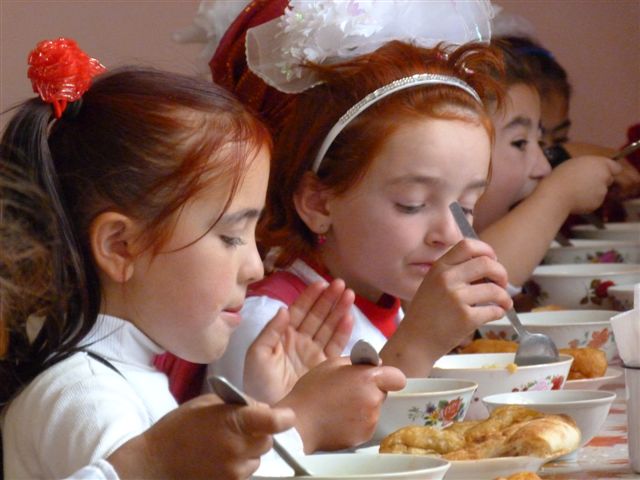
Food for the school feeding in Tajikistan has been limited because of the railway blockade in Uzbekistan. Low funding for WFP has also harmed the program this year. (World Food Programme photo)

The nation of Tajikistan needs food aid. Nearly half the population lives in poverty and food prices are high. In fact, earlier this year children in Tajikistan had their school meal ration reduced because of low funding for the UN World Food Programme (WFP). The WFP depends entirely on voluntary donations.

Some food was on the way to Tajikistan recently by railroad via the neighboring country of Uzbekistan. Yet, the food has been stalled in Uzbekistan for a month when there are hungry people in need. Why? Here are WFP Tajikistan country director Alzira Ferreira’s answers to questions about this situation.

Why are the WFP supplies for Tajikistan being held in Uzbekistan?

The WFP supplies are part of several hundred wagons stuck in Uzbekistan since 17 November. The issue affects all cargoes, both commercial and humanitarian. There are several different accounts of what happened in the Uzbekistan’s side of the rail line that connects that country with the southern Khatlon Region of Tajikistan. I believe the reasons reported in the press (explosion, mud flows, damaged rail bridge) are most likely an excuse for economic and political motives.

How long will it take for the repairs to be made and rail transport can resume?

The Uzbek rail authorities are not providing clear indications of when traffic will resume but have advised our suppliers, under whose responsibility the food is, to divert the wagons via Dushanbe. It does not look like there will be any immediate resumption of rail activity in that line. The other rail connections are not affected.

Are there alternatives such as some food being moved through by truck or air? Is Uzbekistan considering this possibility?

Yes, there are alternatives. Tajikistan is served by three rail lines from Uzbekistan: the one currently interrupted which serves the South, the most populous area of the country; another rail line connects Uzbekistan with Dushanbe and another connects with the northern Sughd Region. We have just made a decision to re-route the wagons intended for the South by rail to Dushanbe and then truck the food South. This brings additional transport costs but it is an alternative.

How much food supply does WFP have left for school feeding and other programs?

WFP still has supplies both in the South and Dushanbe (just over 1,000 tons) but they are insufficient to meet all the needs of planned programmes. For the next three months we need over 3,000 tons of food, so the food held in Uzbekistan is very much needed, and fast. Thus the decision to divert the stranded wagons and future deliveries via Dushanbe.

Article first published as Food Aid for Tajikistan Held up in Uzbekistan on Blogcritics.

Leave a comment

Filed under global hunger

Plotting the 2012 War Against Hunger in Yemen

The term PRRO 200038 stands for Protracted Relief and Recovery Operation and includes the emergency safety net (ESN) plan of food rations discussed in this article as well as nutritional support such as plumpy'nut and plumpy'doz for infants, and Food for Work Projects. Other WFP programs, not included on this map, feed displaced persons

Last month the UN World Food Programme (WFP) held a meeting in Rome to discuss strategy for fighting a growing hunger crisis in Yemen. The WFP’s executive board approved a $32 million budget increase for its plan to distribute rations to families suffering from high food prices. The total budget for this 2011-2012 operation stands at over 122 million dollars.

A WFP document states, “This budget revision is for: i) continuation of a seasonal emergency safety net for 1.2 million severely food-insecure households during the 2012 hunger season; and ii) 4,486 mt of additional food for emergency response in 2012 in view of the deteriorating socio-political situation.”

Malnutrition and lack of basic goods is the most serious threat facing the country. Catherine Bragg of the United Nations said last week, “Humanitarian needs are expected to deteriorate over the next year and we must do everything we can to make sure that these needs are not overshadowed by the political agenda.”

While WFP approved the budget increase, it all hinges on whether donors come through. The World Food Programme relies entirely on voluntary donations from governments and the public.

In 2011, for example, WFP planned to feed 1.8 million Yemenis as part of the aforementioned safety net operation. Funding was low and some entire governorates had to be dropped from the program. At one point over a million Yemenis did not even receive the food rations during a scheduled distribution.

The low funding for WFP Yemen unfolded at the same time food prices increased during political instability. It’s important to remember that even before the year of unrest in Yemen took shape, millions were already deeply mired in hunger and poverty. The turn of events during Yemen’s “Arab Spring” took a bad situation and made it worse.

WFP will also need funding in 2012 to feed Yemenis displaced by conflict both in Northern and Southern Yemen. Food for education programs, which have received almost no funding for two years, need to be restarted. No national school lunch program has been established, nor a universal infant feeding program. These programs can provide a way to defeat malnutrition among children and also increase literacy, class attendance and most importantly completion of education.

In addition, Food for Work projects to help agricultural rehabilitation need to go forward. But it all depends on whether the international community will donate. Yemen cannot achieve political stability and peace amid a storm of hunger. Despite this reality, hunger fighting programs lacked funding in 2011. Will the new year be a repeat?

There is some hope. Germany recently made a 30 million dollar donation to WFP in Yemen. Will other nations follow this lead and help provide food security for Yemenis during a period of political upheaval?

That is a critical question as 2011 comes to a close. It takes on even more urgency when you consider that the United States Congress is proposing reducing funding for the Food for Peace and McGovern-Dole school lunch programs. Both are potential major resources for funding hunger relief in Yemen. If they are cut back, it could prove to be very damaging during the coming year where so much is on the line in Yemen.

Article first published as Plotting the 2012 War Against Hunger in Yemen on Blogcritics.

Leave a comment

Filed under global hunger

Eisenhower’s Thanksgiving Mission

General Dwight Eisenhower (NATO photo)

General Dwight Eisenhower needed rest. It was the first Thanksgiving since the end of World War II in 1945 and the general was suffering from bronchitis. With the holiday, you would think Ike could get his much-needed recovery time. But not so. On this Thanksgiving Day, Eisenhower was called for a special mission in Washington, D.C.

The Congress was holding a hearing on whether to provide additional funding for the United Nations Relief and Rehabilitation Administration (UNRRA). It was UNRRA that was helping provide food and other humanitarian aid to millions of people suffering in the aftermath of World War II. But it was not a sure thing the Congress was going to grant more money to this relief effort.

Congressman Sol Bloom of New York called upon Eisenhower to testify in the hearing. With Eisenhower’s busy schedule in Washington that week, Ike had planned to submit just a written statement. But when it came clear that Eisenhower could decide the fate of UNRRA funding, he agreed to appear in person. General Walter Bedell Smith had cabled Eisenhower stating that without UNRRA, “there is no repeat no agency to which we can turn to assist actively in carrying out our responsibilities in connection with the care of displaced persons.” Ike replied, “Thoroughly understand. My testimony will be strong.”

Eisenhower made some late edits and additions to a statement the War Department had prepared for him. On Thanksgiving morning he appeared before the House Committee on Foreign Affairs.

Congressman Bloom introduced Eisenhower, stating that the general was appearing against doctors orders and needed to get back to bed as soon as possible. But before that, Ike read his statement in support of UNRRA reminding Congress, “There are few places in Europe today where people are not cold, hungry and apprehensive of the future” and that “the ravished nations of the world are looking to UNRRA for their relief.”

Ike’s testimony was pivotal in swaying Congress to provide more funding for UNRRA which allowed aid to war-torn countries like Italy, Austria, and Greece. One of the countries in desperate need of aid was visited by Eisenhower in September, 1945, Poland.

Devastated by the war Poland needed food, medicine, clothing and the rebuilding of so many destroyed cities and towns. The U.S. Ambassador to Poland, Arthur Bliss Lane, saw the suffering in Poland and knew how important UNRRA aid was. Lane wrote, “the most terrible sight of all was that of the one-legged children…whose legs or arms were carried away by bombs, or whose gangrened limbs were amputated in mercy.”

Lane added, “There is no doubt that the help furnished by UNRRA and other humanitarian organizations … created a great spiritual bond between the Polish people and Western civilization. The distribution of packages was a constant reminder to the Poles that the West had not forgotten their plight and that the West, especially the United States, was helping as in the past.”

Humanitarian aid from UNRRA, the U.S. army, charities like Catholic Relief Services, CARE, UNICEF, and so many other organizations helped establish the foundation for European recovery and peace.

The lesson of Eisenhower’s Thanksgiving mission is essentially one of Food for Peace. Ike stated, “now that the fighting has ceased and the danger is less obvious, it is perhaps difficult for people in this country to visualize the desperate needs of the people of Europe and the necessity, if our military victory is to have lasting significance, of our successfully completing the job of making a peaceful world. ”

We didn’t forget about Europe after World War II, and today we cannot forget the hunger that afflicts over 900 million people throughout the globe. Whether it’s in Afghanistan, Sudan, Nepal or Iraq, it is vital that hunger and poverty are defeated if we hope to have peace.

originally published at History News Network.

Leave a comment

Filed under global hunger, History

This Thanksgiving Feed A Silent Guest and Help End World Hunger

Here is a  list of charities where you can make a “silent guest” donation this Thanksgiving to Help Feed the Hungry. Imagine you have a guest at your table on Thanksgiving, one of the world’s hungry people. You can send the donation to pay for the Thanksgiving meal of your “silent guest.” Please see my article This Thanksgiving Feed A Silent Guest and Help Build World Peace. Also you can read more below about the “silent guest” program.

United Nations World Food Programme

Play Free Rice

Save the Children

Catholic Relief Services

CARE

World Vision

Edesia

Feeding America

Aschiana Foundation

Action Against Hunger

Church World Service

Norwegian Refugee Council

UNICEF

Food for the Poor

article about the Silent Guest program in a 1947 Plymouth newspaper. (courtesy Plymouth Public Library)

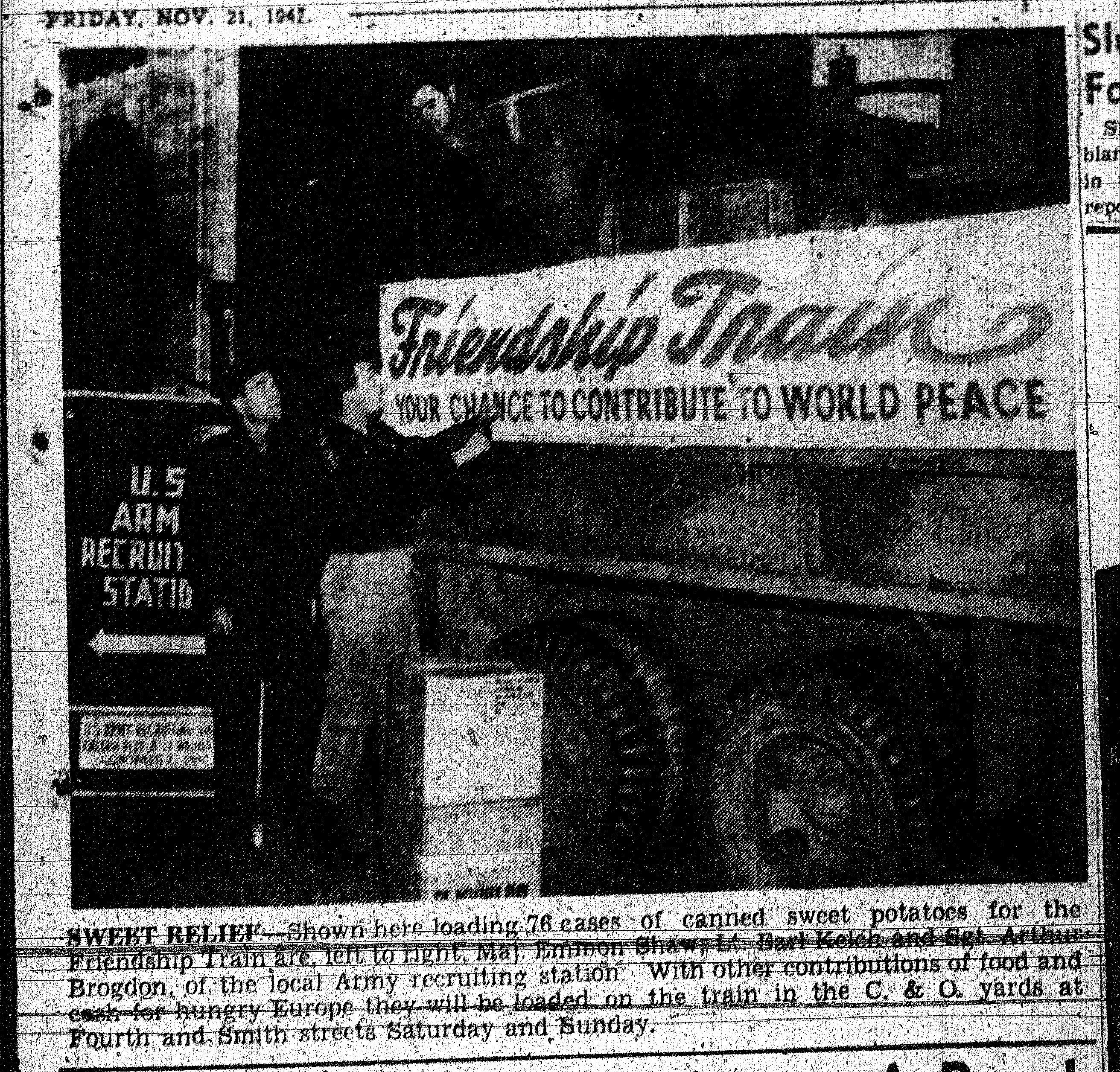
The Friendship Train and the "Silent Guest" Program were two ways Americans sought to build peace after World War II (Cincinnati Post reprint courtesy of the Cincinnati Public Library)

In Thanksgiving 1947 Americans were asked to take a “silent guest” into their homes, one of the hungry in Europe. The World War II devastated countries had been hit hard by drought and harsh winters causing food shortages. The silent guest plan was one way Americans came to the aid of the hungry and suffering.

On Thanksgiving Day Americans would figure what it would cost to feed a “silent guest” at their meal and then mail the donation to a committee in Plymouth, MA – the home of Thanksgiving.  Donations poured in and led to the purchase of many thousands of CARE packages of food going to the hungry in Europe.

This Thanksgiving we can answer the cries of the hungry whether it’s in the famine zone of East Africa, or in drought-ravaged Afghanistan, the Democratic Republic of the Congo  or Haiti. This holiday there may be those in your own city and state who are hungry.

You can take in a “silent guest” and make a donation to feed your guest at a number of charities.  Also included is a link to the online game Free Rice, where for every correct answer you get, 10 grains of rice are donated to the World Food Programme, paid for by advertisers, a modern way of taking in a “silent guest.”

1 Comment

Filed under Charity, global hunger

Afghanistan Hunger Crisis Deepens, Donors Not Responding

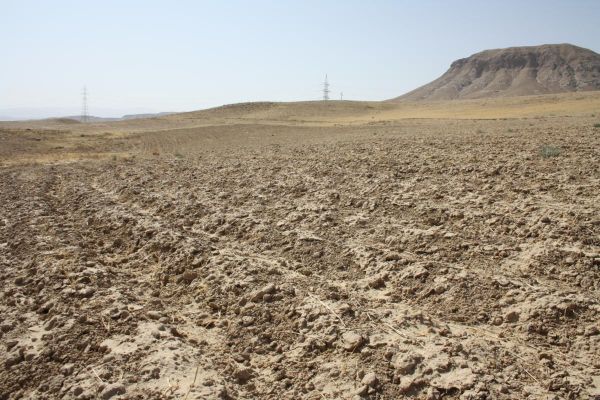
Fields of Dust: This should be a wheat field, but nothing has been harvested from here this year. The poorest farmers don’t have any irrigation systems for their fields and rely entirely on rain – which came late and sparse in the winter of 2010/2011. In the 14 provinces of Afghanistan affected by the drought, farmers have lost an average of 80 percent of the rain-fed harvest. (WFP/Silke Buhr)

The hunger crisis is dangerously escalating in Afghanistan. Drought has struck 14 provinces putting over two million people at risk of severe hunger and malnutrition. The response of international donors has been poor despite warnings being issued by aid agencies. Only 7% of the UN drought appeal has been funded to this point.

Earlier this fall Oxfam warned that in the 14 drought-affected provinces, “Many people in these areas were already suffering from chronic hunger. Nearly three quarters of the people living in the affected areas told relief agencies in August that they would run out of food in less than two months.”

Today a joint statement from Oxfam and other aid agencies said the drought and food shortages are taking their toll in communities, “from the closure of schools, forced migration in order to find food and work and already vulnerable families forced deeper into debt in order to get through the winter.”

Manohar Shenoy, the Afghanistan country director for Oxfam says, “Time was already running short. With snow falling in the highlands, the situation for many people has now become critical.”

Many Afghan children had already lost their school feeding ration earlier this year when low funding for the UN World Food Programme forced cutbacks.

Shenoy says, “To survive, already vulnerable people are pushing themselves and their families to the extreme: sliding even deeper into debt and selling all rather than just some of their livestock. Meanwhile the chronic child labour problems in Afghanistan are being exacerbated, as younger children are being forced to work more, for less money. In the worst cases, destitute families are forced to marry off young girls and sell teenage sons to agents who then send them to work in cities. This not only causes anguish, but reverses important gains that Afghan society has made.”

Funding for the United Nations World Food Programme (WFP), the lead agency in fighting hunger, has been low all year. WFP depends entirely on voluntary donations from the international community.

Silke Buhr of WFP says, “What is really worrying is the fact that for 2012 alone, we will need about US$390 million of which we have so far received nothing. Given that it takes between three and six months from the moment of pledge until beneficiaries actually receive the food, we will almost certainly have pipeline breaks…in early 2012.”

Afghanistan is looking at not only a severe hunger winter but suffering through 2012 and even beyond. Two things have to happen. One is to fund current relief operations to gain control of the hunger situation facing the country. This interim aid needs to be followed by a comprehensive plan to build resiliency among Afghan communities so droughts do not take such a toll.

It’s critical to note that even before the drought took hold, Afghanistan was already facing a hunger crisis with over seven million people listed as “food insecure” and many others on the brink. Poverty and malnutrition rates were already high.

The drought has sunk an already hungry and malnourished population deeper into the pit of suffering. Of all the threats facing Afghanistan, it is hunger which has become the most powerful. Hunger, if left unchecked, will crush hopes for peace for the war-devastated country.

Farhana Faruqi Stocker, the managing director of Afghanaid, says, “The international community, the Afghan authorities and development organizations need to assess why millions of Afghans remain vulnerable to hunger and find long term and sustainable solutions to solve this problem.”

Article first published as Afghanistan Hunger Crisis Deepens, Donors Not Responding on Blogcritics.

Leave a comment

Filed under global hunger

McGovern’s The Third Freedom Essential Reading as Congress Debates Food Aid

George McGovern, author of the Third Freedom, was named the United Nations World Food Programme's first global ambassador against hunger. (WFP photo)

Former Democratic senator George McGovern’s The Third Freedom: Ending Hunger in Our Time highlights ways Congress can work to fight malnutrition at home and abroad, and why it’s so important we win this struggle against hunger.

His book takes on special meaning right now as Congress is proposing reductions in funding to food aid programs both here and abroad.

McGovern, who ran for President in 1972, was the Food for Peace director under President  Kennedy. This program sends U.S. food overseas to fight hunger and build stability.

McGovern also has a long track record helping feed the hungry in the United States. In a Friends of the World Food Program teleconference, the question was once posed to him: why fight hunger abroad when there are hungry people here? His reply was: Why not do both? Fight hunger whether it’s in the US or overseas.

In The Third Freedom he talks about the Food for Peace program which was supported by both President Dwight Eisenhower (a Republican) and then Democratic President John F. Kennedy. Since then, it has been the main weapon of the U.S. against world hunger.

Food for Peace though is currently at risk of significant budget cuts by Congress, despite the fact that there are tremendous hunger crisis points such as famine in East Africa, drought ravaging Afghanistan, and nations like Haiti who need food to bolster reconstruction.

The charity Save the Children says the House of Representatives is proposing $1.04 billion for Food Peace in the upcoming FY 2012 budget, a significant dropoff from this year’s funding level of nearly $1.5 billion.

One of the key bipartisan initiatives discussed by McGovern in the book is the McGovern-Dole global school meals program. Along with Republican Senator Robert Dole, McGovern developed this initiative.

McGovern-Dole funds school meal projects in developing countries. The UN World Food Programme, Catholic Relief Services, World Vision and other charities provide meals using McGovern-Dole funds. This program is among those at risk in current budget discussions in the Congress.

McGovern also writes about bipartisan congressional committees, which helped improve the U.S. domestic school lunch program. Today’s representatives need to keep up the fight to ensure needy children in the U.S. can access food. For instance, school lunch and summer feeding program enhancements made by McGovern and his colleagues in the Congress need to be followed through by the current representatives.

The bipartisan cooperation that McGovern writes about is especially critical as hunger rates in the U.S. are rising. Vicki Escarra, President of Feeding America says: “The need for food assistance has increased dramatically during the prolonged and severe recession. Hunger hits every state and county in America, with one in six people facing food insecurity… strong federal nutrition assistance programs will continue to be essential.”

Funding for domestic and overseas food aid is very much on the line currently in Congress. McGovern’s book offers hope in this difficult period by reviewing past achievements in the struggle to end hunger. At the same time, he is looking forward to what should be done next to defeat man’s ancient enemy

Originally published as McGovern’s The Third Freedom: Ending Hunger in Our Time is Essential Reading as Congress Debates Food Aid at Blogcritics Magazine

Leave a comment

Filed under Books, global hunger

Practice Your Spanish and Help End Global Hunger

Playing the online game Free Rice leads to donations for the United Nations World Food Programme (WFP) to fight global hunger . Every correct answer means 10 grains of rice donated to WFP, the largest food aid organization.

There is a great new way students or anyone else can practice Spanish vocabulary. Now, if you are already fluent in Spanish, please skip ahead to the last paragraph. If not, stick around.

What does the Spanish word Marzo mean? Does El Cobre mean copper or hat? What does the word tarde mean in Spanish? Hint: hopefully you have never been this going to school or work.

These are just a few examples of Spanish vocabulary questions available at the award winning online game Free Rice. To get started, you go to Freerice.com and click on Spanish under the languages section. There are also sections for many other subjects too.

You can answer hundreds of Spanish vocabulary questions. For each answer you get right, 10 grains of rice will be donated to the United Nations World Food Programme to fight hunger. The rice is paid for by advertisers on the site. You will see the rice being added to a bowl in the right hand corner of the screen every time you get an answer right.

The World Food Programme runs the site with its two stated goals: To “Provide education to everyone for free” and “Help end world hunger by providing rice to hungry people for free.”

So you can practice your Spanish vocabulary while at the same time helping fight hunger which afflicts nearly 1 billion people worldwide. It’s a great tool for learning, humanitarianism and social responsibility.

Click on the groups section and create your own team for your class, school or organization. You might even be able to set up a tournament between schools.

Yes, back to those who have already mastered Spanish. There are Free Rice sections for German, Italian and French. Bonne chance!!

To get started playing, visit FreeRice.com

Article first published as Practice Your Spanish and Help End Global Hunger on Blogcritics.

Free Rice is currently helping feed children in Cambodia, where massive floods have struck recently. See below a video from the World Food Programme.

Leave a comment

Filed under global hunger

Drought and Hunger Strike Afghanistan

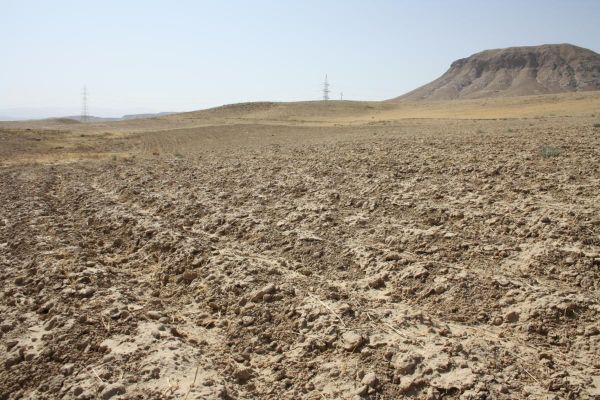
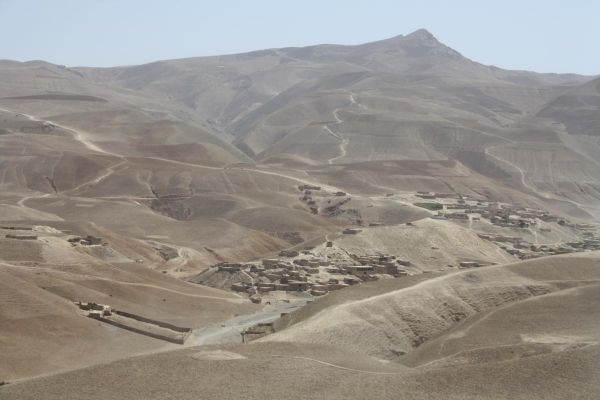
This year I have written several articles about the drought in Afghanistan and the resulting food shortages. The United Nations World Food Programme (WFP) will be providing aid to over 2 million Afghans in the drought zone during the coming months. This is on top of WFP’s existing mission to feed over 7 million Afghans who are hungry and malnourished. WFP depends on voluntary donations but so far is low on funding for its Afghanistan mission. Here is a series of photos taken by Silke Buhr of WFP which shows one of the drought hit areas.

This should be a wheat field, but nothing has been harvested from here this year. The poorest farmers don’t have any irrigation systems for their fields and rely entirely on rain – which came late and sparse in the winter of 2010/2011. In the 14 provinces of Afghanistan affected by the drought, farmers have lost an average of 80 percent of the rain-fed harvest. (WFP/Silke Buhr)

“I don’t remember it ever being this bad,” says Murat, the leader of the Tartarchal village in Khoram Sarbagh, Samangan province. “13 of the 15 wells in the village have dried up. 400 families are relying on two wells. There is no fodder for our animals. We have nothing left to sell or trade for food.” (WFP/Silke Buhr)

In the isolated villages of the drought-affected areas, people have to walk for hours or days to find water and fodder for their livestock. Many have sold their animals – their main source of income. Assessments show that some 2.8 million people have been affected by the drought. (WFP/Silke Buhr)

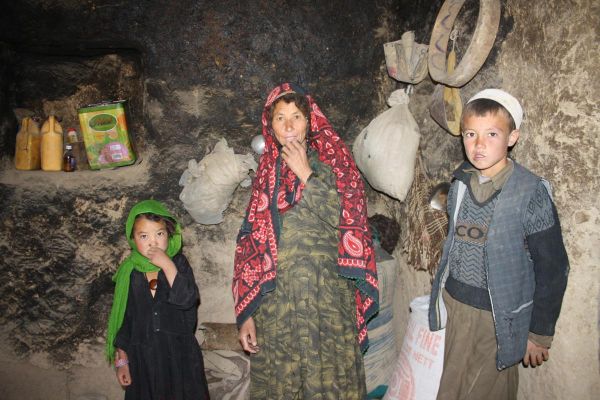
Mazuri-Bibi is in her kitchen with her two children. Here entire food stocks are here: a bag of wheat from last year’s harvest, which will last her a month. She is a widow and there is no work for her in the village, so she relies on the charity of her fellow villagers to get by. (WFP/Silke Buhr)

There is still some greenery in Aybak City, the capital of the Samangan province, but water level of the Aybak River is noticeably low. (WFP/Silke Buhr)

Young men in the drought-affected villages are leaving home to look for work to support their families. With the crop failure, there is little need for agricultural labour this year, so they have to travel to cities or neighbouring countries to look for casual work. (WFP/Silke Buhr)

WFP is preparing an emergency operation to assist some 2.4 million people with food and cash vouchers to help them get through until the next harvest. Assistance will begin with general food distributions to help people get through the harsh winter months, and then transition into food for work projects in the spring that will help people improve their food security by improving farming infrastructure, such as irrigation systems. WFP needs US$ 117 million to implement these plans. (WFP/Silke Buhr)

Leave a comment

Filed under global hunger

Armistice Day, World Peace, and Feeding the Hungry

One of the guns of Battery D, 105th Field Artillery, showing American flag which was hoisted after the last shot had been fired when the armistice took effect. Etraye, France. 11/11/1918Credits: National Archives

It was just a piece of paper. Yet on the morning of November 11, 1918, it meant peace.

For on that paper was a message from United States General John Pershing, ordering ceasefire on all fronts at 11 a.m. Germany had accepted the armistice. The Great War, or World War I, was over.

While the battlefields were filled with the most devastating firepower ever assembled, it was a small piece of paper that was the most powerful instrument of that day.

The announcing of the armistice on November 11, 1918, was the occasion for a monster celebration in Philadelphia, Pennsylvania. Thousands massed on all sides of the replica of the Statue of Liberty on Broad Street, and cheered unceasingly. Philadelphia Public Ledger. (National Archives)

Celebrations sprang up across the world. The Cincinnati Enquirer wrote, “It was Victory Day, and all Cincinnati helped celebrate this most momentous event in the history of the world.”

Americans fought and died right up to the armistice. Many who survived lived with the effects of shellshock . A whole world was in fact left shellshocked by the Great War, and millions of people were threatened with starvation and poverty as a result.

“Hunger knows no armistice,” a poster for the Near East Relief Committee stated. To tell the full story of World War I and its aftermath is to tell of hunger and great humanitarians.

The article in the Cincinnati Enquirer made it a point to mention the city’s impressive record providing relief throughout the conflict. In fact, in 1917 the paper printed the appeal of Frederick Chatfield, a leader for Belgium relief, who said one dollar a month would save a Belgian child from starvation and give him the extra food needed to keep him from disease. The newspaper even printed the names of those who sent in donations.

Cincinnati adopted the town of Hastiere in Belgium in order to help it rebuild from wartime destruction. Among the buildings damaged was a little church, built in the eleventh century, that was bombarded by shells.

The men and women who suffered through World War I deserved a lasting peace. However, the world was at war once again just two decades later. The Second World War would bring even more destruction than the first.

But on this Armistice Day, 2011, let’s remember that dream of world peace that should have followed the First World War, and not give up on that dream. The pursuit of world peace is the best memorial we can leave to the generation that sacrificed so much in the horror of the first World War.

Lands struck by war can recover. Interestingly, I recently received two messages from Belgium, one confirming that the country is a donor to the UN World Food Programme to help this agency fight hunger in conflict and disaster zones around the globe. The second message is from Hastiere. All is well there, and the little church is rebuilt-the Great War long in the rearview mirror.

Article first published as Armistice Day, World Peace and Feeding the Hungry on Blogcritics.

Leave a comment

Filed under global hunger, History, Uncategorized