Category Archives: Hunger in America

Interview: Shanon Chaput, Mason Food Pantry Volunteer

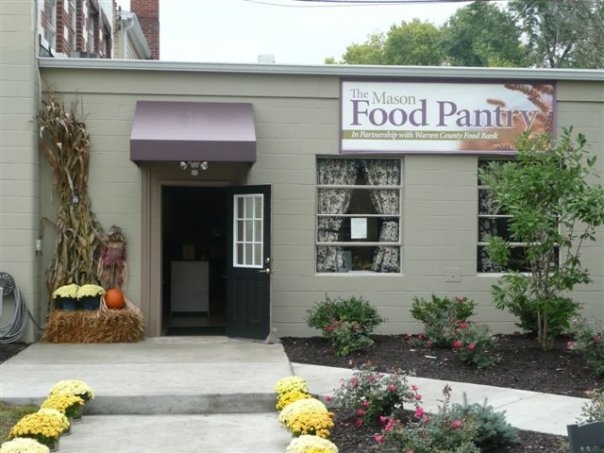
The Mason Food Pantry in Ohio has seen increased demand for food assistance in recent years. (Mason Food Pantry)

The Mason Food Pantry in Ohio has seen increased demand for food assistance in recent years. (Mason Food Pantry)

Hunger may be closer to your doorstep than you think. There are over 50 million Americans who suffer from hunger according to Feeding America.

This crisis can show up in any community. Volunteers play a large role in helping food pantries cope with the increasing need for help.

In the following interview, Shanon Chaput, a volunteer at the Mason Food Pantry in Southwest Ohio, shares her story about getting involved in the fight against hunger.

Tell us about the community where your food pantry is located.

The Mason Food Pantry is located at 406 Fourth Avenue in Mason, Ohio. People think of Mason as a very wealthy town and are surprised that the city actually has people in need of food assistance.

What is the level of hunger in the Mason area?

Quoting the Mason Food Pantry website: “In December 2008 the pantry served 247 people. In December of 2012 the pantry served 667 people.” These numbers represent the month of December, not the calendar year.

How did you decide to become a volunteer at the Pantry?

I chose to be a volunteer at the Mason Food Pantry because my kids were in high school and had their driver’s licenses and really didn’t need me to drive them around as much as I did when they were younger.

Tell us about some of the people who rely on the Pantry. What is their story?

Unfortunately some of the people who come to the food pantry are victims of their own poor decisions. Many more however are desperate for help because they have been fighting cancer and other ailments and have prescription medications that sap every spare penny. There are a lot of elderly people who frequent the pantry and I often wonder if their families know about their predicament.

How can someone help the Mason Food Pantry?

There are a variety of ways people can assist the food pantry. A food drive through their place of employment or church is most typical. Others donate overflow from their summer gardens or prefer to make cash donations. For more information on holding a food drive or making a donation you can contact the director Gina Brown by phone at 513-754-0333 or by email at info@masonfoodpantry.org

Leave a comment

Filed under Hunger in America

Send Congress a Message with National Food Drive

The Stamp Out Hunger Drive takes place Saturday, May 11th. You can leave canned goods out for your letter carrier to be picked up and delivered to local food banks. Credit: Stamp Out Hunger

The Stamp Out Hunger Drive takes place Saturday, May 11th. You can leave canned goods out for your letter carrier to be picked up and delivered to local food banks. Credit: Stamp Out Hunger

On Saturday, May 11, Americans can send a powerful message about ending hunger by taking part in the Stamp Out Hunger Food Drive. Leave non-perishable canned goods by your mailbox that morning, and they will be picked up by your letter carrier and distributed to local food banks.

Hunger is a silent but massive crisis facing over 50 million Americans. Lines of people are gathering at food pantries, which they depend on to get through difficult times. We have to make sure that food banks have enough supplies to meet the increasing demand.

The Stamp Out Hunger Drive offers a quick and easy way to support the food banks.

But more is needed. Congress must also be sent a message. Over the course of a year food banks cannot get by solely on the generous donations they receive from the community. They also need the help of the Federal Emergency Food Assistance Program (TEFAP).

Over 1,300 hunger relief agencies recently sent a letter to Congress urging support for TEFAP in the upcoming Farm Bill legislation. The letter stated that TEFAP “has not kept pace with growing demand and “has actually declined recently, making it difficult for the program and food banks to keep up with demand…In 2012, more than half of Feeding America food banks experienced declines in TEFAP [of] more than 40 percent.”

Congress has to get its priorities in order when making budget decisions. The American people can let them know that funding TEFAP is essential to holding the fort until we can get some significant economic recovery.

On May 11, the National Food Drive offers you a chance to feed the hungry in your community and send a powerful message to Congress that eradicating hunger needs to be a priority.

Article first published as Send Congress a Message with National Food Drive on Blogcritics.

Leave a comment

Filed under Hunger in America

Help Fight Hunger in America from Your Kitchen

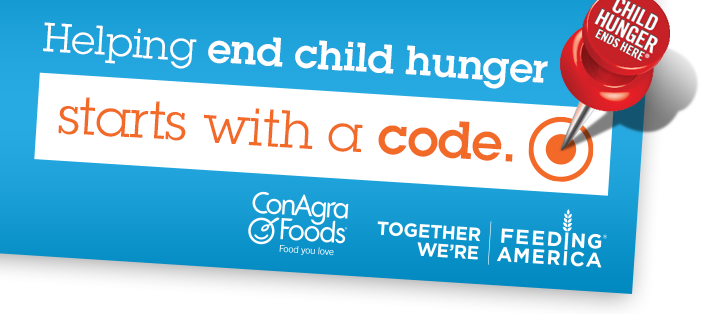
The Child Hunger Ends Here program is part of ConAgra Foods’ ongoing commitment to help end child hunger in America. For every code entered by 8/31/13, ConAgra Foods will donate the monetary equivalent of one meal to Feeding America Credits: ConAgra Foods

This week I have an Easter oped in the Des Moines Register with some free ways you can fight world hunger using Charity Miles and FreeRice. There is another way too using groceries you might already have in your own kitchen.

ConAgra Foods has placed special codes on many of its products. These include Chef Boyardee, Healthy Choice, Hunts Tomato Sauce, Peter Pan peanut butter, Marie Callender and many others. When you see a red push pin on the product label that says Child Hunger Ends Here, the eight digit code is right next to it in a blue box.

You then go to the web site Child Hunger Ends Here, enter the 8 digit code, click submit and ConAgra will donate 1 meal to Feeding America. This will support food banks across the country which are part of the Feeding America network. So far 741,545 codes have been entered since January 11th and the goal is to reach 3 million meals.

When you visit the site you can view information about hunger in your state. There is also a complete list of ConAgra products where you can find the codes.

It’s an easy way to help support food banks with products you might very well have in your kitchen right now.

Leave a comment

Filed under Hunger in America

Feeding America and Charity Miles

You can run, walk or bike and raise money for Feeding America using the Charity Miles free application

You can run, walk or bike and raise money for Feeding America using the Charity Miles free application

Do you walk, run, or bike? Do you plan to get started soon, but need a little extra motivation? Do you own a Smartphone?

If you answered yes to these three questions, then you could be exercising and supporting Feeding America, the nation’s largest domestic hunger-relief charity, at the same time. All you have to do is download the free app called Charity Miles. Every mile you run, walk or bike raises money for charities of your choice.

This past fall I began to see tweets from Feeding America and the UN World Food Programme about Charity Miles and combining fitness with philanthropy. My own form of exercise had been walking, and I didn’t own a cell phone, but in late September, I took the plunge. I bought a cell phone and decided to start running.

For me, I choose Feeding America as my charity to support during my runs. The Charity Miles app keeps track of your distance and posts the results to your Facebook page. For every mile you run or walk, 25 cents is donated to Feeding America. Biking raises 10 cents per mile. Every mile helps provide meals to people facing hunger through Feeding America.

Rome was said to be built on seven hills, but here in Western Hills, OH—where I live—it seems like there are 7,000 hills! Saying it is “hilly” here is an understatement. My running paths may be tough, but my mission is always clear—every step I take, and every mile I run, I can help people struggling with food insecurity. To date, people just like me have helped Charity Miles raise more than $19,000 for Feeding America.

Imagine how many meals could be raised if whole track teams starting using the Charity Miles app. Or, if every runner in this April’s Boston Marathon used Charity Miles.

Strength in numbers. This is the whole idea behind Feeding America’s Together We Can Solve Hunger campaign, launching at the beginning of February. Charity Miles is one of several ways you can help end hunger. Check back in with Feeding America at the beginning of February to find out how you can participate in the Together We Can Solve Hunger campaign.

It’s time to report for duty. There is enough food in the world for everyone. Let’s solve hunger—together!

Visit FeedingAmerica.org and CharityMiles.org for more information.

Originally published at Feeding America

Leave a comment

Filed under Hunger in America

End National Tragedy of Hunger

Donations are needed more than ever by food banks and pantries across the country (author’s photo)

This week I have a letter in the New York Times on fighting hunger in America. As President Ronald Reagan said, “If even one American child is forced to go to bed hungry at night, or if one senior citizen is denied the dignity of proper nutrition, that is a national tragedy.”

The need for public donations and a strong federal emergency food assistance program (TEFAP) has never been greater. Matt Knott, the president of Feeding America, says, “We have seen a tremendous rise in the number of people coming to the food pantries, soup kitchens and other emergency feeding centers served by Feeding America food banks since 2007, including many middle class families seeking assistance for the first time.”

Yet funding for TEFAP is not keeping up with the demand created by these difficult economic times.

Ohio, an election battleground state, has been hit hard, with 15.5 percent of its population facing “food insecurity” and 6.4 percent facing “very low food security,” “meaning that the food intake of one or more household members was reduced…because the household lacked money and other resources for food.”

Lisa Hamler-Fugitt of the Ohio Association of Foodbanks says, “Our hunger relief network is strained, and state and federal programs face the risk of funding losses that cannot be overcome.”

Kurt Reiber, president of Cincinnati’s Freestore Foodbank, says, “we have seen a drop off in the amount of food that we receive through the USDA’s TEFAP program this year as compared to prior years.”

Hunger forces families into difficult decisions. A Feeding America study showed that “34 percent of client households report having to choose between paying for medical bills and food.” It can create a spiraling effect of destruction for individuals, families, and entire communities. Health, educational performance, and work production all can suffer as a result of hunger, making it much harder for recovery.

With food prices expected to rise next year, this will put even more strain on those already in poverty. It will become more difficult for food banks to acquire a supply to help those in need.

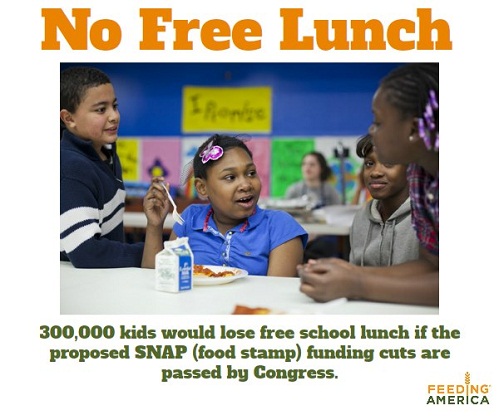
Despite this alarming hunger crisis, Congress is also planning reductions in food stamps which will eliminate free school meals for nearly 300,000 children in the U.S. School meals have been a safety net for children for decades and help boost learning. To lose them now would be catastrophic to America.

What can be done? Citizens can help by supporting their local food banks and many of their programs, including weekend backpack food programs for schoolchildren. Citizens can also write to their representatives asking they support hunger-fighting programs like TEFAP and food stamps.

Making your voice heard through words and actions is essential to ending the national tragedy of hunger.

Article first published as End National Tragedy of Hunger on Blogcritics.

Leave a comment

Filed under Hunger in America

What’s At Stake in Duck Regatta – The Tri-State’s Response To Hunger

The 18th annual Rubber Duck Regatta is this Sunday, September 2nd at 3pm. The ducks will be dropped from the Purple People Bridge into the Ohio River where they will begin a race along the Serpentine Wall. You can purchase a duck to compete in the race.

There is much at stake with this event, the largest single fundraiser for the Cincinnati Freestore Foodbank.

The Freestore provides emergency food aid for the hungry in the Tri-State. They depend on donations both from the public and the government. Hunger is a huge crisis in the area. A Feeding America study showed that in Hamilton County over 18 percent of the population suffers from hunger, or food insecurity.

This summer’s drought is having an impact on the cost of food, placing a further strain on the hungry and charities. However, the worst may be yet to come. The Department of Agriculture says the impact of food prices in stores “typically takes several months to occur, and most of the impact of the drought is expected to be realized in 2013.”

If food prices rise more people will fall deeper into hunger, having even less ability to put food on the table. Others who may be struggling to get by will also need food assistance. The Freestore will need all the support it can get to help those in need.

In addition, Congress is planning to scale back food stamps, which at a time of rising food prices and high unemployment is a recipe for disaster.

Fundraisers for the Freestore take on a great urgency when you consider the potential hunger crisis that is fast gathering.

The Freestore says, “For just $25 – the price of six ducks – the Freestore Foodbank can feed a family of four for an entire week.” You can help out the Freestore and buy a duck at their web site until 2 pm eastern time Sunday, September 2nd at www.freestorefoodbank.org


Leave a comment

Filed under Hunger in America

House Plan Eliminates Free School Meals for Nearly 300,000 Children

On Tuesday the charity Feeding America warned of the consequences of the House Agriculture Committee’s cuts to food stamps on the Farm Bill. The House committee currently plans to cut $16.5 billion from the Supplemental Nutrition Assistance Program (aka SNAP, or food stamps).

The cuts to food stamps would also mean that “nearly 300,000 children would lose their free school meals,” according to Feeding America. Children who were eligible for the free meals because their family received food stamps would lose access to a critical safety net.

Vicki Escarra, the president of Feeding America, asks, “What will households do to make up for this loss in food assistance? The vast majority of SNAP recipients have extremely low incomes – 20 percent of these households have no income at all…Proposed cuts would mean that some low-income Americans may literally go without food.”

The proposed cuts come at a time when 49 million Americans are suffering from hunger and unemployment rates are high.

For children and their families a free school meal is a safety net, especially in tough economic times. Since the early 1900s when Cincinnati school teacher Ella Walsh and other innovators started serving “penny lunches” to needy children, school feeding has evolved. By 1946 Harry Truman signed into law the National School Lunch Act leading to free or reduced-price lunches for children in need.

Today, child hunger is escalating in the United States and the loss of free school meals is a major blow to the fight to end hunger in America. Over 20 percent of children in the U.S. suffer from hunger, or “food insecurity,” according to Feeding America. Some counties in the U.S. have child hunger rates well over 40 percent.

Zavala County in Texas has over 48 percent of its children suffering from hunger, with Starr Country in Texas at just over 45 percent. Imperial County of California and Luna County in New Mexico are third and fourth on this list with 43 percent hunger rates. Yuma County in Arizona has 42 percent of its children suffering from hunger. The list goes on and on, with other counties well over 30 or 40 percent in child hunger rates.

Meanwhile the cuts to food stamps will mean an increased strain on already overstretched food banks. Escarra adds, “If these cuts to SNAP are passed, the food banks in Feeding America’s network will be even more overwhelmed with people seeking food assistance. The food pantries, soup kitchens, and other organizations that are served by Feeding America are already stretched to the limit.”

The full impact of this summer’s drought on food prices may not be felt for months. But if food prices become high over a significant period of time, then foodbanks will be stretched even more. The ranks of the hungry in the United States will struggle even more to find safety nets. Congress can change this by committing to ending hunger in America.

Brett Weisel, the director of advocacy for Feeding America, says that supporting federal anti-hunger programs isn’t about giving a handout. It’s about providing help up. So that those in need can achieve more. When people in our communities don’t have enough food to get through the day, it costs us all. Hunger creates health problems. Children struggle to learn. Workers are less productive. Opportunities are lost.”

Article first published as House Plan Eliminates Free School Meals for Nearly 300,000 Children on Blogcritics.

Leave a comment

Filed under Hunger in America

Freestore, Public Library Seek to Escalate Fight Against Hunger in Cincinnati

The Power Pack provides children food for weekends during the school year. (Freestore Foodbank photo)

The Cincinnati Freestore Foodbank and the Cincinnati Public Library each want to expand child feeding programs throughout the city. Their proposals follow a Feeding America study that showed over 25 percent of children in Ohio suffer from hunger or food insecurity. Within Hamilton County, Ohio the child hunger rate is just above 21 percent.

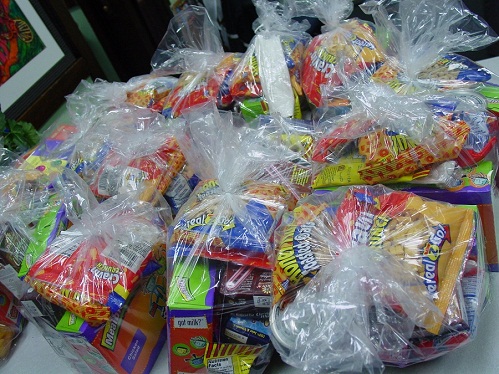
The Freestore wants to expand its school year Power Pack program for children. The Power Pack contains 9-12 non-perishable food items like cereal, fruit cups and pasta. It is provided to children so they can have food at their home over weekends when they cannot access the federal school lunch and breakfast program. It’s a way to ensure children do not suffer from hunger.

Kathy Greenberg of the Freestore says, “In the 2011-12 academic year, Power Packs were provided to the neediest 10% of our children in poverty in 90 schools. For the upcoming 2012-13 academic year, we will deepen our reach to 15% since the need continues to grow.” The schools are selected based on how much they participate in the federal free and reduced-price lunch program, which is a safety net for America’s kids established in 1946. Interestingly, some of the earliest school feeding in the country was pioneered by a Cincinnati school teacher named Ella Walsh in 1908.

The Cincinnati Public Library is also seeking to help out during this school year in ending child hunger. Diane Smiley, the Youth Services Coordinator for the Library, says “we’re looking at developing a community partnership that would provide free and healthy afterschool snacks to kids at our Homework Help sites…I’m hopeful that it will grow into a reality and maybe as early as the 2012-13 school year.”

This summer the Public Library is working with the Freestore to provide summer feeding as well as a backpack program so children can have a food supply for the weekends. The programs run by the Freestore and the Library will likely become even more significant with the rise in food prices resulting from the drought that has struck much of the country. Families will be in extra need of these food safety nets.

See also:

Ohio has childhood hunger crisis

Summer Feeding Means Summer Learning

Backpacks Fight Hunger in America

Article first published as Freestore, Public Library Seek to Escalate Fight Against Child Hunger in Cincinnati on Blogcritics.

Leave a comment

Filed under Hunger in America

Summer Feeding Means Summer Learning

This summer the Cincinnati Public Library is hosting summer feeding programs at many of its branch libraries (Cincinnnati Public Library photo)

This summer the city of Cincinnati is trying to ensure that no child goes hungry. This is especially critical with Feeding America‘s recent report that over 25 percent of children suffer from hunger or “food insecurity” in Ohio.

Free meals for children ages 1-18 are being distributed at a number of sites across the city including Cincinnati Public Library branches.

Lisa Hamrick, the manager of the North Central Library branch, says, “I believe we have been incredibly successful in serving lunch to children who might otherwise not eat throughout the day. In fact, many of the children coming to eat lunch arrive at the library when we open at 10:00 (they are actually standing outside waiting for the doors to open) and many days they don’t leave until after 6:00 pm – occasionally they stay until we close at 9:00 pm.”

The North Central branch has served 625 meals to children so far this summer. In fact, according to Hamrick, children are discovering new foods like pita bread, green pepper slices, pears and liking them, a possible exception being hummus.

The US Dept of Agriculture, Cincinnati Public Schools, the Freestore Foodbank, Cincinnati Cooks, and other partners are providing the food for these library feeding programs.

Here’s some feedback on how the library summer feeding plan is going throughout the city. Diane Smiley, the Youth Services coordinator for the Public Library says, “The results are still mixed at this point. Several of our locations are drawing sizable numbers of children while others are having smaller numbers than we’d like so far.”

As is the case with the North Central branch the summer meals are leading to increased use of libraries. Smiley says, “many of our branches participating in the summer lunch program are encouraging the kids to also participate in the Library’s annual summer reading program.”

Debby Carrico, the manager for Elmwood Place library branch, says, “We have noticed an increase in use of the library both for circulation and use of our computers. Program attendance has gone up some as well, since they usually follow the lunches. ”

The Elmwood Place branch is seeing around 10-12 children daily receive the meals. Carrico adds, “Parents sometimes come with the children to help supervise and this is a plus because we rarely see the parents at this branch as they are working several shifts to survive financially. This has been a GREAT service to this neighborhood.”

Drew Pearson, the branch manager for the Bond Hill Library branch says, “we have seen increases in library use as well as Summer Reading participation. This summer our lunch program has averaged 18 participants a day…..Many of the children and teens who have enjoyed the free lunch have listened as staff promoted the opportunity to win prizes for reading. The grand prizes this summer have been very enticing.”

The link between summer food and reading and learning is strong. Tony Fairhead, the director of Childhood Food Solutions (CFS), works to bring summer feeding to hungry children in the Cincinnati area. CFS provides food to students at the Roll Hill Academy. Fairhead says, “Without summer food, we can’t really imagine the children will be able to return to school ready to learn. I think that summer food explains why we have seen this improvement from 25% to 76% for the vitally important third grade reading proficiency.

Fairhead explains, “Teachers provide the academics and Childhood Food Solutions, along with partners like Walmart, makes sure the kids have the nourishment they need during the summer break. We have been tracking reading and math proficiency and test achievement has been increasing since CFS began providing summer food. At Roll Hill, third grade reading proficiency has increased from 25% to 76% since summer food began in 2008.”

Fairhead says these results led the assistant principal at Roll Hill to exclaim two years ago, “Academics + Food = Achievement!”

The charity our Daily Bread, located in downtown Cincinnati, does not host an official summer feeding site but they do have a program called the Kids Club. It’s an after school program for children ages 5-13 and it runs during the summer as well. Children can get a meal, computer access and do arts and crafts projects. The charity relies on donations from the public to offer these programs.

Natalie Fields, the manager of the Deer Park library branch, says, “We serve an average of 10 children a day. Happily, some of those children are staying to attend library programs, participate in the Library’s Summer Reading Program, and use the Library’s resources. I’d say our overall library use and program attendance have seen a small increase so far as a result of the Summer Lunch Program.

Joan Luebering of the Sharonville branch says, “we do see a few new faces” using the library since the summer feeding began. Ned Heeger-Brehm of the Groesbeck branch library notices some new patrons as well since the start of summer feeding. Denise Scretchen of the Deer Park branch library notes the positive impact of the summer feeding with about 15-20 children attending every day it’s offered.

Liz Anderson, the children’s librarian at the Reading Branch Library, says they are serving about 10 children a day with meals. On one day they had as many as 28 children attend. She has noticed some increased use of the library especially when parents arrive with their children.

Frank Dugan, the manager of the Corryville Library, said that more kids came to library programs as a result of the summer feeding while it was offered. The Corryville branch, as well as some others, discontinued their summer feeding for lack of attendance.

There are issues that need to be addressed to determine how future summer feeding should take place and where. It must be determined why low attendance might occur at one site but not another. In some cases it may just be a case of awareness of the summer feeding availability.

With the summer heat though sometimes libraries lose out on attendance. For instance the Pleasant Ridge library branch had small figures of attendance for summer feeding. David Dukart, the manager of the Pleasant Ridge Library, said that they fed 20 children on a few days but most others they were in the range of 4-8 in attendance. However, the nearby Pleasant Ridge Pool’s summer feeding site served 256 meals in the first week of July alone. Regardless of where the meals are offered its vital they are available.

With school out children in need lose access to the free and reduced prices lunches offered through the national lunch program. But distribution of food during summer becomes a problem with schools closed. With hunger on the rise in Cincinnati and throughout the country it becomes vital to make sure safety nets are in place for the vulnerable.

The need for safety nets like school feeding will become even more important with the expected increase in food prices from this summer’s drought. If you can combine this need with learning it makes for a productive combo.

As Smiley says, “We hope to feed both their bodies and their minds!”

Hamrick says, “as challenging as this has been for us, it is also rewarding to have kids we know wouldn’t eat lunch, let alone a nutritious lunch, eat and leave with a smile because they are full and content.”

Starting this week the North Central branch and others will also be adding a “backpack” component. This is a special package of non-perishable food that children can take home to use over the weekends when the summer feeding at the library is not available.

Leave a comment

Filed under Hunger in America

Cincinnati Libraries Starting Food Backpack Program

Seven Cincinnati Public Library branches will be giving out weekend backpacks of food to children as part of the summer feeding program. (Deer Park Library branch photo)

Seven Cincinnati Public Library branches will be offering backpacks of food for children to take home on weekends. The backpack program starts this Friday, July 20th.

The weekend backpack program is in addition to the summer feeding taking place at these library sites on weekdays. During the summer needy children lose access to the school year lunch and breakfast programs. Summer feeding is needed to fill in the gaps especially with child hunger rates exceeding 25 percent in Ohio.

The Freestore Foodbank is providing the funding for the weekend backpack program. For more information contact the participating libraries listed below:

Deer Park Public Library (3970 E. Galbraith Rd. Cincinnati OH 45236) 513-369-4450

Elmwood Place Public Library (6120 Vine St. Cincinnati OH 45216) 513-369-4452

Forest Park Public Library (655 Waycross Rd. Cincinnati OH 45240) 513-369-4478

Groesbeck Public Library (2994 W. Galbraith Rd. Cincinnati OH 45239) 513-369-4454

North Central Public Library (11109 Hamilton Ave. Cincinnati OH 45231) 513-369-6068

Reading Public Library (9001 Reading Rd. Cincinnati OH 45215) 513-369-4465

Sharonville Public Library (10980 Thornview Dr. Cincinnati, OH 45241) 513-369-6049

Leave a comment

Filed under Hunger in America