Category Archives: History

A Ghostly Tale Near the Ohio River

100-4602This week at the College of Mount St. Joseph in Ohio, I was helping to arrange a fundraiser to benefit the YWCA and global hunger relief efforts. Not far from the campus, located in Delhi Township, is the Ohio River.

You can see the river from certain vantage points looking down from the Mount. And since it’s Halloween, it’s worth mentioning a tale about a graveyard hidden away in the woods.

Many years ago, when nightfall came, residents of Delhi reported mysterious lights and the eerie tune of a fiddler coming from the graveyard. So scared were the residents that no one dared go to the cemetery. Was this a ghost? No one knew. Would anyone ever know?

In the 1960’s, a Mount St. Joseph professor, Cecil Hale, appeared to have found the answer. Henry Darby (1781-1852), a prominent abolitionist, lived right near the site of the graveyard.

scan0041Hale found out the ghost reports started during the time of the Underground Railroad. This was the secret network that guided slaves to freedom, and was extremely active in the years leading up to the Civil War.

Hale believed the strange lights and music at the graveyard were signals to slaves across the river in Kentucky that it was safe to cross. He wrote a play called the Legend of Fiddler’s Green which tells this story.

scan0040The Ohio River was indeed a major route on the Underground Railroad. So active was the area that the Underground Railroad Freedom Center was eventually located in Cincinnati.

Was this ghostly legend one way that residents of Delhi were secretly working to help operate the Underground Railroad? It appears reasonable that the ghostly mystery is indeed solved. Wait! There are some lights coming from over the hill from the direction of the college. And a strange eerie tune. Oh Great!

The global hunger relief fundraiser is to benefit the Catholic Relief Services school feeding program in Sudan, the Aschiana Foundation, and Edesia, a non-profit organization which produces plumpy’nut. For more information please write here.

Article first published as A Ghostly Tale Near the Ohio River on Blogcritics. (article first published in October 2010)

1 Comment

Filed under global hunger, History

Friendship Trains, Global Hunger and Plumpy’nut

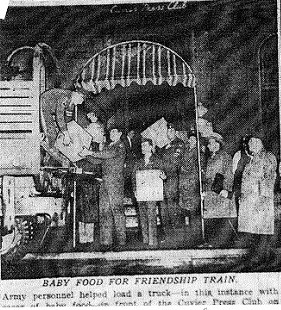
Baby Food for the Friendship Train in 1947.

A group of Army personnel went on a special mission in downtown Cincinnati, Ohio in the fall of 1947. This group of soldiers was helping to load boxes of baby food onto a truck. The following day a train was to roll into Cincinnati to pick up the food. Its destination: Europe.

World War II was over, but the peace was not yet won. Millions of people in the war-devastated countries were suffering from food shortages. Harsh winters and drought had followed the war. Reconstruction still had a way to go. Children were at severe risk of stunted growth if they could not get the right nutrients.

Americans took action. The Friendship Train, as it was called, went from coast to coast picking up food like the baby formula. One of the great achievements in American history was helping to rebuild Europe after World War II, and the Friendship Train was part of this.

The world scene now is no different, in the sense that food is needed to win the peace. If children are hungry, action has to be taken.

What better way to do so than a Friendship Train of plumpy’nut heading toward the areas of suffering and conflict around the globe? Plumpy’nut is the special peanut paste that rescues children from life-threatening malnutrition. The key is to get plumpy’nut to every child at risk from malnutrition so they can be saved.

Low funding and lack of political will are often what prevents this. While there are many great efforts ongoing among the public to raise funds and promote plumpy’nut, getting all the political leaders on board is essential. It has to be a team effort, as Josette Sheeran, the World Food Programme’s director, often points out.

A Friendship Train of plumpy’nut today could rescue every malnourished child whether it’s in East Africa, Sudan, Democratic Republic of the Congo, Yemen, Afghanistan, Guatemala, or any of the other suffering countries. It’s critical to reach the children because without nutrition in the first thousand days of life, they suffer lasting physical and mental damage.

It is unacceptable that low funding prevents foods like plumpy’nut from reaching malnourished children. Food aid is relatively inexpensive when it comes to foreign policy spending. Global hunger-fighting programs make up less than one-tenth of one percent of the entire U.S. federal budget.

So let’s get the Friendship Train rolling. All aboard with plumpy’nut. Save lives and help an entire generation of children to be healthy and strong enough to overcome the challenges their country may face.

Article first published as Friendship Trains, Global Hunger and Plumpy’nut on Blogcritics.

Leave a comment

Filed under advocacy, Books, drought, East Africa, East Africa drought, Europe, global hunger, History, malnutrition, plumpy'nut, School feeding, World Food Programme, World War II

October 5th, 1947 – A Television First To Save Europe From Starvation

President Harry Truman addressed the nation about the hunger crisis facing Europe (photo courtesy of the Truman Library)

On October 5, 1947 the first presidential address ever televised from the White House was delivered by Harry Truman. The President discussed the urgent hunger crisis facing Europe and how Americans could help through food conservation.

At that time Europe was struggling in its recovery from World War II. Rebuilding from the devastation was difficult enough, but a harsh winter followed by a drought during 1947 ruined crops. Food shortages were rampant and Europe needed food to survive and rebuild.

President Truman said of Europe, “The nations of Western Europe will soon be scraping the bottom of the food barrel. They cannot get through the coming winter and spring without help–generous help–from the United States and from other countries which have food to spare.

“I know every American feels in his heart that we must help to prevent starvation and distress among our fellow men in other countries…. Their most urgent need is food. If the peace should be lost because we failed to share our food with hungry people, there would be no more tragic example in all history of a peace needlessly lost.”

Food from the United States helped Europe get through the winter of 1947-1948 and helped set the foundation for the Marshall Plan. It was this initiative that brought about Europe’s recovery.

In addition to President Truman, other speakers for the program included Secretary of State George C. Marshall, Secretary of Agriculture Clinton P. Anderson, Secretary of Commerce W. Averell Harriman, and Charles Luckman, who was the Chairman of the Citizens Food Committee.

Read the full text of President Truman’s October 5, 1947 statement.

Listen to George Marshall’s remarks on October 5, 1947. (audio is faint)

Read how Americans fought hunger in Europe during the Fall of 1947:

Take in a Silent Guest this Thanksgiving (The 1947 Silent Guest Program to Buy CARE packages)

Transformational Leadership in Tackling Global Hunger Crisis (The Friendship Train of 1947)

Old Soldiers Never Die, They Just Fade Away…..And Fight Global Hunger (CARE Packages after World War II)

Leave a comment

Filed under drought, Europe, global hunger, Harry Truman, History, malnutrition, peace, World War II

Interview: Kate O’Malley of Irish Americans in Support of Somalia

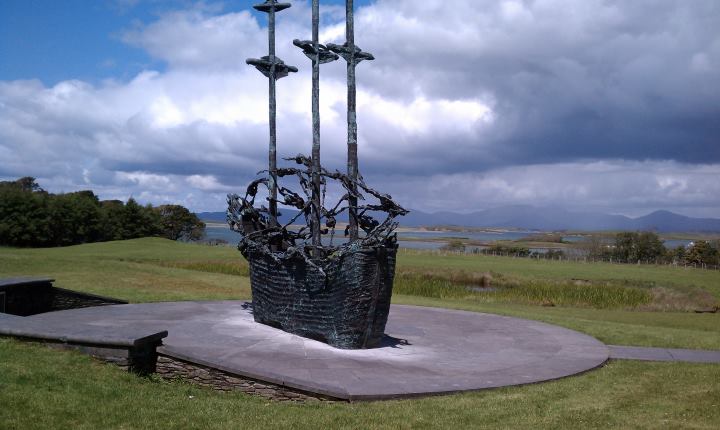
The Irish National Famine Memorial Coffin Ship in County Mayo. Erected "To honor the memory of all who died, suffered and emigrated due to the Great Famine of 1845-1850, and the victims of all famines." (photo courtesy Irish Americans in Support of Somalia)

The drought in East Africa is so massive it threatens over 13 million people with starvation. That is almost as many people as the population of Maryland and Virginia combined.

The hardest hit area is conflict-torn Somalia where UNICEF says that a child dies every 6 minutes. Aid agencies are rushing to save lives. Millions of people have been displaced from their homes in the desperate search for food and water.

But will you see this story in the news? Not often, as reported by the Pew research center. Kate O’Malley of Rhode Island noticed this lack of media attention and took action to do something about it. She started a group called Irish Americans in Support of Somalia. She recently took time to talk about this group and how it connects the past with the present crisis in East Africa.

What gave you the idea to form Irish Americans in Support of Somalia?

I felt frustrated about the lack of media coverage about what was happening in Somalia. My husband is from Ireland and I am Irish American and we have two daughters who have grown up sharing time between both places. We were raised with stories of the bitter devastation of the Great Irish Famine of 150 years ago, when millions perished from starvation or were lost to the coffin ships as they fled in desperation. We felt honoring our history by helping famine victims today was a compelling connection that would resonate with others, so we started this campaign to spread awareness and raise funds to aid in the biggest humanitarian disaster of this century. What’s happening in the Horn of Africa in 2011 is a complex mess and far away, but we hope people, Irish or not, will consider this: In 1831 tens of thousands Native Americans were forcibly relocated with more than half dying on the march now known as the Trail of Tears. Just sixteen years later, despite their suffering and because they understood what starvation meant, members of the Choctaw Nation sent $710 to the starving in Ireland, a huge amount at the time. To this day the Irish are grateful. This history should inspire people to realize that if they could do that then, surely we can each do something today for the starving in Somalia and East Africa.

Do you have fundraising events planned?

Since the start of this campaign a few weeks ago, our focus has been to grow this all-volunteer grassroots campaign through online efforts to spread the word. Just like on St. Patrick’s Day, when everyone can be “Irish”, we’re inviting everyone to “like” our Facebook page or to email us at irishamericansforsomalia@gmail.com .

We’re providing information on how to donate, highlighting compelling historical connections and offering updates about what is happening in East Africa. We’re hoping people will share this information with their own networks, family and friends. This week we met with the Rhode Island Irish Famine Memorial Committee who spearheaded the building of a beautiful memorial to the victims of the Great Irish Famine. As a living memorial, fighting hunger today has always been a part of their mission. They plan to present a donation at an October 9th ceremony at the Memorial in Providence and to encourage their many member Irish American organizations to get behind this effort. Folks should stay tuned for information on upcoming events.

Where will the funds raised by Irish Americans in Support of Somalia be distributed?

We are supporting Edesia, a non-profit, operating its Providence, RI factory around the clock to produce enough Plumpy’nut, to feed 50,000 children a day in the Horn of Africa. Plumpy’nut is designed to treat severe malnutrition in young children who can make a full recovery in just 4 – 8 weeks. Just $50 provides a full life saving treatment. Edesia supplies its products at cost to such organizations as USAID, UNICEF, World Food Programme and Save the Children. Donations help them lower the cost even further so their partners can buy and distribute larger quantities. I visited the plant to see production, learn how it’s being distributed and to meet the people behind Edesia. They’re creating local jobs, they’re saving lives globally, and they need our help now. We’re asking people to donate to them directly at the Edesia donation page and to please write Irish Americans in Support of Somalia in the purpose line of the donation page or on the memo line of their check. This way we can track total donations and determine how effective we’re being.

How can someone get involved with Irish Americans in Support of Somalia?

Helping to spread the word, through Facebook, email, or conversations with family and friends is key to launching this effort and getting people to start paying attention to what’s happening in the Horn of Africa. Our effort is not limited to just Irish Americans, and we are hoping to work with as many individuals and organizations as possible to get the message out. We hope such groups will consider hosting events for this cause, making appeals to their members, or distributing information at their regularly scheduled activities. We have print and electronic materials we can offer. We also ask that people help us with networking and with media contacts, particularly in the Irish American press. If they can make a donation in the name of Irish Americans in Support of Somalia at Edesia Donation Page , all the better.

Article first published as Interview: Kate O’Malley of Irish Americans in Support of Somalia on Blogcritics.

Leave a comment

Filed under advocacy, drought, East Africa, East Africa drought, Edesia, famine, global hunger, History, Ireland, Kenya, malnutrition, plumpy'nut, social media, Somalia, The Roadmap to End Global Hunger, UNICEF, World Food Programme

Food for Peace, CRS Working to Feed the Hungry in East Africa

President Reagan called the U.S. Food for Peace program an “instrument of American compassion.” This government program has a tradition of feeding the world’s hungry. It saves lives. It represents the very best of America.

And we see it in action again with the recent Food for Peace donation of $64 million to the charity Catholic Relief Services (CRS). The food will be used as part of a relief mission to drought-stricken Ethiopia.


Ronald Reagan said “people who are hungry are weak allies for freedom.”  Today, Food for Peace is threatened with severe budget cuts by Congress. (photo courtesy of the Ronald Reagan Library)

Ethiopia is suffering food shortages from failed crops. For the food that is available, prices are high for many Ethiopian families.

Catholic Relief Services is feeding about a million people there as part of the Joint Emergency Operations Plan. The Food for Peace donation goes to this joint mission.

The charities CARE, Save the Children US, Save the Children UK, World Vision, Food for the Hungry Ethiopia, and the Relief Society of Tigray will assist in the distribution of the food.

Around a million people are being given a lifeline, thanks to Food for Peace, CRS and the other charities working together. In addition, CRS and other aid agencies continue their work to build up the resilience of farmers to drought. This effort has helped make Ethiopia less vulnerable to the drought, compared to parts of Somalia where aid agencies have had far less access in recent years.


Women collect water in a region of Ethiopia where CRS has been working on drought mitigation projects since 2003. Photo by KL Dammann/CRS

Food for Peace, which started during the Eisenhower administration, has come under pressure recently from Congress. Members of the House of Representatives have proposed cutting most, if not all, of the funding for Food for Peace. Yet hunger-fighting programs are a very tiny part of the overall budget and cutting them makes no dent in the federal deficit.

CRS is working with its partners throughout East Africa to bring relief from the massive drought that struck the region. This includes aid to Somali refugees in Kenya, as well as support to host communities there which are also suffering from the widespread drought. In Somalia, within the areas of Mogadishu and Baidoa, CRS is helping 28,000 displaced persons with health and nutrition services.

In addition CRS is providing food, water, and livelihood support to 35,000 drought-affected Somalis in the south-central part of the country. Their work involves not only emergency aid, but also projects for building up resistance to future droughts.

David Orth-Moore of CRS says, “While working to alleviate the immediate human suffering, CRS recognizes the importance of long-term drought mitigation programs, and we’ve seen that some communities are faring better now during this current drought because of those projects.”


You can help Catholic Relief Services by donating to their East Africa Emergency Fund

Article first published as Food for Peace, CRS Working to Feed the Hungry in East Africa on Blogcritics.

Leave a comment

Filed under Africa, Catholic Relief Services, drought, Dwight Eisenhower, East Africa, East Africa drought, global hunger, History, Kenya, malnutrition, Save the Children, Somalia, The Roadmap to End Global Hunger, World Vision

Obama, Congress Should Copy JFK’s First Days in Office and Protect the Hungry

President Kennedy supported food aid programs at home and abroad

Hunger is on the offensive, even in the United States. The Department of Agriculture reports that 49 million Americans struggle to get food. Worldwide, nearly one billion people suffer from hunger, and child malnutrition is rampant in East Africa, Afghanistan, Yemen and many other areas.

President Obama and the Congress, as they grapple with the federal budget, also need to protect the hungry. They can take a page from President John F. Kennedy’s playbook for his first days in office, back in 1961.

Kennedy’s first act as president was to order food aid to hungry people in the U.S., particularly in West Virginia. Unemployment was high, and it was critical that food support be given during a time of great strain on the people there. Kennedy’s plan involved distribution of food stamps to the needy. And it worked.

Kennedy reported on this aid in 1962, stating, “Low income families are receiving better diets…Retail food store sales in these areas increased 8 percent in dollar volume. There have been savings in distribution costs and benefits to the economy of the food stamp communities.”

Also the Kennedy administration worked on improvements to the national school feeding program. This is a vital safety net to ensure that children in impoverished families do not suffer from lack of nutrition.

Today, protection is needed for families all across America, where unemployment rates are skyrocketing. Demand for food banks is growing. Many Americans face a struggle to afford food. But support from the federal government is dwindling, with programs like the Emergency Food Assistance Program (TEFAP) facing reduced funding levels. Emergency food banks across the country count on TEFAP for supplies.

Vicki Escarra of Feeding America says, “As Congress and the administration look for ways to reduce the federal deficit, it is more critical than ever to protect funding for nutrition programs that provide the first line of defense against hunger in America.”

President Obama and the Congress should expand food aid for hungry Americans. Programs like TEFAP, food stamps, the national school lunch program, including summer feeding, need to be emphasized. Like JFK on his first days, they need to do what is right for the American people.

But also like JFK, Obama and Congress have to think globally and consider our national security interests abroad. Fighting hunger overseas is an essential part of our foreign policy. JFK realized this. His predecessor, Dwight Eisenhower knew this when he signed Public Law 480, which became known as Food for Peace. This program is the primary tool for the U.S. in fighting hunger abroad.

President Kennedy, in his second executive order, created a White House office for Food for Peace. This bolstered the existing program and made fighting hunger a top priority, where it also needs to be now.

Today, the U.S. should expand its food for peace program, not reduce funding as proposed in budgets put forward by Congress earlier this year. Hunger-fighting initiatives are relatively inexpensive and do not contribute to our debt problems. Moreover, they are essential in terms of promoting stability and economic development abroad.

The U.S. simply cannot afford to retreat from fighting the menace of hunger. There is tremendous suffering ongoing in East Africa in the famine and drought zone. In Afghanistan, where we are trying to win the peace, a hunger crisis is growing, and food aid programs face huge budget shortfalls. Likewise, in Yemen hunger is on the rise while the World Food Programme and UNICEF remain low on funds to combat the scourge.

One area where the U.S. really needs to step up is in child feeding. When Kennedy became president, he named George McGovern the Food for Peace Director. McGovern led a vigorous campaign against hunger, including school meals for millions of children in Brazil, South Korea, India, Poland and other countries. Many of these nations developed their own national school feeding program from this effort.

Today, we need that same kind of resolve as funding for school lunch programs in developing countries remains low. In Afghanistan, for instance, reduced funding for the World Food Programme forced about 500,000 children to lose their school meal ration. That is hardly an epitome of a reconstruction going well.

In Haiti, support for school feeding is critical to turning the corner on rebuilding the country from the earthquake. We do not want to cut funding now. Food for Peace as well as the McGovern-Dole school lunch program need increased funding.

Food aid programs have historically received bipartisan support. They should today as well. For the future of the United States and that of other countries rests on the most basic foundation–food and nutrition. Food for Peace must remain a top priority for the current government as it was the day President Kennedy took office fifty years ago.

Article first published as Obama, Congress Should Copy JFK’s First Days in Office and Protect the Hungry on Blogcritics.

Leave a comment

Filed under Afghanistan, drought, Dwight Eisenhower, East Africa, East Africa drought, global hunger, History, Kenya, malnutrition, Middle East, plumpy'nut, School feeding, The Roadmap to End Global Hunger, UNICEF, World Food Programme, Yemen

Senate Urged to Support Food for Peace Program

This week the Senate will be considering how much funding to give to the Food for Peace program, our main tool in the fight against global hunger. It’s vital the Senate give full support to Food for Peace.

For if you are looking to have a cost-efficient and effective foreign policy, then look no further than Food for Peace. We know this plan works.

Food for Peace was essentially born out of the World War II era where the famous motto was, “Food will win the war and write the peace.” Every CARE package, Friendship Train, or people taking in a silent guest at their home on Thanksgiving was food for peace in action.

The Marshall Plan to rebuild Europe stood on a foundation of food. These post-war actions paved the way toward the official launch of Food for Peace (Public Law 480) in 1954 by President Dwight Eisenhower. President Kennedy continued and strengthened Food for Peace, showing the bipartisan support for the initiative.

But today there is a different tune. Amid all the talk of budget cuts, Food for Peace has been placed on the cutting block. Some members of the House have proposed eliminating all funding for the program. Others want to keep funding levels at 1.69 billion, which is relatively inexpensive compared to other foreign policy expenditures.

Hunger-fighting programs make up less than one tenth of one percent of the federal budget. In short, Food for Peace is not the cause of our spending problems.

What Food for Peace does is it combats hunger and gives hope for peace and stability. Peace cannot be founded on empty stomachs. Whether it’s Afghanistan, Yemen, Somalia, or Haiti, they all share one thing in common: the need for food for healthy generations of children.

The Senate could cut Food for Peace and its partner program Mcgovern-Dole just to save a few dollars. But that would be ill-advised foreign policy.

What Eisenhower said in 1959 holds true today. Food is essential so that “our bodies may be fit for every task and duty and service; our minds free from the fear of hunger; our eyes undimmed by the tragedies of famine, searching out new horizons; our aspirations not frustrated by failure of crop or catastrophe of weather.”

The world’s nearly 1 billion hungry people wonder each day where their next meal will come from. We cannot just skip over this crisis because of tough times domestically, for withdrawing from the fight against hunger will pose grave consequences.

Reducing food aid will threaten millions of lives and will help create desperation among people that will lead to a dangerous instability. The chaos caused by hunger is powerful enough to topple governments.

The Senate needs to stand united and fight global hunger with Food for Peace.

See the World Food Program USA take action page for supporting Food for Peace.

See Food for Peace and the World Food Program.

See also Bringing Dems and Reps Together over Food (Bakersfield Californian 1/9/2011)

Article first published as Senate Urged to Support Food for Peace Program on Blogcritics.

Leave a comment

Filed under Afghanistan, Africa, drought, East Africa drought, global hunger, History, malnutrition, Middle East, The Roadmap to End Global Hunger, World Food Programme, Yemen

Food for Peace and the UN World Food Program

Food for Peace is the primary tool by which the United States fights global hunger.See below President Dwight Eisenhower proclaiming the Food for Peace program (originally titled Public Law 480 in 1954)

The U.S. Food for Peace program opened the door to an international version, The United Nations World Food Program. Listen to President John F. Kennedy announce the creation of the UN World Food Program

Now today the two programs, U.S. Food for Peace and the UN World Food Program work together to fight global hunger.

See an example here where U.S. Food for Peace made donations to the UN World Food Program

Food for Peace makes donation to the Central African Republic

U.S. Food for Peace To Aid Conflict Victims in Cote d’Ivoire and Liberia


1 Comment

Filed under Africa, Dwight Eisenhower, global hunger, History, The Roadmap to End Global Hunger, World Food Programme

Thoughts On Norway and the Famine in Somalia

How will history remember the summer of 2011? You could make a long list of events. Certainly at the top are the famine in East Africa and the mass shootings that took place in Norway.

These two tragedies intertwined when representatives from Norway attended an East Africa donor conference in July, right after the shootings.

Arvinn E. Gadgil of Norway’s foreign ministry said, “It was an astonishing moment. In a meeting about the potential death of 12 million people, Norway got a standing ovation for a full minute. I asked our UN ambassador who said that he had not seen anything like it during his 30 years in the UN system. People all around the world were clearly shocked by the events in Oslo.”

Norway could have turned inwards in the wake of their own tragedy. They could have put aside areas of international concern. They could have stopped reaching out, for at least the time being. That did not happen.

Instead, Norway went to work to save lives in East Africa. At the end of July, two planes from Norway touched down in Somalia to distribute emergency rations for 50,000 hungry Somalis. The Norwegian Refugee Council (NRC) distributed the food in the Mogadishu area.

On Saturday July 31, two AN-12 planes from Norway landed in Mogadishu loaded with almost 28 tons emergency rations. Credits: Gunhild Forselv/NRC

Marianne Alfsen of NRC wrote, “People are dying as we speak. The quicker we act, the more lives can be saved. More shipments by plane are being planned, while emergency food is also on its way by sea.”

The Norwegian government continued its donations to UN agencies to help them fight hunger. Dena Gudaitis of the UN World Food Programme says, “WFP is incredibly grateful to Norway for providing a generous and flexible contribution to WFP on a yearly basis for our overall relief operations. This year, WFP has allocated US$ 5 million from Norway funding to operations in Kenya and Ethiopia.”

This outpouring of generosity is a way of life for Norway. It can be seen in the actions of the government and charitable agencies. It’s also seen in the acts of individuals.

When Hanna Helmersen penned her memoir War and Innocence, she characterized the generosity of her home country during the Nazi German occupation. Children reached out to the hungry. Helmresen and her classmates gave some of their food, which was in short supply, to Russian prisoners being held by the German army in a camp near their home.

After the war, the Norwegian government showed this same spirit working with Herbert Hoover, America’s food ambassador. Hoover sought to organize relief to defeat the post-war famine. Norway was very cooperative in this effort, doing what it could even though the country had great needs of its own.

The charity American Relief for Norway typified the same spirit too. This agency, which was led by Norwegian Americans, did not forget the suffering in other countries. American relief for Norway helped to buy CARE packages for their hungry neighbors. That same generosity carries on today.

Gadgil said in July, “The question of whether I should travel to Rome when so many people have lost so much in the terrorist actions in Norway was a difficult one. But, as Prime Minister Jens Stoltenberg has said, we will respond to these atrocities with more humanity. Norway’s fight against poverty, for development and humanitarian compassion are what define us as a nation.”

Article first published as Thoughts On Norway and the Famine in Somalia on Blogcritics.

Leave a comment

Filed under Africa, drought, East Africa, East Africa drought, global hunger, History, Kenya, malnutrition, Norway, Somalia, The Roadmap to End Global Hunger

Open Skies for Peace in the Age of Nuclear Weapons


Contributing to the development of peace worldwide by the creation of an Open Skies regime for aerial observation.

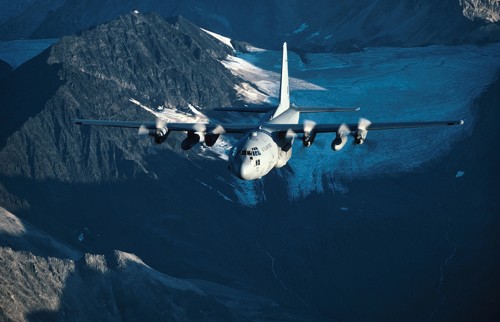
As the Cold War and the nuclear arms race escalated President Dwight Eisenhower offered the “open skies” peace initiative to the Soviet Union at the Geneva Conference in July, 1955. The idea was to allow peace planes from each country to fly over the territory of the other to inspect military forces and make sure no surprise attack preparations were taking place.  Watch the news video of the Geneva Conference followed by President Eisenhower explaining the purpose of open skies. You will also see a sample flight.

The Open Skies Plan was not accepted in 1955 but it was revived by President George H. Bush in 1989.

This led to the Open Skies Treaty of 1992 which included the United States, Canada, Russia and a number of nations in Europe. Watch this video about the treaty.

Video Celebrating Open Skies 20th Anniversary

Hillary Clinton on the Open Skies Treaty

Can Open Skies Be Expanded to More Nations?

Expanding Open Skies (New York Times)

How an Idea of Ike’s Could Help Settle India/Pakistan Nuclear Tensions–And Help Us Win the War on Terrorism (History News Network)

What Open Skies Can Do For Chinese-American Relations (History News Service)

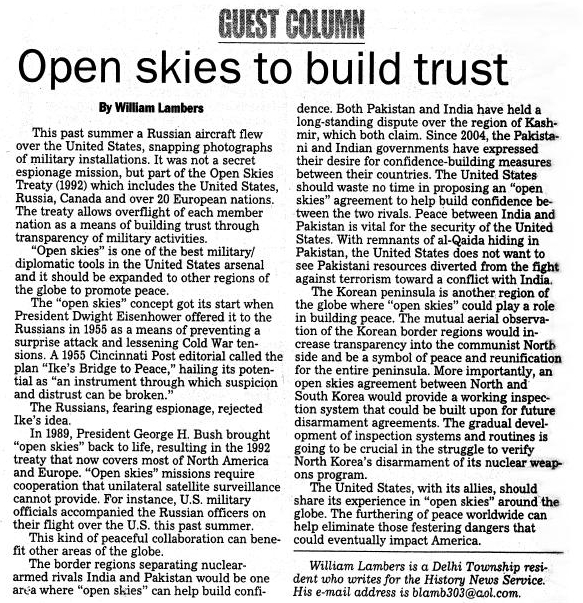
Article in the Cincinnati Post titled “Open Skies to Build Trust.”

article about the Open Skies Treaty and its 500th flight

The Obama Administration moving forward with Open Skies Treaty

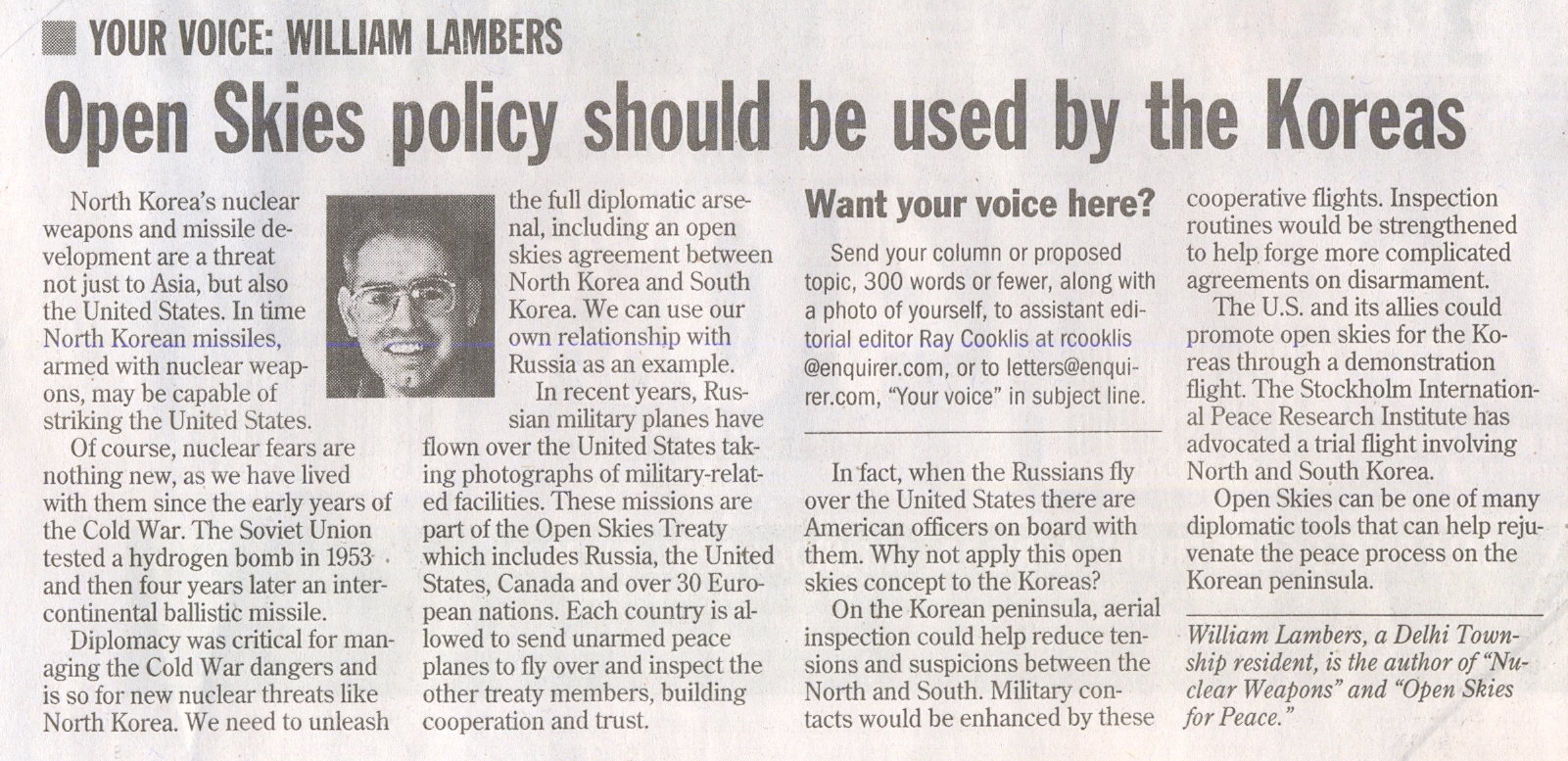
Open Skies Policy Should be Used by the Koreas (Cincinnati Enquirer)

“Open Skies” can play a role in the Korean peace and disarmament process. Click here to read the article in the San Diego Union-Tribune.

Historical Documents About Open Skies

Over a month before the Open Skies proposal this article appeared in the Cincinnat Post (June 14, 1955) about Operation Alert, a civil defense drill against nuclear attack.

Read a memorandum of a meeting of President Eisenhower and his advisors discussing “Open Skies” at the Geneva Conference. (Courtesy Eisenhower Library)

Read excerpts from a memorandum of a conversation at the President’s luncheon for the Russian delegation at the Geneva Conference on July 20, 1955. (courtesy Eisenhower Library)

Article in July 22nd, 1955 Cincinnati Post about Ike’s “Open Skies” proposal.

Read excerpts from an “Open Skies for Peace” pamphlet published during the Eisenhower administration. (courtesy of The National Archives of the UK (PRO): ref. FO371/123712)

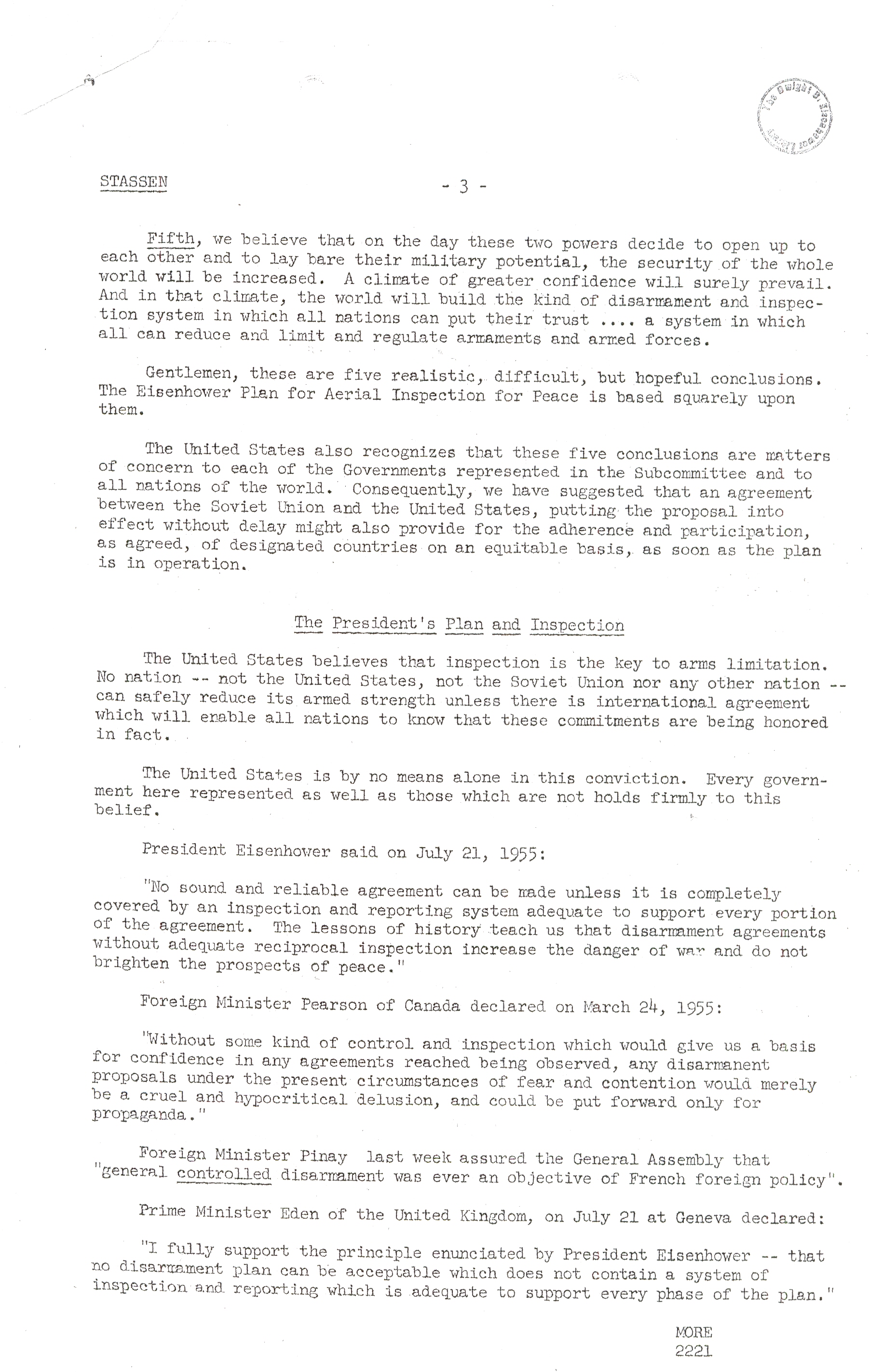
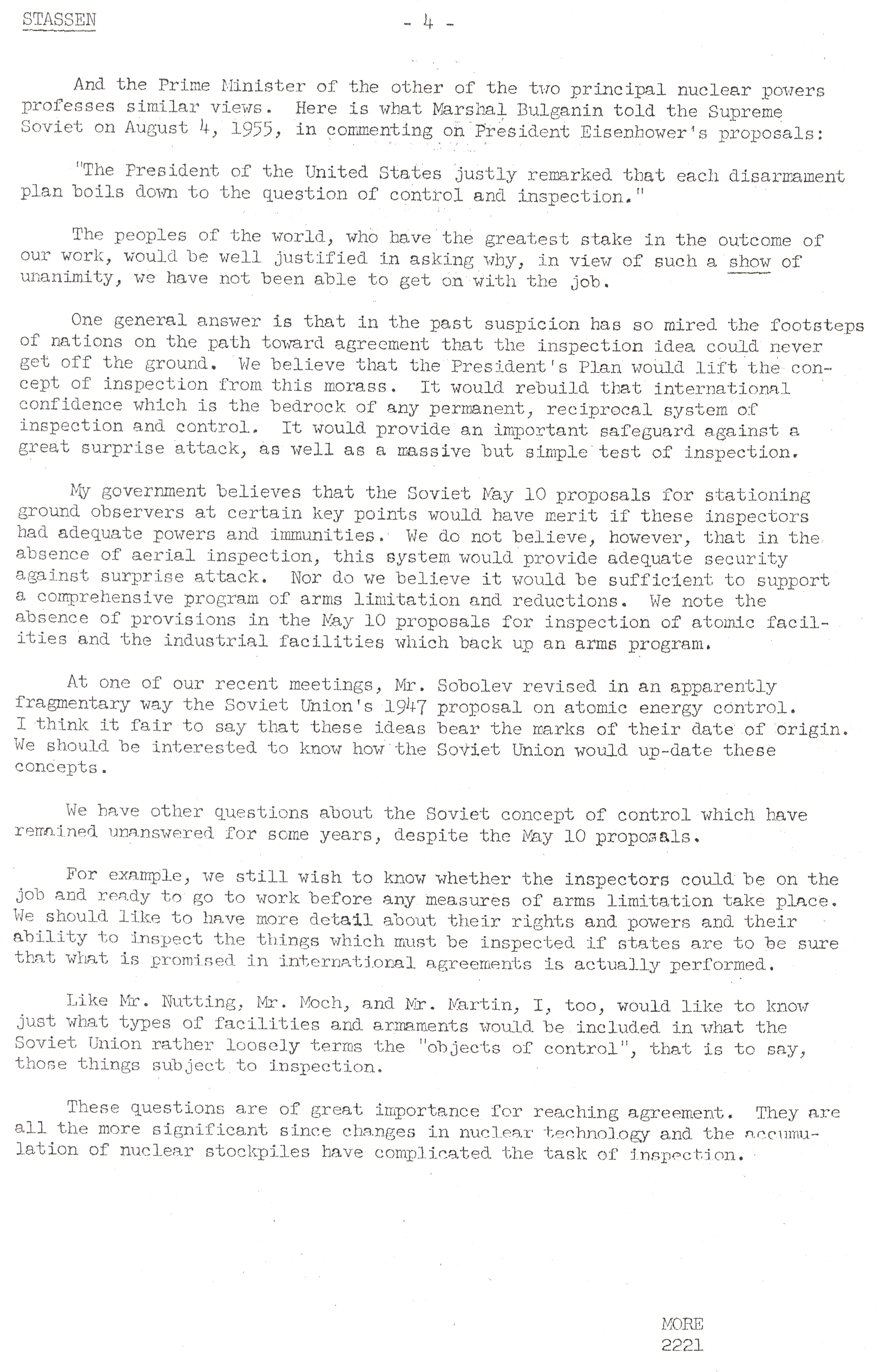
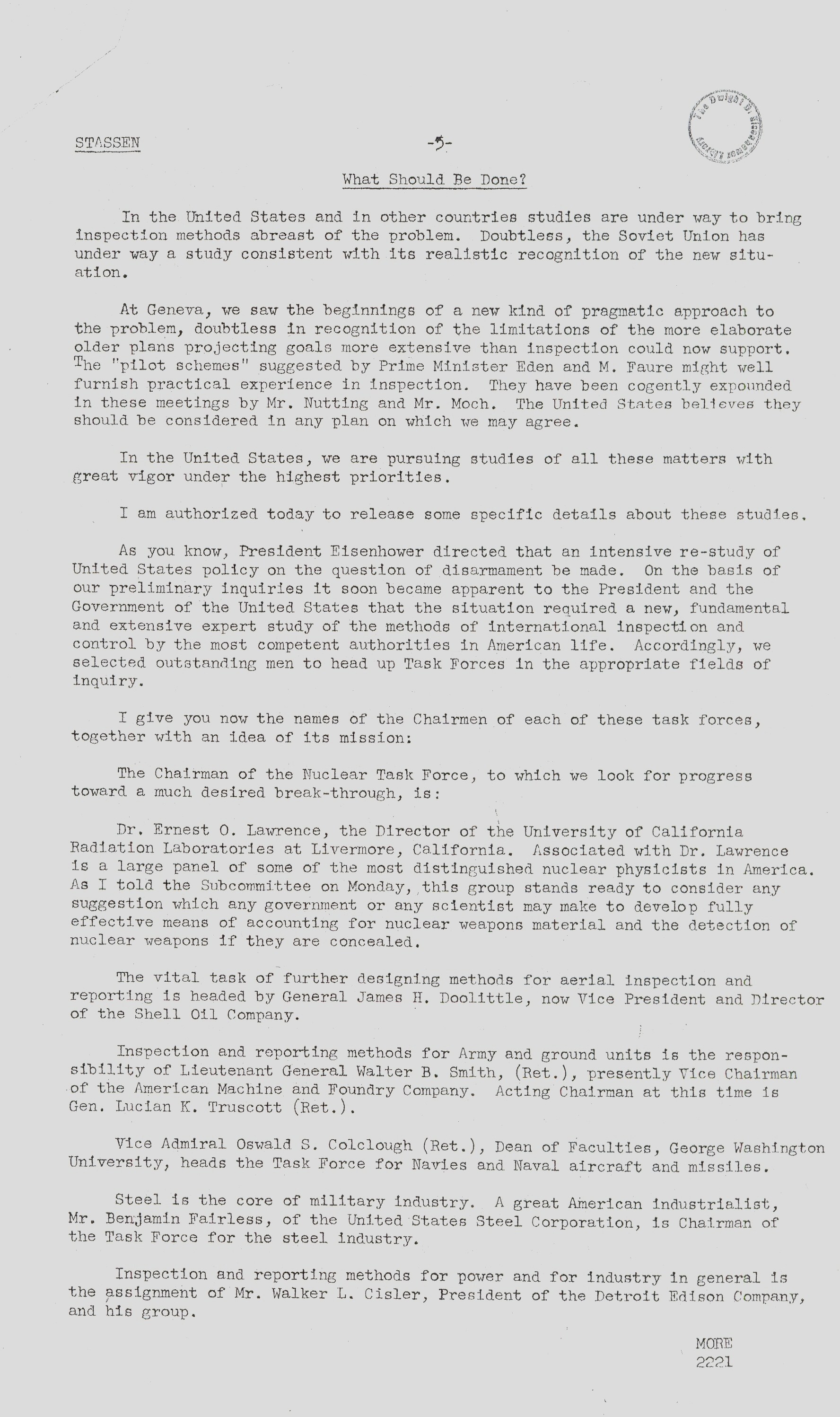
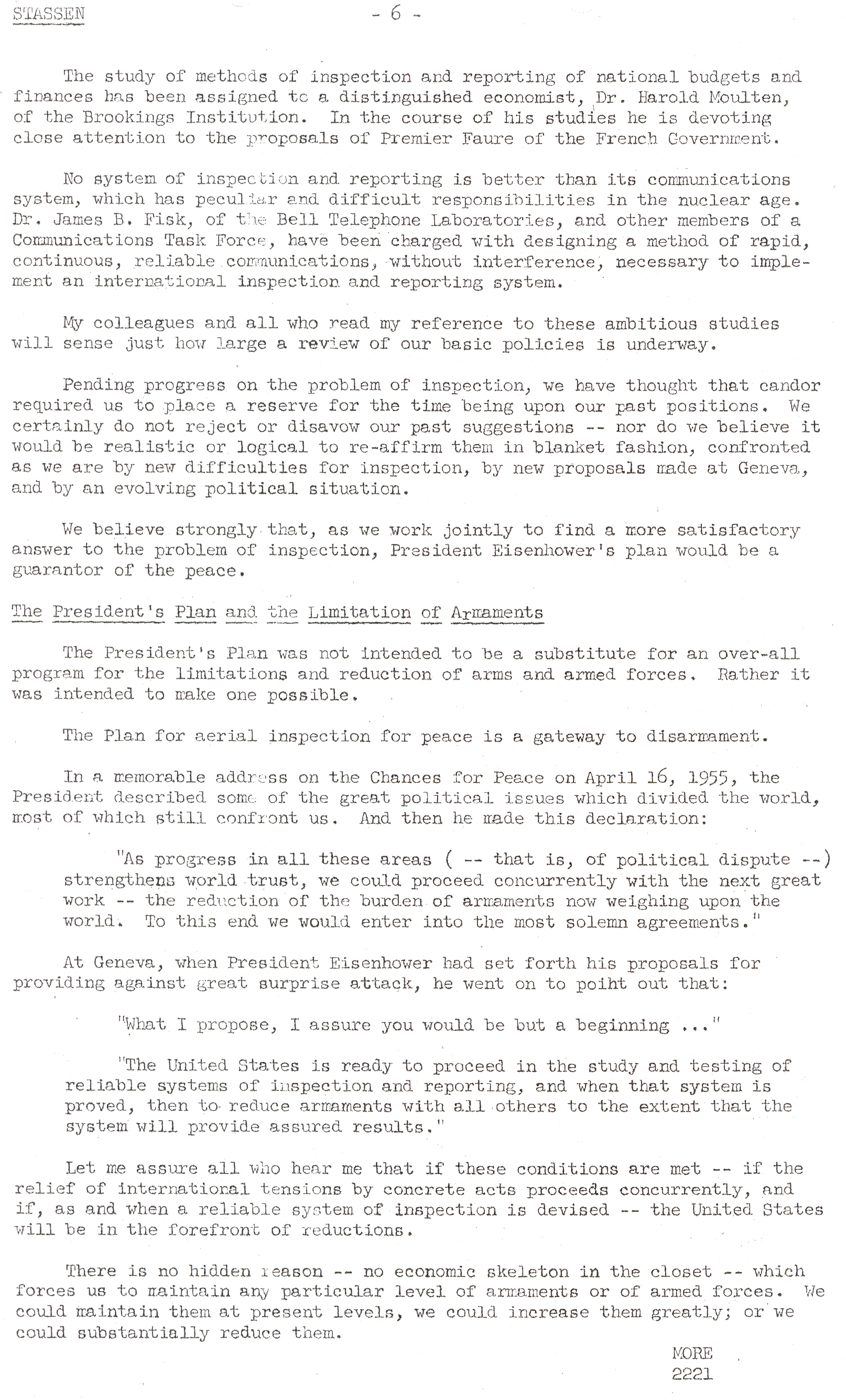
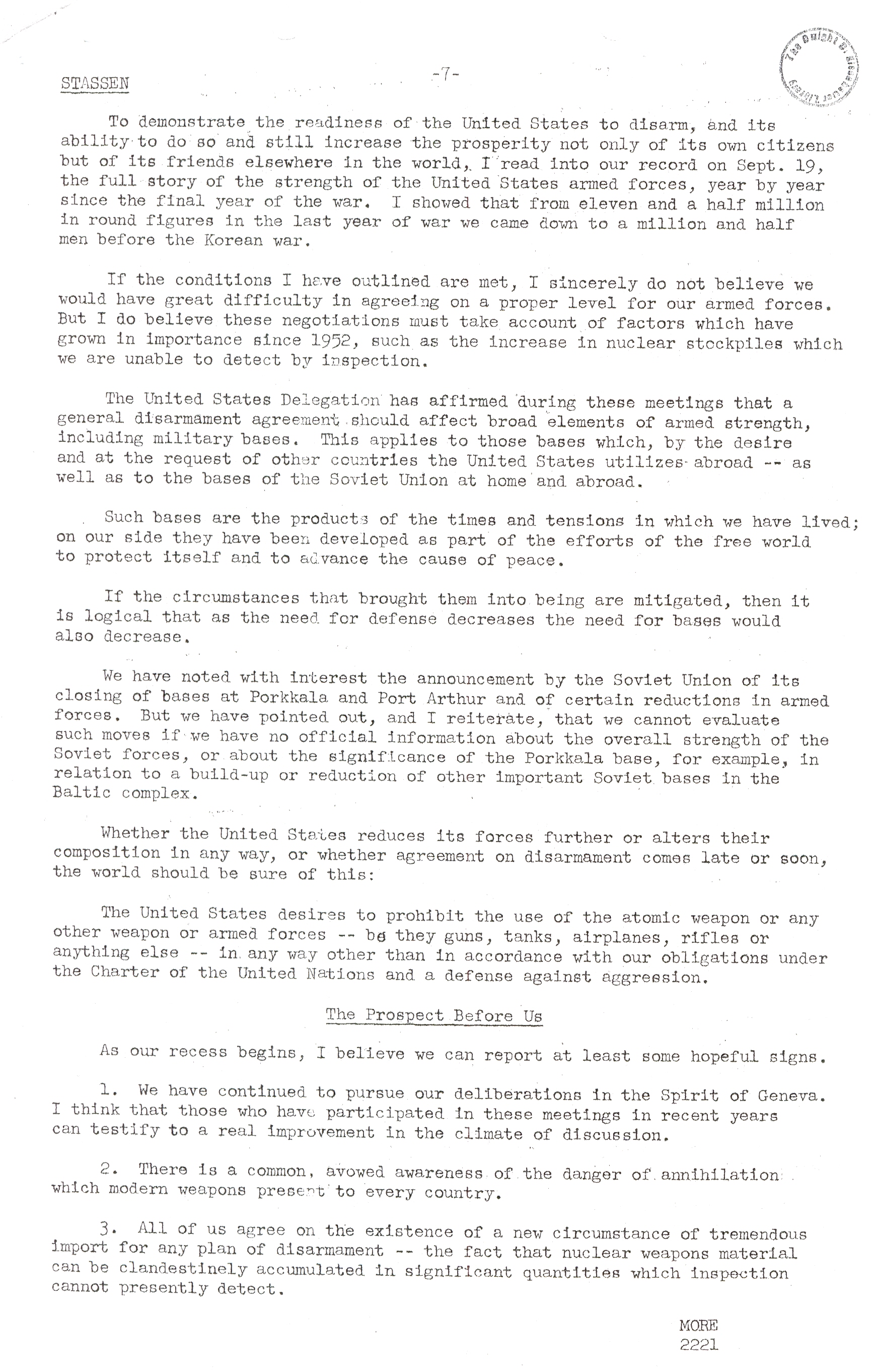
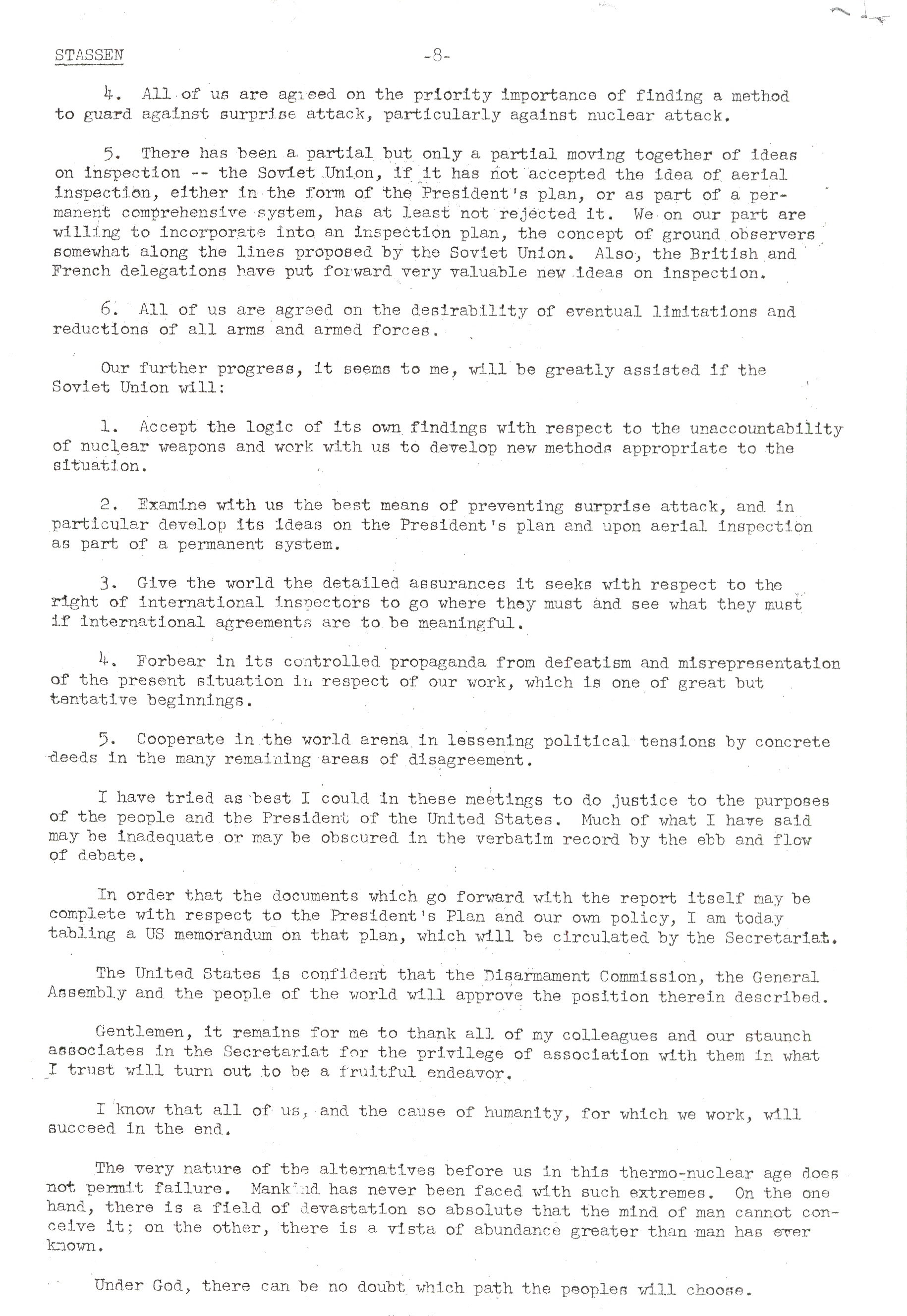
Read disarmament advisor Harold Stassen’s speech at the UN on October 7, 1955 about Open Skies and arms control. (courtesy Eisenhower Library)

Page 1 Page 2 Page 3 Page 4 Page 5 Page 6 Page 7 Page 8

Read a 1956 memorandum prepared by one of President Eisenhower’s assistants, Andrew Goodpaster, on the topic of confidence building measures and disarmament. (courtesy Eisenhower Library)

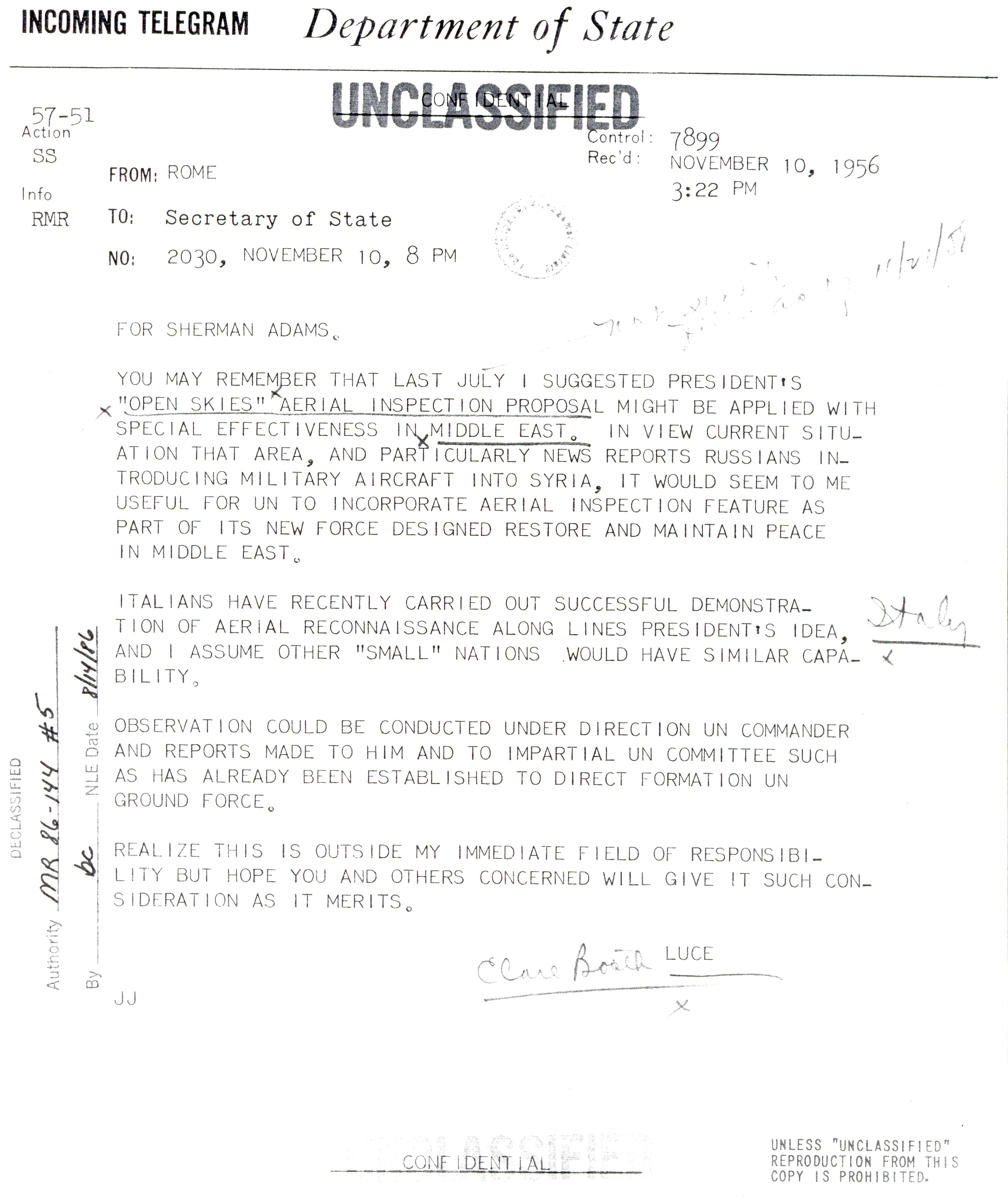
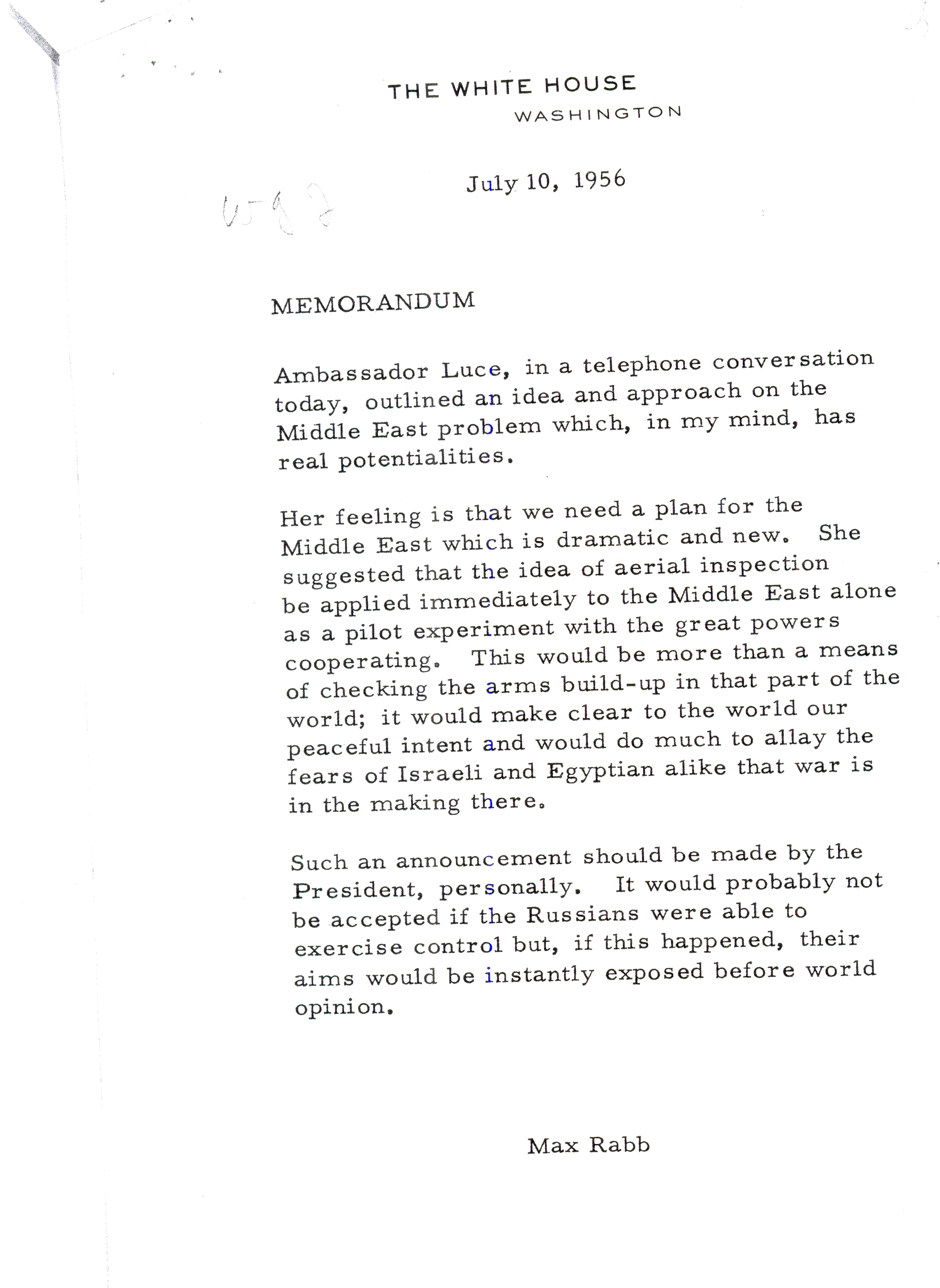
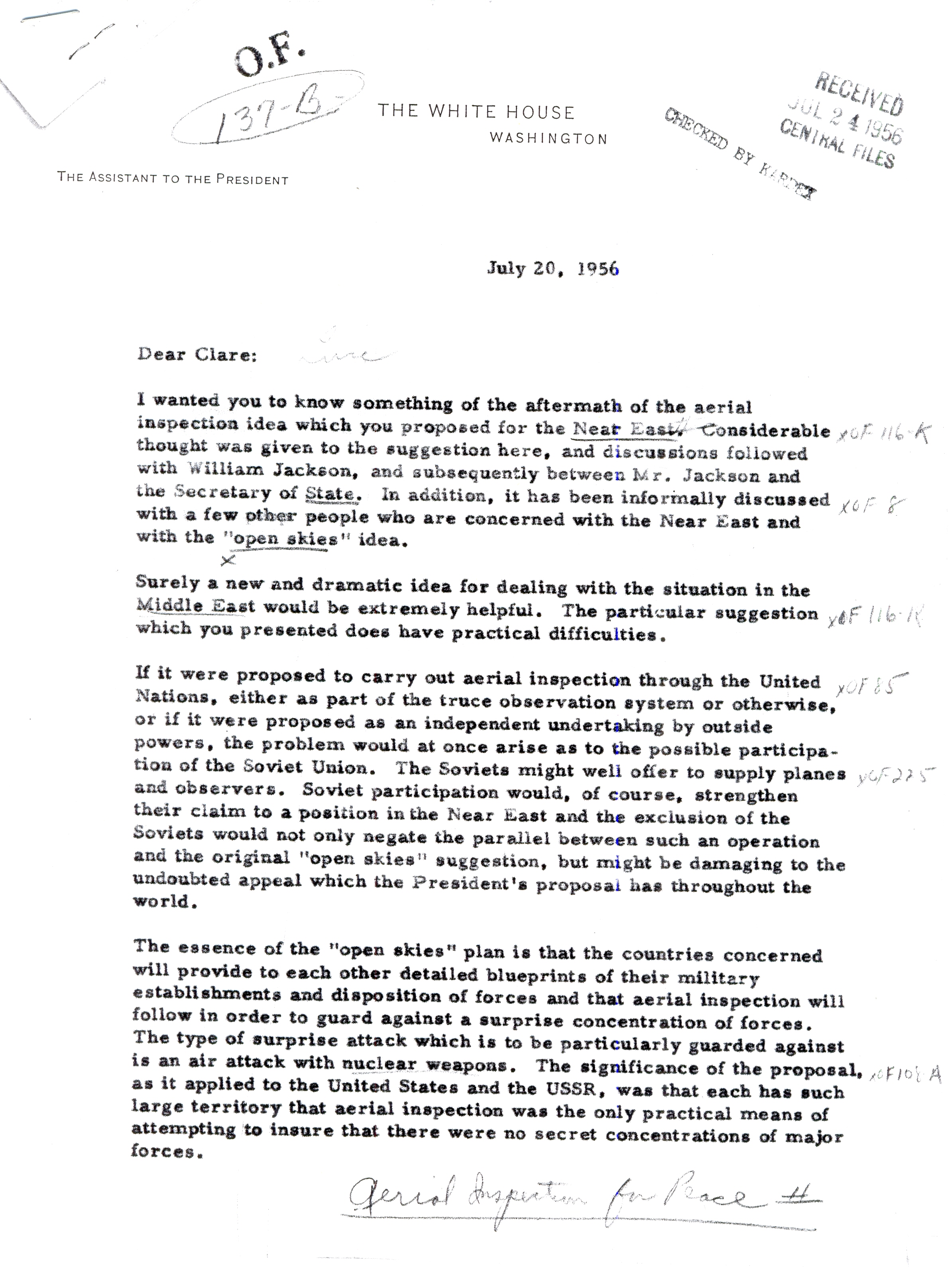
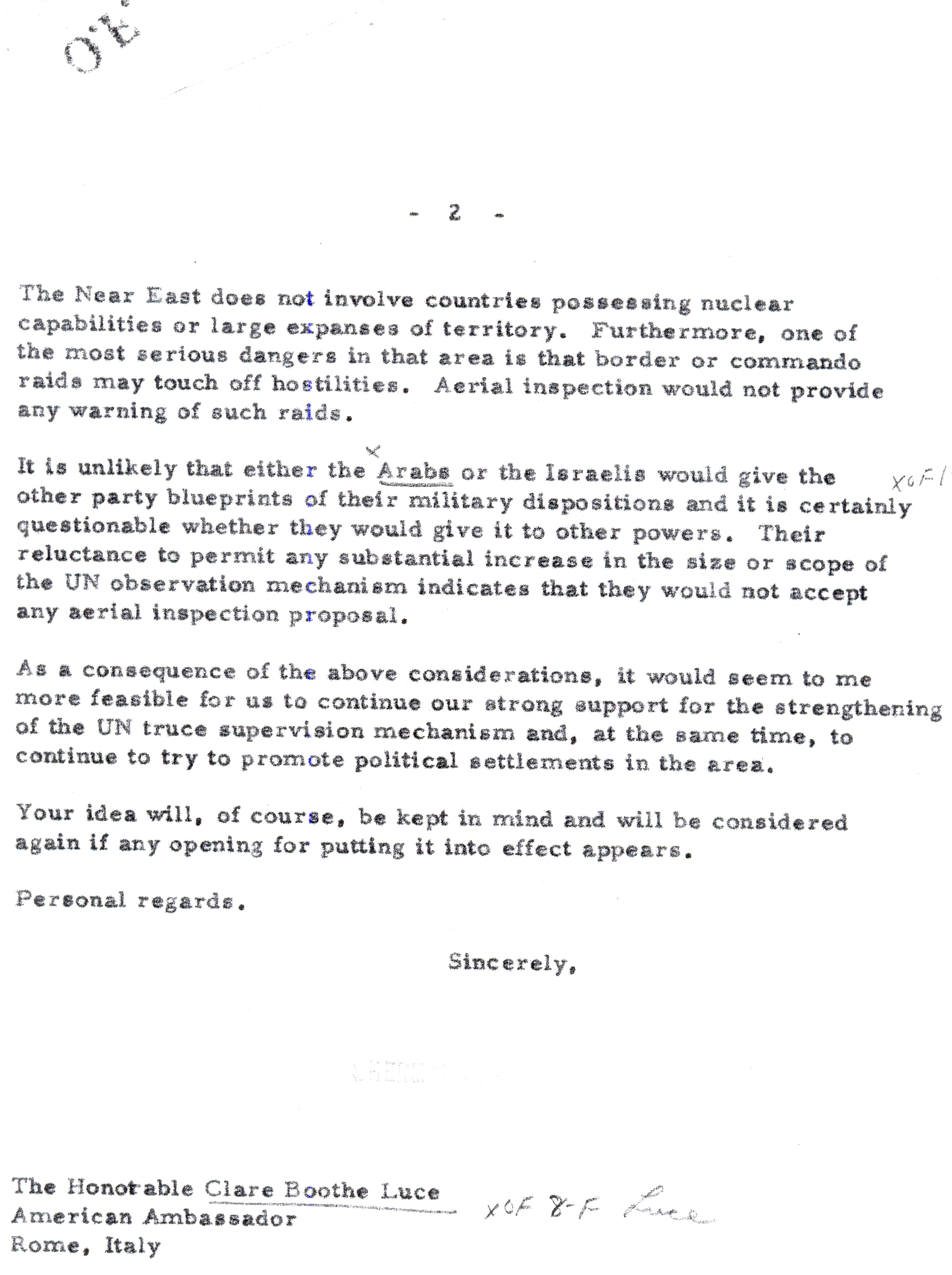
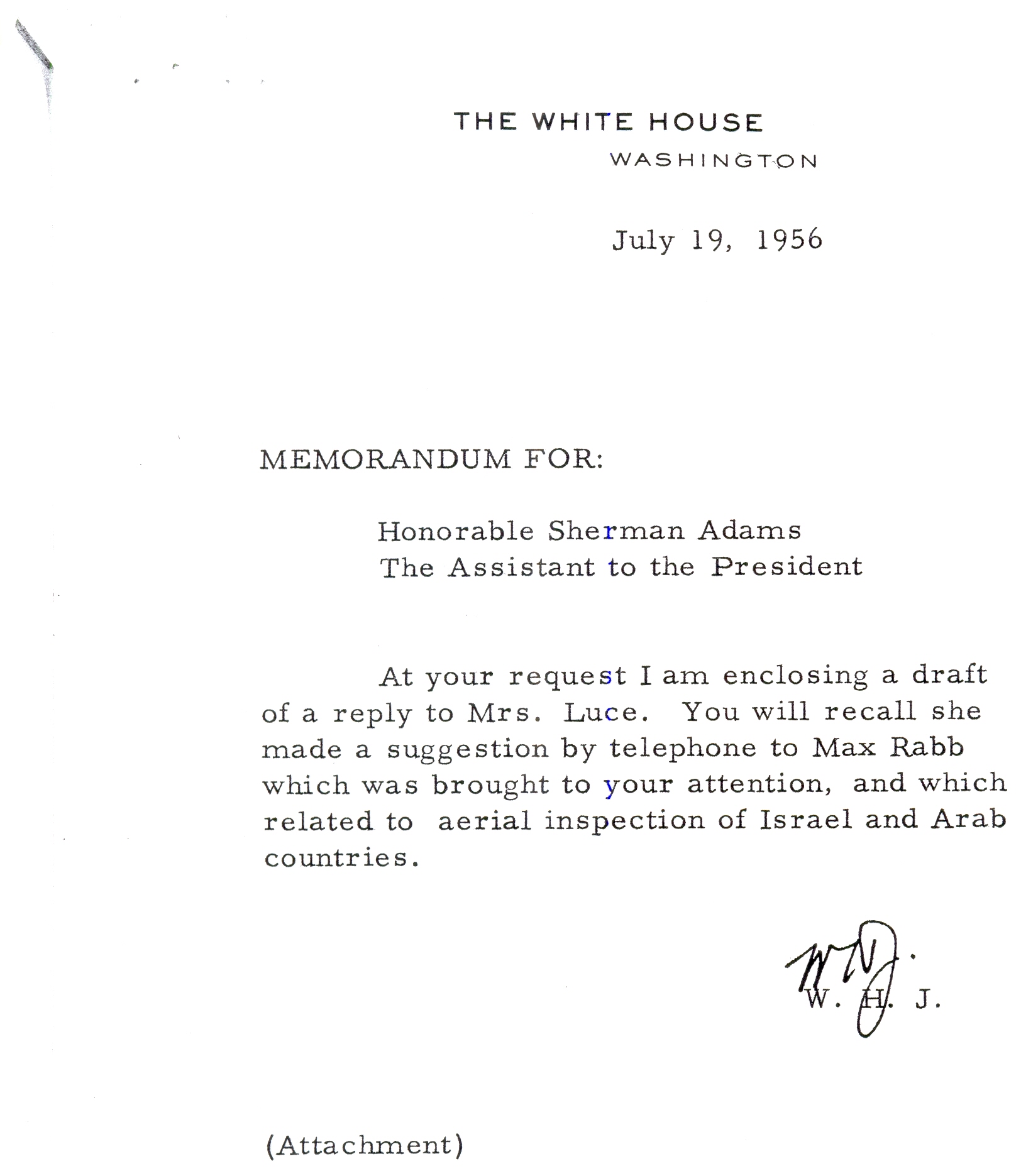
Click here to read a 1956 document which discusses the application of open skies in the Middle East. (courtesy Eisenhower Library)

Read here some responses to the Open Skies Middle East proposal

Page 1       Page 2        Page 3       Page 4

1992 Open Skies Treaty Fact Sheet

Read pages from 1992 Senate hearings on the Open Skies Treaty. These are answers from the Bush adminstration about Open Skies and how it can relate to the START Treaty and also potential expansion. (courtesy Cincinnati Public Library)

Open Skies Treaty Review Conference

Russian “Open Skies” mission over the United States.

Report by Tony D. Holmes, Major, USAF titled “Relevance of the Open Skies Treaty Program In the Twenty-First Century.”

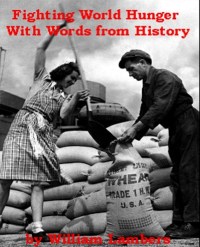
Available at Amazon.com and Google Ebookstore

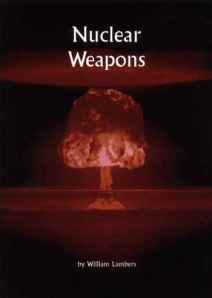
Nuclear Weapons

Open Skies for Peace

Leave a comment

Filed under arms control, Books, disarmament, Dwight Eisenhower, History, nuclear arms control, nuclear weapons, Open Skies Treaty, peace, Uncategorized