
Tag Archives: Haiti

American Epic Highlights War, Peace, and Child Hunger

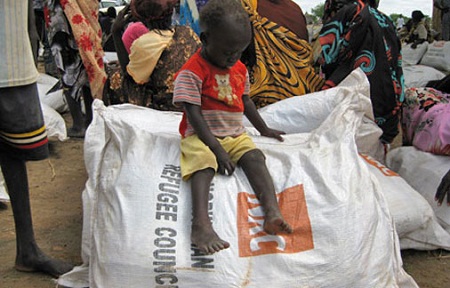
This child in Sudan is receiving food aid from the Norwegian Refugee Council (NRC). Many more children in the world are in need of food safety nets. (NRC Sudan photo)

Herbert Hoover’s book American Epic Volume Four gives a country-by-country breakdown of the siege of hunger after World War II. Detailed reports reveal the crisis of child hunger and the desperate race to find solutions.

The book is a great history of the World War II era and the fight to save millions from starvation after the fighting had ended. It tells a story not often covered in the histories of this time period.

But I think the book represents more than an outstanding history. It’s something we can learn from in today’s struggle to win peace.

When I saw Hoover’s book a few years ago, I asked: Why not have something like this today? Why not have a country-by-country look at all-important child feeding? I felt this was not being covered enough in the news. The “silent tsunami” of high food prices had struck and the number of hungry children worldwide was fast growing.

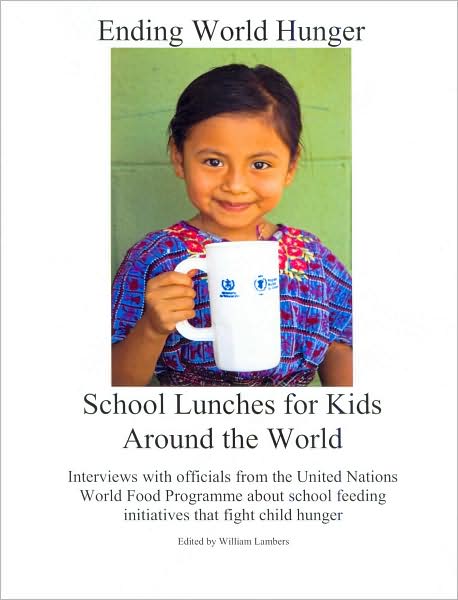
So I contacted Jennifer Parmelee of the UN World Food Programme (WFP) in Washington, D.C. I presented my idea and it took off from there. It led to the creation of an interview series covering school feeding programs worldwide and then the book Ending World Hunger.

Laura Sheahen of Catholic Relief Services/Caritas also was very instrumental in helping develop the series. The feature continues online at Blogcritics today with its most recent update including the Norwegian Refugee Council providing school meals in the Democratic Republic of the Congo.

The idea is to bring the issue of child hunger into the spotlight and talk about solutions, and to connect the issues of hunger and nutrition to the pursuit of peace and development. This is something American Epic does.

A school meal program for Germany saved that country after World War II and it can do the same for others today.

Yet hunger has not been made enough of a priority and low funding plagues relief operations in Afghanistan, Yemen, Ivory Coast, Haiti, Sudan, and other nations. In East Africa, critical months lie ahead in saving the region after the massive drought last year.

In Sudan food is vital to the peace process. Whether it’s the nutritious peanut paste plumpy’nut (or plumpy’sup for malnourished infants), food for school age children, or agricultural development, it can mean the difference between peace and conflict.

Currently, low funding for the United Nations World Food Programme (WFP) has led to reductions in its school feeding for Afghan children. In Benin, WFP is able to feed only 64 percent of children in the school feeding program. The funding shortages again limit the reach of the program.

There is a lot more that can be done to fight hunger around the globe.

Hoover’s American Epic showed what a food ambassador could do to rally cooperation, both domestically and internationally, for fighting hunger, and why it’s so important that child feeding programs get the support they need. Nutrition matters.

As Hoover said, “Civilization marches forward upon the feet of healthy children. We cannot have recovery of civilization in nations with a legacy of stunted bodies or distorted and embittered minds.”

I think the Congress needs to think of this when they are drawing up the new budget. Think of what the consequences will be of reducing U.S. international food aid – what that will mean for future generations, and what it will mean for our prospects for peace.

I think that is a key lesson to take from Hoover’s American Epic.

Article first published as American Epic Highlights War, Peace, and Child Hunger on Blogcritics.
Leave a comment

Filed under global hunger, History

School meal programs are defense against child hunger

When he was campaigning for re-election in 1940, President Franklin Roosevelt took time in Boston to talk about the country’s school lunch program. FDR said, “Milk does those children more good than political soothing syrup.”

As we celebrate National School Lunch Week, it should be a call to action to our political leaders to put aside partisanship and support child nutrition. It could not be more urgent. The Department of Agriculture (USDA) reports that 16 million children in the U.S. live in food-insecure households. Families are struggling to get food on the shelves.

Read the full article at the Cincinnati Enquirer

Leave a comment

Filed under global hunger, School feeding

National School Lunch Week: A Call to Action

When he was campaigning for re-election in 1940, President Franklin Roosevelt took time in Boston to talk about the country’s school lunch program. FDR said “milk does those children more good than political soothing syrup.”

The U.S. has built up its school lunch program through the Great Depression, World War II and with the National School Lunch Act of 1946. (photo courtesy Franklin D. Roosevelt Library)

As we celebrate National School Lunch Week, it should be a call to action to our political leaders to put aside partisanship and support child nutrition. It could not be more urgent. The Department of Agriculture (USDA) reports that 16 million children in the U.S. live in food-insecure households. Families are struggling to get food on the shelves.

Our national school lunch and breakfast programs, which provide free or reduced price meals, serve as a critical line of defense against child hunger. Cincinnati, with the Children’s Hunger Alliance of Ohio and USDA, has set a great example by providing free breakfast for all its public school students K-12.

But when school is out, children living in poverty, especially during these tough economic times, are vulnerable. The charity Feeding America supports school pantries, which allow needy families to get take-home rations to fill in these gaps when schools are closed.

Jennifer Small of the Maryland Food Bank is working to establish such pantries in the Eastern shore of her state. The demand for food assistance there has grown. In fact, nationwide the demand for food assistance has gone up, making school pantries and other programs all the more vital.

Small says: “It is so important to ensure children are fed so they can thrive in school. By assisting them and their families with take-home rations for dinners and/or weekend meals, this helps keep them fed so they can concentrate and receive a well-rounded nutritional meal.”

An area of huge glaring weakness is the summer feeding program. Many children who get free or reduced price meals during the school year are unable to access them in the summer. The problem is how to distribute the food when schools are closed.

This is an area where political and community leaders need to work together so that when next summer comes, food assistance does not take a vacation. Hunger certainly does not take the summer off.

Feeding America reports: “During the 2010 federal fiscal year, 20.6 million low-income children received free or reduced-price meals through the National School Lunch Program. Unfortunately, just 2.3 million of these same income-eligible children participated in the Summer Food Service Program that same year.”

USDA says it is testing “home delivery of meals and a backpack food program for kids” on days when the summer feeding program is not available. Political leaders can encourage community-based solutions to summer feeding. Senator Sherrod Brown of Ohio has been very active in this regard.

As President Obama said when proclaiming National School Lunch Week: “Children are America’s greatest treasure, and ensuring their health is one of our most important duties as parents, families, and community members. Our children’s continued ability to learn in the classroom, grow up healthy, and reach their full potential will depend on what we do now to secure their future.”

School feeding has become integral to our country for generations now. No less important are school meals for children in other countries. For our foreign policy, we have to think of school feeding.

We did this after World Wars I and II, when the U.S. supported school feeding to help countries and their children through the harshest of times. American charities even helped provide meals in Nazi- invaded Norway so children’s nutrition did not suffer amid food shortages and the occupation. The reconstruction of Europe after the war included millions of school meals for children.

The U.S. Food for Peace and now the McGovern-Dole programs support school meals overseas. Haiti, for instance, has a school feeding initiative, which is essential to the recovery of the country. The UN World Food Programme, Haiti’s government and donations from the U.S., Brazil, Canada and others are making this program work.

The World Food Programme provides meals at this school UNICEF rebuilt after the earthquake. The U.S. Congress is debating whether to reduce food aid, including school meal initiatives like the McGovern-Dole program which supports Haiti. Currently U.S. spending on food aid accounts for less than one tenth of one percent of the entire federal budget. (WFP/Stephanie Tremblay)

But funding is always an issue. Sadly, proposed budget cuts by Congress will threaten our ability to provide school meals in developing countries. In Afghanistan, for example, there has been such low funding that the World Food Programme may be forced to cease its program feeding 2 million children. This has devastating consequences, because without nutrition and education, no society can advance and have peace.

We will all have a much brighter future if we ensure that all children around the world have access to school meals. As we celebrate National School Lunch Week, let’s remember nutrition is critical for children here and abroad.

Article first published as National School Lunch Week: A Call to Action on Blogcritics Magazine.

Leave a comment

Filed under global hunger, School feeding

Food for Peace, Brazil and the World Food Prize

One of this year’s World Food Prize winners is H.E. Luiz Inácio Lula da Silva, the former President of Brazil. His work fighting hunger included developing the national school feeding  program. An excerpt from the World Food Prize web site reads:

“The national School Feeding Program has had a far-reaching impact on reducing child malnutrition by providing nutritious meals to children in all grades of Brazil’s public schools across the country. Forty-seven million were being served in 2010, with a minimum of 30 percent of the food supplied from local farms. Child malnutrition fell 61.9 percent between 2003 and 2009, and all age groups experienced improved access to quality food.”

Brazil has come a a long way in its fight against hunger and developing its school feeding. Back in the 1960s Brazil got help from the U.S. Food for Peace program. Here is a photo of a milk shipment leaving for Brazil. George McGovern, a World Food Prize winner himself, is to the far right.

1962 Photo of the largest milk donation under the “Food for Peace” program leaving from Brooklyn, NY heading toward Brazil. Left to right is the Brazilian ambassador Roberto de Oliveira Campos; Capt. Timothy Harrington and George McGovern, the Food for Peace director. The milk will be used for maternal feeding and the school lunch program. (Library of Congress)

Today, Brazil supports school milk programs such as the one in Haiti. See my article Got Milk? Haiti’s Farmers and Now Schools Do.

Leave a comment

Filed under global hunger

Haiti: Keeping Focused on Fighting Hunger

Tropical storm Emily just passed through Haiti, fortunately never developing into a hurricane. But it should serve as a reminder that Haiti is still very vulnerable to the shock of these storms. It’s important to build up Haiti’s resiliency so it can better withstand the risk of flooding that comes with these heavy rains.

The UN World Food Programme (WFP), as it seeks to help Haiti boost its food production, sponsors projects aimed at preventing damage to agriculture from flooding.

In addition, other WFP Food/Cash for Work projects are aimed at rubble removal, still very much a task even more than a year after the earthquake. There is still a long way to go in Haiti’s reconstruction. That is why the World Food Programme is urging support for its programs in Haiti. Malnutrition and poverty are still massive challenges for Haitians to overcome

WFP’s Stephanie Tremblay reports that the agency is facing a funding shortage for its programs. Without this funding, programs to protect the poor and boost agriculture and other projects will be at risk. WFP’s biggest project, school feeding, will be in jeopardy without funding.

Tremblay says, “We need an additional $14 million to purchase food – that will cover the needs of our school meals and nutrition programs – It also includes a take-home ration that we give students at the beginning of the school year to help families cope with back-to-school costs.”

WFP currently is reaching 1.1 million students with school meals as it helps the government build a national program. There is a long way to go to provide school meals for all children in Haiti.

Currently, there are many children in Haiti not yet enrolled in school. A national school lunch program needs to be developed to reach all these children. The food is what encourages parents to send their children to school.

Principal Sister Bernadette says Haitian children would “simply be too weak to study if they weren’t able to eat something at school. It’s important for them to have a meal here, most of them come from very poor families.” Marie Anika, 8, speaks for all children worldwide when she says, “It would be terrible if we didn’t get a meal at school. I really wouldn’t like that.”

WFP also needs $27 million to keep its cash/food for work projects, which are critical to the reconstruction, moving in the right direction.

The media spotlight may have moved on from Haiti, but the tremendous need is still very much present.

Article first published as Haiti: Keeping Focused on Fighting Hunger on Blogcritics.

Leave a comment

Filed under malnutrition, plumpy'nut, School feeding