Foodbank Collecting Donations for Colorado Fire Victims

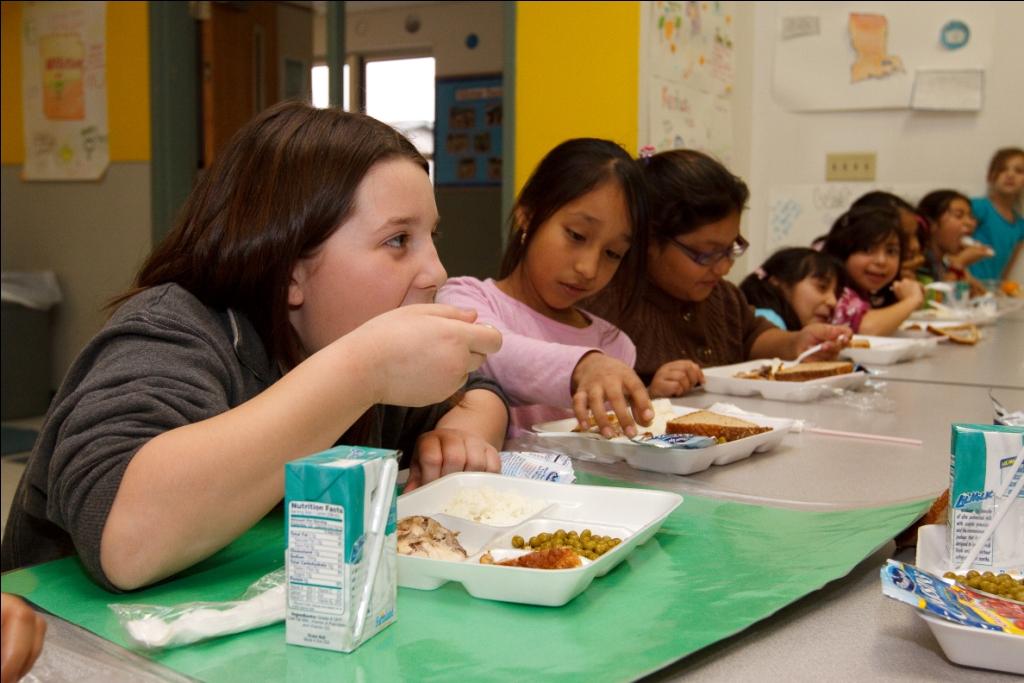
The Care and Share Foodbank is accepting donations to help feed Colorado fire victims.(Care and Share photo)

The Care and Share Foodbank of Colorado Springs, CO is helping provide emergency food aid to thousands of people displaced by wildfires. Care and Share, a member of the Feeding America network, helps needy families throughout Southern Colorado.

The fast-escalating wildfires have forced the evacuation of at least 32,000 people from their homes. The Waldo Canyon blaze, which started last week, has claimed homes near the city of Colorado Springs and the situation may worsen. The wildfires are being called among the most devastating in Colorado’s history.

Lynne Telford, Care and Share’s president, says the foodbank is providing assistance through the Red Cross, Salvation Army, emergency management, and partner agencies.

Care and Share is accepting food donations at its facility in Colorado Springs and monetary donations online at its web site. The agency is requesting canned and boxed meals such as macaroni and cheese, soups, beef stew, ravioli, cereal, cans of fruits and vegetables as well as basic hygiene items like toothpaste.

Colorado Springs is located in El Paso County where 15 percent of the population suffers from hunger according to a new study by Feeding America. El Paso County has a child hunger rate of 20 percent according to the same Feeding America study.

You can make a donation to help feed those displaced by the Colorado wildfires at www.careandshare.org.


Leave a comment

Filed under Hunger in America

The Challenge of Getting Food to Afghan Schoolchildren

Imagine you have been given a special assignment: to make sure every child in Afghanistan is able to receive school meals. If you are successful, you can save Afghan children from hunger and malnutrition. The meals will help children have the energy and strength to come to school and learn. In essence, you will be playing a huge role in building Afghanistan’s future.

Your mission begins. You line up funding, of course, or you won’t get anywhere. Once you have funding to purchase the food for the school feeding, can you buy it locally and help out Afghan farmers and food producers? Maybe you can, maybe not. You might need to mix local production with some imported food.

Then there is the transportation of the food. This is a decent challenge no matter where you are in the world. In Afghanistan though it is especially difficult as the road system is not well-developed. Weather can wreak havoc in parts of Afghanistan. There is also the issue of security for your food transport in a country plagued by conflict and unrest.


Stuck In The Mud in Afghanistan: Drivers have to dig trucks out of the mud or shovel dry dirt onto the roads in order to get vehicles moving again. (WFP / Hukomat Khan)

In a nutshell, these are some of the challenges facing the UN World Food Programme (WFP) as it tries to provide food for schoolchildren in Afghanistan. WFP is the largest food aid organization in the world and it is entirely voluntarily funded by governments and the public. WFP’s goal is to work with the Afghan government to provide meals for every child at school as well as take-home rations. This food also serves as an incentive for parents to send their children to school. The stronger the school feeding program, the stronger the enrollment and class performance.

Back in April WFP sent out a convoy of trucks to bring 200 tons of school meals to the remote Daykundi province of central Afghanistan. The mission had to be delayed briefly when violence flared up around the country. But WFP was determined to get the food there.


High Climbers: The unpaved roads – some at an altitude of more than 2,000 metres – become impassable in the winter months, and are left muddy and slippery in the spring. (WFP / Hukomat Khan)

Shershah Wahidi, the Senior Logistics Assistant, said, “The roads in this part of Afghanistan don’t usually reopen until late May. But we had to send food to these villages early this year because this region remains without food during winter. We wanted to make sure that supplies for the schools were in place in good time to convince students to start attending classes as early as possible.”


On The Edge: Many of the drivers working for WFP in Afghanistan have been driving these routes for more than 20 years. (WFP / Hukomat Khan)

A week-long trek, through rain, mud, and sometimes snow, followed. It was Afghanistan’s version of Mr. Toad’s Wild Ride, but WFP made the deliveries of high-energy biscuits and vegetable oil to the school feeding program.

Another convoy in June was not as fortunate. WFP reports: “On 4 June, a WFP convoy carrying food – 15 light trucks clearly marked with WFP logos – was attacked by anti-government elements in Parwan province. Although the drivers escaped unharmed, three trucks were burned, with their cargo of High Energy Biscuits lost.”

Funding for Afghan hunger relief continues to be an issue as WFP has “received less than one fifth of its 2012 funding needs so far” for its country operation. This includes the school feeding program as well as nutrition and food for work programs.

This shortage of food aid funding becomes a critical topic for debate as the US plans to reduce its Food for Peace program (Title II). The US makes donations through Food for Peace to countries around the world suffering from hunger. The less funding Food for Peace has, the less potential for donations to Afghanistan and other countries. The McGovern-Dole international school meals program is another US aid program whose funding is also being considered by Congress.

The World Food Program USA said last week that “recent congressional budget cuts reduce the impact of emergency funding by limiting both short- and long-term assistance programs. At a time when the need for food assistance is greater than ever, Title II programs should be fully-funded to improve the lasting success of the U.S. and recipient countries.”

It’s a daunting challenge getting food to Afghan schoolchildren. When one obstacle is cleared, another one is sure to present itself. What’s at stake is the future of every Afghan child as well as their country. If the children are fed and educated, Afghanistan can build a future of prosperity.


Biscuit Power: When distributed regularly to schoolchildren, high energy biscuits (HEBs) can act as an incentive for students to attend class regularly, as well as help to combat micronutrient deficiencies. WFP plans to give HEBs to nearly one million schoolchildren in Afghanistan this year. (WFP / Assadullah Azhari)


Buying Domestically: Most of the biscuits distributed by WFP in Afghanistan are imported from India, but WFP is working to build local capacity in order to buy more locally in future. (WFP/Silke Buhr)

Article first published as The Challenge of Getting Food to Afghan Schoolchildren on Blogcritics.


Leave a comment

Filed under global hunger

Eisenhower Believed Allied Victory was Inspiration for Fighting Global Hunger

Dwight Eisenhower (Eisenhower Library photo)

Times may be tough for the US, but we have seen tougher. The struggle to fight global hunger need not be relegated to the backburner.

In 1948 when Dwight Eisenhower made a speech about fighting child hunger, he invoked the great resilience of America in overcoming challenges. He used the example of June 1944 just after the Allied Landings of D-Day to start the invasion of Nazi-occupied Europe. A massive storm struck the coast, and the destruction it caused could have severely harmed the Allied forces. But even greater than the storm was the resolve of America and its allies in overcoming obstacles.

Today, both Congress and President Obama should show stronger support for fighting global hunger, which means increased funding for the US Food for Peace and McGovern-Dole programs.

Right now these global hunger fighting programs are in serious jeopardy of more budget cuts.

The World Food Program USA reports, “Despite this increasing need, national budget cuts have decreased the funding for Title II, the main legislation for food assistance in the Food for Peace program. The reduction from $1.84 billion to $1.46 billion since 2010 can negatively impact vulnerable populations in a variety of ways, making each recurring crisis deeper and more costly to address.”

Afghanistan, South Sudan, Yemen, East Africa, the Sahel region of Africa and many other areas are suffering from severe hunger and malnutrition. Food for Peace and McGovern-Dole donations make a huge difference for these crisis points. But if not enough resources are provided to these hunger fighting initiatives, then the enemy of hunger can live to fight another day.

The US has to increase its Food for Peace arsenal. If America has enough resolve to battle world hunger, we can take the greatest step toward world peace there is.

Article first published as Eisenhower Believed Allied Victory Was Inspiration for Fighting Global Hunger on Blogcritics.

Leave a comment

Filed under global hunger, History

Norwegian Charity Says More Aid Needed for Somali Refugee Children

Displaced children in Somaliland are deprived of basic rights such as access to clean water, food, health services and education. Photo: NRC/Astrid Sehl

The Norwegian Refugee Council is calling on the world to increase aid for Somali children displaced by conflict and famine.

Last summer the world was stunned with tens of thousands of Somali children starving to death. A severe drought had struck Somalia and East Africa, causing massive food shortages. Conflict within Somalia made the situation far worse by preventing aid from reaching the needy.

Thousands of children and their families were able to flee the worst hunger and conflict areas. Many of these “children of famine” found refuge in camps in Dadaab, Kenya.

A year later their plight in the refugee camps is largely silent to the world. The Norwegian Refugee Council (NRC) wants to change this by focusing on these children’s needs. They have a chance to recover if the world gives them enough help.

Somali refugees need the basics of food, water, shelter. They also need education to learn and develop the skills needed to get out of these camps and build a life. NRC issued a report in May about the lack of educational resources at the Dadaab camps.

Dadaab does not have enough school facilities and teachers. There are 221,000 school age children in the refugee camps but only 57,000 are enrolled in school. Funding is needed to build up the schools.

The NRC Regional Director Hassan Khaire says, “The universal right to education applies also for refugee children in Dadaab, but only in theory. The international community has to step up and demonstrate the importance of investing in the development and future of young Somali refugees.”

NRC is partnering with other organizations on developing accelerated learning programs to help children “catch up” and get their education back on track.

For those who are already enrolled in school at Dadaab, there is the problem of staying the course. The NRC report says, “The number of students who actually complete school is much lower, as the drop out rates are very high especially for girls.” The challenge is getting kids into school in East Africa and then keeping them there to finish their education.

School feeding programs run by the UN World Food Programme and other groups are vital especially with malnutrition being such a threat to the refugees.

Astrid Sehl, an NRC officer, recently took some time to answer a few questions on how the world can help the children of the East Africa famine.

What is being done to increase the number of schools and teachers in the Daddab refugee camp?

UN and non-governmental organizations are doing what they can to build more schools and educate more teachers in Dadaab – e.g. the joint Education strategy (Accelerated learning program). However, as always, funding when it comes to crises and education, is very limited, and a lot more should be done!

Could take home rations be added to any existing school feeding in order to reduce the dropout rate?

Yes, take home rations is a good idea. For the time being, we provide school feeding and we are investigating funding opportunities for take-home rations (or introducing school gardens, where the kids are taught how to grow vegetables and they can bring the knowledge and produce home).

For children displaced inside Somalia has NRC been able to reach them with educational materials?

Yes, we have large educational programs for internally displaced persons across Somalia – in Somaliland, Puntland and South Central. So we’re supporting thousands of internally displaced children and youth with education, skills training, we train teachers and build schools – but again – more efforts are required to meet children’s right to education.

Leave a comment

Filed under global hunger

We Need Less Political Fundraisers, More Humanitarian Aid

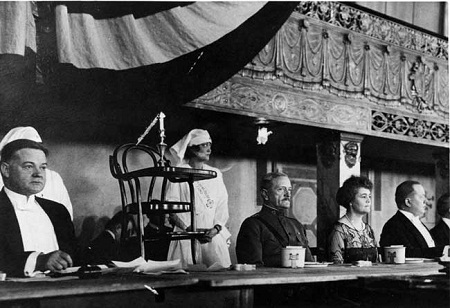
Herbert Hoover and General John J. Pershing hosted an Invisible Guest Fundraising Dinner in New York to help feed the world’s hungry (Hoover Presidential Library and Museum)

You know the race for the presidency is on when you start seeing huge political fundraising dinners. Actor George Clooney recently hosted one for President Obama where the cost was $40,000 a plate. Mitt Romney and the Republicans, not to be outdone, are having one at $50,000 a plate.

These events are great for the campaigns to build their war chest. But all it means for the rest of us is lots of political ads. Not very inspiring. History offers us an alternative.

In 1920, Herbert Hoover, almost a decade before he became president, set up fundraising dinners to help millions of people suffering from hunger after World War One. The war, as well as drought, had devastated food production in Europe.

Hoover, the head of the American Relief Administration, appealed to the public through a series of fundraising dinners called “The Invisible Guest.” An empty chair was placed at the dinner table to represent one of the hungry “children of famine.” These were innocent victims of war “wasting away in their own homes,”as Hoover put it. War brings hunger even after the guns fall silent.

Like many political fundraising dinners of today, the “invisible guest” events had high profile figures attending. General John J. Pershing, who commanded American forces during World War I, presided with Hoover over one of the “invisible guest” events in New York City.

One thousand tickets were sold for $1,000 each at the New York event alone. Guests at the dinner, including John D. Rockefeller Jr., brought total donations up to $3 million dollars that night according to Hoover’s memoir. Other invisible guest dinners took place across the country.

These dinners meant food for hungry children in Austria, Germany, Poland and other war-devastated nations. American food aid saved millions of lives after the First World War, particularly children who need these nutrients or they suffer lasting physical and mental damage. A Hungarian official said American aid, “saved from death and disease many of our children.”

What would be inspiring today is to see America’s political leaders revive the “invisible guest” to fight today’s famine. Like post World War I many countries are reeling from conflict and drought. Newly independent South Sudan is in a border conflict with its neighbor Sudan. Many thousands have been displaced causing great hunger and suffering. Children in Darfur, Sudan are also suffering from malnutrition. Drought has also deepened the hunger emergency.

UNICEF and the UN World Food Programme are low on funding for relief of children and could be a beneficiary from an “Invisible Guest” dinner.

Yemen is also in conflict as the government, backed by the U.S., is fighting Al Qaeda. In the background of this battle is a nation where 22 percent of the population suffers from severe hunger and 60 percent of its youth is stunted from malnutrition. No peace is going to emerge in Yemen under such suffering.

The Sahel region of West Africa is being threatened with famine, at a time when East Africa is still recovering from last year’s famine. In terms of children suffering, 2012 is not all that different from post World War I.

Let’s today have a break from excessive political fundraising and have our political leaders come together to benefit humanity when nearly one billion people suffer from hunger. Bring back the “invisible guest” dinners. George Clooney, a humanitarian who has been very active in seeking peace in the Sudan region, could help start this.

Generosity and humanitarianism defined America during World War I as much as heroism in the battlefield. Today, far more capability exists to fundraise and deliver food aid. We need to maximize this advantage and save the lives of the hungry and suffering. It all starts by setting aside a chair at your table for an “invisible guest.”

Article first published as Obama, Romney, Clooney, and an Invisible Guest on Blogcritics.

2 Comments

Filed under global hunger

Free Breakfasts and Lunches for Children in Cincinnati This Summer

When summer comes children are at an increased risk of hunger since they lose access to the free or reduced price meals available at school. Summer feeding programs need to be established to fill in the gaps. In Hamilton County last year there were 45,950 needy students who took part in the federal lunch program during the school year while only 3,990 children received summer feeding. (Feeding America photo)

The Cincinnati Public Schools have announced their list of summer feeding sites. Children ages 1-18 can receive free breakfast and lunch at these locations which includes summer school sites and community and school locations.

The summer feeding program is meant to fill in the gap when school closes and children no longer have access to the federal school breakfast and lunch programs. It’s an effort to curb child hunger as Hamilton County has 18 percent of its population considered “food insecure.”

The Children’s Hunger Alliance of Ohio has an automated service you can call (1 800 481 6885) which will help you find the summer feeding site closest to you.

Summer Feeding Locations in Cincinnati for Children Ages 1-18

summer school sites

community and school sites

Leave a comment

Filed under Hunger in America

UN, Save the Children Start Famine Relief Funds for West Africa

The United Nations World Food Programme (WFP), the world’s largest humanitarian agency, has started a relief fund for the famine-threatened Sahel region of West Africa. Unless humanitarian aid is rushed in, eight countries which make up the Sahel region are at risk of mass starvation.

The charity Save the Children has likewise started a relief fund for West Africa, urging the world to respond before mass famine takes hold. Save the Children warns, “The greatest tragedy is that the world sees disasters such as this coming but fails to prevent them.”

Map of the Sahel region of West Africa. Shaded areas can quickly descend into famine if humanitarian aid does not arrive. (map courtesy USAID Famine Early Warning System)

Individuals can donate to these funds and help save lives in the eight Sahel countries which have suffered a massive drought: Niger, The Gambia, Mauritania, Mali, Burkina Faso, Senegal, Chad, and Cameroon.

Mothers and their babies wait in line in a maternal health care centre in Niamey, Niger, where WFP provides supplementary feeding for moderately malnourished children under three years of age. (WFP/Rein Skellerud)

Niamey, Niger, maternal health care center: a child eats his ration of Supplementary Plumpy – a nutritious peanut-based product packed with vitamins, minerals, and milk proteins. If children receive this food, they will survive the crisis. Aid agencies are low on funding to provide the food. (WFP/Rein Skellerud)

Already children in West Africa have perished from malnutrition. The World Food Programme has warned for months that the hunger crisis in West Africa could reach epic proportions during the summer. WFP says, “Malnutrition rates, particularly affecting children under two, are generally high in the Sahel, and usually rise during the lean season, leading to significant peaks in acute malnutrition and mortality.”

The lean season, or period between harvests, runs through September. Severe drought, though, has drastically reduced the amount of food farmers can produce, leading to shortages and high prices for any available supply. Conflict in Northern Mali has created a refugee crisis which is adding to the disaster in the region.WFP is pleading for funds as it plans to feed over nine million people in the Sahel. The smallest children are most at risk because they need nutrients at this early age or they will suffer lasting physical and mental damage. When the malnutrition reaches its severest, children will die, as is already happening in the Sahel.

Special foods like plumpy’nut can save children’s lives, but low funding for humanitarian aid often prevents enough supplies from being deployed quickly enough into the field. If the world would act faster, and more consistently, famines could be prevented.

Country Director Vitoria Ginja speaking to a beneficiary at Janjanbureh distribution point in the Central River Region, The Gambia. (WFP photo)

Last year the world waited too long before responding to the hunger crisis in the Horn of Africa. Massive drought struck Somalia, Kenya, and Ethiopia, but it was not until summer was well underway that the world’s attention shifted significantly to the disaster.

Save the Children says, “Early signs of an oncoming food crisis were clear many months before the Horn of Africa emergency reached its peak. Yet it was not until the situation had reached crisis point that the international system started to respond at scale.”

This year a similar tragedy awaits West Africa unless the world responds now.

You can donate to the relief funds at the World Food Programme and Save the Children.

See a series of articles on the Sahel Food Crisis.

Article first published as UN, Save the Children Start Famine Relief Funds for West Africa on Blogcritics.

Leave a comment

Filed under global hunger

This Memorial Day You Can Save a Life in Famine-Threatened West Africa

This Memorial Day is a time to remember lost loved ones. It’s also a time when people can rally to save the lives of millions of people threatened by starvation in the Sahel region of Africa.

A severe drought has ruined food supplies in this part of West Africa, which includes Niger, Mauritania, Mali, and five other countries. Conflict in Mali has created a refugee crisis; small children have already starved to death as a result of the food shortages. Aid agencies do not have enough resources to defeat the famine.

West Africa Faces Food Crisis (Australian Broadcasting Corporation video)

How can someone help? Do exactly what General John J. Pershing did after World War I. That war, in which he commanded American forces, produced a massive food shortage that threatened millions with starvation in Europe and other areas. Pershing co-hosted a fundraising dinner along with Herbert Hoover who ran American relief efforts during and after the war.

Description: New York City, Children's Relief Fund, 12/29/1920, Invisible Guest Dinner (Hoover Presidential Library and Museum photo)

A chair was placed at the table signifying an “invisible guest,” one of the hungry and suffering. Funds were collected at the dinners through the cost of the plate and also additional contributions. The money funded the work of the American Relief Administration overseas, the agency that led the fight against the other enemy of the World War I- Hunger.

Description: CRB, American Relief Administration Food Distribution, Poland, CA 1919 (Hoover Presidential Library and Museum photo)

Today, Memorial Day offers an opportunity for people to have their own “invisible guest” event. If it leads to a donation of even the cost of one Memorial Day cookout meal, it can save a life.

The director of the UN World Food Programme, Ertharin Cousin, says, “Time is not on our side. If no new food or cash contributions are received immediately, the resulting inability to pre-position and distribute enough food at the peak of the lean season, from June to September, would be catastrophic for the most vulnerable, food insecure people – especially women and children.”

Children being screened for their nutrition status at a supplementary feeding centre in Mauritania. (WFP/Jacqueline Seeley)

The UN World Food Programme has started a relief fund where people can donate to the Sahel relief effort. Save the Children also has its own Sahel relief fund. Both offer great opportunities to feed an “invisible guest” this Memorial Day.

If the donations come in, children will be saved from starvation in the Sahel region of Africa.(WFP/Rein Skullerud)

Article first published as This Memorial Day You Can Save a Life In Famine-Threatened West Africa on Blogcritics.

1 Comment

Filed under global hunger, History

Famine in Niger: Silent Guest Donations Needed to Feed Starving Children

Children are suffering from life-threatening malnutrition in Niger. Many will lose their lives unless the world responds. (Save the Children UK photo.)

Iris Gabriel, who once aspired to be an actress, played her most important role as a humanitarian. She proposed an idea to Massachusetts Governor Robert Bradford for Thanksgiving of 1947. Why not ask everyone hosting a Thanksgiving dinner to take in a “silent guest,” one of the world’s starving people?

People would then send a donation to feed the silent guest. The plan took off, with Bradford’s support, and it led to the purchase of thousands of CARE packages forwarded to the hungry in Europe. The program continued well past Thanksgiving too.

Today, the “silent guest” heroics are needed again as famine threatens. Children are starving to death in Niger and other countries in the Sahel region of West Africa. Severe drought and conflict have led to food shortages. If we respond now, we can save many lives. But aid agencies are lacking funding and the world is slow to turn its attention to this crisis.

If everyone will take the initiative, we can stop the tragedy. I just made a “silent guest” donation to Save the Children’s West Africa relief fund. If everyone did this at their next meal, it could help Save the Children’s relief work in Niger and the other Sahel countries.

Do not wait for the G8 to take action. Show them how to take action. Tonight at dinner imagine having one of the children in Niger as your guest. You could change a life by making a silent guest donation. Even a few dollars can buy a number of servings of the life-saving food Plumpy’nut.

Read this article by Annie Bodmer-Roy of Save the Children as she tell us about the tragedy taking place in Niger.

The Silent Guest reminds us of what is the right thing to do for humanity and building lasting peace. I think Americans can respond like this again and save lives.

You can help Save the Children’s West Africa Emergency Fund.

Article first published as Famine in Niger: Silent Guest Donations Needed to Feed Starving Children on Blogcritics.

Leave a comment

Filed under global hunger

This Day in History in the Fight Against Global Hunger

Winston Churchill once said, “The further backward you look, the further forward you can see.” As President Obama is set to make a speech about today’s global hunger crisis, it helps to look back on this day in history.

On May 17, 1946 Herbert Hoover addressed the nation as famine threatened to strike the countries devastated by World War II. Hoover had been appointed as a “food ambassador” by Harry Truman. Hoover set out to coordinate the global response and millions of lives were saved by this effort. As Hoover put it, the  world had to come together to master the famine.

Herbert Hoover (far right) served as food ambassador under President Truman (center).  Hoover, Truman and General Dwight Eisenhower (far left) made multiple speeches about fighting hunger after World War II in order to win the peace. (Truman Library photo)

The citizens of America responded, sending CARE packages and even having trains cross the country collecting food for the hungry. The recovery program for Europe after the war, known as the Marshall Plan, was built on a foundation of food and nutrition.

We face a new hunger crisis today, as conflict in Sudan, East Africa, the Sahel region of Africa, Yemen, and Afghanistan has escalated the ranks of the hungry. Also, drought has descended in many of these areas which has ruined food production. Children are dying from malnutrition.  Right now aid agencies lack the funding to keep up with the crisis.

The UN World Food Programme said earlier this month that 364 million dollars is needed right away to fight hunger in the Sahel. UNICEF Yemen is only 32 percent funded for this year for its relief work. The World Food Programme in South Sudan is short $132 million dollars for relief work.

Peace in these countries depends on whether there is enough food supply and nutrition, especially for the smallest children. If enough funding is provided, millions of children in these countries could be spared death or damaging malnutrition.

Peace is advanced if we save the children. This we know. Still, history gives hope that the world can respond to the threat of famine today. On this day in history the Greatest Generation was focused on defeating the last enemy of World War II: Hunger.

Listen to Herbert Hoover address the nation on May 17,1946 about the famine after World War II.

Read more about President Obama’s speech on global hunger at the Global Agriculture and Food Security Symposium on May 18th.

Article first published as This Day in History in the Fight Against Global Hunger on Blogcritics.

Leave a comment

Filed under global hunger, History