Marathon Champ Paul Tergat Says School Meals Changed His Life

Paul Tergat (World Food Program USA photo)

Paul Tergat (World Food Program USA photo)

Paul Tergat raced to victory in the 2003 Berlin Marathon. Then again he took first in the 2005 New York City Marathon. Tergat held the world record in the Marathon for years. He has won countless races including Cross Country titles and two Olympic Silver Medals.

How did he achieve all this? Training and hard work, yes. But something more than that. Tergat credits the school meals he received as a child growing up in Kenya. These were meals provided by the UN World Food Programme (WFP), the largest organization fighting global hunger.

I interviewed Paul on Thursday, one of the nicest people you can talk with, and a great sense of humor. Earlier he was stuck in the Washington, D.C. traffic, which unlike the government is not shut down. He wished his running shoes were with him, it would have been quicker to get around.

Tergat is in D.C. this week advocating for school meals for children around the world. Tergat knows best. He says without these meals he could never have achieved this amazing career as a runner, or as spokesperson and leader. He has become all those things because someone cared.

When Tergat was just seven WFP started bringing meals to his school, which was in an impoverished area of Kenya. The food was cornmeal as he recalls. It made such a difference to him and the other students. In fact, some of his classmates have gone on to become doctors and teachers.

With meals at school, it can give children a chance to fend off hunger and the opportunity to concentrate on learning. Tergat and his class are proof of that. So it’s no secret Tergat is advocating for school meals for children around the world.

He has met with members of Congress this week calling for more funding for the McGovern-Dole school meals program. This program currently is helping Kenya and other nations with school meals using relatively little funding. Food aid overall makes up less than one tenth of one percent of the federal budget.

Tergat is speaking at American University and George Washington University this week before winding up Friday with an event called The Role of School Feeding. This event will be hosted by the World Food Program USA and Catholic Relief Services. Both organizations are supporting school meals in Mali, another country devastated by poverty and war.

Tergat encourages students to find ways to support the work of the World Food Programme, and contribute what they can. Tergat is also supporting racing opportunities for children back in Kenya including competitions between towns.

We also discussed Charity Miles, a great way to run and support the World Food Programme using this free app.

I think what people can do, seeing his example, is to continually advocate for feeding children at school. So many times this basic meal gets lost in the shuffle with everything that is happening in government and around the world. Sometimes members of Congress even vote to cut school meals. That should never happen.

We all benefit if children get the opportunity they deserve. For children living in hunger and poverty, just getting some food at school changes their lives.

How many great runners and stories of inspiration never come to be because of hunger and poverty? This is something Paul Tergat realizes and carries with him. He made it. A helping hand was there to give him food which became the foundation of his success.

When WFP asked Paul to be an Ambassador Against Hunger in 2004 he jumped at the opportunity. He has never stopped running in a sense to achieve this goal of school meals for every child in the world.

Originally published at the Huffington Post.

Leave a comment

Filed under global hunger

Special Foods Fight Malnutrition in Syria

Plumpy'Doz is being used to treat malnutrition in Syria (Wolrd Food Programme)

Plumpy’Doz is being used to treat malnutrition in Syria (World Food Programme)

As the war continues in Syria, so does the risk of deadly malnutrition for children. Special-nutrient rich foods, like those being distributed by the UN World Food Programme (WFP) can save their lives.

Spokesperson Laure Chadraoui told me last week that WFP is distributing “Plumpy’Doz for children, 6-59 months, residing in collective centers and Nutributter in the North east of Syria to children 6-23 months for the prevention of micro-nutrient deficiencies.”

Plumpy’Doz is a nutritional supplement designed for children most at risk of malnutrition. The Nutributter is described by one its producers as being like a “daily multi-vitamin in a peanut paste” for children 6 months to 2 years of age.

Both the Plumpy’Doz and the Nutributter are ready-to-eat foods specifically designed for areas suffering from conflict, disaster or extreme poverty. No cooking or special storage is required for this food to be eaten, making their distribution easier. A system of factories, including Providence-based Edesia, produce these miracle foods.

These foods prevent children from suffering malnutrition. Children under the age of five will suffer lasting physical and mental damage if they become malnourished. So this concept of prevention is so vital in terms of planning a humanitarian response in distressed parts of the globe.

Around 300,000 children in Syria will benefit from the Plumpy’Doz and Nutributter provided by WFP. The Nutributter is being donated by the United States as part of a continuing relief effort.

It’s critical that aid agencies maintain the pipeline of this food, especially in a crisis as desperate as the one in Syria. The hunger facing Syria is so severe that the needs of the population will grow as the conflict continues. With access to parts of Syria being restricted by the government it remains an unknown as to the extent of malnutrition in these areas. Much more food aid may be required.

It’s also less costly to bring in Plumpy’Doz and Nutributter earlier rather than having to resort to Plumpy’nut which is used to treat the most severe cases of malnutrition.

WFP relies on voluntary funding and needs around U.S. $30 million dollars a week to feed Syrian war victims. Decisions made by the U.S. Congress on food aid budgets will have a major impact on Syria and other war and disaster afflicted nations.

Plumpy’Doz and high energy biscuits are also being provided to Syrian refugee children in Iraq. Save the Children is also operating a large-scale infant and young child feeding program in Jordan.

originally published at the Huffington Post.

Leave a comment

Filed under global hunger

A Historic TV speech in the Fight Against Hunger

President Harry Truman (photo courtesy of the Truman Library)

President Harry Truman (photo courtesy of the Truman Library)

These days what we see on TV, especially about the government shutdown, is not very inspiring. A glance back in time though gives us something we can treasure. On October 5, 1947 a historic television event took place, one that helped fight world hunger.

President Harry Truman delivered the first ever televised presidential address from the White House. His speech was about saving lives from the one enemy that remained from World War II: hunger.

At the time Europe, still reeling from the war, was suffering from a severe drought. Food was in short supply. Truman asked Americans to conserve food. The Citizens Food Committee was formed to rally America behind this effort.

President Truman said, The nations of Western Europe will soon be scraping the bottom of the food barrel. They cannot get through the coming winter and spring without help-generous help-from the United States and from other countries which have food to spare.

“I know every American feels in his heart that we must help to prevent starvation and distress among our fellow men in other countries…. Their most urgent need is food. If the peace should be lost because we failed to share our food with hungry people, there would be no more tragic example in all history of a peace needlessly lost.”

What happened after this TV address was amazing. Americans came together to donate food to Europe via the Friendship Train which crossed most of the country that fall. The “Silent Guest” program was started during the holidays to buy a CARE package for a hungry person overseas. Catholic Relief Services sponsored a nationwide Thanksgiving Week campaign to collect food at churches.

The post-war years saw Americans take action to make sure hungry children overseas received the food they needed to grow and learn.

The Congress followed with passage of the Interim Aid bill that provided food for Austria, Italy and France that winter. This food aid led up to passage of the Marshall Plan in 1948 and the reconstruction of Europe.

World hunger had a high profile in America’s foreign policy at that time. President Truman, Secretary of State George Marshall and other leaders routinely talked about the importance of fighting hunger. The October 5th television address being one example of this outreach. Marshall also addressed the nation about fighting hunger on October 5th.

In order to maintain a steady program of international food aid and development, you need to keep the issue front and center within the halls of government and the public.

Making world hunger a top priority is what Representative Betty McCollum (MN) is trying to accomplish with the Global Food Security Act. This bill would create a White House level coordinator for world hunger relief. Aid agencies want this bill passed. It has go through Congress and there is some support. More is needed.

We are now facing one of the largest hunger emergencies of our time with the war in Syria. This conflict has caused millions to be displaced and hungry. Afghanistan, Yemen, Haiti, Mali and so many other areas are also suffering from severe hunger. It’s clear that action must be taken. We need a sense of urgency.

Food need to be a foreign policy priority for as George Marshall once said, “hunger and insecurity are the worst enemies of peace.”

originally published at the Huffington Post

Leave a comment

Filed under global hunger, History

Food and Education Can Change the World

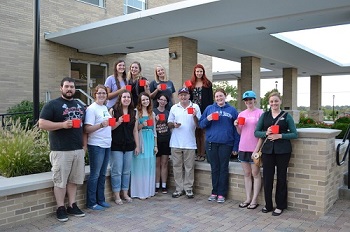
The UN Development Goals Class at the College of Mount St. Joseph (Dr. Jim Bodle)

The UN Development Goals Class at the College of Mount St. Joseph (Dr. Jim Bodle)

Last month I spoke to a unique class at the College of Mount St. Joseph in Ohio, one dedicated to ending hunger and poverty through the UN Development Goals. The class had attended Ban Ki-moon’s Youth Day presentation at the General Assembly.

As I prepared for the class a surprise came to me via twitter! It was a letter from a child in Mali, a country in Africa that has suffered through conflict and drought. The UN World Food Programme (WFP), which is providing school meals in Mali, forwarded a translation of the letter:

Hello papa et maman. After 11 months of occupation in North Mali by armed bandits we’re today on the path to school. Our parents are poor and tired.

Thank you WFP who gave us food so we could work hard in school. We always count on God and you. With WFP it’s okay. The school in Barize thanks you.

These school meals take on even more urgency in Mali with recent findings that show three out of every four households in the northern part of the country suffer from hunger. Both WFP and Catholic Relief Services are providing food for schoolchildren in Mali. Funding though is always an issue.

Food and education for children is something that clearly does not get enough attention, yet it’s one of our most important pathways to peace.

Ban Ki-moon told the Youth Day audience in August about his experiences growing up in war-time Korea. When it rained there were no classes because those were held outdoors. The school buildings had been destroyed during the fighting.

The Secretary General said the Korean children were hungry for food, but also hungry for knowledge. “It’s not only bread and butter” he said, “you need to have knowledge and education.” Getting children food and education is a top priority worldwide.

What better example than South Korea? During and after the war food was provided to children through the United Nations, CARE and other organizations. The U.S. Food for Peace program was founded after the Korean War. Millions of Korean children received school meals through Food for Peace.

History provides us even more advice. It was October 1st, 1947 when Secretary of State George Marshall said, “Hunger and insecurity are the worst enemies of peace.” He knew that peace after World War II stood no chance unless the enemy of hunger was defeated. Europe’s recovery was only possible under a foundation of food. School meals were a huge part of this recovery. That is a lesson we need to remember today.

It was a great opportunity to speak to the UN Development Goals class about food and education for children. Everyone in the class even received a Red Cup which is the World Food Programme’s symbol of school meals.

The school meals mean a lot to every country, from the United States to Yemen. The United States has its own national school lunch program, building upon years of effort. Now the U.S. Congress ironically is trying to undo that by eliminating some free school meals as part of its food stamp cuts.

That is why it’s so important that people advocate for what should be a basic right for children: school meals. The UN Development Goals class, with its emphasis on service learning, is well-equipped to carry on this message.

Next year Yemen will be starting their own national school lunch program with the help of WFP, a potential major turning point for a country mired in conflict and poverty.

Erin Koepke of the World Food Program USA said to me, “I love how there is a class dedicated to the Millennium Development Goals. If only all colleges and universities had a similar class.” I agree.

originally published at the Huffington Post

Leave a comment

Filed under global hunger

Writing, History and Global Hunger


In 1947 Americans fed a "silent guest" during the holidays and this led to a CARE package going overseas to feed the hungry. Credits:  CARE

In 1947 Americans fed a “silent guest” during the holidays and this led to a CARE package going overseas to feed the hungry.
Credits:
CARE

Writing is like a bridge to other worlds. It can take you to a land far away. Or it can even take you back in time. All you need is a pen and your imagination.

This combination of writing and history is the best tool I have for taking on one of mankind’s greatest threats: global hunger.

Why study history? Because “I like to” to quote former Harvard Professor Frederick Merk. There are great stories as we uncover the past. It’s inspiring. How well known is it that millions of lives have been saved over the years because both citizens and leaders were committed to fighting hunger. Shouldn’t that be remembered and celebrated?

History can help guide us through the sometimes treacherous waters before us. The famous Marshall Plan that rebuilt Europe after World War II showed how critical food is for rebuilding a society. Once, a young lieutenant after World War I was told that getting food to the hungry trapped in a valley would be impossible. His response was “yes, we can” and his team got it done. That is the spirit that must remain timeless.

My writing adventure against world hunger started when I was finishing a graduate course at the College of Mount St. Joseph. You know a class is going well when the ideas start coming. Sometimes those ideas divert you from the curriculum, but when it comes to education it’s good to deviate. School is about creative thinking and writing.

I was ready to take on a new topic with my writing. However, I did not know much about global hunger at that time. I knew hunger was a crisis both globally and even locally. Today, there are 870 million people worldwide who suffer from hunger. In America there are just over 50 million people who struggle to get food. But quite often it’s not something we see right in front of us and it’s not often covered in the media. These great distances can mean less action.

Hunger can be a silent crisis too. The effects of malnutrition are very damaging, and even deadly, to a society. The impact can takes months or years to unfold, or to be realized. Hunger though has the potential to claim more lives than a war itself.

To get started, I bought a book about Food for Peace by George McGovern written back in the early 1960’s. From that historical starting block I moved into the present day struggle. I made a great contact with Jennifer Parmelee of the UN World Food Programme (WFP). The WFP is the largest food aid organization in the world. Then I got some ideas.

My first article on hunger was published in my hometown newspaper, the Cincinnati Enquirer, on my birthday. I have written hundreds of articles and books about hunger since that time. I even compiled these articles and interviews into several books.

With each story I try to take that trip to a distant land or time. Sometimes I do both. Just within the last year I have written about school meal programs (which Charity Miles supports) and have received comments from people who benefited from U.S. led school feeding in Germany after World War II.

Sometimes I do my writing in between a Charity Miles workout. I will bring a little notebook and stop somewhere and jot a few things down. Last week I took a break at the College of Mount St. Joseph library and found a historical book about the International Red Cross. I read about how they provided school meals to children in Hungary during the 1956 Revolution.

When it comes to fighting hunger you are looking at a crisis so massive, that it takes involvement from so many corners to mount any kind of offensive. This month I reminded a UN Development goals class at Mount St. Joseph of Helen Keller’s quote, “Alone we can do so little, together we can do so much.”

A good idea would be if someone could write a paragraph or two about their interests and talents. Afterwards, you would write down how those same parts of your life could be used to help end global hunger. If you use Charity Miles you already have one such idea to write down and develop. The great thing about Charity Miles is that you can fight hunger both at home, by supporting Feeding America, and abroad by helping WFP. On some days I have run or walked for both. You can probably think of many other ways to help these organizations fight hunger. Think of as many as you can. Then you can start turning those ideas into action.

Those words and ideas can lead to many things. I remember a message from an organization called Edesia saying that a newspaper article I wrote led to donations to buy Plumpy’Nut, a life saving food for infants, during the East Africa famine of 2011. You never know what surprises wait around the corner just by writing or diving a bit into the past.

Originally published at Charity Miles.

Leave a comment

Filed under global hunger

Feed Syria’s Starving War Victims

WFP is trying to feed millions of Syrian war victims (WFP/Marco Frattini)

WFP is trying to feed millions of Syrian war victims (WFP/Marco Frattini)

Where there is war there is hunger. In Syria children have died because of chemical weapons, but also because they could not get enough food. Weakened, illness overtook them.

Isra from Syria says, “This war…is killing people slowly. We used up all our supplies of food – I could only give my children one or two mouthfuls of rice to keep them going. I just cried at night.”

The civil war in Syria has created a new enemy for the people: hunger. Syria’s agriculture has been ruined and many bakeries have been destroyed by shelling. The seeds of war have been planted for famine.

The United Nations World Food Program (WFP) is facing its largest hunger relief mission. WFP is trying to feed three million Syrians this month, but faces extreme difficulty in moving life-saving aid because of the violence.

Many people are blocked off from aid by the Syrian government. Save the Children says the numbers of hungry are likely much higher, possibly 10.5 million Syrians in seven governorates alone. Save the Children warns, “As the destruction continues, these numbers will grow: children who once relied on three healthy meals a day will go to bed hungry, afraid, feeling abandoned by the world outside.”

There are also two million Syrians who have fled to Iraq, Jordan, Turkey, Egypt and Lebanon. They totally depend on international aid.

The World Food Program needs about $ US 30 million a week to provide food aid for Syrian war victims. The UN food agency is also trying to feed millions of hungry in Yemen, Afghanistan, Mali, South Sudan, Darfur, Haiti and other countries leveled by conflict or natural disasters.

As the world tries to negotiate an end to the war, we must also press the Syrian government to allow full access to the hungry. In addition, WFP and other aid agencies must have the funding they need to bring relief.

It’s overwhelming for any individual to look at the size of this crisis. But everyone can have an impact, even some of the simplest measures can help. The free smartphone app Charity Miles raises money for the World Food Program. Just going out for a walk, run or bike can raise funds for WFP, which is an agency that relies entirely on voluntary funding. It’s free for you, the funds are donated from a corporate sponsorship pool.

Using this app I have raised hundreds of meals for WFP just by running or walking. I know it’s a small amount, but it’s better than feeling helpless. Laure Chadraoui, a WFP rep working on Syrian relief, told me “What you do makes us all very proud, we need every penny indeed.”

It’s also important to make an impact statement. That’s what needed to keep the focus of leaders in bringing an end to the war and negotiating agreements on humanitarian access. It can help motivate the Congress to pass key legislation like the Global Food Security Act, so hunger remains a top foreign policy priority.

What happens in communities can have a powerful impact globally. In the fall of 1947 people across the USA donated food for the Friendship Train. This outpouring had a powerful influence on Congress as it debated aid to rebuild war-torn Europe.

Senator Arthur Vandenberg said the Friendship Train, “demonstrates our instinct, our tradition, and our impulse to feed the hungry and to heal the sick; and personifies the friendliness which is the genius of a lasting peace.” That holiday season Americans did not stop either, they fed a “silent guest” at Thanksgiving and Christmas which led to more CARE packages for the hungry. The famous Marshall Plan followed and rebuilt Europe from the ashes of war.

Every generation’s horrors can be overcome by its heroes. During World War I collections were held to provide relief in Belgium and other suffering countries. Even after the war people responded to pleas from Herbert Hoover and General John J. Pershing to feed the “invisible guest”: a hungry child. The Motion Picture Industry even held a major fundraiser at the same time.

As Helen Keller once said, “Alone we can do so little, together we can do so much.” Every little bit can go a long way. Understanding this is what makes a leader. Now is the time for action as our generation faces its great challenges in war, humanitarianism and the quest for peace.

Originally published at the Huffington Post.
Leave a comment

Filed under global hunger

In Favor of the Comprehensive Nuclear Test Ban Treaty

Nuclear Weapons Test during the 1950s. (National Archives photo)

Nuclear Weapons Test during the 1950s. The CTBT would end all nuclear weapons testing. (National Archives photo)

I have written several columns about ending all nuclear weapons testing through the Comprehensive Nuclear Test Ban Treaty (CTBT).

New York Times
Des Moines Register
Albuquerque Journal
Yahoo! Voices

There is support for the treaty from many corners. Paige Norton, a student in the New Media and Communications Department at the College of Mount St. Joseph,  compiled a list of recent articles that are also in favor of ending nuclear testing once and for all. Here is this list:

Pifer, Steven. “Brookings.” New Support for the Comprehensive Test Ban Treaty. The Brookings Institution, 30 Mar 2012. Web. 18 Aug. 2013. <>.

Krauss, Lawrence. “Future Tense.” It’s Time for the U.S. To Finally Sign the Nuclear-Test-Ban Treaty. The Slate Group, 25 Apr 2012. Web. 18 Aug. 2013.

Chen, Steven. “South China Morning Post.” Beijing to share blast detection data with Comprehensive Nuclear-Test-Ban Treaty Organisation. South China Morning Post Publishers, 11 Aug 2013. Web. 18 Aug. 2013.

Mangano, Sherman, Joseph, Janette . “counterpunch .” The Legacy of the Nuclear Test Ban Treaty. South China Morning Post Publishers, 5 Aug 2013. Web. 18 Aug. 2013.

Suresh, J.C. “InDepthNews.” CIVIL SOCIETY CRUCIAL TO BAN NUKE TESTING . S.R International , 2013. Web. 21 Aug. 2013.

“newswise.” 3D Earth Model Developed at Sandia Labs More Accurately Pinpoints Source of Earthquakes, Explosions. Sandia National Laboratories, 27 Aug 2013. Web. 27 Aug. 2013.

“”Scoop” World- Independent News .” China’s Commitment to Comprehensive Nuclear-Test-Ban Treaty. Sandia National Laboratories, 27 Aug 2013. Web. 27 Aug. 2013.

Brannen, Kate. “DefenseNews.” U.S. Renews Debate Over Comprehensive Nuclear Test Ban Treaty. Gannet Government Media Corporation , 10 Apr 2012. Web. 21 Aug. 2013.

“Itar-Tass News Agency.” Russia doesn’t see any practical steps of the U.S. over Comprehensive Nuclear Test Ban Treaty ratification. N.p., 19 Jul 2013. Web. 22 Aug. 2013.

Mackby, Jenifer. “Strategic insights and bipartisan policy solutions.” Comprehensive Nuclear Test Ban Treaty. CSIS, 23 Jan 2012. Web. 21 Aug. 2013.

Daryl , Kimball. “Comprehensive Nuclear Test Ban Treaty .” Five Decades Since JFK’s Call for a Nuclear Test Ban Treaty. The Arms Control Association , 7 Jun 2013. Web. 22 Aug. 2013.

“Physicians for Social Responsibility .” Comprehensive Test Ban Treaty. The Arms Control Association , 2012. Web. 22 Aug. 2013.

Dahl, Fredrik . “Reuters.” Nuclear test ban body’s new head to seek compliance of key powers. N.p., 23 Oct 2012. Web. 23 Aug. 2013.

 History of Comprehensive Nuclear Test-Ban Treaty. Philadelphia News , 13 Apr 2012. Web. 23 Aug. 2013.

Leave a comment

Filed under Comprehensive Nuclear Test Ban Treaty

College Students Hear Message of Hope from UN Chief

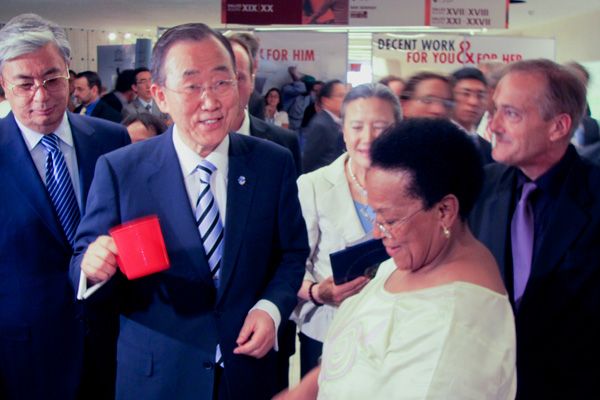
United Nations Secretary General Ban Ki-Moon holding the famous red cup which symbolizes the movement to provide all children worldwide with school meals. Mount St. Joseph students listed to presentations both at the United Nations and on campus about the importance of school meals in ending hunger and poverty (photo courtesy of the UN World Food Program)

United Nations Secretary General Ban Ki-Moon holding the famous red cup which symbolizes the movement to provide all children worldwide with school meals. Mount St. Joseph students listed to presentations both at the United Nations and on campus about the importance of school meals in ending hunger and poverty (photo courtesy of the UN World Food Program)

Last month College of Mount St. Joseph students traveled to the United Nations in New York. Their mission was to learn about the UN Development goals to end world hunger and poverty.

The students attended a presentation by UN Secretary General Ban Ki-Moon. The Secretary General talked about bread and butter. Not the appetizer kind. What he meant was how children around the globe needed food, but also education.

The Secretary General told the story about growing up during the Korean War. Schools were destroyed during the fighting and children attended class outdoors, under shade of trees. When it rained there was no class.

The Secretary General said how he and other children were hungry for food, but also for knowledge. “It’s not only bread and butter” he said, “you need to have knowledge and education.” Getting children an education is a top priority worldwide.

The Mount students, upon returning to campus, learned more about the importance of food and education for children. The story of war-time Korea further illustrated this point as former Cincinnati resident, Major Charles Arnold, led a UN civil assistance team that fed Korean refugee children. Without this food, the children would have suffered severe malnutrition.

The Charity CARE, with support from the U.S. Food for Peace program, provided millions of Korean children with school feeding over the decade following the war. This was a key strategy to fighting malnutrition and boosting school enrollment and learning.

Today, the United Nations World Food Program spearheads a global effort to provide all children with school meals. It’s called The Fill the Red Cup Campaign.

MSJ students received red cups from the World Food Program USA last week as a symbol of this school feeding movement. They also listened to historic messages from General Dwight Eisenhower, who spoke in 1948 at the United Nations Crusade for Children. Ike emphasized how starving children, scrapping for food, could not grow up to be apostles of peace. Food aid is essential now as it was after World War II.

The Mount campus currently fundraises for UN school feeding programs and Feeding America through its Charity Miles team. The UN class is planning to continue to spread Ban Ki-Moon’s message of hope, food and education for all.

article originally published at Cincinnati.com

Leave a comment

Filed under global hunger

The World Needs More School Meals

Emergency school feeding in Mali through the World Food Programme. Cuts by Congress to food aid could harm this program. (WFP/Daouda Guirou)

Emergency school feeding in Mali through the World Food Programme. Cuts by Congress to food aid could harm this program. (WFP/Daouda Guirou)

A child in the war-torn African nation of Mali just wrote a letter to the UN World Food Programme (WFP). Emergency school meals are being provided by the WFP in Northern Mali.

“Our parents are poor and tired,” the child wrote. “Thank you WFP who gave us food so we could work hard in school. We always count on God and you. With WFP it’s okay. The school in Barize thanks you.”

This food is nutrition for their mind and body. But also for their spirit and soul. Food is hope. WFP’s plan is to feed children but at the same time get them back in school and learning. It’s a strategy that is proven to work.

They are going full steam ahead at providing these meals through the rest of this year. Right now 120,771 students in Northern Mali get two meals a day: an enriched breakfast and a lunch. Volunteer cooks also receive take home rations.

It’s common sense that school meals are important, especially for a nation trying to find that road to peace after a war. Tragically, that does not always translate into funding for school meals. When international relations is discussed it seldom revolves around humanitarianism, the very thing people around the world need most.

For Syrian refugee children school feeding is one of the few things they can count on during this time of upheaval in the Middle East. The WFP is providing 2,000 children right now with school feeding at refugee camps in Jordan. They hope to expand to 30,000 by the end of the year. In Iraq over 4500 refugee children have received high-energy biscuits at school and summer camps.

WFP needs funding to make sure school meals continue the rest of this year and into next year. The UN food agency relies entirely on voluntary donations. That means budget decisions by the U.S. Congress have a dramatic effect. If funding disappears so too will the school meals. That is a silent tragedy that goes unseen.

In Mali, WFP has a homegrown school feeding project in the Southern part of the country. By helping small farmers become the providers of the meals, it helps build the future of the country, one where they can sustain themselves.

Catholic Relief Services (CRS) also has a school feeding program in Mali which is set to resume in October. Kristina Brayman of CRS reports the program will operate in 310 schools with an end goal of feeding 80,000 children.

The U.S. McGovern-Dole school lunch program supports this CRS initiative in Mali. The Congress will be deciding in the coming weeks how much funding to give McGovern-Dole. This will have a big impact on the future of school meals in U.S. foreign policy.

Some members of Congress want these budgets made responsibly and are desperately trying to get the fight against hunger at the top of the foreign policy agenda. Representative Betty McCollum (MN) recently introduced the Global Food Security Act. This would create a White House level coordinator to improve the U.S. response to world hunger.

The Act quotes a U.S. Intelligence report which states, ”Growing food insecurity in weakly governed countries could lead to political violence and provide opportunities for existing insurgent groups to capitalize on poor conditions, exploit international food aid, and discredit governments for their inability to address basic needs.”

It’s in everyone’s interests that we fight hunger and provide school meals around the world. A child who received school meals in Germany wrote after World War II, “If every people will help the other, like you does, we should have a lasting peace soon.”

That is what the world needs most of all now.

Leave a comment

Filed under global hunger

Hunger is not a game for politics

Congress is threatening to cut international food aid.

Congress is threatening to cut international food aid.

The article “Food-stamp cuts might deal heavy blow to region” (July 28) justifiably raises great concern over the repeated attempts by Congress to cut food aid.

Over 50 million Americans suffer from hunger. Food banks are overstretched, and cutting back assistance will be a disaster. The cutting of food stamps will also eliminate hundreds of thousands of free school meals for needy children.

Globally, what could be more important to our foreign policy than fighting hunger. Our Food for Peace and global school-lunch programs save children’s lives, and help the recovery of nations leveled by war, disasters and poverty. This is the great humanitarian tradition of our country, the one that prevented the worst famine in history after World War II.

Today, food will determine whether there is to be peace and recovery in the Middle East and regions where there are massive flows of refugees and agriculture has suffered huge damage. The Syria crisis is alarming, with the UN World Food Program needing around $29 million a week to carry out a relief mission. Conflict and hunger are also ongoing in Mali, South Sudan and Yemen. Haiti needs food support as it tries to build its agriculture after suffering through a series of disasters.

Yet some in Congress seek to reduce funding for international food aid, even though it makes up less than 1⁄10 of 1 percent of the federal budget.

Some House members are trying to change this disconnect. Rep. Betty McCollum of Minnesota introduced the Global Food Security Act to put hunger back at the top of the foreign policy agenda, with a White House level coordinator. Over 30 humanitarian aid groups want this bill passed, and Congress should listen to what they have to say.

Food is the very basis of peace, a functioning economy or education. The idea that this is an area for budget cuts makes little sense, for domestic and foreign policy. It’s time Congress received this memo.

Originally published at the Cincinnati Enquirer.

Leave a comment

Filed under global hunger