

































Photographs copyright 2011 by William Lambers

Aisha is an internally displaced Yemeni girl in Southern Yemen living in an elementary school. She is one of many Yemeni children who are suffering from hunger and displacement. WFP and other aid agencies need support in order to carry out child feeding and rehabilitation programs. (WFP/Abeer Etefa)
News about Yemen is dominating the airwaves following the killing of the Al Qaeda leader there. Far less reported is the suffering of those displaced by the fighting between the government and Al Qaeda-linked militants.
Abeer Etefa of the United Nations World Food Programme (WFP) just visited the southern port city of Aden and witnessed the terrible conditions in which displaced Yemenis are living.
See the full article and video at Blogcritics Magazine.
Filed under Uncategorized, World Food Programme, Yemen
Hunger in Yemen: An Activist Spotlight
Food for Education is the Great Hope for Yemen (Yemen Post)
Fighting Hunger in Yemen (New York Times letter)
Interview: Rajia Sharhan of UNICEF Yemen
Interview: Geert Cappelaere of UNICEF on the Humanitarian Crisis in Yemen
Plotting the 2012 War Against Hunger in Yemen
Budget Debates in Congress Loom over Yemen Crisis
WFP Director Warns of Hunger Threat Stalking Yemen
Over 1 Million in Yemen Denied Emergency Food Rations
Inside Yemen: Hunger from Conflict, High Food Prices
Without Nutrition and Education Yemen Cannot Thrive
Yemen Nears Breaking Point, Humanitarian Crisis Could Worsen
U.S. Increases Drone Attacks in Yemen, Hunger Relief Remains Low on Funding
In Yemen’s Arab Spring, Crucial to Look Beyond Al Qaeda
Yemen: Food for Peace Plan Low on Funding
Yemen’s Future is Being Made Now
Could Yemen be the Next Somalia?
Crisis in Yemen: Children Suffering from Malnutrition
1000 Days of Peril in Yemen: The Children Must Be Fed
Rapidly Deteriorating Humanitarian Crisis in Yemen
U.S.- Yemen Partnership Can Mean Food for Peace
For Yemen it’s Bread, Fuel or Chaos
Hunger in Yemen Expanding at Alarming Rate
Yemen Undergoing Its Worst Humanitarian Crisis Ever
U.S. Strategy in Yemen Should Fight Hunger
Underfunded Hunger Relief Mission Resumes in Yemen, but Thousands Displaced
Plumpynut to the Rescue in Yemen
Yemen: What Can Be Done to Help Now
Yemen: Low Funding Limits Hunger Relief Operation
Yemen: When a “CARE Package” Brings Education and Hope
Osama bin Laden Dead, Al Qaeda Lives on in Food Insecure Yemen
Yemen: Recovering Livelihoods in Conflict-Torn North
Yemen: Children Echo Timeless Call for Peace
U.S. Wants Change in Yemen, But Where Is the food?
Food to Reinforce Peace Process in Yemen
For Yemen There Is No Alternative To Peace
Yemen: Protests, Chaos and Hunger
Protests in Food-Insecure Yemen
Like Egypt, Yemen Suffers from High Food Prices
Yemen Hunger Relief Mission Underfunded by Nearly $70 Million
Clinton in Yemen as Humanitarian Crisis Reaches Tipping Point
What Matters to the People of Yemen
More Powerful Than Al Qaeda: Hunger in Yemen
Malnourished Children in Yemen Need Plumpy’nut
Yemen: hunger relief mission remains woefully underfunded
Petition to President Obama and the Senate on fighting hunger in Yemen
WFP, Yemen launch emergency operation
Fighting Al-Qaeda, Hunger, and Poverty in Yemen
U.S. and Allies Ignoring Child Hunger Crisis in Yemen
Friends of Yemen can restart vital Food for Education program
Obama’s MDG Speech Will Test Yemen Policy
Civilians need aid after Yemen offensive against Al Qaeda
Food for Education critical for Yemen and the Millennium Development Goals
Feed Those Displaced by the War in Yemen
What’s troubling about the Pentagon’s plan for Yemen
Against Hunger, Poverty, Desperation and Chaos in Yemen
Senate needs to back Yemen resolution with food aid
Al Qaeda, War, Hunger, and Poverty
Relief Fund Created for Victims of Conflict and Hunger in Yemen
Food For Education Is The Great Hope For Yemen
Yemen Needs Its Own Roadmap to End Hunger
White House says UN relief plan for Yemen woefully underfunded
Obama’s Feed the Future Should Include Food for Education in Yemen
Stopping the Hunger and Despair in Yemen
World Food Programme provides aid to Somali refugees in Yemen
Remembering Hoover’s child feeding message as we face hunger crisis in Yemen
Unrest in Yemen Over Food Shortages: U.S. and Allies Need to Take Action
World Food Programme provides aid to Somali refugees in Yemen
Obama’s Policy Toward Yemen is Failing on Food
Hunger crisis escalates in Yemen, World Food Programme appeals for help
Hunger crisis escalates in Yemen, U.S. needs to show leadership
Low funding for World Food Programme causes ration cuts for victims of conflict in Yemen
Low Funding for WFP Threatens Vital Child Feeding Programs in Yemen
Interview with Andrew Moore of Save the Children in Yemen
Clinton’s Call for Development in Yemen Cannot Go Forward Without Food for Education
“The best way to really get at some of these underlying problems that exist is through an effective development strategy.” — Hillary Clinton
Humanitarian aid critical for peace process in Yemen
President Obama must lead to stop hunger crisis in Yemen
Sounding the alarm on hunger in Yemen
Conflict, hunger and the suffering of women in Yemen
U.S. Policy Toward Yemen Missing Key Component: Food
Hunger, Conflict, and the Suffering of Women in Yemen
150 Million in Military Aid for Yemen, Still No Funding for School Feeding
Jennifer Mizgata of the UN World Food Programme on the Hunger Crisis in Yemen
Hunger the Worst Enemy of Peace in Yemen
Lack of Funding for School Feeding in Yemen Not a Sound Strategy for Peace
Contributing to the development of peace worldwide by the creation of an Open Skies regime for aerial observation.
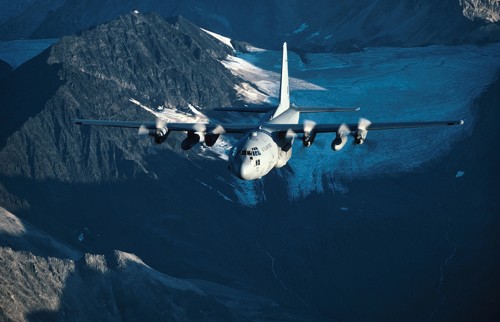
As the Cold War and the nuclear arms race escalated President Dwight Eisenhower offered the “open skies” peace initiative to the Soviet Union at the Geneva Conference in July, 1955. The idea was to allow peace planes from each country to fly over the territory of the other to inspect military forces and make sure no surprise attack preparations were taking place. Watch the news video of the Geneva Conference followed by President Eisenhower explaining the purpose of open skies. You will also see a sample flight.
The Open Skies Plan was not accepted in 1955 but it was revived by President George H. Bush in 1989.
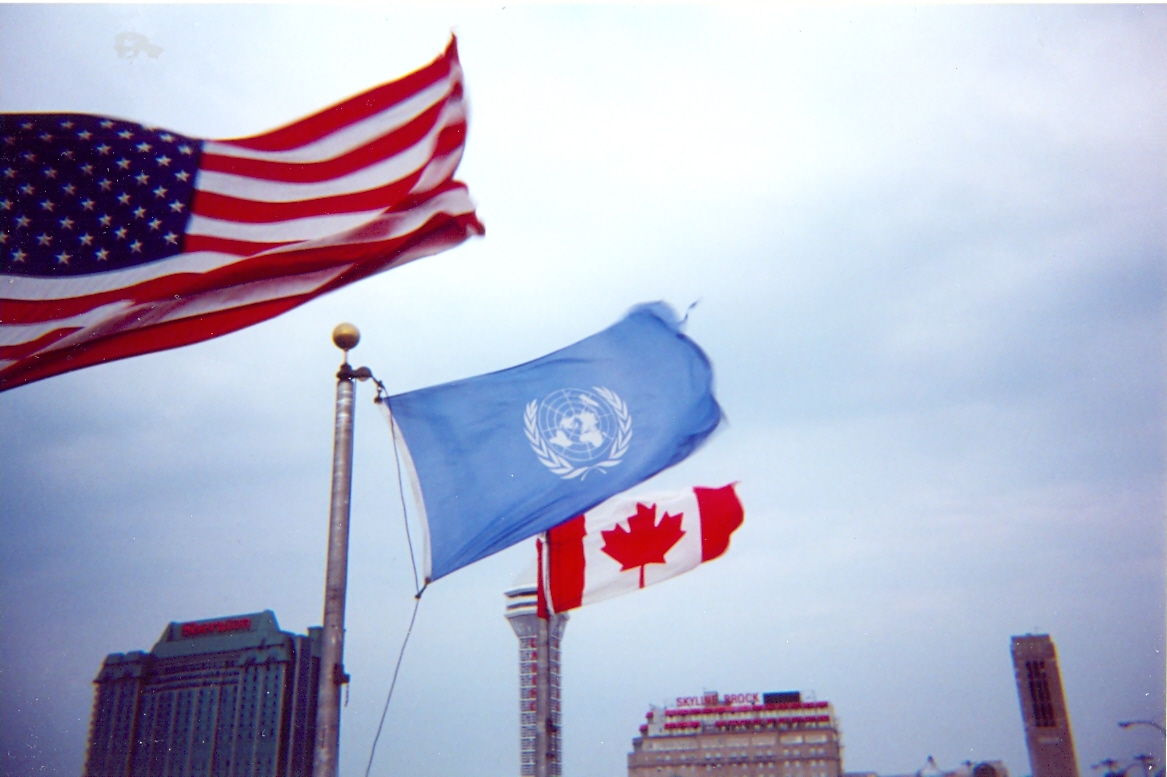
This led to the Open Skies Treaty of 1992 which included the United States, Canada, Russia and a number of nations in Europe. Watch this video about the treaty.
Video Celebrating Open Skies 20th Anniversary
Hillary Clinton on the Open Skies Treaty
Can Open Skies Be Expanded to More Nations?
Expanding Open Skies (New York Times)
How an Idea of Ike’s Could Help Settle India/Pakistan Nuclear Tensions–And Help Us Win the War on Terrorism (History News Network)
What Open Skies Can Do For Chinese-American Relations (History News Service)
Article in the Cincinnati Post titled “Open Skies to Build Trust.”
article about the Open Skies Treaty and its 500th flight
The Obama Administration moving forward with Open Skies Treaty
Open Skies Policy Should be Used by the Koreas (Cincinnati Enquirer)
“Open Skies” can play a role in the Korean peace and disarmament process. Click here to read the article in the San Diego Union-Tribune.
Historical Documents About Open Skies
Over a month before the Open Skies proposal this article appeared in the Cincinnat Post (June 14, 1955) about Operation Alert, a civil defense drill against nuclear attack.
Read a memorandum of a meeting of President Eisenhower and his advisors discussing “Open Skies” at the Geneva Conference. (Courtesy Eisenhower Library)
Read excerpts from a memorandum of a conversation at the President’s luncheon for the Russian delegation at the Geneva Conference on July 20, 1955. (courtesy Eisenhower Library)
Article in July 22nd, 1955 Cincinnati Post about Ike’s “Open Skies” proposal.
Read excerpts from an “Open Skies for Peace” pamphlet published during the Eisenhower administration. (courtesy of The National Archives of the UK (PRO): ref. FO371/123712)
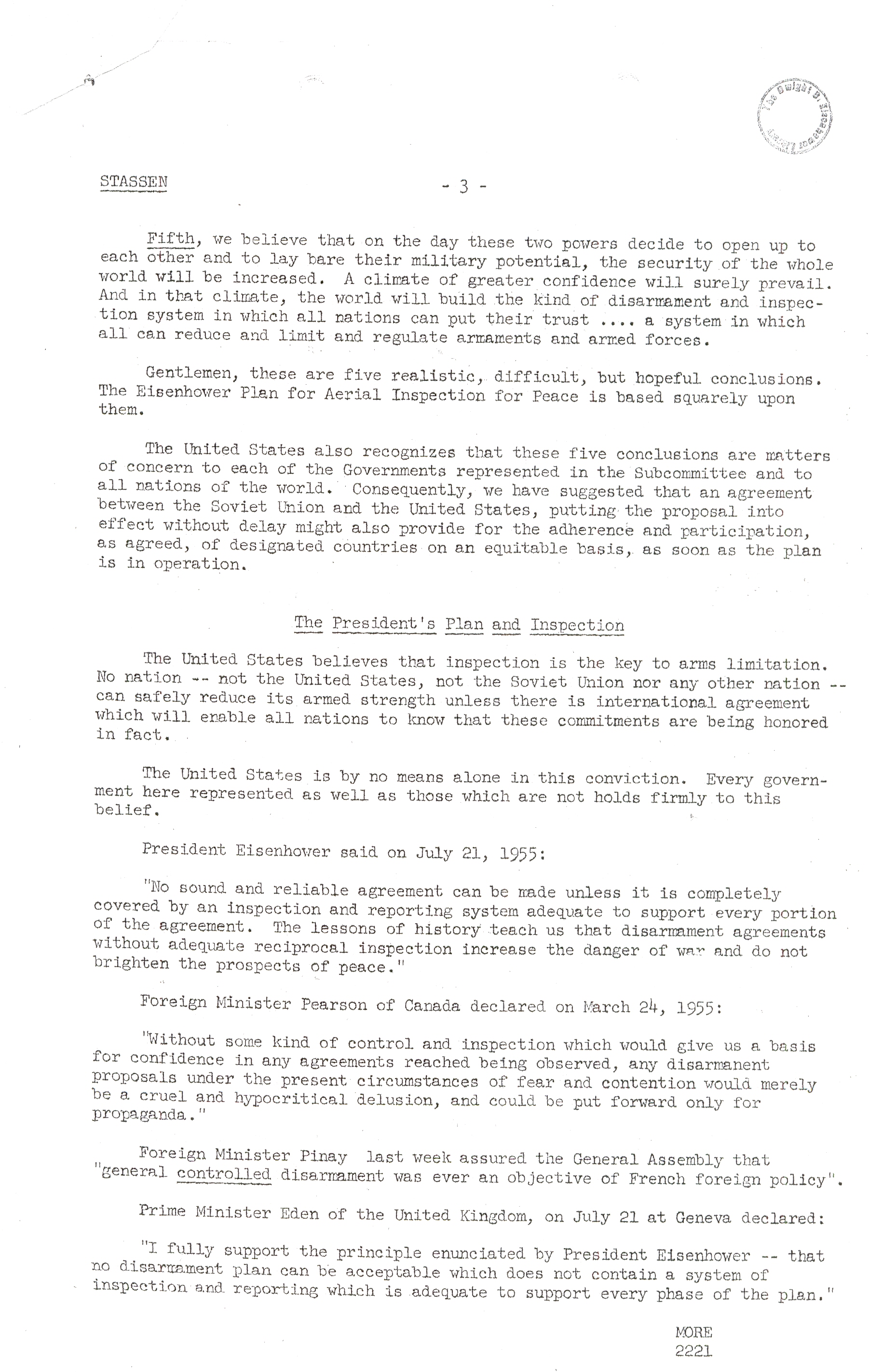
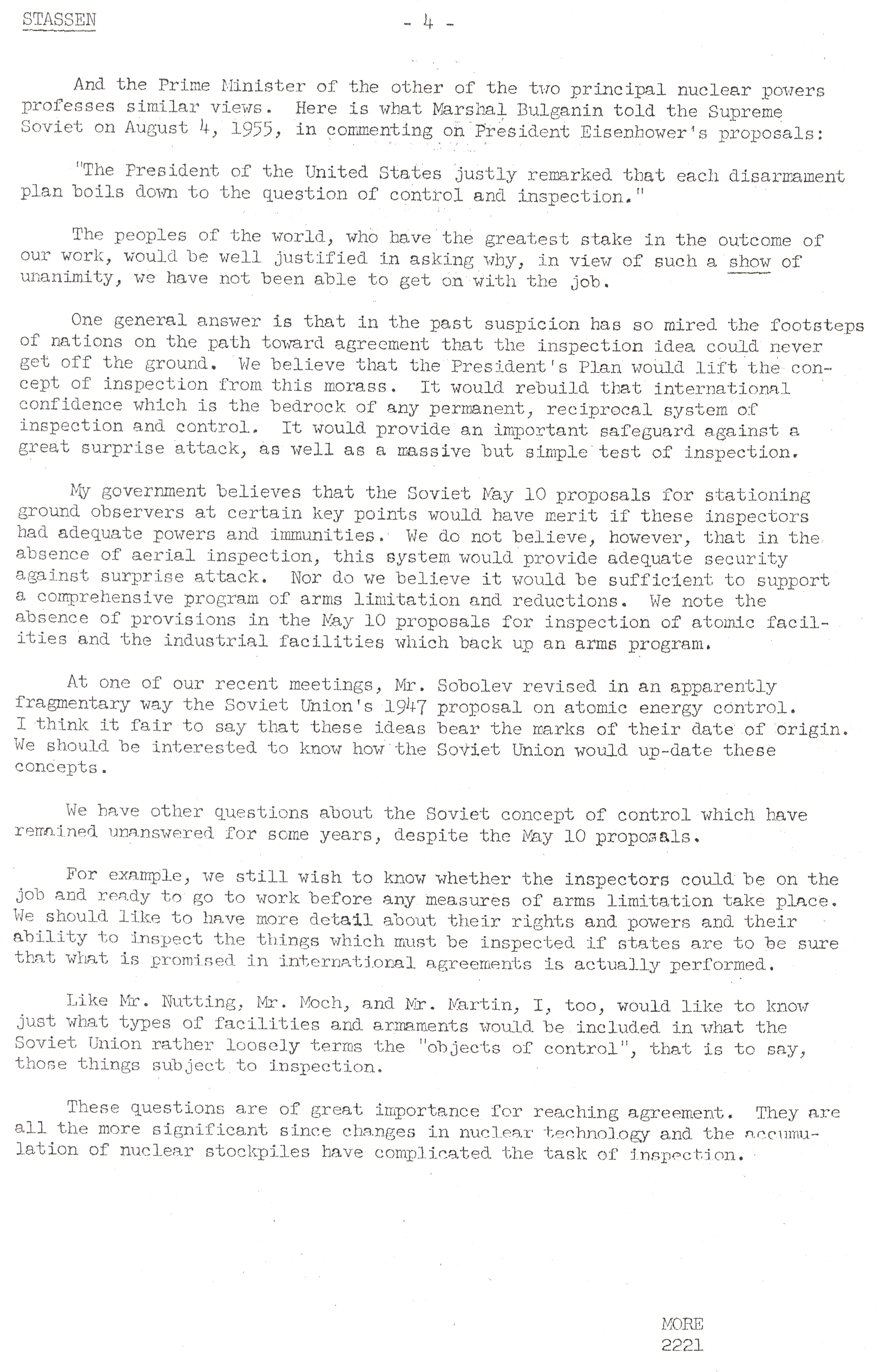
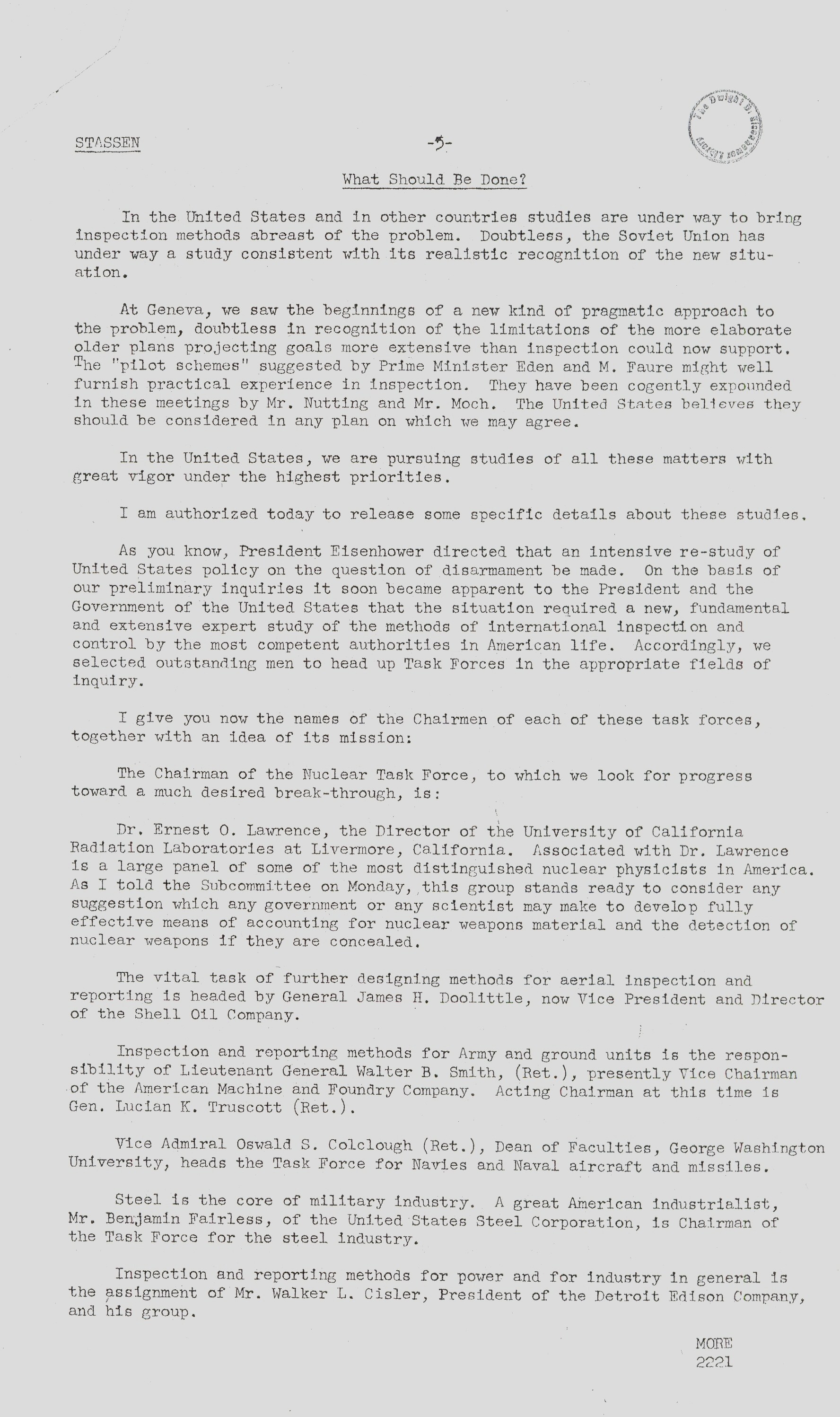
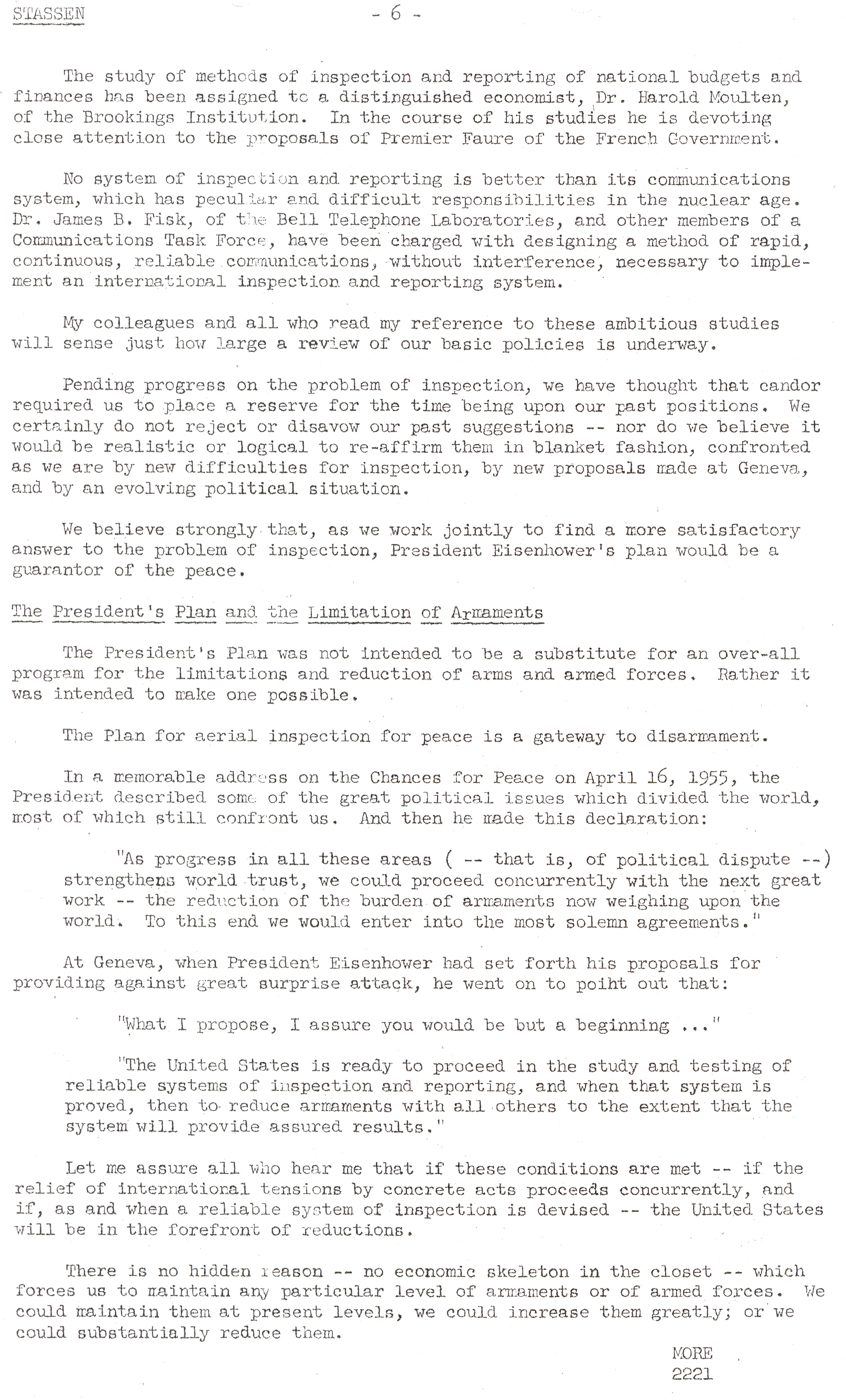
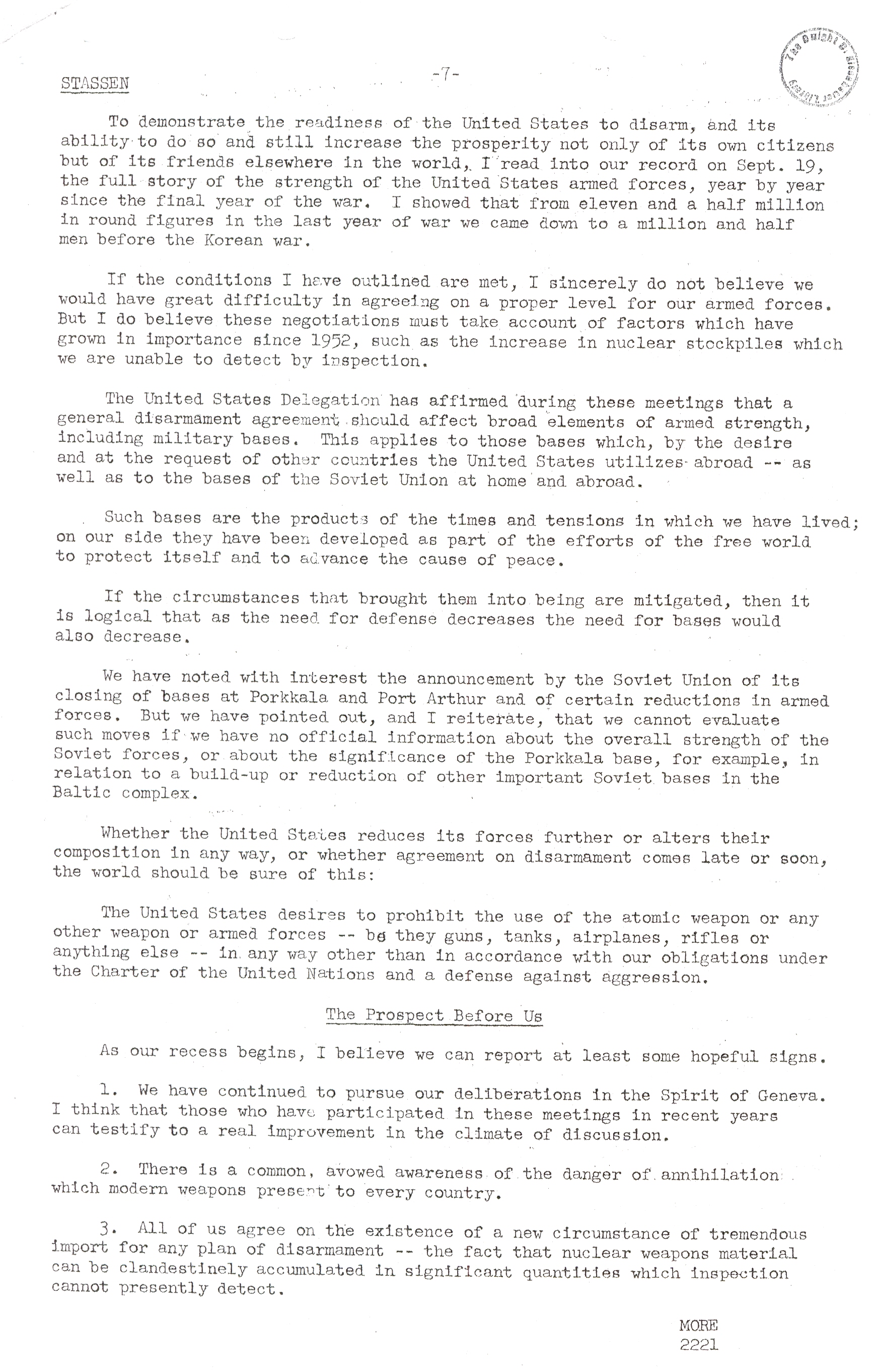
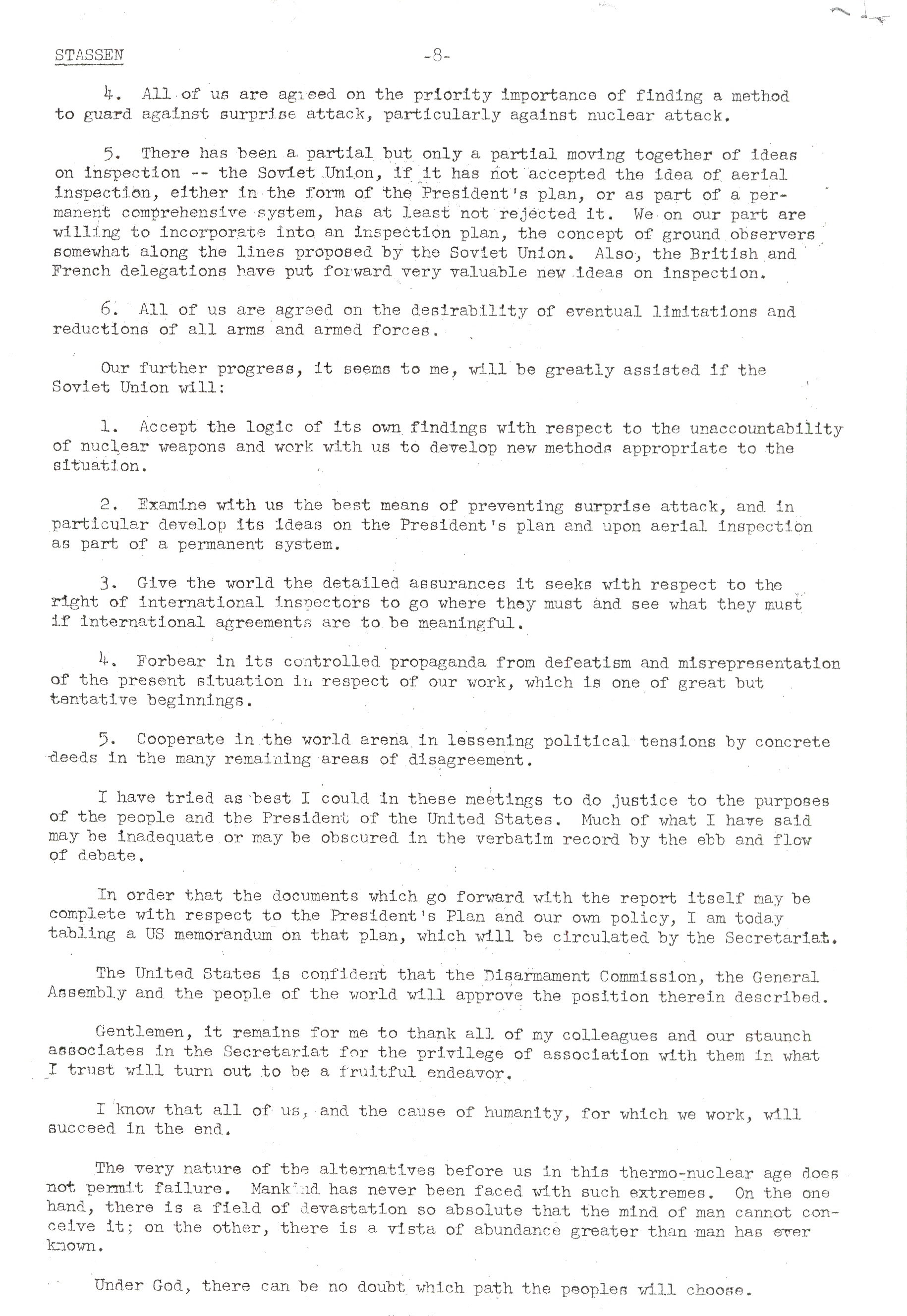
Read disarmament advisor Harold Stassen’s speech at the UN on October 7, 1955 about Open Skies and arms control. (courtesy Eisenhower Library)
Page 1 Page 2 Page 3 Page 4 Page 5 Page 6 Page 7 Page 8
Read a 1956 memorandum prepared by one of President Eisenhower’s assistants, Andrew Goodpaster, on the topic of confidence building measures and disarmament. (courtesy Eisenhower Library)
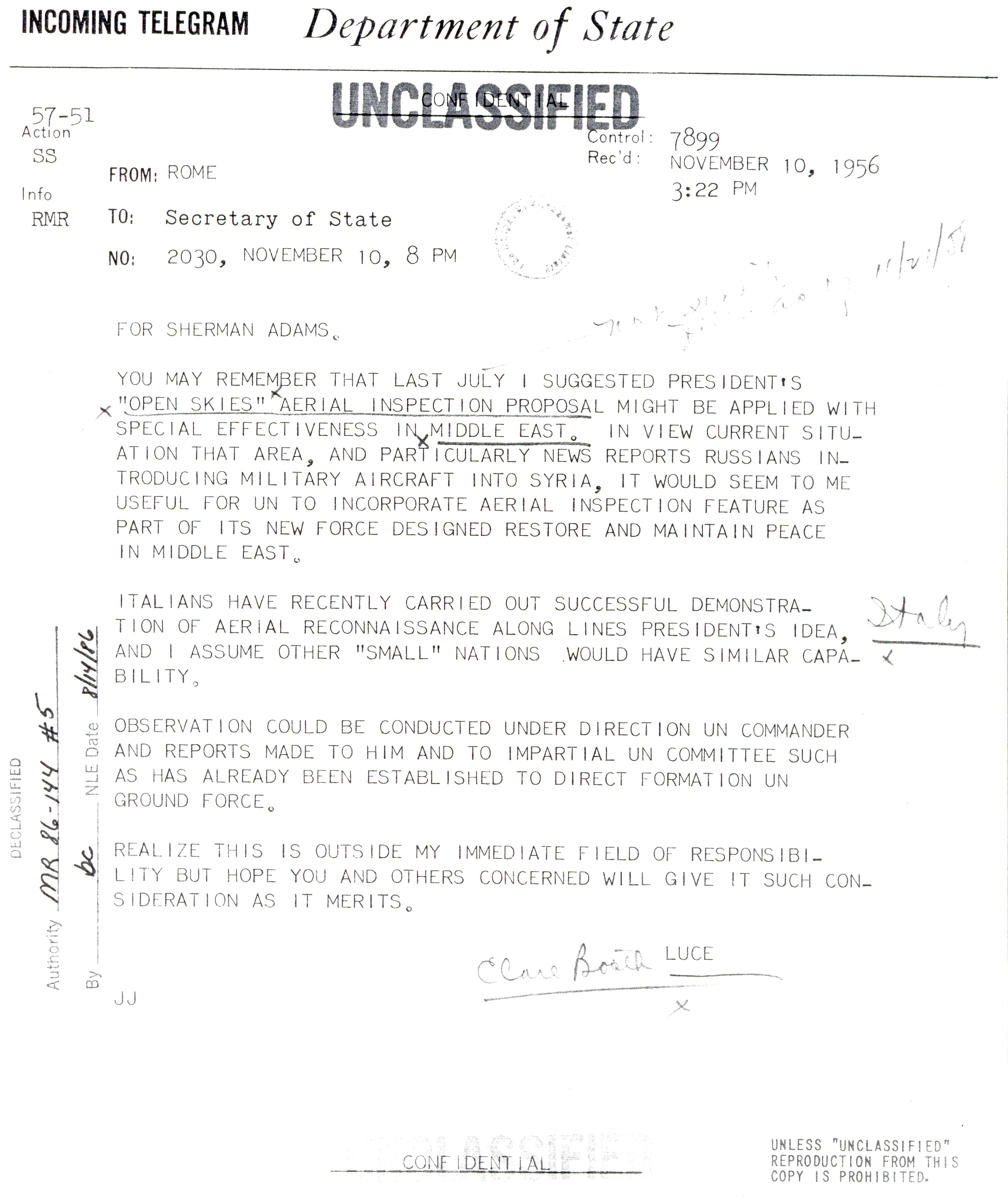
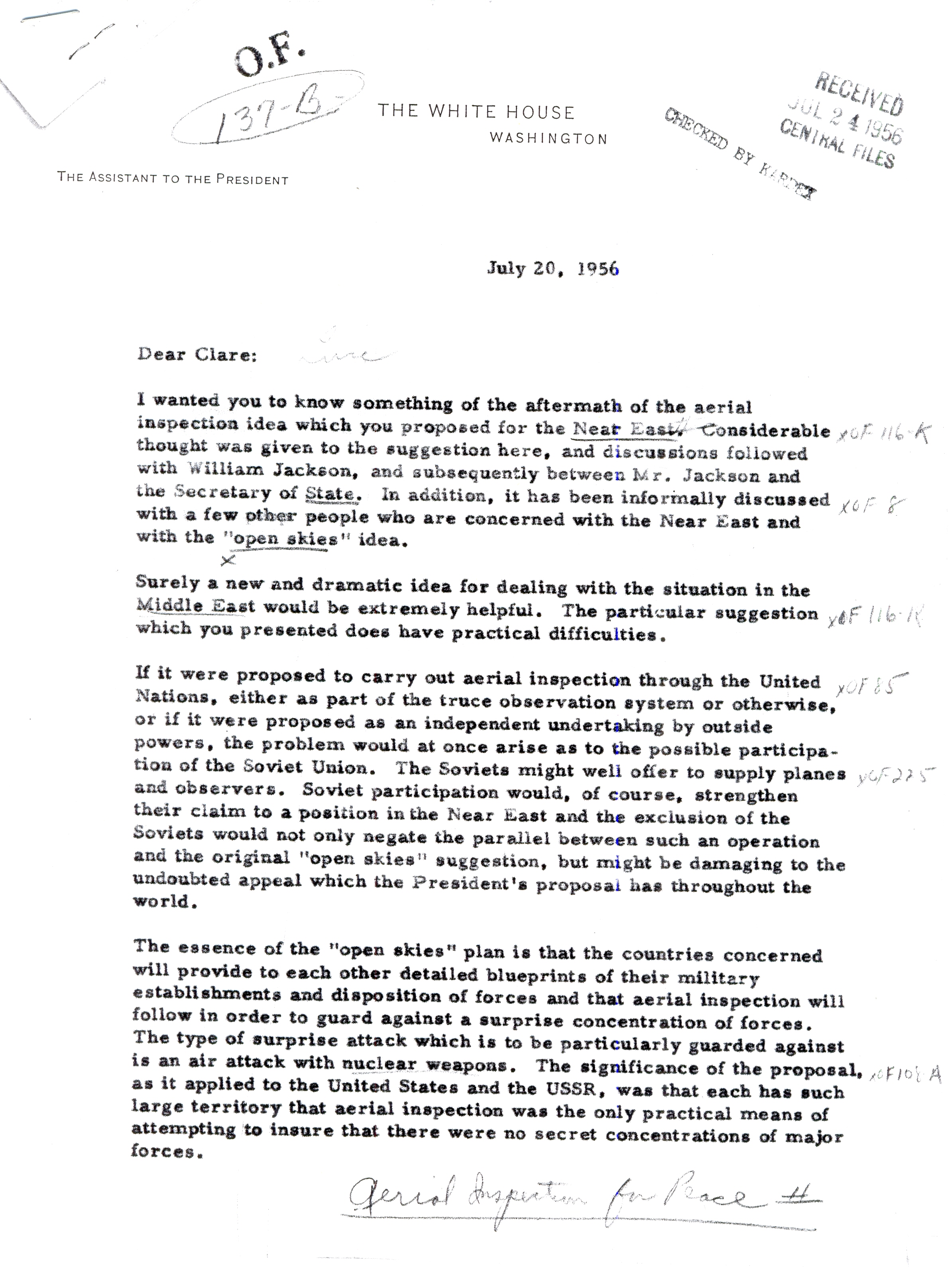
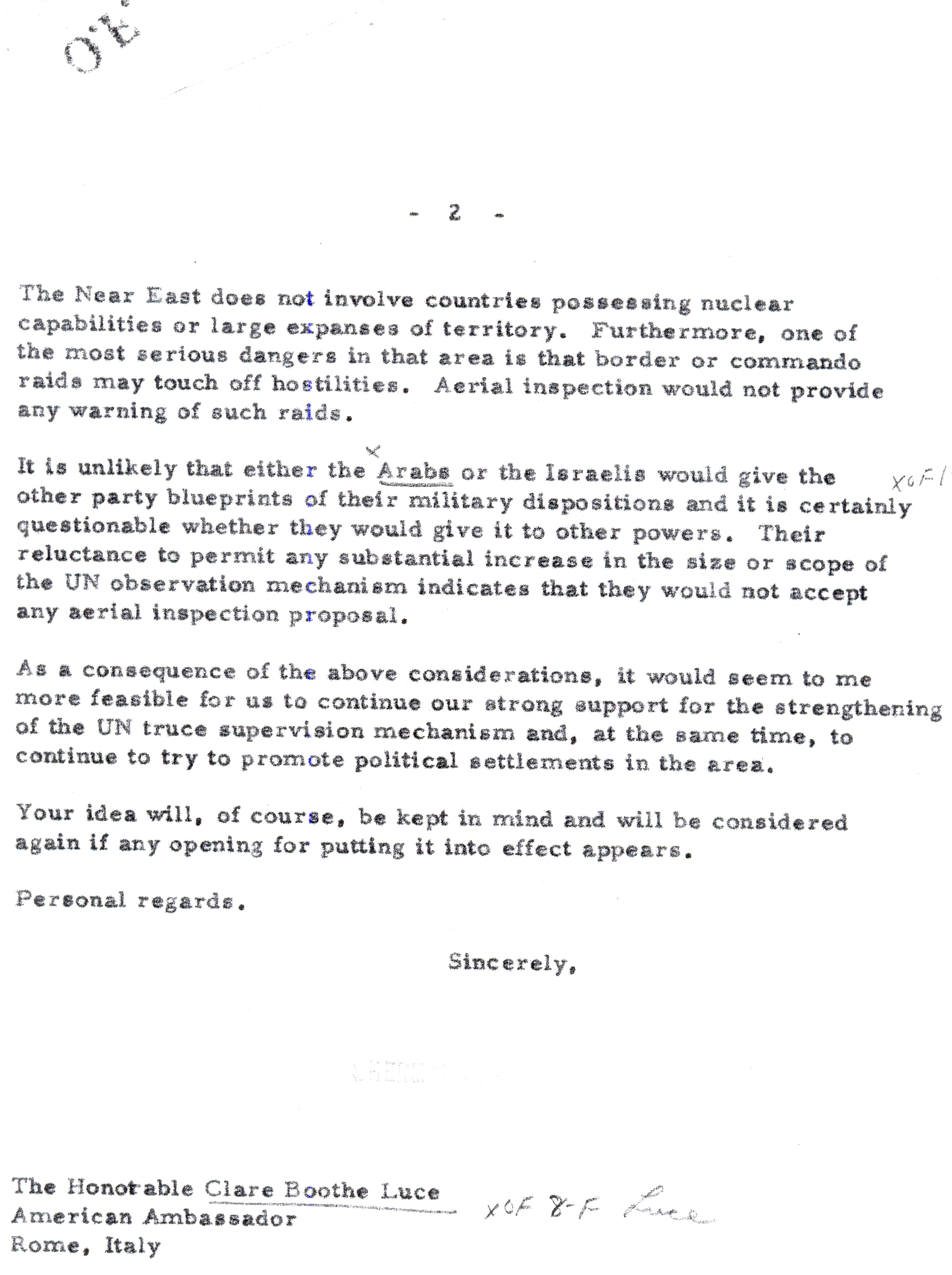
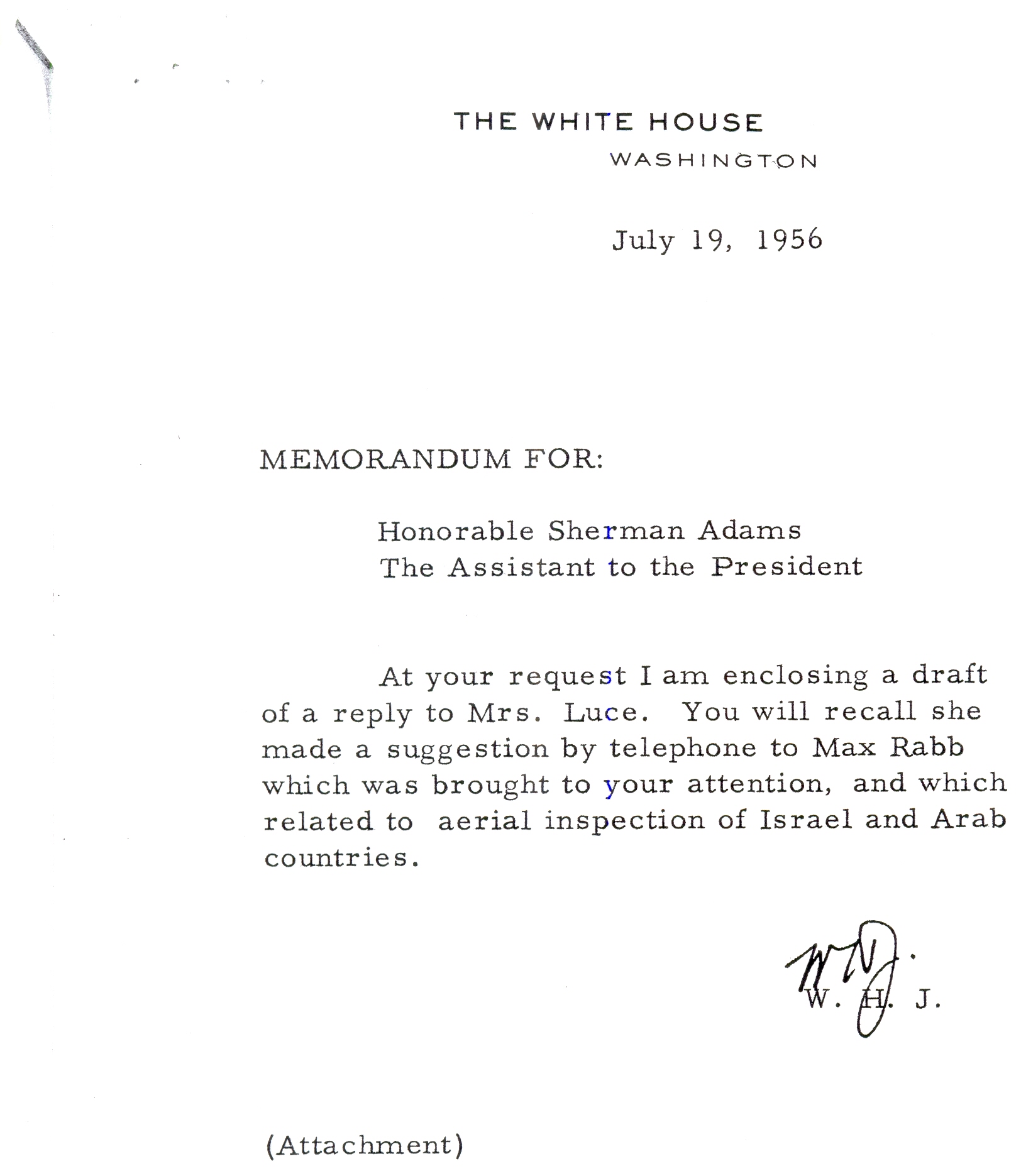
Click here to read a 1956 document which discusses the application of open skies in the Middle East. (courtesy Eisenhower Library)
Read here some responses to the Open Skies Middle East proposal
1992 Open Skies Treaty Fact Sheet
Read pages from 1992 Senate hearings on the Open Skies Treaty. These are answers from the Bush adminstration about Open Skies and how it can relate to the START Treaty and also potential expansion. (courtesy Cincinnati Public Library)
Open Skies Treaty Review Conference
Russian “Open Skies” mission over the United States.
Available at Amazon.com and Google Ebookstore

Nuclear Weapons

Open Skies for Peace
Mindy Mizell of World Vision is traveling through the Horn of Africa to report on the relief efforts for famine and drought victims. Amid so much chaos and horror Mizell finds rays of hope, such as 13-year-old Abdillahi, a Somali refugee living in Dadaab, Kenya. His family was forced to flee Somalia to find food and escape the violence.
Here is a child confronted with war and famine and Mizell said he never uttered a single complaint or talked about how unfortunate he was. Instead, he remained positive and upbeat.
Mizell writes, “I guess I expected him to say that he wanted more food, more water, better clothes or maybe a soccer ball. Instead, Abdillahi told me he wanted to go to school again! Not only did Abdillahi believe he had a bright future, but he spent several minutes advocating on behalf of his Somali friends and telling me that they all needed to go to school in order to find good jobs someday.”

World Vision’s Mindy Mizell interviews Abdillahi, 13, in the Dadaab refugee camp. (World Vision photo)
Young Abdillahi just pointed the way to what can end hunger and build peace in the Horn of Africa: education and food.
In responding to the drought in East Africa, it’s vital to ensure that all children can receive school meals and an education. This is extremely challenging, especially in areas where there are refugees and host communities all with great needs.
Lisa Doherty of UNICEF explains, “In some cases there have been massive influxes of communities and school-aged children into urban areas where there aren’t school facilities to absorb them all.”
UNICEF states that “school feeding, provision of learning materials and teacher incentives and additional learning spaces are the top priorities in order to ensure that children can access learning opportunities, many for the first time.”
Rozanne Chorlton, UNICEF Somalia Representative says, “Education is a critical component of any emergency response. Schools can provide a place for children to come to learn, as well as access health care and other vital services. Providing learning opportunities in safe environments is critical to a child’s survival and development and for the longer term stability and growth of the country.”
This is similar to what the U.S. Army did after World War II. For example, in Vienna, Austria, the U.S. military government helped reopen schools and start a feeding program. They did not want children roaming the streets, and giving them food at school was a top priority with post-war malnutrition rates climbing. The Army and food ambassador Herbert Hoover recognized the such programs were critical and needed to be strengthened and expanded. School feeding provided by the Allies and others after the war was a key defense, as famine threatened to attack many nations at that time.
Today, school meals play an urgent role in providing for refugee children in East Africa. Sandra Bulling of CARE says, “we are currently planning to set up lunch programs for the accelerated learning program of newly arrived refugee children, many of whom have never been to school before.”
Aid agencies are mobilizing to help children through this crisis and open the door to a better life in the future. But will there be enough funding? Fighting hunger and building children’s education is an area of neglect in the foreign policy of many governments. How do you change this? It’s up to the public to tell their representatives in government that it should be a top priority for all children to receive school meals and an education.
That is what can make a difference in the long term for children in East Africa and elsewhere who just want to go to school again.
See videos from the World Food Programme’s WeFeedback page.
Article first published as Somali Child: I Just Want to Go to School Again on Blogcritics.

At a GIZ hospital at a refugee camp in Kenya, a severely malnourished Somali refugee child receives treatment. (Photo by Laura Sheahen/Catholic Relief Services)
The famine and drought striking East Africa have created one of the worst humanitarian tragedies of this generation. Thousands of children have starved to death and many more are in grave peril from malnutrition.
Somalis are desperately fleeing into Kenya and Ethiopia in the search for food, only these countries are also suffering from food shortages. With the unrelenting drought, the crisis could get much worse. Children are suffering from severe malnutrition. Aid agencies are struggling to keep up.
Catholic Relief Services (CRS) is one of the aid groups in a race to save lives. CRS officers Laura Sheahen, who just visited one of the refugee camps in Kenya, and Sara A. Fajardo, took time to discuss the massive relief effort underway.
How is Catholic Relief Services helping the victims of famine and drought in East Africa?
Sara A. Fajardo: To give just a few examples, we are currently helping to feed more than a million people in Ethiopia and have launched projects in Isiolo and Wajir, Kenya and about to launch projects in Mandera where the drought’s impact has been severe. Some of the pastoralist communities living there have lost 50-100 percent of their livestock. These projects include rehabilitating wells, assisting with school-feeding programs and working on conflict mitigation projects between different pastoralist communities who may be trying to access the same limited resources.
In the Dadaab Refugee area we will be working through partners to distribute around 10,000 hygiene kits to arriving refugees. As part of our “do no harm” approach to humanitarian aid, we will also be providing assistance to the host communities surrounding the Dadaab refugee camps. These communities have also been severely impacted by the drought but are often overlooked because of the seemingly more pressing needs of the incoming refugees. Tensions can often flare up when one community perceives another as receiving assistance while they are left to fend for themselves. We will provide them with water and food aid and work with them to help weather the difficult months ahead.
Even before this drought hit, Catholic Relief Services was on the ground working to help communities prepare for this current emergency. In Kenya our staff has been working over the past three years alone to provide 91 water points to local communities, helped to create tree nurseries with more than 3.7 million seedlings, worked to get more than 2,500 miles of agricultural terraces built, and provided more than 108,000 female goats to our beneficiaries.
In Ethiopia we’ve worked over the past eight years to fight the effects of recurrent drought by drilling wells 1,000 feet into the earth. In much of Ethiopia, water runs below the surface in underground caverns as deep as 1,000 feet. This water is difficult, but not impossible to access. A recent visit to the field revealed that 95 percent of 28 wells CRS has constructed are still operational. The difference between communities with water sources and those without is remarkable. The livestock are plumper and produce more milk, which in turn means that the people themselves are nourished better. People in these areas rely less on food aid and more on their own means.

Somali refugees at Dagahaley refugee camp in Dadaab, Kenya. Following a severe drought, many families faced starvation and left Somalia on foot. Thousands of refugees are flooding into Dadaab every week. (Photo by Laura Sheahen/Catholic Relief Services)
You met some of the refugees escaping from Somalia, what are some of the stories they told you about what they have faced?
Laura Sheahen: Almost every refugee I spoke to had a horror story about the long walk from Somalia to Kenya. Armed bandits are a huge problem, and the vast majority of refugees I spoke to had been robbed at gunpoint. There has been an appalling number of rapes as well.
Some of the refugees were robbed not just of the little food and clothing they carried, but the actual clothes they were wearing; they are walking naked. People fleeing the famine and war in Somalia are also fighting off lions and hyenas in the night.
And of course, walking for weeks in the bush, under a baking sun and with no food, is bringing refugees to the brink of collapse even when they don’t meet bandits or wild animals.
What do you see is the greatest risk to refugees at these camps? Is it spread of disease, malnutrition?
Laura Sheahen: Right now, just keeping up with the food and water needs is a gargantuan task. The refugee camps in Kenya near the border have existed for years because Somalia has been troubled and dangerous for so long. But because of the drought, the camps are overflowing now and it’s hard to get food to everyone quickly enough. Waterborne diseases will be a problem if sanitation for the newcomers isn’t worked out fast. Any contagious diseases–anything that spreads when too many weak, hungry people are crowded together–could be an issue. For example, there was a recent outbreak of measles.
How many more refugees potentially could arrive?
Sara A. Fajardo: It’s hard to say. Currently the United Nations High Commission for Refugees estimates that between 1300-1500 new refugees are arriving daily. Aid agencies of course would prefer to help Somalis stay in their own countries. Whenever people are forced to migrate, it places them at undue risk for rape, theft, or other forms of exploitation. There is also the very real possibility of families becoming separated. In the measure that is possible the humanitarian aid community would like to provide direct assistance in the towns in villages most affected by the drought in order to avoid anyone having to make this often life-threatening trek.
How long do you think the refugees, as well as the host communities, will require extensive international assistance?
Sara A. Fajardo: This is a problem that will not be resolved over night. Droughts are cyclical in eastern Africa and their frequency (due to a variety of factors) is on the rise. Even if it rains tomorrow and the crops start growing, it will be quite awhile before things stabilize to the point where people can harvest enough food to sustain a family. It’s also important to remember that many of the drought-affected communities are pastoralists and rely on livestock for their survival. The UN estimates that it can take up to 5 years for herds of livestock to regenerate to a point that they can be relied as a consistent source of food. This emergency will require short, medium and long-term solutions, but of course the eventual goal of all concerned is to help people become self-reliant and not aid reliant.
Article first published as East Africa Famine: An Interview with Laura Sheahen and Sara A. Fajardo of Catholic Relief Services on Blogcritics.

You can donate to the Catholic Relief Services East Africa Emergency Fund.
The Providence Journal just published an editorial about the famine in Somalia. Their piece mentions two organizations, Rhode Island based Edesia and World Vision, who are working to provide desperately needed aid to East Africa.
You can donate to Edesia’s Horn of Africa fundraiser here.
You can donate to World Vision at their web site.
Also check out my July 25th, oped in the Providence Journal as well as their other coverage of the famine.
Bernard Beaudreau: Again, famine horror in Horn of Africa
Click here: Editorial: SOS from Somalia | Editorials | projo.com | The Providence Journal
Filed under Uncategorized

UNICEF Nutrition Officer Dr. Rajia Sharhan holds a young child at a therapeutic feeding centre in Sana’a, the Yemeni capital. (UNICEF Yemen/2011/Halldorsson)
In my recent article, “1000 days of peril in Yemen,” I talked about the great threat facing the children in that embattled Middle East country. If these infants do not get proper nutrition, they suffer lasting physical and mental damage. They are scarred for life.
Tragically, this is often the case in Yemen, the poorest country in the Middle East.
This week Hedinn Halldorsson of UNICEF profiles one of the physicians on the front line of the struggle to save Yemen’s children. Dr. Rajia Sharhan is UNICEF’s nutrition officer running therapeutic feeding centres. Families are so poor in Yemen, they are even forced to do the unthinkable.
Dr. Sharhan says, “For poor families, letting a child die is, sadly, one of the options they sometimes resort to.” Sharhan also explains how crucial it is for Yemen’s physicians to be properly trained to treat malnutrition.
The article is also full of warnings that policymakers must heed. Halldorsson writes, “At the therapeutic feeding centre at a large hospital in the capital, Sana’a, the mothers and grandmothers of six young patients all tell the same story. They say recent months have been particularly difficult due to Yemen’s political conflict, that they have no source of income or food.” An impoverished country like Yemen is not well-suited to absorb this prolonged political strife.
Dr. Sharhan says, “I often feel that I am in a vicious cycle. We treat one child and then watch new ones being brought in.” This is the struggle facing Yemen that often misses the headlines and news bytes. But children suffering is unacceptable and we have to do something about it.
The international community can help. The rehabilitation of malnourished children is a top priority in order to save a generation of youth. The future of Yemen is impacted by the rampant malnutrition and poverty in the population. In my previous article I mentioned how plumpy’nut supplies for all children in Yemen could make a huge difference. It would not even cost that much for the international community to come through.
There was once a time when one could buy a CARE package and send it to a country where children were suffering so much. I think people would like to do that today with Yemen. Maybe it’s this kind of initiative that would move the government leaders to follow.
This is an area where we can actually help Yemen relatively quickly. We have UNICEF, the World Food Programme, Save the Children, and others on the ground ready to work with Yemen and solve this crisis. They just need the support of the international community. All it takes is for a few in power to decide to take action to save the children and save Yemen.
Article first published as Crisis in Yemen: Children Suffering from Malnutrition on Blogcritics.
Filed under global hunger, Uncategorized

At the time this photo was made, smoke billowed 20,000 feet above Hiroshima while smoke from the burst of the first atomic bomb had spread over 10,000 feet on the target at the base of the rising column, 08/06/1945 (National Archives)
On August 6th, 1945 the atomic bomb was dropped on Hiroshima, Japan. The United States government later published a report titled “The Effects of the Atomic Bombings of Hiroshima and Nagasaki.” A telling final conclusion outlines the moral obligations of the United States with regards to nuclear weapons in the future.
“No more forceful arguments for peace and for the international machinery of peace than the sight of the devastation of Hiroshima and Nagasaki have ever been devised. As the developer and exploiter of this ominous weapon, our nation has a responsibility, which no American should shirk, to lead in establishing and implementing the international guarantees and controls which will prevent its future use.”
For more information about today’s efforts to control nuclear weapons visit Global Zero.
Filed under History, Uncategorized

Taylor Swift performing at the Hope for Haiti event to help earthquake victims. Will there be a similar event for famine relief in East Africa? (Photo Credit: Mark Davis/Hope for Haiti Now/PictureGroup)
When the earthquake struck Haiti in 2010 and millions were in desperate need of aid, Americans quickly rallied support. A telethon called Hope For Haiti, featuring some of the most famous performers, raised millions almost overnight.
This is really the great humanitarian tradition of the United States at work, a tradition that became very deeply rooted during the two World Wars and the Korean conflict. War breeds famine. American generosity came through to save millions during and after each conflict.
Read the full article at Blogcritics Magazine.
Filed under Uncategorized

 Author William Lambers