Category Archives: global hunger

This Thanksgiving Feed A Silent Guest and Help End World Hunger

Here is a  list of charities where you can make a “silent guest” donation this Thanksgiving to Help Feed the Hungry. Imagine you have a guest at your table on Thanksgiving, one of the world’s hungry people. You can send the donation to pay for the Thanksgiving meal of your “silent guest.” Please see my article This Thanksgiving Feed A Silent Guest and Help Build World Peace. Also you can read more below about the “silent guest” program.

United Nations World Food Programme

Play Free Rice

Save the Children

Catholic Relief Services

CARE

World Vision

Edesia

Feeding America

Aschiana Foundation

Action Against Hunger

Church World Service

Norwegian Refugee Council

UNICEF

Food for the Poor

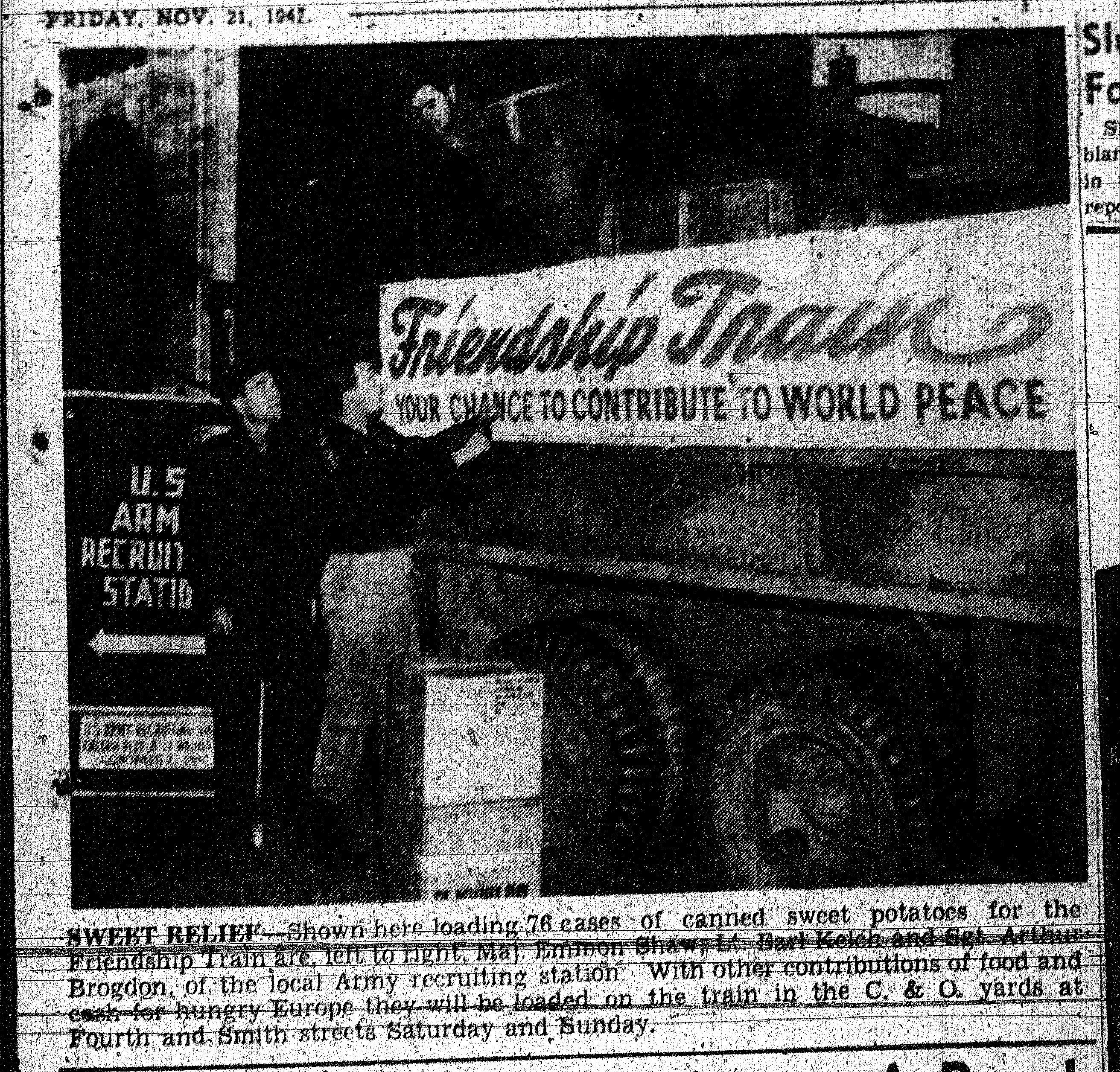
article about the Silent Guest program in a 1947 Plymouth newspaper. (courtesy Plymouth Public Library)

The Friendship Train and the "Silent Guest" Program were two ways Americans sought to build peace after World War II (Cincinnati Post reprint courtesy of the Cincinnati Public Library)

In Thanksgiving 1947 Americans were asked to take a “silent guest” into their homes, one of the hungry in Europe. The World War II devastated countries had been hit hard by drought and harsh winters causing food shortages. The silent guest plan was one way Americans came to the aid of the hungry and suffering.

On Thanksgiving Day Americans would figure what it would cost to feed a “silent guest” at their meal and then mail the donation to a committee in Plymouth, MA – the home of Thanksgiving.  Donations poured in and led to the purchase of many thousands of CARE packages of food going to the hungry in Europe.

This Thanksgiving we can answer the cries of the hungry whether it’s in the famine zone of East Africa, or in drought-ravaged Afghanistan, the Democratic Republic of the Congo  or Haiti. This holiday there may be those in your own city and state who are hungry.

You can take in a “silent guest” and make a donation to feed your guest at a number of charities.  Also included is a link to the online game Free Rice, where for every correct answer you get, 10 grains of rice are donated to the World Food Programme, paid for by advertisers, a modern way of taking in a “silent guest.”

1 Comment

Filed under Charity, global hunger

Afghanistan Hunger Crisis Deepens, Donors Not Responding

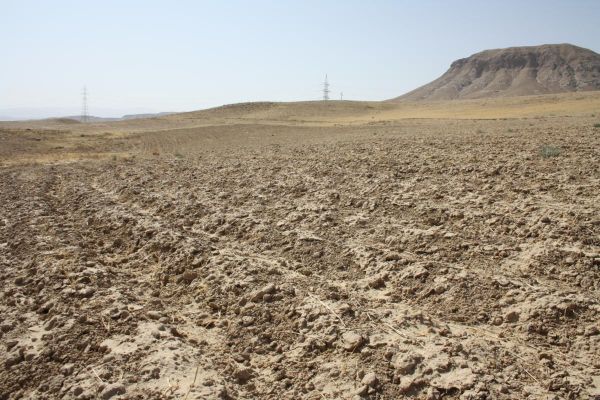
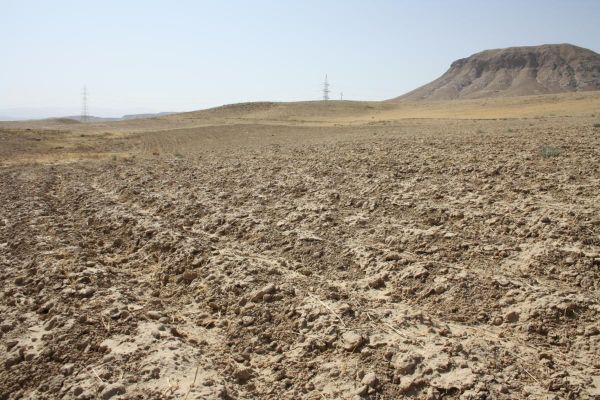
Fields of Dust: This should be a wheat field, but nothing has been harvested from here this year. The poorest farmers don’t have any irrigation systems for their fields and rely entirely on rain – which came late and sparse in the winter of 2010/2011. In the 14 provinces of Afghanistan affected by the drought, farmers have lost an average of 80 percent of the rain-fed harvest. (WFP/Silke Buhr)

The hunger crisis is dangerously escalating in Afghanistan. Drought has struck 14 provinces putting over two million people at risk of severe hunger and malnutrition. The response of international donors has been poor despite warnings being issued by aid agencies. Only 7% of the UN drought appeal has been funded to this point.

Earlier this fall Oxfam warned that in the 14 drought-affected provinces, “Many people in these areas were already suffering from chronic hunger. Nearly three quarters of the people living in the affected areas told relief agencies in August that they would run out of food in less than two months.”

Today a joint statement from Oxfam and other aid agencies said the drought and food shortages are taking their toll in communities, “from the closure of schools, forced migration in order to find food and work and already vulnerable families forced deeper into debt in order to get through the winter.”

Manohar Shenoy, the Afghanistan country director for Oxfam says, “Time was already running short. With snow falling in the highlands, the situation for many people has now become critical.”

Many Afghan children had already lost their school feeding ration earlier this year when low funding for the UN World Food Programme forced cutbacks.

Shenoy says, “To survive, already vulnerable people are pushing themselves and their families to the extreme: sliding even deeper into debt and selling all rather than just some of their livestock. Meanwhile the chronic child labour problems in Afghanistan are being exacerbated, as younger children are being forced to work more, for less money. In the worst cases, destitute families are forced to marry off young girls and sell teenage sons to agents who then send them to work in cities. This not only causes anguish, but reverses important gains that Afghan society has made.”

Funding for the United Nations World Food Programme (WFP), the lead agency in fighting hunger, has been low all year. WFP depends entirely on voluntary donations from the international community.

Silke Buhr of WFP says, “What is really worrying is the fact that for 2012 alone, we will need about US$390 million of which we have so far received nothing. Given that it takes between three and six months from the moment of pledge until beneficiaries actually receive the food, we will almost certainly have pipeline breaks…in early 2012.”

Afghanistan is looking at not only a severe hunger winter but suffering through 2012 and even beyond. Two things have to happen. One is to fund current relief operations to gain control of the hunger situation facing the country. This interim aid needs to be followed by a comprehensive plan to build resiliency among Afghan communities so droughts do not take such a toll.

It’s critical to note that even before the drought took hold, Afghanistan was already facing a hunger crisis with over seven million people listed as “food insecure” and many others on the brink. Poverty and malnutrition rates were already high.

The drought has sunk an already hungry and malnourished population deeper into the pit of suffering. Of all the threats facing Afghanistan, it is hunger which has become the most powerful. Hunger, if left unchecked, will crush hopes for peace for the war-devastated country.

Farhana Faruqi Stocker, the managing director of Afghanaid, says, “The international community, the Afghan authorities and development organizations need to assess why millions of Afghans remain vulnerable to hunger and find long term and sustainable solutions to solve this problem.”

Article first published as Afghanistan Hunger Crisis Deepens, Donors Not Responding on Blogcritics.

Leave a comment

Filed under global hunger

Interview: Alain Homsy of the Norwegian Refugee Council in the Democratic Republic of the Congo

School feeding in the DRC (WFP photo)

The Democratic Republic of the Congo (DRC) has suffered through decades of instability and conflict. And as the country moves forward with elections and peace building, it must contend with hunger, poverty, and displacement.

The International Food Policy Research Institute calls the hunger crisis in DRC “extremely alarming.” In fact, its Global Hunger Index (GHI) report recently revealed that, “among the six countries in which the hunger situation worsened, the Democratic Republic of Congo stands out. Its GHI score rose by about 63% owing to conflict and political instability”.

Close to 2 million people have been displaced due to the conflict. A majority of these are located in the North and South Kivu areas of the DRC. And the same report shows that 70% of the population in DRC is undernourished – the highest rate in the world.

The Norwegian Refugee Council (NRC) is coming to the aid of children in the DRC through programmes like school feeding. School meals not only fight hunger and malnutrition, but give children a better chance at getting an education.

Alain Homsy, country director for the NRC in the Democratic Republic of the Congo, recently took time to answer some questions about its school feeding mission.

How many children are benefiting from the NRC school meals program in DRC?

In Grand North Kivu (Beni/Lubero Territories – 2011), in a total of 156 primary schools, 87,848 pupils (43,166 boys and 44,682 girls) have benefitted from the school feeding programme, along with 1,953 teachers (754 men and 1,199 women) and 970 cooks (833 men and 137 women). In addition, two NRC Youth Education Program centres also benefitted from the school feeding program with a total of 192 learners (94 boys and 98 girls).

In South Kivu (Mwenga Territory – 2011), in a total of 52 primary schools, 22,367 pupils (11,220 boys and 11,157 girls) have benefitted from school feeding, along with 524 teachers (445 men and 79 women) and 220 cooks (all women). In addition, one NRC Youth Education programme centre also benefitted from school feeding with a total of 192 learners (74 boys and 91 girls).

Have the meals had an effect on class attendance and performance?

In Grand North Kivu [where sending children to school is a priority for those who can afford it and satisfactory security conditions prevailed for most of past decade] thanks to school feeding, enrolment and attendance went up by an average of 28% in the academic year 2009-10, with a maximum of 63% and a minimum of 2%. The regular meal supply therefore appears to have a clear impact on attendance, although changing security conditions also affect attendance in a significant way. In terms of performances, impact of school feeding is more difficult to demonstrate as it is not solely linked to the quality or quantity of daily food intake, and is also clearly affected by other factors, amongst which is an obviously determining one, the class size. Therefore, in some areas with less populated schools (classes of 25-30), the proportion of pupils who graduated went up by 10 to 15% based on the directors’ verbal comments, while in areas where schools listed high numbers of students (classes of up to 58 pupils), graduation rates sometimes decreased by 80% in spite of school feeding.

In South Kivu [where sending children to school has not been a priority and security conditions were bad for most of the past decade due to presence of the Democratic Forces for the Liberation of Rwanda], thanks to school feeding, enrolment and attendance shot up by an impressive average of 119% – bearing in mind over 52 schools were covered from 2009 to 2011 – with a maximum of 248% and a minimum of 80%. On the other hand, six schools which were either temporarily occupied by Forces of the Democratic Republic of the Congo (FARDC) or located nearby temporary armed forces positions lost up to 20% of their pupils. In terms of performances, the proportion of pupils who graduated after school feeding introduction stands at an average 85.2% for girls and 89.1 % for boys, reportedly being an incremental increase of about 5% [school directors’ estimates – not fully documented].

In addition, it is worth remembering that all school feeding should be accompanied by regular, twice a year minimum, de-worming treatments so that food eaten effectively contributes to better child development and higher concentration and learning capacity.

How long does NRC expect to run this school feeding program? Do you anticipate being able to hand it over to the government or local community?

On a general note, emergency school feeding is indeed expected to have an impact on attendance and performances, as well fed kids not only have a higher concentration and learning capacity but also “they do not need to rush back home for a meal as soon as the school bell rings”, to quote from a Masabele primary school director. [The same teacher argued that school feeding is the main reason for an ever-growing number of registered children, and that it helps pupils stay in school after class hours where they can do homework instead of going straight home for food and being called upon by parents for home chores at the expense of studies.]

As such, taking into consideration current instability in DRC and potential renewed difficulties in connection with presidential elections due in November 2011, NRC believes that there will be continued need for emergency school feeding at least for the whole of the 2011-12 academic year, as it stimulates vulnerable children to attend classes and help schools cope with increased number of pupils both in displacement and return areas.

It is important to note that from The World Food Programme’s point of view, however, emergency school feeding is purely linked to nutritional considerations and therefore targeted to areas where indicators justify it. But in light of the recently revised Global Hunger Index, in which DRC ranks first, it is very unlikely that conditions may evolve for the better in Eastern DRC and therefore emergency school feeding should be extended.

Longer-term perspectives, in terms of handing over to local government, are extremely limited as so far even “free education for all” remains a remote dream in DRC. On the other hand, substitutes to emergency school feeding are currently studied by NRC, first involving gradual introduction of a cash and vouchers approach for schools as a first step towards reducing dependency on the WFP supply lines, while increasing efficiency and stimulating the economy by local purchases of food needed in a selection of pilot schools. Thereafter, self-sufficiency of these schools could be reinforced by developing improved school feeding programmes, including food production on school-owned land by parents of vulnerable children, who in return for their work would gain free or cheaper access to education for their kids and receive a share of the harvests. Additional features of such programmes will include introduction of more fuel-efficient kitchen use, both at school and home level, as well as small-scale animal husbandry for a diversified source of proteins and income-generating purposes.

For more information about the Norwegian Refugee Council visit www.nrc.no

Special thanks to Kaja Haldorsen and the field staff of the NRC in the Democratic Republic of the Congo for helping to coordinate the interview.

Article first published as Interview: Alain Homsy of the Norwegian Refugee Council in the Democratic Republic of the Congo on Blogcritics.

Leave a comment

Filed under global hunger

Save the Children Issues Appeal for Flood Ravaged Thailand

Flooding in Don Meung, one of the northern suburbs of Bangkok which has been hard hit by Thailand's worst flooding in five decades, has killed at least 356 people and affected nearly 2.5 million.

Save the Children has issued an appeal for 5 million dollars to help with flood relief efforts in Thailand. The charity estimates that about 800,000 children are in need of assistance as massive floods have struck the country.

Thousands of people have been forced from their homes into crowded evacuation centers. Thousands of others though remained trapped in their homes and are depending on aid agencies to reach them with food, clean water, medicine and other supplies.

The floodwaters bring grave danger. Annie Bodmer-Roy of Save the Children warns, “The water is filthy, and there is a very real risk of waterborne or communicable diseases such as diarrhea and skin infections taking hold if families can’t maintain basic standards of hygiene. It is essential that the risks facing children in this crisis are understood and steps taken to keep them safe.”

Save the Children has been making deliveries of life-saving supplies to those trapped by the floods. They are also helping children in the evacuation centers.

Save the Children’s appeal states, “We need donations to help us delivering aid (including food, water, and non-food items such as diapers, sleeping mats, mosquito nets and hygiene supplies) and keep children safe by organizing child friendly spaces for them to play and learn.”

The flooding has destroyed livelihoods and hunger and poverty will threaten many for months to come. Aid will be needed to help thousands who will suffer without an income and will struggle to afford basic necessities.

You can donate at Save the Children’s web site.

Leave a comment

Filed under global hunger

McGovern’s The Third Freedom Essential Reading as Congress Debates Food Aid

George McGovern, author of the Third Freedom, was named the United Nations World Food Programme's first global ambassador against hunger. (WFP photo)

Former Democratic senator George McGovern’s The Third Freedom: Ending Hunger in Our Time highlights ways Congress can work to fight malnutrition at home and abroad, and why it’s so important we win this struggle against hunger.

His book takes on special meaning right now as Congress is proposing reductions in funding to food aid programs both here and abroad.

McGovern, who ran for President in 1972, was the Food for Peace director under President  Kennedy. This program sends U.S. food overseas to fight hunger and build stability.

McGovern also has a long track record helping feed the hungry in the United States. In a Friends of the World Food Program teleconference, the question was once posed to him: why fight hunger abroad when there are hungry people here? His reply was: Why not do both? Fight hunger whether it’s in the US or overseas.

In The Third Freedom he talks about the Food for Peace program which was supported by both President Dwight Eisenhower (a Republican) and then Democratic President John F. Kennedy. Since then, it has been the main weapon of the U.S. against world hunger.

Food for Peace though is currently at risk of significant budget cuts by Congress, despite the fact that there are tremendous hunger crisis points such as famine in East Africa, drought ravaging Afghanistan, and nations like Haiti who need food to bolster reconstruction.

The charity Save the Children says the House of Representatives is proposing $1.04 billion for Food Peace in the upcoming FY 2012 budget, a significant dropoff from this year’s funding level of nearly $1.5 billion.

One of the key bipartisan initiatives discussed by McGovern in the book is the McGovern-Dole global school meals program. Along with Republican Senator Robert Dole, McGovern developed this initiative.

McGovern-Dole funds school meal projects in developing countries. The UN World Food Programme, Catholic Relief Services, World Vision and other charities provide meals using McGovern-Dole funds. This program is among those at risk in current budget discussions in the Congress.

McGovern also writes about bipartisan congressional committees, which helped improve the U.S. domestic school lunch program. Today’s representatives need to keep up the fight to ensure needy children in the U.S. can access food. For instance, school lunch and summer feeding program enhancements made by McGovern and his colleagues in the Congress need to be followed through by the current representatives.

The bipartisan cooperation that McGovern writes about is especially critical as hunger rates in the U.S. are rising. Vicki Escarra, President of Feeding America says: “The need for food assistance has increased dramatically during the prolonged and severe recession. Hunger hits every state and county in America, with one in six people facing food insecurity… strong federal nutrition assistance programs will continue to be essential.”

Funding for domestic and overseas food aid is very much on the line currently in Congress. McGovern’s book offers hope in this difficult period by reviewing past achievements in the struggle to end hunger. At the same time, he is looking forward to what should be done next to defeat man’s ancient enemy

Originally published as McGovern’s The Third Freedom: Ending Hunger in Our Time is Essential Reading as Congress Debates Food Aid at Blogcritics Magazine

Leave a comment

Filed under Books, global hunger

Practice Your Spanish and Help End Global Hunger

Playing the online game Free Rice leads to donations for the United Nations World Food Programme (WFP) to fight global hunger . Every correct answer means 10 grains of rice donated to WFP, the largest food aid organization.

There is a great new way students or anyone else can practice Spanish vocabulary. Now, if you are already fluent in Spanish, please skip ahead to the last paragraph. If not, stick around.

What does the Spanish word Marzo mean? Does El Cobre mean copper or hat? What does the word tarde mean in Spanish? Hint: hopefully you have never been this going to school or work.

These are just a few examples of Spanish vocabulary questions available at the award winning online game Free Rice. To get started, you go to Freerice.com and click on Spanish under the languages section. There are also sections for many other subjects too.

You can answer hundreds of Spanish vocabulary questions. For each answer you get right, 10 grains of rice will be donated to the United Nations World Food Programme to fight hunger. The rice is paid for by advertisers on the site. You will see the rice being added to a bowl in the right hand corner of the screen every time you get an answer right.

The World Food Programme runs the site with its two stated goals: To “Provide education to everyone for free” and “Help end world hunger by providing rice to hungry people for free.”

So you can practice your Spanish vocabulary while at the same time helping fight hunger which afflicts nearly 1 billion people worldwide. It’s a great tool for learning, humanitarianism and social responsibility.

Click on the groups section and create your own team for your class, school or organization. You might even be able to set up a tournament between schools.

Yes, back to those who have already mastered Spanish. There are Free Rice sections for German, Italian and French. Bonne chance!!

To get started playing, visit FreeRice.com

Article first published as Practice Your Spanish and Help End Global Hunger on Blogcritics.

Free Rice is currently helping feed children in Cambodia, where massive floods have struck recently. See below a video from the World Food Programme.

Leave a comment

Filed under global hunger

Drought and Hunger Strike Afghanistan

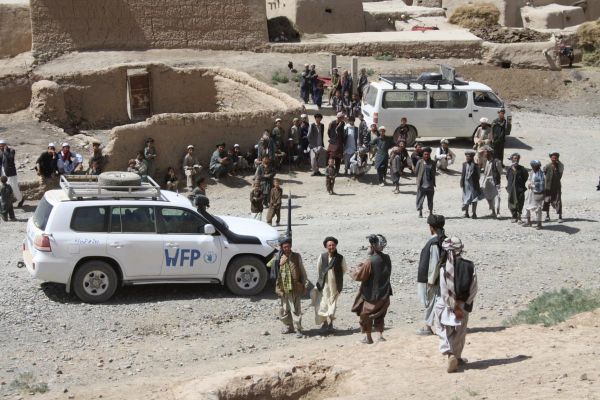
This year I have written several articles about the drought in Afghanistan and the resulting food shortages. The United Nations World Food Programme (WFP) will be providing aid to over 2 million Afghans in the drought zone during the coming months. This is on top of WFP’s existing mission to feed over 7 million Afghans who are hungry and malnourished. WFP depends on voluntary donations but so far is low on funding for its Afghanistan mission. Here is a series of photos taken by Silke Buhr of WFP which shows one of the drought hit areas.

This should be a wheat field, but nothing has been harvested from here this year. The poorest farmers don’t have any irrigation systems for their fields and rely entirely on rain – which came late and sparse in the winter of 2010/2011. In the 14 provinces of Afghanistan affected by the drought, farmers have lost an average of 80 percent of the rain-fed harvest. (WFP/Silke Buhr)

“I don’t remember it ever being this bad,” says Murat, the leader of the Tartarchal village in Khoram Sarbagh, Samangan province. “13 of the 15 wells in the village have dried up. 400 families are relying on two wells. There is no fodder for our animals. We have nothing left to sell or trade for food.” (WFP/Silke Buhr)

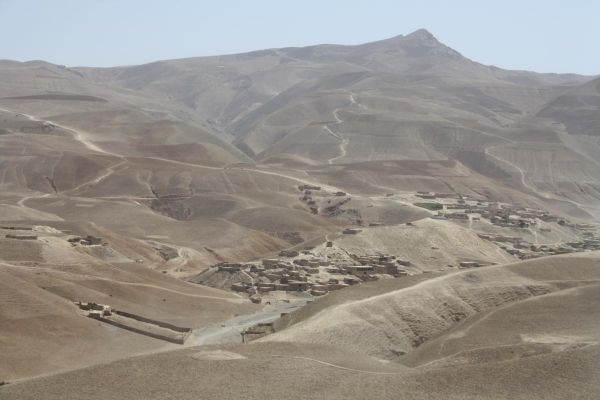
In the isolated villages of the drought-affected areas, people have to walk for hours or days to find water and fodder for their livestock. Many have sold their animals – their main source of income. Assessments show that some 2.8 million people have been affected by the drought. (WFP/Silke Buhr)

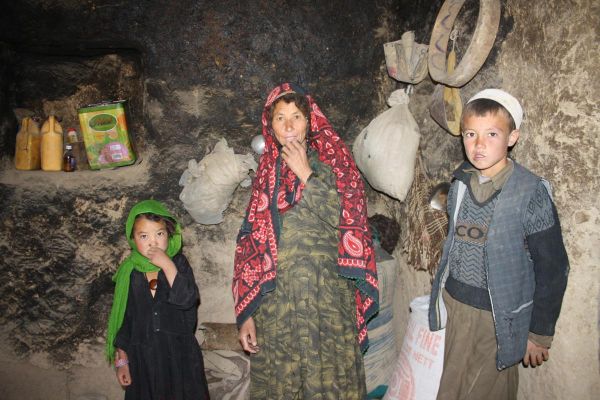
Mazuri-Bibi is in her kitchen with her two children. Here entire food stocks are here: a bag of wheat from last year’s harvest, which will last her a month. She is a widow and there is no work for her in the village, so she relies on the charity of her fellow villagers to get by. (WFP/Silke Buhr)

There is still some greenery in Aybak City, the capital of the Samangan province, but water level of the Aybak River is noticeably low. (WFP/Silke Buhr)

Young men in the drought-affected villages are leaving home to look for work to support their families. With the crop failure, there is little need for agricultural labour this year, so they have to travel to cities or neighbouring countries to look for casual work. (WFP/Silke Buhr)

WFP is preparing an emergency operation to assist some 2.4 million people with food and cash vouchers to help them get through until the next harvest. Assistance will begin with general food distributions to help people get through the harsh winter months, and then transition into food for work projects in the spring that will help people improve their food security by improving farming infrastructure, such as irrigation systems. WFP needs US$ 117 million to implement these plans. (WFP/Silke Buhr)

Leave a comment

Filed under global hunger

She Wanted to Mourn, But Chose to Save A Life

In my article Armistice Day, World Peace and Feeding the Hungry, I talk about the amazing work of the Belgian Relief Commission. They fed the hungry in Belgium, as well as Northern France, during World War One and in its aftermath.

One of its anonymous donors was a woman who wanted to buy flowers for a friend’s grave. She wanted to mourn. But she also was aware of the Belgian relief fund which had been collecting donations. She considered the two choices and decided to spend the 2 dollars on the Belgian relief fund. The Cincinnati Enquirer reported, “The possibility of saving a child in Belgium from starvation was the reason given” for her donation.

Two dollars in 1917 was worth about 2 months’ of meals. Frederick Chatfield, Cincinnati Branch Commissioner for relief in Belgium, reported the anonymous woman’s donation in an article discussing contributions and shipping. He said, “Cincinnati has responded splendidly to our appeal.”

The food sustained millions trapped by the fighting of World War One. In an article published by the newspaper in late 1916, Milton Brown wrote from Belgium, “Herbert Hoover, who heads the commission, is a remarkable man. He describes his job as feeding a kitten with a 40-foot pole, the kitten being in a cage between two hungry lions.”

On this Armistice Day, a two dollar donation could actually achieve close to two weeks’ worth of meals in countries suffering from conflict, natural disaster or extreme poverty. It could mean plumpy’nut to save small children from potentially deadly malnutrition; or it could mean school meals that not only prevent malnutrition, but help keep children learning in school.

There are tremendous needs around the globe today, and many ways you can help. Catholic Relief Services has set up an East Africa Relief Fund to fight the famine and drought there. Save the Children is collecting donations to help feed and give medicine to victims of massive floods which have struck Thailand.

Edesia, a producer of plumpy’nut, is holding a fundraiser titled the 11-11-11 project. Plumpy’nut is a special peanut paste desperately needed in many countries including Sudan, Guatemala, Afghanistan, Yemen and the Democratic Republic of the Congo.

The UN World Food Programme (WFP) has a We Feedback campaign which is like taking in a Silent Guest, one of the world’s hungry, at your next meal. WFP also has the online game called Free Rice which raises money for the hungry, and is free for the user to play.

To help those who are hungry within the United States, Feeding America supports a network of emergency food banks.

Article first published as She Wanted to Mourn, But Chose to Save A Life on Blogcritics.

Leave a comment

Filed under global hunger, History

Armistice Day, World Peace, and Feeding the Hungry

One of the guns of Battery D, 105th Field Artillery, showing American flag which was hoisted after the last shot had been fired when the armistice took effect. Etraye, France. 11/11/1918Credits: National Archives

It was just a piece of paper. Yet on the morning of November 11, 1918, it meant peace.

For on that paper was a message from United States General John Pershing, ordering ceasefire on all fronts at 11 a.m. Germany had accepted the armistice. The Great War, or World War I, was over.

While the battlefields were filled with the most devastating firepower ever assembled, it was a small piece of paper that was the most powerful instrument of that day.

The announcing of the armistice on November 11, 1918, was the occasion for a monster celebration in Philadelphia, Pennsylvania. Thousands massed on all sides of the replica of the Statue of Liberty on Broad Street, and cheered unceasingly. Philadelphia Public Ledger. (National Archives)

Celebrations sprang up across the world. The Cincinnati Enquirer wrote, “It was Victory Day, and all Cincinnati helped celebrate this most momentous event in the history of the world.”

Americans fought and died right up to the armistice. Many who survived lived with the effects of shellshock . A whole world was in fact left shellshocked by the Great War, and millions of people were threatened with starvation and poverty as a result.

“Hunger knows no armistice,” a poster for the Near East Relief Committee stated. To tell the full story of World War I and its aftermath is to tell of hunger and great humanitarians.

The article in the Cincinnati Enquirer made it a point to mention the city’s impressive record providing relief throughout the conflict. In fact, in 1917 the paper printed the appeal of Frederick Chatfield, a leader for Belgium relief, who said one dollar a month would save a Belgian child from starvation and give him the extra food needed to keep him from disease. The newspaper even printed the names of those who sent in donations.

Cincinnati adopted the town of Hastiere in Belgium in order to help it rebuild from wartime destruction. Among the buildings damaged was a little church, built in the eleventh century, that was bombarded by shells.

The men and women who suffered through World War I deserved a lasting peace. However, the world was at war once again just two decades later. The Second World War would bring even more destruction than the first.

But on this Armistice Day, 2011, let’s remember that dream of world peace that should have followed the First World War, and not give up on that dream. The pursuit of world peace is the best memorial we can leave to the generation that sacrificed so much in the horror of the first World War.

Lands struck by war can recover. Interestingly, I recently received two messages from Belgium, one confirming that the country is a donor to the UN World Food Programme to help this agency fight hunger in conflict and disaster zones around the globe. The second message is from Hastiere. All is well there, and the little church is rebuilt-the Great War long in the rearview mirror.

Article first published as Armistice Day, World Peace and Feeding the Hungry on Blogcritics.

Leave a comment

Filed under global hunger, History, Uncategorized

Cutting Food Aid Programs Dangerous to National Security

There is much debate in Congress on how much to cut military spending. But there is another vital area of our foreign policy at risk of budget cuts too: international food aid.

Fighting hunger is not often included in talks about national security. But it should be. Remember the famous World War II slogan, “Food will win the war and write the peace.” George Marshall said, “Hunger and insecurity are the worst enemies of peace.” Food formed the foundation of the famous Marshall Plan that spurred Europe’s recovery after the war.

While some members of Congress may think it prudent now to cut food aid programs to save a few dollars, think again. On the contrary, by investing now in nutrition and agriculture development, future humanitarian disasters can be averted, thereby reducing foreign assistance in the future. Nutrition for a generation of children means better educated societies, more stable societies and the chance for economic growth.

Investing in farmers allows them to build up the capacity to better resist drought. This is what can prevent famines from taking hold.

Reducing food aid will cost lives, increase the spread of disease, and weaken societies who are fighting poverty. Congress simply cannot cut food aid, in view of the famine striking East Africa, drought leveling Afghanistan, and malnutrition on the attack in Yemen. We have to remember that Haiti and other countries need food to remain on the road to recovery.

International food aid currently accounts for less than one tenth of one percent of the federal budget. So in essence, you are looking at an already relatively low-funded program that is being selected for potential cuts. You could actually increase the funding for these programs past current levels and put very little strain on the budget.

International food aid programs include the Food for Peace initiative started by President Dwight Eisenhower and the McGovern-Dole program which provides school meals. These programs got their start by members of the Greatest Generation who understood that food forms the basis of all reconstruction, peace and progress.

This is a lesson Congress should not forget as it forges the budget and how to spend on an essential aspect of our national security: fighting global hunger.

Learn more about the potential budget cuts at the World Food Program USA.

Article first published as Cutting Food Aid Programs Dangerous to National Security on Blogcritics.

Leave a comment

Filed under global hunger