Let’s Get the Map Out to End Global Hunger

Rep. Sam Farr of California: “Hunger is a threat to our national and fiscal security. Our national leaders understand that we cannot have a stable world with out addressing the root causes of poverty and hunger.”
Credits: World Food Program USA photo

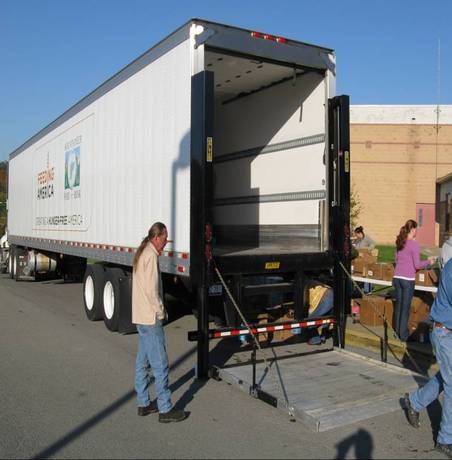
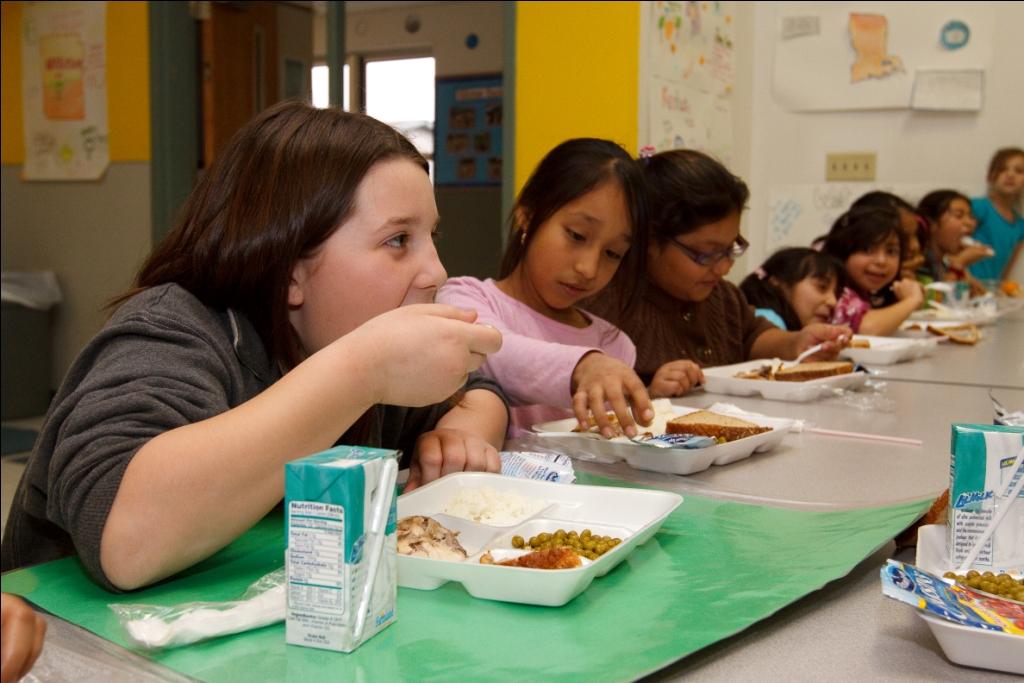
Humanitarian groups are calling on the United States to fully adopt the Roadmap to End Global Hunger, a series of strategic steps to rescue the nearly one billion suffering people who cannot access basic food.

The Roadmap, first introduced in 2009, calls for the US to increase its funding for hunger relief programs. While this might seem a challenge in the current cash-strapped environment, the Roadmap notes that jumping to $5 billion a year on global hunger relief “is just over one tenth of one percent of the US budget, yet would support increased food security for hundreds of millions of people worldwide.”

Currently, US hunger-fighting programs like Food for Peace and the McGovern-Dole school lunch program do not even add up to $2 billion in funding a year. To further compare, the annual cost of the U.S. nuclear weapons program is estimated to be $52 billion.

Bill O’Keefe, the vice president for advocacy at Catholic Relief Services, says, “This Roadmap makes clear that we as a country have to do more if we are going to end global hunger. In the current Congress, we have fought hard just to maintain current spending levels and still face the possibility of significant cuts. The Roadmap shows that spending to end hunger is a good investment that is supported by a majority of the American people. Hunger around the world can be significantly reduced if we follow these recommendations.”

An increase in funding would give U.S. food assistance programs far more reach. Add the increase in funding to more local purchasing of food in developing countries and the budget can stretch even further. Food purchased in developing countries generally provides a savings compared with shipping the food from the United States.

The key provision of the Roadmap, though, lies in leadership. That has to start at the top, with the appointment of a Global Food Security Coordinator. The Roadmap states, “The US should ensure coordination and integration of food security programs by appointing a Global Food Security Coordinator responsible for overseeing development and implementation of the government-wide global food security strategy, with corresponding budget authority over all global food security programs.”

There has to be someone in charge, and someone visible in charge. Global hunger is escalating and drought has sent countries into famine or near-famine levels numerous times the last few years. Conflicts in Sudan, Syria, and other areas have also increased the ranks of the hungry.

Not only does the government have to be fully mobilized to fight global hunger; so too does the public. We can effectively do this if we have a “food ambassador” in view every day leading the way. Congress and the President need to take action on this provision of the Roadmap right away.

“If you want to end global hunger, follow this Roadmap,” said Congressman James McGovern of Massachusetts. “We can ensure no child wakes up [and] goes to school or goes to bed hungry. This report tells us how to do it. I want to drive down this road to end hunger.”

Article first published as Let’s Get the Map Out to End Global Hunger on Blogcritics.

Leave a comment

Filed under global hunger

Interview: Niknaz Aftahi on Education Under Fire in Iran

In 2010, I interviewed TV journalist Nava Ghalili about the discrimination in Iran against members of the Baha’i faith. One of the human rights issues discussed in that interview was that members of the Baha’i faith are not even allowed to receive a higher education in Iran.

So Bahais have their own university, out of sight of the Iranian government. Niknaz Aftahi was one of the students who had to study for her degree in secret because of the threats against Bahais.

In this interview Niknaz discusses the struggle of the Bahais in Iran to receive what many of us take for granted, an opportunity for education and advancement.

As a member of the Baha’i Faith living in Iran how were you able to receive a college education?

It’s odd for a child to even have to think about it…but when I was little, while dreaming of becoming an artist, I kept worrying about my higher education, that when the time comes for my college, whether Iran’s universities would allow me to follow my dreams or not.

The time came and like the other Bahais, I was not allowed to enter any national university. This was despite the fact that I had graduated with the highest grades in high school. But I still made it happen; I fulfilled my higher ambitions for an architecture education at BIHE, the Bahai Institute for Higher Education.

I still carry with me this constant deep anxiety for my fellow peers and professors in Iran, who are facing more ban and restrictions, threats and imprisonment because of their affiliation to the BIHE.

What were the risks for those involved with the University?

I did not study in a normal classroom like everybody else in America. Our classes were held at homes and the university was underground. Every day of studying at the BIHE involves risk factors and restrictions. Every day, I did not know if tomorrow my university will be there or not. Every day the fear existed that our professors would be arrested and our equipments confiscated.

There was no permanent place for our classes and workshops.

Many Bahai homes and their basements, big or small, and the professors’ offices and workplaces, were ready to instantly turn into classrooms and studios and labs.

We as students were happy under any circumstance, whether there were enough chairs or we had to sit on the floor; whether the room was spacious or cramped, whether, there was an overhead projector or a whiteboard, would not matter and our minds were ready to learn. Sometimes for attending two classes in one day, I had to go from one class in the north of Tehran to another class in the south.

We were always very careful to avoid traffic while going and coming out of the house, not to attract any attention.

During long classes we could not step out in our breaks to buy tools and things we needed so as to not to draw any attention.

Several times I was stopped from entering libraries because I did not have an official student ID. We were invisible; we did not exist as students in Iran.

Attending online classes and accessing information was another challenge due to Iran’s slow internet connections and existing filtering.

Human resources and educational resources were very limited. I even knew that I would not receive a validated degree, which I needed to officially work in my own country.

Are you continuing your education in the US now?

As the first graduate of BIHE architecture program, I came to the US to pursue my masters’ degree immediately after my graduation.

My bachelor in architecture was recognized in the US by five prestigious schools namely UCBerkeley, Virginia Tech, UPenn, University of Oregon and Calpoly.

They offered me admission to the Master of Architecture for fall 2012.

The people who helped me get my education in Iran are now sitting behind bars. Now that I live in the US and have decided to augment my architecture knowledge at UC Berkeley, I am determined to share my story with the world and be the voice of my suppressed people in Iran.

What can be done to protect the rights of the Baha’i in Iran and allow them to receive education?

“Injustice anywhere is a threat to justice everywhere.” I believe media in the US should focus more on human rights violations in Iran, rather than on controversial statements of Iran’s conservatives. They should raise awareness on this injustice and the denial of the right to education for the Baha’i students and other groups such starred students in Iran.

The priority I think at the present time should be to raise BIHE’s public profile, as greater awareness will facilitate any specific initiative or action taken in support of its students such as enabling its graduates to pursue graduate degrees and expanding student’s online access to academic journals and research libraries.

A recent campaign called “Education under fire” is rapidly growing. Harvard, MIT, UC Berkeley and Stanford are already on board. It is a 30-minute documentary that profiles the growth, struggle, and inspiring spirit of the Bahai Institute for Higher Education and you can check it out at : http://www.educationunderfire.com/

I also believe that the academic world should publicly condemn Iran’s discriminatory actions against Baha’i students and put the Iranian universities under pressure to put an end to their discriminatory admission process.

Let me be share the story that few know of and for my many friends who are suffering the discrimination and persecution in Iran:

Earlier this year, Kamran Rahimian, and his wife, Faran Hesami, who together have a two-year-old son, were convicted of similar charges of “being a member of Bahai community” (Article 499) and “gathering and colluding to disturb national security” (Article 610) and were each sentenced by Judge Salavati of the 15th Branch of the Revolutionary Court to four years in prison. Both Kamran and Faran had been serving as professors at the Baha’i Institute for Higher Education at the time of their arrest on September 12, 2012. They had been summoned to the 5th Court inside Evin Prison in Tehran, along with two other BIHE professors, following the incarceration of another seven BIHE professors and administrators on May 22, 2012. These seven were sentenced to a combined 25 years and six months in prison under similar charges and are now serving their sentences in Evin and Rajayi-Shahr prisons. It should be noted that Kamran Rahimian was transferred without a temporary release to the notorious Rajayi-Shahr prison following the approval of his verdict by the Appeals Court. The decision of the Appeals Court in the case of Faran Hesami has not yet been released.

On June 20, 2012, Keyvan Rahimian, brother of Kamran Rahimian and also a professor at the Baha’i Institute for Higher Education, was sentenced by Judge Moghise of the 28th Branch of Tehran’s Revolutionary Court to five years in prison and ordered to pay a fine of 97 million rials (approximately $7000) His trial was held on June 11, 2012, outside the presence of his lawyer. Unfortunately, the attack on this Baha’i family also extends across generational lines as Kamran and Keyvan Rahimian’s father was executed at the beginning of the Islamic Revolution in 1984, along with more than 200 other Baha’is, for believing in the Baha’i Faith.

Following are a few lines that Keyvan wrote in an open letter soon after receiving his five-year prison sentence. His wife had recently passed away of cancer leaving him alone to raise their four-year old daughter.

“Yesterday, June 20th, I was summoned to court and the verdict was given to me. My charges are so strange that I cannot believe them. Kamran’s, Faran’s and my case have similar charges and as they say I am the most important person at BIHE and a psychology major. Apparently I was supposed to come out of prison (the first time in 2004) and accompany Fereshteh (my wife) on her eternal journey and share her pains before returning again to prison. Maybe on my return I am supposed to learn that I should not be attached to anything in this world, and probably my last attachment is my daughter Jina.

I have yet to learn the wisdom of what God and Baha’u’llah has planned for us, however I am sure that it is the best that can happen. The lesson I have been trying to learn from my imprisonment in 2004, and probably have not fully learned yet, is a sentence in the Obligatory prayer we say everyday: “Whatsoever is revealed by Thee is the desire of my heart and the beloved of my soul.” Apparently I am not that talented since I have not fully learned it yet.

I have been sentenced to five years in prison, and despite being acquitted of the charge of illicit money, I have been ordered to pay 97 million rials (approximately $7000) to the government for the recent months that I worked. The sentence can be appealed and I have 20 days to ask for the appeal. Naturally I hope to see more justice in the Court of Appeals and my charges to be overturned.”

Leave a comment

Filed under Baha'i Faith

Summer Feeding Means Summer Learning

This summer the Cincinnati Public Library is hosting summer feeding programs at many of its branch libraries (Cincinnnati Public Library photo)

This summer the city of Cincinnati is trying to ensure that no child goes hungry. This is especially critical with Feeding America‘s recent report that over 25 percent of children suffer from hunger or “food insecurity” in Ohio.

Free meals for children ages 1-18 are being distributed at a number of sites across the city including Cincinnati Public Library branches.

Lisa Hamrick, the manager of the North Central Library branch, says, “I believe we have been incredibly successful in serving lunch to children who might otherwise not eat throughout the day. In fact, many of the children coming to eat lunch arrive at the library when we open at 10:00 (they are actually standing outside waiting for the doors to open) and many days they don’t leave until after 6:00 pm – occasionally they stay until we close at 9:00 pm.”

The North Central branch has served 625 meals to children so far this summer. In fact, according to Hamrick, children are discovering new foods like pita bread, green pepper slices, pears and liking them, a possible exception being hummus.

The US Dept of Agriculture, Cincinnati Public Schools, the Freestore Foodbank, Cincinnati Cooks, and other partners are providing the food for these library feeding programs.

Here’s some feedback on how the library summer feeding plan is going throughout the city. Diane Smiley, the Youth Services coordinator for the Public Library says, “The results are still mixed at this point. Several of our locations are drawing sizable numbers of children while others are having smaller numbers than we’d like so far.”

As is the case with the North Central branch the summer meals are leading to increased use of libraries. Smiley says, “many of our branches participating in the summer lunch program are encouraging the kids to also participate in the Library’s annual summer reading program.”

Debby Carrico, the manager for Elmwood Place library branch, says, “We have noticed an increase in use of the library both for circulation and use of our computers. Program attendance has gone up some as well, since they usually follow the lunches. ”

The Elmwood Place branch is seeing around 10-12 children daily receive the meals. Carrico adds, “Parents sometimes come with the children to help supervise and this is a plus because we rarely see the parents at this branch as they are working several shifts to survive financially. This has been a GREAT service to this neighborhood.”

Drew Pearson, the branch manager for the Bond Hill Library branch says, “we have seen increases in library use as well as Summer Reading participation. This summer our lunch program has averaged 18 participants a day…..Many of the children and teens who have enjoyed the free lunch have listened as staff promoted the opportunity to win prizes for reading. The grand prizes this summer have been very enticing.”

The link between summer food and reading and learning is strong. Tony Fairhead, the director of Childhood Food Solutions (CFS), works to bring summer feeding to hungry children in the Cincinnati area. CFS provides food to students at the Roll Hill Academy. Fairhead says, “Without summer food, we can’t really imagine the children will be able to return to school ready to learn. I think that summer food explains why we have seen this improvement from 25% to 76% for the vitally important third grade reading proficiency.

Fairhead explains, “Teachers provide the academics and Childhood Food Solutions, along with partners like Walmart, makes sure the kids have the nourishment they need during the summer break. We have been tracking reading and math proficiency and test achievement has been increasing since CFS began providing summer food. At Roll Hill, third grade reading proficiency has increased from 25% to 76% since summer food began in 2008.”

Fairhead says these results led the assistant principal at Roll Hill to exclaim two years ago, “Academics + Food = Achievement!”

The charity our Daily Bread, located in downtown Cincinnati, does not host an official summer feeding site but they do have a program called the Kids Club. It’s an after school program for children ages 5-13 and it runs during the summer as well. Children can get a meal, computer access and do arts and crafts projects. The charity relies on donations from the public to offer these programs.

Natalie Fields, the manager of the Deer Park library branch, says, “We serve an average of 10 children a day. Happily, some of those children are staying to attend library programs, participate in the Library’s Summer Reading Program, and use the Library’s resources. I’d say our overall library use and program attendance have seen a small increase so far as a result of the Summer Lunch Program.

Joan Luebering of the Sharonville branch says, “we do see a few new faces” using the library since the summer feeding began. Ned Heeger-Brehm of the Groesbeck branch library notices some new patrons as well since the start of summer feeding. Denise Scretchen of the Deer Park branch library notes the positive impact of the summer feeding with about 15-20 children attending every day it’s offered.

Liz Anderson, the children’s librarian at the Reading Branch Library, says they are serving about 10 children a day with meals. On one day they had as many as 28 children attend. She has noticed some increased use of the library especially when parents arrive with their children.

Frank Dugan, the manager of the Corryville Library, said that more kids came to library programs as a result of the summer feeding while it was offered. The Corryville branch, as well as some others, discontinued their summer feeding for lack of attendance.

There are issues that need to be addressed to determine how future summer feeding should take place and where. It must be determined why low attendance might occur at one site but not another. In some cases it may just be a case of awareness of the summer feeding availability.

With the summer heat though sometimes libraries lose out on attendance. For instance the Pleasant Ridge library branch had small figures of attendance for summer feeding. David Dukart, the manager of the Pleasant Ridge Library, said that they fed 20 children on a few days but most others they were in the range of 4-8 in attendance. However, the nearby Pleasant Ridge Pool’s summer feeding site served 256 meals in the first week of July alone. Regardless of where the meals are offered its vital they are available.

With school out children in need lose access to the free and reduced prices lunches offered through the national lunch program. But distribution of food during summer becomes a problem with schools closed. With hunger on the rise in Cincinnati and throughout the country it becomes vital to make sure safety nets are in place for the vulnerable.

The need for safety nets like school feeding will become even more important with the expected increase in food prices from this summer’s drought. If you can combine this need with learning it makes for a productive combo.

As Smiley says, “We hope to feed both their bodies and their minds!”

Hamrick says, “as challenging as this has been for us, it is also rewarding to have kids we know wouldn’t eat lunch, let alone a nutritious lunch, eat and leave with a smile because they are full and content.”

Starting this week the North Central branch and others will also be adding a “backpack” component. This is a special package of non-perishable food that children can take home to use over the weekends when the summer feeding at the library is not available.

Leave a comment

Filed under Hunger in America

Cincinnati Libraries Starting Food Backpack Program

Seven Cincinnati Public Library branches will be giving out weekend backpacks of food to children as part of the summer feeding program. (Deer Park Library branch photo)

Seven Cincinnati Public Library branches will be offering backpacks of food for children to take home on weekends. The backpack program starts this Friday, July 20th.

The weekend backpack program is in addition to the summer feeding taking place at these library sites on weekdays. During the summer needy children lose access to the school year lunch and breakfast programs. Summer feeding is needed to fill in the gaps especially with child hunger rates exceeding 25 percent in Ohio.

The Freestore Foodbank is providing the funding for the weekend backpack program. For more information contact the participating libraries listed below:

Deer Park Public Library (3970 E. Galbraith Rd. Cincinnati OH 45236) 513-369-4450

Elmwood Place Public Library (6120 Vine St. Cincinnati OH 45216) 513-369-4452

Forest Park Public Library (655 Waycross Rd. Cincinnati OH 45240) 513-369-4478

Groesbeck Public Library (2994 W. Galbraith Rd. Cincinnati OH 45239) 513-369-4454

North Central Public Library (11109 Hamilton Ave. Cincinnati OH 45231) 513-369-6068

Reading Public Library (9001 Reading Rd. Cincinnati OH 45215) 513-369-4465

Sharonville Public Library (10980 Thornview Dr. Cincinnati, OH 45241) 513-369-6049

Leave a comment

Filed under Hunger in America

Budget Cuts by Congress Would Impact Hungry South Sudan

One year after gaining independence South Sudan is still searching for peace. Conflict and hunger threaten to ruin the young nation.(Sara A. Fajardo/CRS)

South Sudan is facing a humanitarian emergency, with nearly five million people suffering from hunger. South Sudan’s conflict with neighboring Sudan is escalating the hunger crisis. Civilians fleeing the fighting are walking for days without food until they can reach aid stations.

The UN World Food Programme (WFP) says, “In the past weeks, the refugee population in South Sudan’s northern Border States has rapidly increased to more than 160,000 individuals. More than 32,000 Sudanese refugees arrived in Upper Nile state alone, increasing the refugee population in Maban County to over 105,000 individuals.”

WFP, the world’s largest hunger fighting agency, is racing to provide aid. One its key partners is the US Food for Peace program, the largest single source of funding for WFP. Congress, though, is planning to reduce funding for Food for Peace and other global hunger fighting programs.

The House Appropriations Committee just approved a bill that would cut the Food for Peace program by 22 percent, down to the level of $1.15 billion for the coming fiscal year. Who will this hurt? South Sudan as well as other nations that need food assistance.

Kathleen Kahlau of Catholic Relief Services (CRS) said last week that proposed cuts to Food for Peace are a severe threat. In a CRS webcast on South Sudan Kahlua said that “we are very concerned about the cuts to international food aid as proposed by the Congress. Please help us keep these drastic cuts from happening.”

CRS has written a letter to Secretary of State Hillary Clinton stating, “Please ensure that the Administration is engaged in every way possible with the governments of Sudan and South Sudan and with important partner countries and regional bodies to prevent a return to war, to end attacks on civilians, and to protect the basic rights of the Sudanese people, including the freedom of movement and access to humanitarian aid.”

Diplomatic efforts at demilitarizing the border and resolving the dispute over oil revenues need to be reinforced with food for the hungry.

South Sudan’s troubles go far beyond its border areas. The country is facing low food production resulting from drought. Internal conflict between rival tribes has caused large-scale displacement and hunger.

WFP warns the crisis may get much worse, “with thousands more refugees expected to arrive in the coming weeks before the rains make the trek across the border impossible.” The agency is currently short $86 million in funding to fight hunger in South Sudan.

See also An Independent Nation’s Parallel Path to Lasting Peace.

Article first published as Budget Cuts by Congress Would Impact Hungry South Sudan on Blogcritics.


Leave a comment

Filed under global hunger

Food Donations Needed for West Virginia

The Mountaineer Food Bank, a member of the Feeding America network, needs donations in the aftermath of storms that struck West Virginia. (Mountaineer Food Bank)

The storms and resulting power outages that struck West Virginia ruined food supplies. Emergency foodbanks are under pressure to keep up with the demand. Chad Morrison of the Mountaineer Food Bank says, “The next few months will be hard because many of the agencies gave out all of their food with more people coming.”

Even before the storms hit nearly 15 percent of West Virginia’s population was hungry or “food insecure.” A recent study by Feeding America showed that child hunger in the state was even higher at 21 percent. The storms have placed extra pressure on the food safety net program that exists to combat hunger in West Virginia.

Donations are starting to coming in from Feeding America, Kellogg and Walmart. The governor’s office is also hosting a statewide food drive. A lot more help is needed though. A summer feeding program for children in Jefferson County lost its food supply in the storms. The U.S. govt has not responded to a request to replace the lost food, over a week since a plea was issued.

You can donate to the Mountaineer Food Bank at their web site.

Leave a comment

Filed under Hunger in America

Unrest and Funding Shortages Threaten Yemen School Feeding

Funding shortages and lack of security have limited the ability of the UN World Food Programme (WFP) to provide school feeding for Yemeni children. The school feeding is part of WFP’s response to the hunger crisis in Yemen where nearly half of the population is “food insecure.”

WFP depends entirely on voluntary donations from the international community. As WFP notes, its school feeding project for Yemeni schoolgirls, “has been under-funded for much of its implementation period.”

Civil unrest in Yemen has made it much more difficult for aid to be delivered in parts of the country. A WFP report says, the “school feeding activity will therefore be suspended in Sa’adah, Al Jawf, Mareb, Abyan (currently inaccessible under UN security regulations) and parts of Amran governorates. Should the situation and hence access improve, WFP will look to reinstate the programme in these currently suspended areas.”

In 2011, the WFP school feeding “project reached only 59,000 school girls during May 2011 compared to the planned figure of 114,639 participants during the three distributions in the school year (September to June).”

This year the project has been reduced to 53,000 students. A distribution of school feeding rations, with 2 months supply of food, took place in February but none has occurred since. WFP says the next school feeding distribution is scheduled for September or October.

WFP school feeding in Yemen provides take-home rations to schoolgirls. This also means food for the family of the student. For instance, this year’s distribution to 53,000 schoolgirls meant about 371,000 Yemenis received a food supply.

If the school feeding project were able to return to the level of 114,639 students, then the food rations would be reaching nearly one million Yemenis total.

School feeding is also a way to increase the enrollment of girls. If parents know food is provided, they are more likely to send their children to school.

It’s the kind of program that you would want to see established throughout the whole country. More funding though is needed from the international community. The US McGovern-Dole school feeding program would be a potential source of funding provided the Congress shows more support for this global initiative. McGovern-Dole has not received the funding levels advocates have called for in recent years.

WFP also runs a school feeding project as part of its aid to Somali refugees who have fled to Yemen. This program too is facing funding shortages.

All the people of Yemen have to choose peace and progress over the violence and instability that currently exists. This will allow Food for Education and other projects to go forward at full strength to defeat the crushing poverty that exists in the poorest country in the Middle East.

Article first published as Unrest and Funding Shortages Threaten Yemen School Feeding on Blogcritics.

Leave a comment

Filed under global hunger

Olympic Torchbearer: Games Can Highlight Global Hunger Crisis

Vadsana Sinthavong carrying the Olympic Torch (WFP/Caroline Hurford)

The Olympic Torch Relay is underway in the United Kingdom leading up to the opening ceremonies of the Games in London. One of the Olympic torchbearers is Vadsana Sinthavong, who represents the largest hunger fighting organization, the UN World Food Programme (WFP).

Nearly one billion people worldwide suffer from hunger and malnutrition and WFP is active in over 70 countries. Vadsana works with the school meals program that fights child hunger in her home country of Laos.

Vadsana recently took a few moments to talk about her experience being part of this Torch Relay. She also talks about her mission trying to end global hunger and how she thinks the Olympics can play a role.

Tell us your reaction when you found out you were going to be the WFP representative at the Olympic Torch Relay?

I was in Vietnam, on vacation, and didn’t have access to the internet. All my colleagues started calling me — eventually they reached me to tell me the news. I thought it was so amazing. I couldn’t believe it — I was thrilled, just so happy. It’s a great honour for my family and for my country, too. I was very proud I would be able to represent WFP and our work with people watching from all over the world..

Are you experienced in running and relay races?

Not really. I never ran a relay before, and our sport lessons in school didn’t really include running. But when I was younger I walked a lot – to school, of course, but also many other trips were made on foot. One time when I was 11, I walked 40km in one day to bring a buffalo that was a present for my older brother on his wedding day. There were very few trucks at the time and our family could not afford one, so I had to walk.

But even though I didn’t run much before, I started preparing myself when I heard of my selection to carry the Olympic Flame. Even when I went to remote villages to do trainings and assessments for our school meals programme, I always found some time to train a little.

How important do you think school feeding is for any country to have a strong Olympic Team?

Well, first of all, with the daily nutritious snack we provide, children have more energy and they can concentrate better in school, and be more active during breaks. They have more opportunity to build their brains and bodies, and to become good sports people, or do anything else they want to achieve in life.

But I think the real impact is much more long term. In Laos, for example, every second child in rural areas is chronically malnourished. These children don’t grow up as tall or strong as they could be, and of course that also impacts their ability to be competitive in sports.

Studies have shown that educated children grow into men and women who produce and earn more, and who are less likely to have malnourished children. So school meals help prevent chronic malnutrition in future generations, and those kids will have a better chance to participate and succeed in the Olympics than their parents and grandparents did.

(Note: There is an interesting correlation between stunting rates in a country and Olympic performance; if broken down to per head of population, nations with high stunting rates are significantly underrepresented in regards to medal scores and team sizes at Olympic Games. You can find more information about this here: Banerjee, Abhijit and Esther Duflo (2011): Poor Economics. A Radical Rethinking of the Way to Fight Global Poverty. Chapter 2)

What role do you think yourself and the London Olympics can play in furthering the cause of ending child hunger?

The Olympics are one of those events that focus the attention of the world on one place. Even the Torch Relay leading up to the Games really engages people, both locally and from all over the world.

When I ran my portion of the relay early in the morning on a Sunday, but still so many people came to watch and cheer me on.

So the Olympics are a great opportunity to highlight the problem of child hunger and show how WFP fights hunger all over the world. I was so proud to be the one who represents WFP’s work in front of the eyes of the world.

Here in Laos, the main focus of my work is to cooperate closely with the Ministry of Education to assist them in building their own National School Meals Programme. The Lao Government recognizes the value of school meals in bringing children to school and keeping them in class longer, and they plan to ultimately provide school meals to every student in the country. I am very happy to be part of WFP’s effort to help Laos achieve this goal.

How far was your part of the torch relay? 

I ran quarter of a mile, or 300 meters, but it felt much shorter. This was such a special moment for me! I felt proud and happy to represent WFP, and was overwhelmed with the support from the people along the road who had come to see the Olympic Flame travel through Birmingham, even though it was so early in the morning on a Sunday. I could have run a lot farther – the moment was over much too soon.

What were some of the landmarks along your route? 

I started in front of Bullring Shopping Centre, and on my stretch of the relay I noticed a lot of Indian restaurants and shops. I was surprised, I didn’t know the UK is such a diverse country!

For more information about the World Food Programme visit their home page.

Article first published as Olympic Torchbearer: Games Can Highlight Global Hunger Crisis on Blogcritics.


Leave a comment

Filed under global hunger

Food and Water Needed for Storm Victims in West Virginia, Ohio

Water being unloaded at the Athens Recreation Center July 02, 2012.
Photo credit: Ohio Department of Public Safety

West Virginia and Ohio are recovering from severe storms that caused widespread power outages. Both have declared states of emergency.

Richard Belisle of the Herald-Mail newspaper reported on Monday that 40,000 worth of food had been ruined in Jefferson County, West Virginia when the power went off. This food was meant for the summer feeding program for children.

Dr. Sheri Hoff of the Jefferson County Public Schools said Tuesday morning, “At this time, we have not been able to replace the lost food. We had hoped for assistance from the FDA but have not heard back yet.” Jefferson County has a childhood hunger rate of nearly 14 percent according to a Feeding America study making summer feeding programs very critical.

The Mountaineer Food Bank of West Virginia is working to bring aid to shelters as well as resume regular food distributions. Chad Morrison of the Mountaineer Food Bank in West Virginia says “We are up and running but will need more supplies to meet the need.”

Matthew 25: Ministries of Ohio is bringing water and ice to storm victims in the Charleston West Virginia area.Tim Mettey, Vice President and Disaster Relief Coordinator for Matthew 25, says “The scope of the storm’s damage is incredible. We’ve seen cars stranded by the side of the road, with anything white fluttering from the window to indicate that the occupants need help. Gas stations with power are limiting what each car can get in order to conserve supplies. I’m told that some people may not have their power restored until well after the 4th of July. We will be distributing water and ice to shelters all weekend long to help these people and will continue to help them as long as we are needed.”

Lisa Hamler-Fugitt of the Ohio Association of Foodbanks says, “we are working with emergency management and all food banks have been mobilized.”

To donate to the Mountaineer Food Bank visit their home page. You can also donate to Matthew 25: Ministries or Ohio Association of Foodbanks.

Leave a comment

Filed under Hunger in America

Cincinnati Freestore Foodbank Summer Feeding Sites for Children

When summer comes children are at an increased risk of hunger since they lose access to the free or reduced price meals available at school. Summer feeding programs need to be established to fill in the gaps. In Hamilton County last year there were 45,950 needy students who took part in the federal lunch program during the school year while only 3,990 children received summer feeding. (Feeding America photo)

The Cincinnati Freestore Foodbank, with the help of a grant from the U.S. Department of Agriculture, has announced the summer food service program. From June 11 through Aug. 10 (closed July 4th) children ages 1-18 will be able to receive lunches at eight sites throughout the city. The Freestore Foodbanks’s Cincinnati Cooks students will prepare the meals which will include sandwiches and tuna salad.

During the school year children from lower income families have access to free or reduced price meals via the federal school lunch program. When school closes, children often lose access to these meals unless summer feeding is sponsored.

The Children’s Hunger Alliance of Ohio reports that in Hamilton County last year 45,950 eligible children took part in the free/reduced price lunch program. In the summer though only 3,990 eligible children received meals because of the difficulty distributing food with school closed.

Governor John Kasich recently issued an executive order which would provide $1 million to help increase summer feeding coverage in parts of the state. More funding will be needed though to help Cincinnati and other areas provide more summer meals.

Jessica Shelly, the food service director of Cincinnati Public Schools, says that free breakfast will be served at school sites during the summer. This will be a continuation of the free breakfast program offered when school is in session.

A recent report from Feeding America showed that 18 percent of the population of Hamilton County is suffering from hunger or “food insecurity.” The availability of free or reduced price meals is vital to fighting a child hunger crisis in the Tri-State area.

The eight locations for Freestore Foodbank summer lunches beginning June 11 include:

Deer Park Public Library (3970 E. Galbraith Rd. Cincinnati OH 45236, M-F 12:00-12:30pm) 513-369-4450

Elmwood Place Public Library (6120 Vine St. Cincinnati OH 45216, M-F 1:00-1:30pm) 513-369-4452

Forest Park Public Library (655 Waycross Rd. Cincinnati OH 45240, M-F 12:00-12:30pm) 513-369-4478

Groesbeck Public Library (2994 W. Galbraith Rd. Cincinnati OH 45239 M-F 12:00-12:30pm) 513-369-4454

North Central Public Library (11109 Hamilton Ave. Cincinnati OH 45231 M-F 12:00-12:30pm) 513-369-6068

Reading Public Library (9001 Reading Rd. Cincinnati OH 45215 M-F 12:00-1:00pm) 513-369-4465

Sharonville Public Library (10980 Thornview Dr. Cincinnati, OH 45241 M-F 12:00-12:30pm) 513-369-6049

Skyline Community Center (8500 Pippin Rd. Cincinnati, OH 45251 M-F 12:00-1:00pm) (513) 729-0757

Read about more summer feeding sites run by Cincinnati Public Schools.

article originally published May 24th at Cincinnati.com

Leave a comment

Filed under Hunger in America