Hunger Games Movie Can Feed the Starving

The new Hunger Games film is teaming with the World Food Programme and Feeding America. World Food Programme. (WFP photo)

The new Hunger Games film is teaming with the World Food Programme and Feeding America. World Food Programme. (WFP photo)

The New Hunger Games movie: Catching Fire has so much potential beyond being a stellar film. With extra imagination, and a little inspiration from history, this blockbuster can make a difference fighting world hunger.

The Hunger Games is teaming up with the United Nations World Food Programme (WFP) and Feeding America. The mission is to feed the hungry.

A special web site has been set up to get fans involved. There is information about the global hunger crisis. There are even Hunger Games prizes for the film, which stars Jennifer Lawrence and Liam Hemsworth. A site dedicated to the first Hunger Games movie is also available. You can take a special quiz and see a video message from Jennifer Lawrence.

This is a great opportunity for the movie industry to use its powerful influence to help bring relief to the starving children in Syria, Mali, Haiti, Sudan, Afghanistan, and the Central African Republic.

This takes on even more urgency with the recent disaster in the Philippines, where a typhoon has left millions at risk of hunger and malnutrition. WFP is the lead agency in feeding storm victims.

The UN food agency, which relies on voluntary donations, is already stretched thin by the hunger crisis caused by the war in Syria. The Hunger Games, with its powerful media influence, can be a support in raising funds and awareness.

We know this can work. History tell us so. With famine lurking over Europe in the aftermath of World War I, the young motion picture industry came to the rescue.

Herbert Hoover and General John Pershing appealed for donations to the European Relief Council. As part of this campaign the movie industry held fundraisers nationwide. A two reel film was specially prepared for theaters. Stars made appearances at films to help the cause.

In Louisville, Kentucky two young local dancers performed at the Majestic and Crown Theaters. The Louisville Courier Journal proudly ran an article about its local talent with the headline “They’re Helping Europe’s Children.” Millions of Europeans received food from this outpouring of support in America.

During World War II films were used by American Relief for Norway and other groups to inform and raise donations. After World War II a film called the Seeds of Destiny won an Academy Award for showing the plight of the starving overseas. This film was influential in helping secure the food that was needed for the rebuilding of the war devastated nations.

Now today there are 842 million people worldwide suffering from hunger. In America, cuts to the food stamps program is going to place a huge strain on Feeding America’s network of food banks. The WFP and Feeding America each need support for their hunger relief missions.

When you go to the movie theater, think of sending the cost of an extra ticket to the World Food Programme or Feeding America. If a ticket costs 10 dollars, that is equal to around 40 meals donated.

Feeding a “silent guest,” one of the world’s hungry, was a big hit in America after World War II. You can carry on that tradition with the Hunger Games film and throughout the holidays.

You can get started by visiting the Hunger Games site. Then let your own imagination take over from there.

Originally published at The Huffington Post.

Leave a comment

Filed under global hunger

You Can Help Save the Philippines

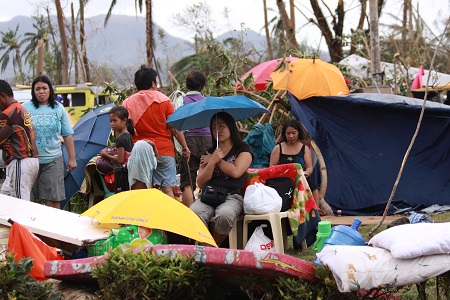
Nearly half a million people have been left homeless by the typhoon, like this family from the storm-battered city of Tacloban.  (WFP/Praveen Agrawal)

Nearly half a million people have been left homeless by the typhoon, like this family from the storm-battered city of Tacloban. (WFP/Praveen Agrawal)

It’s critical to build the pipeline of aid to the Philippines, to prevent the situation from deteriorating even further after last week’s massive typhoon. Save the Children’s Cat Carter says, “The lack of shelter, lack of food and bottled water is only making things worse as children suffer under such brutal conditions.”

That is where you come in. Even though reading those details can make you feel helpless, there is something you can do. Whether it’s a fundraiser, a letter, or doing Charity Miles you can help speed relief.

Recently, I caught up with Elizabeth Tromans of Catholic Relief Services (CRS) , who is coordinating relief from Manila. Back in 2010, Tromans was a humanitarian hero feature in my global hunger column.

Tromans says it’s essential “to secure funds and make sure our goods are arriving and getting into the hands of those who need it.”

For CRS and other charities to make this happen they need a chain of events from a donor thousands of miles away, to logistics and IT staff, to the aid workers themselves. The end result is help for storm victims. So everyone has a part to play to make that happen. If you are reading this you can spread the word and start the life-saving pipeline.

The United Nations says 11.5 million people are affected by the Typhoon and 544,606 people are displaced. Food, clean water, medicine and shelter are desperately needed.

Hunger, malnutrition and disease will escalate among the population unless aid arrives in time. The storm’s impact can last long past the event itself.

CRS is helping with two of these vital needs, emergency shelter and water purification. Many people lost their homes from the high winds of the storm. The UN says that, “ground water supplies are contaminated in many affected areas. Need for immediate and on-site water testing and treatment to establish water quality.”

The UN World Food Programme (WFP) says it will be feeding 2.5 million people. Although these estimates can quickly change. WFP has brought high-energy-biscuits and rice to storm victims but so much more needs to be done. The U.S. Food for Peace program has sent more biscuits and rice on the way for WFP to distribute.

UNICEF is setting up child feeding centers where they will be providing Plumpy’Nut, which a doctor called “The Magic Food.” This special peanut paste saves children from potentially deadly malnutrition. So it’s vital that UNICEF have enough funding for a supply of Plumpy’Nut.

What’s important to remember is that aid groups are already stretched thin by prior disasters in the Philippines as well as the war in Syria. They need the support as the Philippines emergency response kicks in.

Amid all the devastation is hope. Tromans says,”The Filipino people are so strong and resourceful.”

You can donate to Catholic Relief Services, UNICEF, the World Food Programme, Save the Children and many other great organizations.

Leave a comment

Filed under global hunger

Feed a “Silent Guest” from the Philippines

The UN World Food Programme and other aid groups are rushing aid to those displace by the typhoon. World Food Programme. (WFP/Praveen Agrawal)

The UN World Food Programme and other aid groups are rushing aid to those displace by the typhoon. (WFP/Praveen Agrawal)

Right now there are millions of people suffering from hunger in the Philippines after the super typhoon. There is no food, water or electricity in storm hit areas. Humanitarian agencies are rushing to get aid to the suffering.

What can you do to help? You can follow the great American tradition of feeding a “silent guest” at your next meal.

Set an extra plate or just use your imagination. Figure out how much it would cost to feed a “silent guest” at your next meal and send that amount to a charity. You could send it to Save the Children or Catholic Relief Services, two charities that were providing aid when the “Silent guest” program was first active after World War II.

You could donate to UNICEF or the World Food Programme, Or any charity of your choice.

There is another way you can feed a “silent guest” from the Philippines. This comes by way of a free app called Charity Miles and Lifeway Foods. You download the Charity Miles app, select World Food Programme as your charity. Then you just run, walk or bike and funds are raised for WFP, paid for out of a corporate sponsorship pool.

Lifeway Foods, in response to the Philippines disaster, is increasing its sponsorship of Charity Miles and offering an incentive. Whenever you use the app Lifeway will donate an additional 25 cents per mile (up to $20,000) to the World Food Programme.

Charity Miles is a free an easy way you can feed a “silent guest.” Just bring your smartphone and your heart.

The “silent guest” tradition got its start in 1947 when the fate of war-devastated Europe rested upon food for the hungry. A one-time aspiring actress, Iris Gabriel, proposed the plan to Governor Robert Bradford of Massachusetts. It took off around Thanksgiving time and it led to people buying “CARE packages” to feed the hungry in Europe.

Governors around the country mobilized their respective states. Today, we are seeing a similar development. Governor Bob McDonnell of Virginia issued a statement today encouraging citizens to donate what they can.

You can help build the pipeline of food that WFP is going to need for some time. A shipment from the U.S. Food for Peace program just left Miami with high energy biscuits to be distributed by WFP. We also need to make sure the Congress increases Food for Peace funding in the upcoming Farm Bill legislation.

Let’s all take in a “silent guest” and help feed the storm victims in the Philippines.

originally published at the Huffington Post.

Leave a comment

Filed under global hunger

Veterans Day and Fighting World Hunger

This Memorial Day we can remember the World War One Legacy of Humanitarianism (National World War I Memorial)

This Memorial Day we can remember the World War One Legacy of Humanitarianism (National World War I Memorial)

They were 150 Navy officers on a mission. Yet, their task fell after the Armistice of November 11, 1918, which ended the fighting of World War One. Their objective was to help defeat the enemy “that knows no Armistice:” hunger.

War destroys food production. Farmlands, factories and roads, all the things you need to produce and move food can be leveled by just one battle. These cannot be fixed overnight. Even if all guns go silent, hunger can continue to attack a population. The consequences of malnutrition, particularly for children, can be deadly.

This was certainly the case in Northern France, which had suffered through years of German occupation and fighting during World War One. When the Armistice came civilians, who had been forced to flee, now wanted to return to their homes.

What would be left of them? As Herbert Hoover described in his memoirs there was tragically little remaining of these homes and villages. There was very little food supply as well.

Then came the Navy to save the day for the refugees. These were 150 volunteers under Admiral Thomas Craven. They came ready to work. Hoover and newspaper accounts describe how almost overnight these men put up barracks near the French villages that had been destroyed. Next they put beds and kitchens inside these structures.

Imagine a family trekking along a road toward their home, tired and hungry. Thanks to the Navy they could find food and a place to rest. This aid would be needed in the weeks and months ahead as they tried to rebuild their lives and towns.

The Commission for Relief in Belgium (CRB) had provided aid to Northern France during the war. A lot of the American staff though had joined the U.S. Army. Once the armistice came, these officers returned to their duties with the CRB to fight hunger. In the coming years CRB and American Relief Administration officers, with support from people back home, fed millions of people.

These are lesser known tales of heroism from those who have served in our military, but for the greatest of causes. This humanitarian tradition continued into the Second World War. So many tales of heroics from the 1945 airlift to the starving Dutch in Nazi-occupied Holland to U.S. Army led school lunch programs for Austrian and German children.

All these stories, great or small, are noble. Last month I told a UN Development Goals class at the College of Mount St. Joseph about an Army major who once lived not too far from the school. Major Charles Arnold headed a UN Civil Assistance Team that fed refugee children during the Korean War. The Cincinnati Enquirer reported, “After only a few weeks of this milk-and-rice diet you could actually see the children’s cheeks fill out and a healthy sparkle come to their eyes.”

The U.S. Air Force also evacuated Korean war orphans who were trapped by the fighting. They flew them to safety on an island away from the approaching enemy. The Air Force made a return visit later to the orphans bringing food and gifts from the American people.

These meals can save and change a life forever.

In President Woodrow Wilson’s proclamation of Veterans Day he said America has the great opportunity “to show her sympathy with peace and justice in the councils of the nations…” That is our best hope to for spreading peace across the globe.

We know that hundreds of millions of hungry and sick people around the world is not peace. It is certainly not the peaceful world that veterans of World War One hoped to see come about. Yet as we speak people are starving and displaced from wars in Syria, Central African Republic, South Sudan, Sudan, Afghanistan and many other parts of the globe.

On this Veterans Day we can remember the many who have served in the armed forces and built a great humanitarian tradition. A tradition that carries on.

Originally published at The Huffington Post.
Leave a comment

Filed under global hunger

Congress Must Rescue Food Stamp Program

Congress is threatening to cut international food aid.

Congress is threatening to cut food aid.

Congress can make or break our fight against hunger at home and overseas. Both food stamps, to help impoverished Americans, and the global Food for Peace program are on the line in Farm Bill meetings starting this week.

With over 49 million Americans suffering from hunger, and high unemployment rates, it makes no sense to cut back the food stamp (SNAP) program. Yet on November 1 there will be reductions in SNAP and more may be coming. The House of Representatives is proposing nearly $ 40 billion dollars worth of cuts in SNAP. Their plan also calls for the elimination of free school meals for over 200,000 children.

Where will hungry Americans go for help? They will look to food banks, but these are already overstretched and cannot make up the difference. The economy is suffering and hunger will escalate in America if Congress dismantles food safety nets.

Bob Aiken, the CEO of Feeding America says, “We anticipate that, faced with this sudden drop in their monthly food budget, many people who receive SNAP benefits will seek additional help from our food banks and the agencies they serve. Unfortunately, our food banks across the nation continue to be stretched thin in their efforts to meet sustained high need in the wake of the recession.”

Food stamps have a history of helping Americans living in poverty. In 1939 food stamps were first introduced to help low-income families. Studies showed the needy were getting more nutritious foods as a result. Grocers liked the plan because the stamps were redeemed to buy food at their stores.

As America entered World War II, food stamps were seen as vital for keeping the whole nation strong. In 1943, because Americans were back at work in large part, the need for food stamps ended. Secretary of Agriculture Claude Wickard called the program “an outstanding success.” The U.S. did continue food aid with school lunch programs and relief for the handicapped and elderly during these war years.

Today, Congress wants to roll back food stamps before economic recovery has taken place. Their plan puts more strain on the nation’s hungry and food bank system. Their plan takes away school meals. What they should do is strengthen the food stamp plan and the Federal Emergency Food Assistance (TEFAP) program which supports food banks. When jobs and wages start to return then take up large reductions in food stamps.

The Food for Peace program is also a major part of the Farm Bill. Congress has to decide the level of funding. Food for Peace supports hunger relief in Syria, Afghanistan, South Sudan, Haiti, Mali, Yemen and many other countries. It’s an extension of Wickard’s World War II philosophy that “Food will win the war and write the peace.”

No country or region will have stability if it suffers from malnutrition. That is why Food for Peace, as well as the McGovern-Dole global school lunch plan, need support in Congress. As Dwight Eisenhower said, hungry children scrapping in garbage heaps cannot be expected to become apostles of peace. We need to wage war against hunger and want. Food for Peace is the largest supplier of the UN World Food Programme, the lead hunger fighting organization.

International food aid makes up less than one tenth of one percent of the federal budget. So there is no savings to cost cut here. What cuts would do is sink our foreign policy.

Congress has a lot on its plate as it starts back to work. Decisions in the coming weeks can drastically impact the hungry here at home and abroad. That will be a legacy of this Congress, how it responds to these difficult times.

Americans must continue to give their input as to how to run things. Leadership can come from any corner. Now is the stretch run for the Farm Bill. As Amelia Kegan, a policy analyst for Bread for the World says, “It’ll be an intense period, but as you well know, this is often the most important part of any race.”

Originally published at the Huffington Post

Leave a comment

Filed under Uncategorized

Halloween Can Feed the Hungry

This Halloween please remember the world's hungry (photo courtesy USA.gov)

This Halloween please remember the world’s hungry (photo courtesy USA.gov)

There is more to Halloween than you might think. Yes, it’s about monsters and ghouls, and the fear of the unseen. Do not let Halloween ‘trick” you though. Halloween is also the season of charity and feeding the hungry.

Where I live in Cincinnati is an old ghost legend at a cemetery near the Ohio River. A mysterious light would shine from this graveyard at night along with the eerie tune of a fiddler. No one dared to check it out.

A professor from the nearby College of Mount St. Joseph, Cecil Hale, did some “digging” and found out this “ghost” first appeared at the time of the Underground Railroad. This was the secret network which guided slaves to freedom in the north before the Civil War.

The strange light was likely a signal meant to guide slaves across the Ohio River. The creation of a ghost was meant to keep people away from the cemetery. This scary story was actually a cover for the most noble act of charity, giving the oppressed a light to freedom. This meant sending them to their next safe house on the Underground Railroad. The travelers on this Railroad were hungry and these stops along the route gave them food and renewed their strength to keep going.

Today, the ghosts and creatures of Halloween are huge business, with billions spent yearly on candy and costumes. The amount spent each year on Halloween could finance hunger relief missions in many countries around the world.

Since 1950, Halloween has added an extra surprise for those receiving trick or treaters. Many thousands of children have appeared at the door with a Halloween bag, not just for candy, but one to collect change for UNICEF. It all started when the Reverend Clyde Allison and his wife Mary Emma had an idea to turn Halloween into a night of charity.

Since that time more than 170 million dollars has been raised for UNICEF and its operations providing food, medicine and education to children in impoverished countries. Trick-or-Treat for UNICEF is a Halloween tradition that saves lives.

Think about this. On Halloween night you could collect donations to feed starving children in Syria, South Sudan, Mali, Afghanistan, Yemen, Democratic Republic of the Congo and other countries suffering from war.

Small children die every day because they cannot get the nutrition they need. UNICEF uses a miracle food called Plumpy’Nut to save their lives, but only if they have enough supply. Funding is often low for humanitarian aid missions because it’s not made a high enough priority.

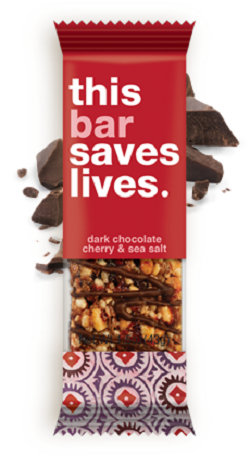
That is where individuals can take the lead and the responsibility. There is even now chocolate and vanilla flavored bars you can purchase that lead to donations for Plumpy’Nut. The company This Bar Saves Lives makes a donation for each bar sold so Save the Children can distribute more Plumpy’Nut.

So on this Halloween night, you can make a change. You can experience the other side of Halloween, the one of charity. The College of Mount St. Joseph is hosting trick or treat events as well. Yes, there will be ghost stories, but also a canned good collection for the local Delhi Food Pantry. The school’s Campus Ministry, Student Nurses Association and the Activities Board are all pitching in to collect the donations.

It turns out this Halloween food drive is extra timely as food stamps are being reduced in the United States. The strain on food pantries is going to be enormous. The coming scare for America is going to be a further escalation of hunger in an already suffering economy.

Things are not always what they appear to be. Sometimes though you decide what something is to be. Your actions make the difference. Your ideas can give power to charity. On Halloween you can add an extra surprise to this “fright night,” making it a special event that helps the world.

Originally published at the Huffington Post.

Leave a comment

Filed under global hunger

The Granola Bar that Saves Children’s Lives


This Bar Saves Lives

This Bar Saves Lives

Halloween is sneaking up on us. The holidays are not far behind. These days come with plenty of snacks with chocolate, vanilla and many other kinds of flavors.

What if you could buy a snack and save a life at the same time? What if on Halloween or Thanksgiving you could share the joy and feed a “silent guest,” a starving child a world away?

There actually is a way with This Bar Saves Lives, a new granola bar with chocolate, vanilla and wild blueberry flavors. Each purchase of this bar means a donation of the miracle food Plumpy’Nut, a peanut paste fed to children suffering from severe malnutrition.

Ryan Devlin, Todd Grinnell and Ravi Patel started This Bar Saves Lives when they witnessed the devastating effects of child malnutrition. When you buy one of these bars the donation gets sent to Edesia, a Plumpy’Nut producer in Providence, Rhode Island. Edesia makes the Plumpy’Nut and sends it to Save the Children, which uses this food in their relief missions around the world. Save the Children says “more than 150 million children in developing countries are malnourished.”

Malnutrition can cause lasting physical and mental damage in small children under the age of five. If the malnutrition become severe children may perish. In many developing countries afflicted by war, disasters or extreme poverty, small children are vulnerable to malnutrition. When food supply systems break down in a country, families can be forced into desperation with little rations. They look to humanitarian aid agencies for help. Plumpy’Nut can rescue the smallest children, if there is enough supply on hand for aid groups.

Within the last year Save the Children has been fighting child malnutrition in South Sudan. In Eastern Equatoria, a state in South Sudan, crops had failed and families were resorting to wild fruits to survive. More cases of malnutrition had to be treated at Save the Children health centers there. Plumpy’Nut was used for the most severe cases.

Conflict in Jonglei, South Sudan also has escalated malnutrition among children thus increasing the need for Plumpy”nut.

When funding is low aid groups like Save the Children may be forced to cut back on this life-saving food. The consequences are devastating. Opportunities like This Bar Saves Lives gives people a world away a chance to help.

Just as after World War II when Americans fed “silent guest” at their Holiday meals, you can be doing the same in the coming weeks and months. Your “silent guest” might be a child in drought-stricken West Africa, or in war-devastated Syria or Mali. You can help them get the Plumpy’Nut that will save their lives.

Visit their web site at www.thisbarsaveslives.com

A note from This Bar Saves Lives: “Whether it’s setting up Hunger Awareness Campaigns on your campus, holding a This Bar Saves Lives community event, or connecting us with your company, there are a number of ways to get involved. Jump in!

Leave a comment

Filed under global hunger

School Meals for Peace in Mali and Burkina Faso

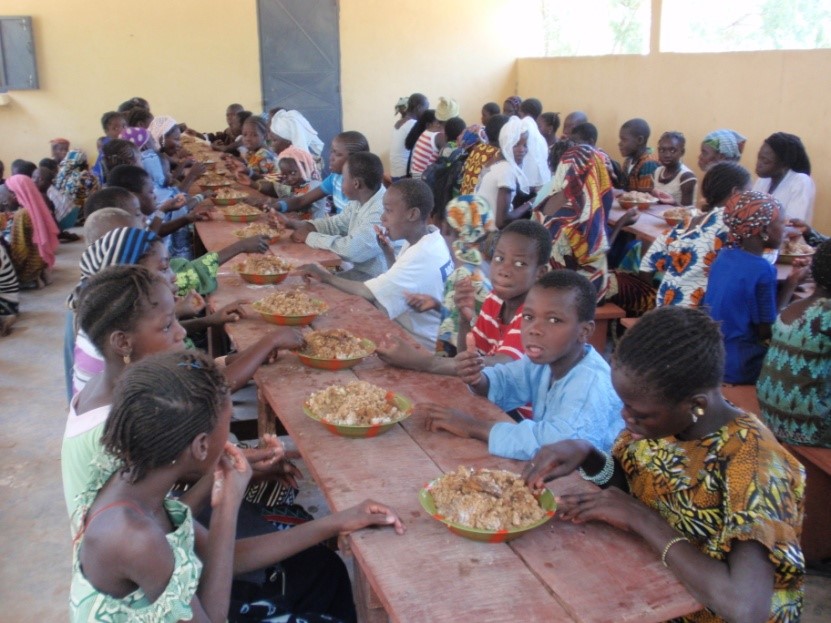
School feeding in Mali provided by Catholic Relief Services (CRS photo)

School feeding in Mali provided by Catholic Relief Services (CRS photo)

As Congress gets back to work on the Farm Bill, it’s vital they support the Food for Peace and McGovern-Dole programs. Both initiatives fund school meals around the world in partnership with charities like Catholic Relief Services.

From World War II to conflict and drought recovery today in West Africa, Catholic Relief Services (CRS) has been providing aid.

In Austria, after World War II, CRS teamed with the U.S. Army and UNICEF to give school meals to children. More recently CRS has been organizing school feeding in Mali and Burkina Faso, two nations suffering from extreme poverty in West Africa.

Mali has been struck by conflict in the North and a nationwide drought. Food production is reduced across the country. The UN World Food Programme says, “69 percent of the population lives below the national poverty line, and according to 2010 National Statistics, more than one-fifth of school-aged children do not attend school.”

A report from the Famine Early Warning System shows that “north of Kayes and in some parts of the Mopti, Koulikoro, Ségou, and Timbuktu regions, rain shortages have affected crop development, which will likely reduce yields at these locations.” Hunger is a growing problem in Mali and aid is desperately needed.

CRS provides school meals in the Mopti and Koulikoro regions to help families cope with the crushing strain of poverty. The meals are funded by the U.S. Dept. of Agriculture’s McGovern-Dole program, named after former U.S. senators George McGovern and Bob Dole.

CRS is reaching around 80,000 children in Mali with this food. Children can count on a hot meal of rice, peas and vegetable oil every day at school. When your family is struggling for food, this is an absolute treasure.

Kristina Brayman of CRS Mali says,

Without that food, many students would not eat a square meal at all. It motivates parents to send their children to school, especially girls, and means the children are able to grow, develop, and maximize their learning potential. It really is essential.

In Mali, CRS also has an initiative where local farmers provide the school meals. This is key because the goal is for each country to be able to run its own school feeding. CRS helps form School Management Committees. Fairs are established where farmers can bring their crops, which are inspected to ensure quality. The School Management Committees then purchase foods from the farmers to use for the meals.

CRS says,

Students and parents were very pleased with the taste and content of the local school meals, and the School Management Committees’ capacity and sense of ownership increased significantly.

In Burkina Faso CRS is also providing school meals using McGovern-Dole funding. Anne Sellers of CRS says McGovern-Dole is “a huge help,” as Burkina Faso tries to develop a national school feeding program. They need help along this road.

McGovern-Dole and CRS are feeding 145,000 children in 688 schools and 28 preschools. Take-home rations and de-worming are also provided. Burkina Faso has suffered from drought and also the strain of hosting refugees from the war in Mali. The country has high poverty and very low literacy rates. Support for education is extremely vital.

The U.S. Food for Peace program is also funding CRS to feed another 40,000 children in primary school. There are also 700 children in preschool who receive meals. Take-home rations are given to 4500 girls with rates of attendance. The food is a powerful incentive for attending school. The Food for Peace plan is to help Burkina Faso as it develops more capacity to take over the school feeding.

Local production of food is also part of the Burkina Faso plan. CRS and the U.S. Dept. of Agriculture combined on a local purchase project that fed 58,000 children. Cornell University helped with monitoring and evaluation.

The future of these school feeding projects will rely on funding that will be determined, in large extent, in the next Farm Bill. It’s important citizens let their representatives in Congress know about funding the Food for Peace and McGovern-Dole programs.

Originally published at The Huffington Post

Leave a comment

Filed under world hunger

The School Lunch That Saved Cincinnati

Cincinnati,  Ohio (author photo)Cincinnati, Ohio has a very special place in the celebration of National School Lunch week (October 14-18). For it was teacher Ella Walsh who, in the early 1900’s, started one of the nation’s earliest school feeding programs.

Walsh, who taught at Cincinnati’s Jackson School, saw children coming to class hungry. Times were tough. She knew they needed help. So Walsh and her assistants set up a lunchroom. The “penny lunch” program was started.

Children who could afford it would pay a penny and get a lunch. Most could not afford, but still would receive the meal. Soup, spaghetti, rice, beans and fruit made up an early menu of the “penny lunches.”

The “penny lunches” spread to more parts of the city and even other cities. Dr. John Withrow was quoted as saying “started, you cannot stop them.” These were meals children and their families could count on, no matter what the circumstances. And there were rough times they had to face.

During World War One, many breadwinners were overseas with the Army and malnutrition became a bigger crisis according to a Cincinnati Enquirer report. Having “penny lunches” was vital for families facing this strain. The Cincinnati Post reported in 1933 that these school meals saved the lives of children during the Great Depression.

Then there are the little unsung heroes of Cincinnati. During World War II, the Cincinnati Times Star told the story of 10 year-old Charles Graff Jr., who collected sales tax stamps. He gave the stamps to his school so they could be redeemed and pay for school lunches for children in need. Graff had to study at home because he had the disease hemophilia. But he kept collecting the stamps and encouraging others to contribute. His father worked at the Red Top Brewing Company and got co-workers to give their stamps. Graff grew the school’s lunch fund.

Little by little the nation was building a national school lunch program, culminating in the law signed by President Harry Truman in 1946. When West Virginia had a hunger crisis during the Eisenhower and Kennedy administrations the school lunch and milk programs were safety nets.

The idea is simple common sense. Children should be spared from hunger. The food allows children to concentrate on learning. That is how a community and a nation succeeds. This is a lesson we must remember today and take care of our national school feeding.

I think we should resist cuts to school meals in the federal budget. The recent proposal by the House of Representatives to cut foods stamps also eliminates school meals for 210,000 children. What politicians and other leaders need to be doing is strengthening our hunger relief programs, especially in bad economic times.

The economy is struggling and the government shutdowns and other problems are certainly not helping the average citizen. Hunger can escalate in the presence of lack of leadership and cooperation in Washington, D.C. Food safety nets for children are especially important during these times.

School meals mean a lot to children here and across the world. I recently spoke to a man from Kenya who received school meals from the United Nations World Food Programme (WFP). They changed his life. In fact, the meals allowed him to become a world record holder in the marathon. His name is Paul Tergat, one of the fastest runners ever. Without the meals at school he never could have reached his potential.

That is something to remember with National School Lunch Week. These meals matter and we should do what we can so every child can receive them. Every child deserves that chance to reach their potential.

originally published at The Huffington Post.

Leave a comment

Filed under global hunger, History

Autumn, Charity Miles and Ending World Hunger

author photoFall is here. The cooler air is starting to move in. Thank goodness! This is a great time for running, biking or just taking a stroll. With the coming of autumn you can get some very good scenic workouts. And some Charity Miles!

It was a year ago when I first heard about Charity Miles. Alanna Imbach and Ekaterina Oshepkova of the U.N. World Food Programme (WFP) kept tweeting about it. WFP is the largest food aid organization providing relief in Syria, Mali, South Sudan, Afghanistan, Haiti and many other countries.

Alanna and Ekaterina were getting in some great workouts. By doing so they were raising money for WFP. What was this Charity Miles I wondered? I thought maybe I could do this too.

They filled me in on the details. With the Charity Miles app you walk, run or bike and raise funds for WFP and other organizations. All you need is a smartphone. I bought one, downloaded the free app, and followed the easy set up instructions.

And I was off to the races. Well, sort of. I had been doing some walking but I needed to get into shape to do running again too. The chance to actually take a walk or run and raise funds for the World Food Programme and Feeding America, two organizations I write about, is a unique experience.

On Thanksgiving Day I ran over nine miles for the World Food Programme, Feeding America and Stand Up 2 Cancer. You can raise money for multiple organizations in the same day or just pick one. At one point this year Charity Miles told me I was ranked 4th among those raising funds for the World Food Programme.

Once you get started others will see what you are doing. I have talked about Charity Miles at classes and churches. I even talk about it sometimes while in line at the store. Or even just on the street.

While speaking to a College of Mount St. Joseph class in February there was a great surprise. Professor Jeff Hillard added an extra credit component of Charity Miles to his Cincinnati Authors course. And the students started racking up the miles.

Soon I made contact with a group on the Mount St. Joseph campus called the Campus Activities Board. They really took Charity Miles to great heights at the college. There are now runners and walkers at the Mount raising funds for WFP, Feeding America, Autism Speaks, Leukemia and Lymphoma Society, Stand Up 2 Cancer, Wounded Warrior Project and many other charities.

I would recommend to anyone trying to start Charity Miles at a college to contact the activities board at the campus or any existing hunger fighting organizations. For instance, with Ithaca College they have a great student-led program called Food for Thought. This groups does an annual Walk for Plumpy’Nut, a food that saves the lives of infants. They also meet routinely to learn about hunger issues and have their own FreeRice team. I just proposed they add Charity Miles to Food for Thought’s schedule.

So many of us have the smartphones and do the workouts anyway. Why not be raising money for charity at the same time? Beyond that is the most important of them all: impact. For instance, a group of Charity Milers could raise funds on any given day for the World Food Programme and make an impact statement for Syrian relief. I just proposed this Charity Miles initiative for helping Syria to a U.N. Development Goals class at Mount St. Joseph.

WFP needs about U.S. $30 million a week to provide food to Syrian war victims. As they rely entirely on voluntary contributions, any bit means a lot. Just getting a mile means a couple meals donated.

You can be a sports ambassador for many causes using Charity Miles. So it is the perfect time to be raising funds for the World Food Programme and Feeding America. Globally there are 842 million people who are hungry. Here in the United States 50 million people are considered “food insecure.”

With Charity Miles you can help both WFP and Feeding America. Funds can be raised, but also remember that impact statement. The more knowledge of what you do, the more advocacy that can reach the halls of government where food aid budgets and policy are determined.

So tweet and facebook your results as much as possible. Running and walking may be quiet activities in themselves. With Charity Miles every step speaks loudly. Every step helps someone in need. As fall is here, no better time get started with Charity Miles to end hunger.

Visit Charity Miles to get started!

Leave a comment

Filed under Uncategorized