Support Save the Children’s Ivory Coast Crisis Fund

Although the political crisis sparked by last year’s elections has now been resolved, immediate needs remain for hundreds of thousands of people, many of whom are still displaced from their homes even today. Save the Children is running an emergency response in the Ivory Coast to make sure that children are able to access enough nutritious food to stay healthy and strong; medical care and treatment; and clean drinking water. We’re also working closely with other agencies and the government so that children are well-protected against violence, abuse and exploitation, also making sure that children can get back into school. As families begin to return home, we are looking at transitioning some of our programmes into longer-term work to ensure that even once the immediate crisis has passed, children and their families are not forgotten, and continue to receive the assistance they need to build their lives back.

Annie Bodmer-Roy/Save the Children

You can donate to support Save the Children’s Ivory Coast Crisis Fund at their web site.

Read the full interview with Annie Bodmer-Roy of Save the Children.

Leave a comment

Filed under Africa, Ivory Coast, malnutrition, Save the Children

Twitter, Facebook and Fighting Global Hunger

Twitter and Facebook are everywhere! But can these powerful social media tools help defeat man’s ancient enemy– hunger? Can they support relief operations for famine and drought-ravaged East Africa? Jen Hardy of the charity Catholic Relief Services recently took time to discuss Twitter, Facebook and fighting global hunger.

Can someone use Twitter to mobilize support for famine relief in East Africa and other areas suffering from hunger?

Absolutely! Twitter is a great way for people who share common interests to share information. It’s also a wonderful resource for searches about a particular topic. I suggest doing a few searches on Twitter to find out what people are saying about the drought and food security in East Africa. That way, your advocacy messages will be informed by the conversation that’s already happening.

Go to the Twitter homepage (even if you don’t have an account!) and try searching a few of these terms: drought, famine, East Africa, the name of a specific country (like Kenya or Somalia), and Horn of Africa.

Are there ways to make tweets about global hunger stand out?

Tweets with a link for more detailed information are great. You can share the most interesting tidbit in the text of the tweet, and then add a shortened url that provides further context.

It’s also a good practice to use hashtags when crafting a tweet about a specific topic, such as hunger. A hashtag is simply the “#” sign in front of a search term. On the Twitter platform, using a hashtag creates a clickable link to search for other posts with that same hashtag. It’s also a way to sort information quickly at an event, such as during a local fundraiser for famine relief.

Here are a few tips for using hashtags:

  • Don’t litter each tweet with multiple hashtags. Two or three is plenty.
  • Don’t leave spaces between a multi-word hashtag. For example, use “#HornofAfrica,” not “#Horn of Africa.”
  • Do use What the Trend or another site devoted to explaining hashtags if you’re not sure what something means and to find the best hashtag for a specific topic.

Can Facebook also be used for helping to feed the hungry?

Not only can Facebook help fight global hunger, I think it’s vital for raising awareness of the issue and sharing ways to get involved. A crisis that’s half a world away and slow moving, like the drought in East Africa, is so much more real when we feel a personal connection to the people living through it. Media coverage and advocacy by organizations are just parts of the puzzle in getting people to care. A few of my friends, for example, posted about how sad the pictures coming out of East Africa were, but they didn’t actually make a donation to hunger relief until I reached out through a personal message with a list of several of the most efficient organizations working in East Africa. That personal contact helped them take the final step from empathy to action.

There are so many ways to get involved in hunger relief on Facebook. “Like” a few organizations working in East Africa to get updates right to your Facebook feed. Recruit your friends to “Like” those organizations. Donate to an organization you trust through Facebook Causes. And share your own links to useful information as the East Africa crisis continues. Catholic Relief Services has a good collection of resources if you need a starting point.

Can sites like Blogger, WordPress and others be used to help hunger relief missions overseas?

Any blogging platform can be a wonderful way to share both the need in East Africa and resources for how to get involved. Blogs are a public way to share personal commitment to a cause like hunger relief, and most bloggers are savvy with search engine optimization. Many organizations working in East Africa either have a downloadable button for bloggers or can provide one on request. Blogs are also good platforms for discussing the politics of food aid and budget cuts. Calls to political action should include a link to find elected officials’ contact information .

There’s also a robust community of international aid and development bloggers who offer suggestions and critiques for how development can work better.

What are some other social media sites that can be used to help end hunger worldwide?

Social media facilitates connections between people, so any social media platform can build on existing relationships to help others. YouTube is perfect for those supporters who react to a more visual medium and it integrates well with Facebook in terms of sharing videos. If you’re an early adopter on Google+, search “Sparks” for drought and hunger topics. Post photos of a local awareness event on Instagram, Picasa or Flickr. If you sell your art or handicrafts on Etsy, donate a percentage of your sales to hunger relief, and link to your preferred organization. There are too many possibilities to list, and I’m sure there are many more that haven’t occurred to aid organizations yet (please add your ideas to the comments!).

Congress is proposing cuts to international food aid in the budget. Can Facebook, Twitter and other sites be used to get Congress to support international food aid programs?

Gritty details about the inner-workings of Congress make most people’s eyes glaze over. If you’re going to share anything about an upcoming vote or appropriation process, break it down for your friends and followers. Explain exactly what’s happening in simple terms, provide a clear ask for how they can get involved, and then provide instructions for next steps. If you want a shortcut to this whole process, sign up for the Catholic Relief Services/USCCB joint effort Catholics Confront Global Poverty . The CCGP action alerts break everything down into plain language and clear instructions (plus, we won’t bombard your inbox!).

Twitter is especially useful for contacting representatives. If your representative uses Twitter, send him or her @replies (beginning a tweet with someone’s Twitter handle directs a public message to their attention). It’s a nice way to break through the clutter of emails and phone calls, and the staffer assigned to the account will bring highlights back to the representative.

How can someone contact Catholic Relief Services with questions?

Besides our normal contact information , find us on Facebook , Twitter , LinkedIn and YouTube . Our Twitter feed for journalists is @CRSNews . And if you have any ideas for using social media to fight hunger, find me on Twitter ( @JenHardy ).

Article first published as Twitter, Facebook and Fighting Global Hunger on Blogcritics.

Leave a comment

Filed under Catholic Relief Services, drought, East Africa, East Africa drought, global hunger, malnutrition, social media, The Roadmap to End Global Hunger, West Africa

Josette Sheeran of WFP Ranked 30th Most Powerful Woman by Forbes

Josette Sheeran, the director of the United Nations World Food Programme (WFP), has been ranked by Forbes as the 30th most powerful woman in the world. The Forbes rankings were just released this week. Others on the list include Angela Merkel (1), Hillary Clinton (2), Oprah Winfrey (14) and Queen Rania Al Abdullah (54). You can view the complete list at Forbes Magazine .

Sheeran has emerged in recent years as the lead “food ambassador” in the struggle to fight global hunger. As the head of WFP, Sheeran runs the largest agency fighting the hunger that afflicts nearly one billion people worldwide. WFP relies on voluntary donations from governments and the public to fund its relief activities in over 70 countries. The agency constantly seeks to elevate the issue of global hunger in the public consciousness and in the halls of government.

During Sheeran’s tenure numerous challenges have emerged, including the “silent tsunami” of high food prices, the earthquake in Haiti, flooding in Pakistan, unrest and hunger in the Middle East, and this summer’s massive drought and famine in East Africa. Sheeran has rallied support for life-saving missions in each of these disasters, while also pressing for long-term solutions to hunger and poverty.

WFP, for instance, has programs aimed at boosting the production of small farmers in developing countries. WFP’s Fill the Cup campaign calls for school meals for every child. Food for children at school wards off malnutrition and increases class attendance and performance.

Sheeran’s accomplishments continue a family tradition. Her father James, a paratrooper during World War II, organized food aid for a town in France after World War II.

The coming months will be extremely challenging for Sheeran and WFP. Food aid is needed for over 11 million people in East Africa. There is also drought in Afghanistan putting millions more at risk of hunger and malnutrition. Unrest in the Middle East is escalating the hunger crisis in Yemen and other countries. Focus must also be kept on building food security in Haiti.

WFP faces funding shortages for these operations and will need to rally enough support to meet the massive, escalating global hunger crisis.

You can learn more about the World Food Programme and how you can get involved on their website .

Article first published as Josette Sheeran Ranked 30th Most Powerful Woman by Forbes on Blogcritics.

Leave a comment

Filed under Afghanistan, drought, East Africa, East Africa drought, global hunger, Josette Sheeran, malnutrition, School feeding, The Roadmap to End Global Hunger, World Food Programme

Post-Conflict Ivory Coast: An Interview with Annie Bodmer-Roy of Save the Children

Ten-month-old Sara has been found to be malnourished, and will receive treatment to make her strong and healthy again. Even before the conflict, already one in three children under five years old in Côte d'Ivoire was suffering from chronic malnutrition (Photo: Annie Bodmer-Roy/Save the Children)

Four months have passed since the conflict in the Ivory Coast came to an end following a disputed election. But the wounds run very deep in the West African nation.

There were thousands displaced by the fighting between supporters of President Alassane Ouattara and those of ex-President Laurent Gbagbo. Many of the refugees fear returning home. The conflict caused a loss of livelihoods, shelter, medical care and other basic services.

The Ivory Coast needs peace and reconciliation, as well as unity against the hunger and disease still attacking the population. Annie Bodmer-Roy of Save the Children recently talked about how the charity is taking action to help Ivory Coast recover from the violence.

What kinds of programs is Save the Children running in the Ivory Coast?

The conflict that hit the Ivory Coast following disputed elections in November 2010 had a huge impact on the population. As in conflict around the world, children have been hit the hardest. Pre-existing high levels of poverty even before the conflict – 49% of the population was living under the poverty line – were suddenly combined with large-scale loss of income as hundreds of thousands of families were forced to flee their homes for safety. This has meant that thousands of parents no longer have enough money to ensure enough food for their children. Widespread violence and looting also limited families’ access to health care and children’s access to schools as health workers and teachers fled the areas of fighting, hospitals were looted, and schools used as temporary camps for those families who had fled their homes.

In response to the increased needs of children and their families, Save the Children launched a large-scale emergency program, appealing for funds to help meet the immediate needs of children affected by the conflict. We’re currently operating across eight offices and are running seven different programs, including health; nutrition; food security and livelihoods; education; child protection; shelter; and water, sanitation and hygiene. We’re also running a civil society initiative where we provide small cash grants to local NGOs and community-based organisations for them to implement projects in their communities, enabling a local response to needs identified within the community as being the most pressing for families.

As so many families lost their means to an income, one initiative Save the Children has started running is a cash transfer programme, where the families most affected by the conflict are identified by our staff, and are provided with ID cards that allow them to take out money at specific banks we’ve partnered with throughout the country. In this way, families who have been displaced, families on their way back home, or those who have already returned, can access this cash when they are on the move and once they arrive, providing a buffer that will help them get through the day-to-day as they start building back their lives. The cash provided will enable families to buy food at local markets, ensuring their children will begin getting the nutritious food they need, while at the same time improving livelihoods for local farmers and vendors. So far we’ve helped close to 2,000 families through this project – and we’re scaling up in the coming weeks to provide this assistance to an additional 8,000 families.

What is the level of malnutrition among the children?

Even before the conflict, already one in three children under five years old in Côte d’Ivoire was suffering from chronic malnutrition. One in five children under five was considered underweight. With the outbreak of conflict and massive population movement, it has been difficult to gather accurate and up-to-date information on malnutrition rates; however Save the Children and other agencies working on malnutrition have observed worrying signs of increases in malnutrition, including some areas where severe acute malnutrition has increased in a matter of weeks. Save the Children has recently started up malnutrition screening and treatment for children under five in western Ivory Coast, where some of the worst of the fighting and looting took place during the conflict.

Are there any basic health services available to children?

One of the immediate results of the conflict was the breakdown in health services as hospitals and health centres closed in many areas due to the fighting, with health workers fleeing the areas hit by violence and the centres and hospitals themselves being looted and pillaged. Medicines and medical equipment were stolen, which meant that even once health workers began returning and hospitals began to re-open, patients were unable to receive the treatment they needed.

Another major concern has been health user fees – because so many families lost their means to an income, they could no longer afford medical care and treatment. As a result of advocacy by aid agencies like Save the Children however, the Ivorian government agreed to drop health user fees, passing a decree enabling families to access free health care throughout the country.

Today, health centres are largely open and running with the support of agencies like Save the Children, who ensure regular provision of medical supplies and essential medicines, as well as support in rehabilitating infrastructures destroyed during the conflict. For areas where there are no functioning health centres or hospitals running, Save the Children and other agencies have been running mobile outreach clinics, travelling to remote villages and towns to ensure that the health needs of children and their families’ are being addressed and proper care and treatment is provided.

What has been the psychological impact of the conflict?

Children have been exposed to enormous levels of violence and many have been separated from their families when they had to flee their homes. Save the Children’s teams have spoken to children who have fled violence in the west of the country who have seen their houses burnt down and family members killed. Even today, four months after the end of the fighting and over eight months since the elections, our teams are identifying children who had to leave relatives behind when they fled – and still do not know whether their family members are alive or dead. Some of the older children have lived through the 2002 conflict and have now been exposed to heavy violence in their lives for a second time – while it is clear that this has an immediate and profound impact on children, Save the Children is also concerned about the longer term psychological impact on children.

In the past weeks, our teams have spoken to children who consider the war to still be going on – despite the end of fighting and the resolution of the political crisis. We’ve also been to villages in the West where children no longer play in the same areas they used to go play in, as they no longer feel safe there. Save the Children is running regular play activities for children in Abidjan and in the West, areas hardest hit by the conflict. Through the spaces set up for these activities, Save the Children is providing an opportunity for children to play together in a safe area, getting a chance to be children again and regain a sense of normalcy to help them recover from the difficulties they’ve faced in the past months. The spaces also give children the chance to speak to an adult they can trust, trained by Save the Children to help children talk through their problems and ensure children have someone who will listen.

How can someone help Save the Children in the Ivory Coast?

Although the political crisis sparked by last year’s elections has now been resolved, immediate needs remain for hundreds of thousands of people, many of whom are still displaced from their homes even today. Save the Children is running an emergency response in the Ivory Coast to make sure that children are able to access enough nutritious food to stay healthy and strong; medical care and treatment; and clean drinking water. We’re also working closely with other agencies and the government so that children are well-protected against violence, abuse and exploitation, also making sure that children can get back into school. As families begin to return home, we are looking at transitioning some of our programmes into longer-term work to ensure that even once the immediate crisis has passed, children and their families are not forgotten, and continue to receive the assistance they need to build their lives back.

Someone who wanted to help Save the Children in the Ivory Coast can keep up to date on what we’re doing by signing up to Save the Children’s email updates, sent out regularly to supporters, providing information on what we’re doing on the ground. You can also check out our webpage on the Ivory Coast at our website and spread the word among your friends and family about what we’re doing to help children recover from the conflict. You can also donate here to help us continue our work and make sure we have the funding we need to continue to meet the needs of children and their families in the Ivory Coast.

Article first published as Post-Conflict Ivory Coast: An Interview with Annie Bodmer-Roy of Save the Children on Blogcritics.

1 Comment

Filed under global hunger, Ivory Coast, malnutrition, peace, plumpy'nut, Save the Children, West Africa

A New Friendship Train to Fight Global Hunger

When hunger ravaged Europe after World War II how did Americans respond? They started a Friendship Train to feed the hungry and help win the peace after the war.

Let’s start a New Friendship Train today to reach the hungry overseas starting first with East Africa which is suffering from famine and a severe drought. Then the train will move to provide relief to drought afflicted Afghanistan. Yemen, Haiti, the Ivory Coast and many other countries also need support.

Start the New Friendship Train. You can donate at these aid agencies……
 

First Destination: East Africa…To Feed the Hungry and Malnourished…..

Train images courtesy of Shortlines of Chicago Historical Society. Crossing lights image courtesy of Amazing Animations.

Leave a comment

Filed under Afghanistan, Catholic Relief Services, drought, East Africa, East Africa drought, global hunger, History, malnutrition, plumpy'nut, Save the Children, School feeding, Somalia, The Roadmap to End Global Hunger, UNICEF, World Food Programme, World Vision

Could Yemen be the Next Somalia?

UNICEF Nutrition Officer Dr. Rajia Sharhan holds a young child at a therapeutic feeding centre in Sana'a, the Yemeni capital. (UNICEF Yemen/2011/Halldorsson)

With months of political unrest layered upon an already hungry and impoverished population, a humanitarian catastrophe is unfolding in Yemen. The suffering is taking place on many fronts.

Recent fighting in southern Yemen between the government and suspected Al Qaeda militants is causing displacement and malnutrition, particularly among children. There are also hundreds of thousands of displaced persons from a conflict in the North who need humanitarian assistance. Many Yemenis are impacted by high food prices.

Add this together and you have a Somalia-size humanitarian disaster potentially in the offing – that is, if no action is taken. In an IRIN News story Geert Cappelaere of UNICEF says, “Yemen could become the next Somalia as child malnutrition is as big as it is in the Horn of Africa.”

Even before the political unrest began, aid agencies like the World Food Programme and UNICEF were short on funding and unable to reach all those in need. Hunger and malnutrition were severe problems. Food prices were high .

Instability has resulted in a shortage of fuel, electricity and other basic services. Food prices have skyrocketed even higher. Families have skipped meals or cut back on certain food items needed for a healthy diet.

A gradual breakdown of public services is taking place. When this happens, it creates a devastating domino effect that is often silent and potentially deadly. You have the most dreaded scenario unfolding: unvaccinated and malnourished children.

A recent UNICEF report states, “Governorates continue to report an average of 20% non-operational vaccinating facilities, either because health workers are unable to travel to the health facilities or cold chain refrigeration is disrupted due to lack of electricity and gas.”

Dr Rajia Ahmed Sharhan of UNICEF says, “Families are finding it difficult to go to health facilities due to the high cost of transport especially when they are from villages and are far from health centers.” The result is fewer visits by families to get what they most desperately need.

When health interventions can be applied, they are enormously successful. Take for instance the miracle food plumpy’nut, which needs to be in full supply in Yemen to treat child malnutrition.

Dr. Sharhan says, “Children who have received plumpy’nut were cured from malnutrition within 45 days maximum…some get cured very fast within 30 days. You can see the results immediately.” Plumpy’nut rescues children from lifelong physical and mental damage that can occur early in life from lack of nourishment. Imagine what long-term change could occur in Yemen if a whole generation of children could be saved from the damaging malnutrition.

UNICEF should be provided with a full supply of plumpy’nut to treat all the cases of malnutrition. It would be an inexpensive investment for the international community to make. Ultimately, it is the most important.

A coalition of nations could intervene now and ease the humanitarian crisis taking place in Yemen. This means full support of UNICEF , the World Food Programme and other aid agencies operating there.

Now is the time for this intervention, rather than waiting till you have an epic-scale humanitarian disaster. Enough warnings have been sounded.

Article first published as Could Yemen be the Next Somalia? on Blogcritics.

Leave a comment

Filed under malnutrition, plumpy'nut, Somalia, UNICEF, Yemen

The Road to Peace: From the Disarming of the Great Lakes to the Nuclear Test Ban Treaty

At a press conference President Eisenhower stated, “the concept of atomic war is too horrible for man to endure and to practice, and he must find some way out of it.” In “The Road to Peace” read about President Eisenhower and President Kennedy’s pursuit of a nuclear test ban treaty, a first step in nuclear arms control with the Soviet Union. The attempt to control nuclear weaponry came at a time when the Soviet Union and the United States were engaged in the Cold War. Tensions were running high.

A lesser-known arms control measure is also discussed in the book, how the Soviet Union and the United States actually agreed to ban nuclear weapons from at least one part of the globe in 1959. Also read how a diplomat from Mexico led the struggle to create a nuclear weapons free zone in Latin America in the aftermath of the Cuban Missile Crisis.

“The Road to Peace” includes the struggles between America and Britain over the Great Lakes and the Oregon territory. The now peaceful border of the United States and Canada did not come about easily. Read about diplomatic initiatives after World War I when the great hope of mankind was an end to warfare. Also, there is a concluding section on the INF and Open Skies treaties. Featured in “The Road to Peace” are notable peace efforts by extraordinary statesmen who served in government here and abroad from 1812 to the 20th century. Lessons of diplomacy and cooperation between countries are applicable to today’s conflicts.

Table of Contents
Introduction
1. War and Peace on the Great Lakes
2. The Oregon Treaty
3. Peace After the Great War?
4. Eisenhower, Kennedy and the Nuclear Test Ban Treaty
5. The First Nuclear Weapon Free Zones
Epilogue- The INF and Open Skies Treaties
Notes
Index

The Road to Peace is available from

Amazon.com

Google ebookstore

Barnes and Noble

1 Comment

Filed under History, nuclear weapons

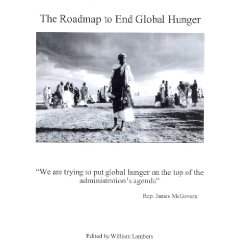
The Roadmap to End Global Hunger

During 2009 the global hunger crisis escalated with the number of people suffering from hunger climbing over one billion. This great humanitarian crisis calls for action on the part of world leaders. In countries like Afghanistan, Yemen, Iraq, Pakistan, Somalia and Sudan hunger threatens hopes for peace. This book includes press releases, interviews and perspective on The Roadmap to End Global Hunger legislation in Congress. This bill (H.R. 2817) was introduced during 2009 by U.S. Representatives Jim McGovern (D-Mass.) and Jo Ann Emerson (R-Mo.). The legislation is based on the recommendations made by groups such as Save the Children, Catholic Relief Services, Mercy Corps, Friends of the World Food Program, World Vision and others. Inside you will hear from offiicials from these organizations as they discuss the Roadmap and its importance in fighting hunger. Also you will see how you can get involved to support the Roadmap to End Global Hunger. Also included in the book is a special historical perspective section on Fighting Hunger and World War II.

The Roadmap to End Global Hunger is available from:

Amazon.com

Google Ebookstore

Leave a comment

Filed under Afghanistan, Catholic Relief Services, drought, East Africa, global hunger, History, Ivory Coast, Kenya, malnutrition, Mercy Corps, Save the Children, School feeding, Somalia, Sudan, The Roadmap to End Global Hunger, West Africa, World Food Programme, World Vision, World War II, Yemen

Nuclear Weapons

This concise book traces the history of nuclear weapons from World War II through the Cold War to the present day. You will also read about issues such as the proliferation of nuclear weapons, nuclear testing, the Comprehensive Test Ban Treaty and nuclear terrorism. This book also examines efforts to use nuclear energy for peaceful purposes as proposed by President Dwight Eisenhower in his “Atoms for Peace” speech. This edition includes a report prepared by the U.S. Strategic Bombing Survey titled “The Effects of the Atomic Bombings of Hiroshima and Nagasaki.”

Table of Contents
Chapter One: The Atomic Bomb
Chapter Two: Nuclear Weapons and the Cold War
Chapter Three: Atoms For Peace and Open Skies
Chapter Four: Nuclear Weapons and the Public
Chapter Five: The Cuban Missile Crisis and the Limited Test Ban Treaty
Chapter Six: Nuclear Proliferation
Chapter Seven: The Comprehensive Test Ban Treaty
Chapter Eight: Nuclear Terrorism
Chapter Nine: Conclusion
Appendix -The Effects of the Atomic Bombings of Hiroshima and Nagasaki
Memorandum by the Chief of Staff, U.S.
Air Force to the Secretary of Defense on
Long Range Detection of Atomic Explosions
Memorandum of Conference with the President
Documents on Nuclear Test Ban Negotiations
Facts About Fallout
Worldwide Reaction to Communist China’s Third Nuclear Explosion
Joint Statement of the Fourth Round of the Six Party Talks Beijing, September 19, 2005
An Antarctic Solution for the Koreas
Index

Nuclear Weapons is available from

Amazon.com

Google Ebookstore

Barnes and Noble

1 Comment

Filed under Books, History, nuclear weapons

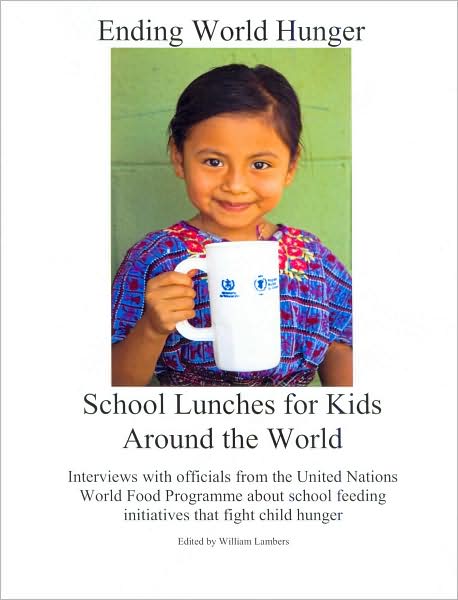
Ending World Hunger: School Lunches for Kids Around the World

The book Ending World Hunger: School Lunches for Kids Around the World features over 50 interviews with officials from the United Nations World Food Programme, Catholic Relief Services, World Vision, the Barefoot Foundation and ChildsLife International. Each interview shows the status of these critical child feeding programs and the potential for expanding them to achieve universal school feeding. The interviews also focus on the impact school meals have for children in developing countries as well as how people can help these programs. Some of the countries profiled are Afghanistan, Sudan, Colombia, Somalia and Pakistan. The interviews published in the book originally appeared online at Blogcritics magazine. The interviews were arranged by William Lambers in conjunction with the UN World Food Programme office in Washington DC.

Ending World Hunger is available at:

Amazon.com

Google Ebookstore

Barnes and Noble

View the short film Ending Child Hunger: School Lunches for Kids Around the World from William Lambers on Vimeo.

1 Comment

Filed under Afghanistan, Books, Catholic Relief Services, East Africa, Ivory Coast, Kenya, malnutrition, School feeding, Somalia, Sudan, West Africa, World Food Programme, World Vision, Yemen