Tag Archives: Yemen

German donation expands food for education in Yemen

The UN World Food Progamme (WFP) said yesterday that a donation from Germany has allowed expansion of school feeding in Yemen. A food for education project is increasing from 35,000 school girls to 100,000 for this year.

Read the full article at Examiner.com

Leave a comment

Filed under global hunger

UN approves plan to fight hunger in Yemen

The UN World Food Programme (WFP) said today it’s approved a two-year plan to fight hunger and build self-sufficiency in Yemen. The relief to recovery operation is estimated to cost US $491 million dollars.

Read the full article at Examiner.com.

Leave a comment

Filed under global hunger

WFP and Yemen Sign Food Aid Agreement, but Funding Remains Low

The UN World Food Programme (WFP) announced today it had signed two agreements with Yemen‘s government on feeding five million people in the impoverished country. Implementation of the agreement will depend on funding received from the international community.

Lubna Alaman, WFP Country Director says, “This is a critical time for Yemen and we hope that WFP assistance will contribute to the general stabilization of Yemen at an important moment in the transition process. We hope that we receive funding to be able to continue our programmes to reduce acute malnutrition among young mothers and children as well as raise the food consumption levels of families struggling to feed their families and others affected by conflict.”

The food aid will be distributed to families all across Yemen struggling with hunger and high food prices. Internally displaced persons and refugees from Somalia will also benefit. Small children will be provided special nutritional foods to prevent the lasting physical and mental damage caused by malnutrition.

WFP relies on voluntary funding to carry out these programs. Currently only US $127 million of US $242 million has been received. Donors so far include Japan, the United States, Canada, the European Commission, Germany and Finland.

Leave a comment

Filed under global hunger

Food Rations Reduced for Displaced Persons in Yemen

Food rations have been reduced for displaced persons in Yemen (WFP/Abeer Etefa)

Food rations have been reduced for displaced persons in Yemen (WFP/Abeer Etefa)

Efforts to build stability in Yemen are being undermined by cuts in food rations to displaced persons throughout the country. The UN World Food Programme (WFP) is facing a funding shortage for its entire emergency operation in Yemen, which provides food aid to millions. WFP relies entirely on voluntary donations.

In February, WFP was forced to reduce rations for 300,000 displaced persons and returnees in the North and South of the country. WFP spokesperson Barry Came said: “Without the ration cuts, WFP would have run out of wheat by late March and many other commodities by mid-April.”

In Southern Yemen, people are returning to their homes in Abyan province, trying to rebuild after the fighting between the government and Al Qaeda. The reduced rations will place an extra strain on these war victims.

WFP needs US$33 million urgently to finance its displaced persons relief. Its overall Yemen relief program faces a US$170 million shortfall in funding. This includes distributing rations to food-insecure families and providing aid to malnourished children. The organisation also has a Food for Education program that needs to be expanded.

Without funding, the threat of more ration cuts or even program suspensions loom.

Half of the population in Yemen suffers from food insecurity and five million suffer from severe hunger. The hunger is most dangerous to children who, if they do not get the right nutrition, will suffer lasting physical and mental damage. If food ration cuts continue Yemen could easily see an increase in an already dire situation of child malnutrition.

WFP, the largest food aid organization, is facing challenging relief missions around the globe, many of which are short on funding. The war in Syria has created a growing humanitarian crisis that is also in desperate needs of resources.

The US Food for Peace program, the largest single donor to WFP, is under the risk of cuts by the Congress. This will make it more difficult to fight hunger and build stability in Yemen and many other countries.

Article first published as Food Rations Reduced for Displaced Persons in Yemen on Blogcritics.

Leave a comment

Filed under global hunger

Feeding the Future of Yemen

Somali refugee children in Yemen having school breakast from the World Food Programme (WFP/Barry Came)

Somali refugee children in Yemen having school breakast from the World Food Programme (WFP/Barry Came)

When you can fight hunger and give a child hope at the same time, you can change the world. We have seen this time and time again over the years with school feeding.

For Yemen, feeding and educating its children is crucial to building the stability and peace it needs. The UN World Food Programme (WFP) has some innovative ways of helping Yemen achieve this.

First is through a Food for Education program which accomplishes two goals at once. To encourage attendance of girls to class, WFP provides take-home food rations. This not only boosts the attendance at school, but helps feed an entire family. You fight hunger and you boost education with one act.

With about 10 million Yemenis facing hunger, food assistance programs like this are desperately needed.

WFP spokesperson Barry Came says 53,000 girls are currently receiving the rations. When you add the fact that their entire family benefits, then 371,000 Yemenis are being helped with this food. The rations consist of wheat and vegetable oil which are distributed in two or three rounds over the course of the school year.

The problem becomes keeping this initiative funded, which has been very difficult for some years. WFP was not even able to run the program for a period of time. In addition, more children could be reached with additional funding.

WFP relies on voluntary funding from governments and the public. A grant, for instance, from the U.S. McGovern-Dole school meals program could make a significant difference in the reach of Food for Education. Right now the program is short $5 million.

WFP also has school feeding for refugee children. Thousands of Somalis have fled the conflict and hunger in their homeland, to find refuge in Yemen. WFP is helping refugee children by providing meals at school.

At the Kharaz refugee camp, in the deserts of southern Yemen, WFP is feeding about 4,500 Somali boys and girls at two primary schools. In addition, WFP is also feeding 4,500 more children, many of which are Somalis, at a school in the Al Basateen district of Aden.

Came says all children at the school receive the meals “in the belief that it helps to integrate the two communities.” The school feeding for Somali refugees currently faces a $1.7 million shortage in funds.

No nation can progress without healthy and educated children. School feeding provides an opportunity for Yemen to make progress, but it will depend on the support of the international community going forward.

Article first published as Feeding the Future of Yemen on Blogcritics.

Leave a comment

Filed under global hunger

Millions of Syrians and Yemenis Suffer From Hunger, Cold

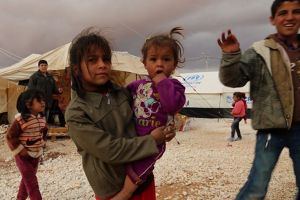
Zaatari refugee camp in Jordan, currently home to 30,000 Syrians who have fled recent fighting in the country. Some 75% of the camp's inhabitants are women and children.Credits: WFP/Jonathan Dumont

Zaatari refugee camp in Jordan, currently home to 30,000 Syrians who have fled recent fighting in the country. Some 75% of the camp’s inhabitants are women and children. Credits:
WFP/Jonathan Dumont

It was just several years ago that Syria was helping refugees from the fighting in Iraq. Now it is Syrians taking refuge in Iraq and other countries as the war between rebels and President Assad’s forces continues.

Victoria Nuland, spokesperson for the U.S. State Department, said this week, “For nearly two years, the Assad regime has brutalized its own people…Assad has lost all legitimacy and must step aside to enable a political solution and a democratic transition that meets the aspirations of the Syrian people.”

Syrians are fleeing daily to Iraq, Lebanon, Turkey, Egypt, and Jordan. Not only do they have to fight hunger but also cold weather.

Um Raed, a mother who recently arrived at Zaatari camp in Jordan, said, “It’s cold, unbelievably cold. My son has only a short sleeved shirt – the clothes he had on when we escaped our country.”

The United Nations High Commission for Refugees is trying to provide shelter, blankets, and clothing for the refugees. This has not been an easy task with hundreds of thousands of Syrians in need and funding low.

This month storms hit the Zaatari camp, flooding and blowing over tents. Syrians who had just gone through the trauma of being displaced from their homeland were dealt another blow. Conditions will continue to be tough for the coming winter months.

Laure Chadraoui, a spokesperson for the UN World Food Programme in Jordan (WFP), said, “The temperature drops here as low as minus two or minus three [Celsius] sometimes, especially at night.” WFP gives food aid to the refugees.

WFP says it might need to feed 750,000 Syrians refugees this year. Meanwhile, inside Syria WFP is feeding about 1.5 million victims trapped by the fighting. This mission is made more difficult by the ongoing violence but also by funding difficulties.

Meanwhile, in Yemen, as the nation undergoes political transition half of the country does not have access to clean water and 10 million people suffer from hunger. A United Nations report said, “Out of the 1 million children suffering from acute malnutrition more than 150,000 may die if they do not receive immediate assistance.”

The same report also says, “Extreme poverty, volatile food and commodity prices and an increase of the cost of living will further reduce access to food, basic services and livelihoods for millions of Yemenis.”

Aid agencies like the UN World Food Programme (WFP) and UNICEF will need funding to help Yemen fight off the hunger crisis. These agencies rely on donor governments and the public.

The U.S. Food for Peace program is the largest single supporter of WFP. If the U.S. Congress supports Food for Peace in upcoming budget negotiations, it can lead to more donations to fight hunger in Yemen and elsewhere.

The UN warns, “There can be no sustainable transition in Yemen without the full support for the humanitarian response.”

Humanitarian aid is a crucial part of achieving peace and stability whether in Syria or Yemen.

Article first published as Millions of Syrians and Yemenis Suffer from Hunger, Cold on Blogcritics.

Leave a comment

Filed under global hunger

Special Food Can Save Malnourished Children in Yemen

If enough packets of supplementary plumpy are brought to Yemen it can allievate much of the child malnutrition ongoing there. The plumpy is easy to store since it requires no refrigeration and packets are ready to eat. (photo courtesy of Plumpyfield)

UNICEF Yemen is reporting stunting rates among children at 71.4 percent in the Rayma governorate of central Yemen. Children who are stunted by lack of nutrition fail to reach expected height and weight for their age.

Another UNICEF survey revealed global acute malnutrition rates among children in the Lahj governorate of southern Yemen at 23 percent. Children who suffer this malnutrition have lasting physical and mental damage unless they are treated.

Child malnutrition is severe throughout Yemen. UNICEF says, “967,000 children suffer from acute malnutrition. In certain areas of the country, the acute malnutrition rate exceeds 30 per cent, twice the emergency threshold.” Until this crisis is alleviated Yemen will not be able to gain stability for its future. The question is, what action can be taken?

A full supply of supplementary plumpy (plumpy’sup) food for all needy children in Yemen would provide the nation with a break from the malnutrition storm. Supplementary plumpy, and plumpy’doz, are peanut pastes designed to keep children from falling into the most severe levels of malnutrition. When children reach the most desperate stage of malnutrition they are generally fed life-saving plumpy’nut. Yemen needs a supply of plumpy’nut too to treat the most severe malnutrition cases.

But if the rest of the child population at risk of malnutrition can be reached with supplementary plumpy you can prevent this last resort.

Dr. Wisam Al-timimi of UNICEF Yemen says, “Supplementary plumpy is the 1st stage to treat the moderate cases of acute malnutrition (MAM).” UNICEF is teaming with the UN World Food Programme to increase coverage of supplementary plumpy and plumpy’doz for children under two years of age.

Navyn Salem of Edesia, which produces Plumpy’Nut and Plumpy’Sup, says it’s a “good strategy” to treat children ahead of time with Plumpy’Sup to prevent their dangerous descent into severe malnutrition. Salem says it “costs less and it is of course better for the children to be reached sooner than later.”

Funding, though, will be an obstacle, as donations are needed so UNICEF, WFP, and other aid agencies can get the necessary supplies. These agencies rely completely on voluntary donations which are often hard to get even though food aid is relatively inexpensive.

Both WFP and UNICEF are limited in plumpy supply due to funding constraints. As of last month UNICEF Yemen only had 30 percent of the funding it needed for a $24 million program to fight child malnutrition. With extra funding they would increase the defenses against child malnutrition.

Support from governments and the public would go a long way toward stabilizing the country and preventing a generation of children from being damaged from malnutrition in the first thousand days of life.

UNICEF Yemen has a relief fund that the public can use to contribute funds to the relief effort. The UNICEF programs needs more support. Susannah Masur of UNICEF USA says “it’s been very difficult to raise money for the nutrition crisis in Yemen.”

The public can also contact the UN World Food Programme and ask about direct donation to their operation in Yemen. Governments can work with UNICEF and WFP and provide donations to make sure they have the resources on the ground to help all the children in Yemen.

Article first published as Special Food Can Save Malnourished Children in Yemen on Blogcritics.

Leave a comment

Filed under global hunger

Unrest and Funding Shortages Threaten Yemen School Feeding

Funding shortages and lack of security have limited the ability of the UN World Food Programme (WFP) to provide school feeding for Yemeni children. The school feeding is part of WFP’s response to the hunger crisis in Yemen where nearly half of the population is “food insecure.”

WFP depends entirely on voluntary donations from the international community. As WFP notes, its school feeding project for Yemeni schoolgirls, “has been under-funded for much of its implementation period.”

Civil unrest in Yemen has made it much more difficult for aid to be delivered in parts of the country. A WFP report says, the “school feeding activity will therefore be suspended in Sa’adah, Al Jawf, Mareb, Abyan (currently inaccessible under UN security regulations) and parts of Amran governorates. Should the situation and hence access improve, WFP will look to reinstate the programme in these currently suspended areas.”

In 2011, the WFP school feeding “project reached only 59,000 school girls during May 2011 compared to the planned figure of 114,639 participants during the three distributions in the school year (September to June).”

This year the project has been reduced to 53,000 students. A distribution of school feeding rations, with 2 months supply of food, took place in February but none has occurred since. WFP says the next school feeding distribution is scheduled for September or October.

WFP school feeding in Yemen provides take-home rations to schoolgirls. This also means food for the family of the student. For instance, this year’s distribution to 53,000 schoolgirls meant about 371,000 Yemenis received a food supply.

If the school feeding project were able to return to the level of 114,639 students, then the food rations would be reaching nearly one million Yemenis total.

School feeding is also a way to increase the enrollment of girls. If parents know food is provided, they are more likely to send their children to school.

It’s the kind of program that you would want to see established throughout the whole country. More funding though is needed from the international community. The US McGovern-Dole school feeding program would be a potential source of funding provided the Congress shows more support for this global initiative. McGovern-Dole has not received the funding levels advocates have called for in recent years.

WFP also runs a school feeding project as part of its aid to Somali refugees who have fled to Yemen. This program too is facing funding shortages.

All the people of Yemen have to choose peace and progress over the violence and instability that currently exists. This will allow Food for Education and other projects to go forward at full strength to defeat the crushing poverty that exists in the poorest country in the Middle East.

Article first published as Unrest and Funding Shortages Threaten Yemen School Feeding on Blogcritics.

Leave a comment

Filed under global hunger

Quiz: Hunger and Malnutrition in Yemen

WFP also hopes to run a Food for Education program to give Yemeni children rations and encourage class attendance. This program has suffered from such a lack of funding that WFP has reduced its planned beneficiaries (photo courtesy Yemen Post)

Hunger and malnutrition is something that you do not hear much about when Yemen is discussed in the news. The United Nations World Food Programme (WFP) just released findings from a preliminary survey of hunger and malnutrition (food insecurity) in Yemen. Test your knowledge on the results. You can check your answers at the conclusion of the quiz.

For the answers click here.

Read more about hunger in Yemen:

Leave a comment

Filed under global hunger, Uncategorized

Quiz Answers: Hunger and Malnutrition in Yemen

1.) Hunger and malnutrition in Yemen

Leave a comment

Filed under Uncategorized