Tag Archives: World Food Programme

Sahel Food Crisis: An Interview with Célestine Ouédraogo of WFP in Burkina Faso

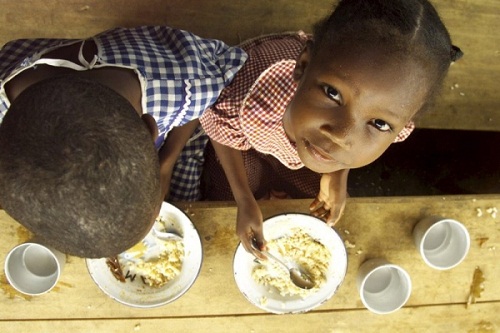
School feeding opens new opportunities for children in developing countries. (WFP/Anne Poulsen)

With the food crisis escalating in the Sahel region of Africa, it’s urgent that children be protected from hunger and kept in school.

In Burkina Faso, one of the affected Sahel countries, the UN World Food Programme (WFP) provides school feeding for impoverished children. These meals take on even more importance during the current hunger emergency.

When drought strikes, families are more likely to remove their kids from school and keep them home to work. However, If there is food available at the school then parents are more likely to keep their children enrolled.

In this interview Célestine Ouédraogo of WFP updates us on the status of school feeding in Burkina Faso as the Sahel food crisis unfolds.

How many children are receiving WFP school meals in Burkina Faso?

Each year 90,019 children enrolled in 691 schools in the Sahel Region benefit daily from a flour-based fortified breakfast and couscous-based lunch. In addition to the meals served in schools, 9,510 girls enrolled in the last two grades are receiving a take-home ration of 10 kg of cereals per month, which encourages parents to keep the girls in school and enable them to complete the primary school cycle.

Are these schools in the areas affected by the drought?

Yes, all these schools are in the areas affected by the drought.

The Sahel region is one of the most food-insecure regions, and has among the highest rates of malnutrition.

Does WFP intend to expand school feeding in Burkina Faso?

No.

Does WFP have enough resources to provide school meals for at
least the rest of the year?

YES, thanks to the generosity of 2/3 donors, we have been able to secure funding up to end of 2012, which is essential if we want to ensure that children can pursue their education despite the food insecurity that the country is facing this year.

For more information please visit the World Food Programme.

Article first published as Sahel Food Crisis: An Interview with Calestine Ouedraogo of WFP in Burkina Faso on Blogcritics.

Leave a comment

Filed under global hunger

Sahel Food Crisis: An Interview with Aboubacar Guindo of WFP in Mali

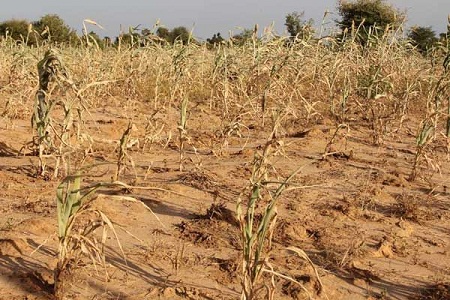
A field of withered crops in the Mali’s Kayes region. Drought has ruined food supplies in the Sahel region of Africa, which includes the countries of Mali, Niger, Mauritania, Burkina Faso, Cameroon, Senegal, and Chad. (WFP/Daouda Guirou)

Almost nine million people urgently need food assistance in the Sahel region of Africa following a severe drought. And time is running out to prevent a massive humanitarian disaster.

Josette Sheeran, the director of UN World Food Programme, says, “The needs of the millions affected by drought in the Sahel are enormous, and the time to act is now.”

Mali is one of the countries caught in the crisis. Mali is not only contending with drought but also conflict in the North between a rebel group and the government. The fighting is creating additional displacement and hunger.

WFP runs school feeding in Mali to save children from hunger and malnutrition and keep them in class. But will there be enough support to keep the program going during this food crisis? WFP depends on voluntary donations to fight hunger around the globe.

Aboubacar S. Guindo, a WFP school feeding officer, talks about where Mali’s program stands now as we head into critical months of this hunger emergency.

How many children are receiving WFP school meals in Mali? Is this a breakfast or lunch ration?

Actually, we are feeding 156,666 kids in 729 schools in the country. They do receive hot meals generally served at midday. In addition to that, the Government undertook under the national budget to cover an additional 651 schools (117.000 children) who are also benefiting from hot meals.

Are these schools in the areas affected by the drought conditions?

Yes, most of the schools are based in the area affected by the drought that results in communities’ increasing vulnerability. The government through the Early Warning System identified 159 communities that are the most affected by this crisis. To respond to this, WFP elaborated an Emergency Operation (EMOP) with a School Feeding component to avoid important drop-outs that schools used to face in this type of crisis. The EMOP will also include nutrition, food for work, and cash components.

In the affected communes all the assisted schools from both government and WFP programs will receive a complimentary meal made of enriched cereals (supercereal) as breakfast. We are planning to assist 150,000 kids under this initiative.

Does WFP intend to expand the program?

For now, the extension WFP will do concerns the coverage of the schools affected by the drought. We are more likely to reinforce government abilities to develop and implement a National SF programme.

Does WFP have enough resources to continue providing the school meals?

Funding is the biggest challenge. We have been obliged last year to reduce the numbers of meals in the northern region due to reductions in funding. In addition to food insecurity, WFP is assessing the needs of the internally displaced due to conflict in the north. This assessment may show in an increase in needs.

We hope to have more contributions from local and international donors in order to continue to provide our support to communities as well as the government so that hunger does no longer constitutes a barrier to the education of any children in Mali.

For more information please visit the World Food Programme.

Article first published as Sahel Food Crisis: An Interview with Aboubacar Guindo of WFP in Mali on Blogcritics.

Leave a comment

Filed under global hunger

Save the Children Starts School Meals for Somali Refugees

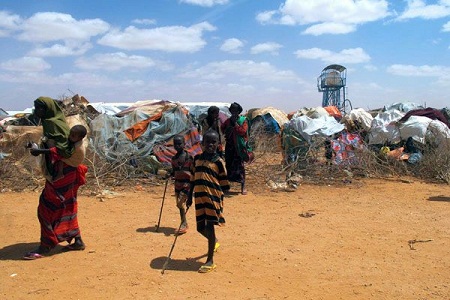
Scene from a refugee camp in Ethiopia where Somalis fled to when food supplies ran out in their homeland. What future do these children face? (WFP/Natasha Scripture)

Imagine if you were a child living in the Gebo and Bay regions of Somalia last summer. Instead of having the opportunity to go to school in the fall you were trapped in a massive drought zone. With food supplies low your family would be forced to flee the region as a matter of survival.

Starting in the summer of 2011 streams of hungry Somalis fled Gebo, Bay and other crisis areas. Some parts of Southern Somalia were declared in famine as starvation had set in. The drought, combined with conflict, placed over 13 million people were put at risk of starvation in Somalia and other countries in East Africa.

Thousands of residents of Gebo and Bay are now in the Kobe and Hilaweyn refugee camps in Ethiopia and depending on relief from aid agencies. Save the Children is helping kids within these camps by providing emergency education and school meals. The meal will be a porridge, made of a corn-soy blend, served as a breakfast at school.

In addition Save the Children wants to provide school meals to children in the Melkadida and Bokolmayo camps, also in Ethiopia.

Save the Children hopes to provide meals to 8,037 children who are currently receiving emergency education in these four refugee camps.  And they want to expand the program to reach more children. There are 43,966 school age children in the four camps.

Save the Children is also working on the construction of schools to expand educational opportunities.

The school meal program, with supplies from the UN World Food Programme, will improve child nutrition. It’s also expected to improve enrollment and enhance the teaching and learning process.

Funding though is critical. Save the Children says resources for the program is expected to run out later this year. That is where the public can help by supporting Save the Children’s East Africa appeal.

Article first published as Save the Children Starts School Meals for Somali Refugees on Blogcritics.

Leave a comment

Filed under global hunger

On Digital Learning Day, think FreeRice

FreeRice has two goals: Provide education to everyone for free. Help end world hunger by providing rice to hungry people for free.

This Wednesday, February 1, is the first ever National Digital Learning Day. It’s a chance to showcase the innovation taking place in classrooms through internet technology and digital media.

One online tool helps students learn and also feeds the hungry worldwide. It is called FreeRice and it’s an online trivia game in which you answer questions on vocabulary, math, chemistry, foreign languages, and even art.

While a student is playing and learning about these subjects, something else magical is happening. For every correct answer, 10 grains of rice, paid for by advertisers, are donated to the UN World Food Programme (WFP), the largest agency fighting hunger. The donations are used in WFP operations fighting hunger and malnutrition.

Last year, for instance, students who played this game helped support school feeding programs in Haiti and Cambodia. The more students play the game, the more support for hunger relief.

Innovative online learning can play a role in tackling the most massive crisis facing man. There are nearly one billion people worldwide who suffer from hunger. A severe drought struck East Africa last year causing food shortages and wide-scale displacement as people desperately searched for help. This crisis is far from over.

Another one is fast emerging in West Africa, in the Sahel region, where the countries of Niger, Chad, Burkina Faso, Mauritania, and Mali are being devastated by drought which has ruined food supplies. Afghanistan, Yemen, Haiti, and so many other countries are suffering deeply from hunger and malnutrition.

The World Food Programme relies on voluntary donations to help these countries fight hunger. This agency is so low on funding that many of their relief operations face suspensions or reduced rations. Right now, children in Mauritania are about to lose their school meal of rice at a time when they need it more than ever. The same holds true in the Ivory Coast, where rice and other supplies are running out for children in a country recovering from an internal conflict last year.

FreeRice is a digital tool that can help these hungry children while helping other children learn. The game’s mission statement is to “Provide education to everyone for free” and “Help end world hunger by providing rice to hungry people for free.” The game is even great for adults who want to test their knowledge on these subjects.

So on this Digital Learning Day I hope many students and teachers will join the already one million players of FreeRice. You can form teams on FreeRice too, so perhaps schools can develop tournaments between classes and even other schools just as they do with football, basketball, debating, and other activities. The sky is the limit for this online learning tool and what it can accomplish.

You can start playing at Freerice.com.

Article first published as On Digital Learning Day, Think FreeRice on Blogcritics.

Leave a comment

Filed under global hunger

Mauritania School Meals Run Out as Drought, High Prices Strike

Impact of Drought in Mauritania: The recent rain deficit in Mauritania has had a severe impact on the land. Many animals have died due to lack of fodder and water leaving families without livestock. (Jacqueline Seeley/WFP)

The hunger emergency in the Sahel region of Africa is fast escalating. Drought and high food prices are taking their toll among millions of already impoverished people across several nations.

Mauritania is one of the countries trapped in this crisis. The UN Food and Agriculture Organization (FAO) reports, “Dry spells and poor rainfall distribution during the growing period (July to October) resulted in a sharp decline in cereal production. The 2011 cereal output was estimated…about 53 percent below last year and 39 percent below the previous five years average.”

The ranks of the hungry in Mauritania are rapidly increasing. FAO says there could be over one million people now “food insecure” out of a population of three million. These are families that are already living in poverty and not able to cope with dramatic price increases.

At a time of low crop production and high food prices, the safety net of school meals for children becomes ever so valuable. However, the UN World Food Programme (WFP) is so low on funding that supplies are about to run out for the breakfast and lunch it has been providing to schoolchildren throughout Mauritania.

At a time when school feeding should be expanded, in Mauritania it is days away from coming to an end. WFP relies on voluntary donations from the international community.

Jacqueline Seeley, WFP information officer, provides us with more details in the following interview.

How many children are currently taking part in the WFP school feeding program in Mauritania?

145,633 children.

Are the schools in areas impacted by the drought and high food prices?

Yes, greatly. There is presently no funding in the pipeline for the school feeding and given the current crisis, the school feeding programme ensures that children at least receive two meals per day. This takes a large burden off of vulnerable families…as of the end of February families will be forced with the challenge of finding ways to feed their children.

Does WFP have enough resources to continue the meals program?

No. Food in the pipeline lasts until end of February, but after that, there will be nothing. No financing is foreseen given the urgency of the crisis as all donors prefer to finance the emergency response.

Are there more children who need these meals?

This caseload of 145,633 is the maximum caseload we planned for 2012; however the need of children who are hungry is higher, yes, especially with the food crisis.

How can someone get involved with helping WFP Mauritania?

Through wfp.org, money can be sent to WFP to support its operations. For direct contributions to Mauritania, contact jacqueline.seeley@wfp.org.

Article first published as Mauritania School Meals Run Out as Drought, High Prices Strike on Blogcritics.

Leave a comment

Filed under global hunger

How a Silent Guest Can Help Save Hungry Yemen

In a letter to the New York Times last February, I wrote about an emergency safety net plan to feed millions of hungry Yemenis suffering from high food prices.

Since that time, child malnutrition in some parts of Yemen has increased so much as to rival famine-ravaged Somalia.

Maria Calivis, UNICEF’s regional director, says, “This year alone, half a million children in Yemen are likely to die from malnutrition or to suffer lifelong physical and cognitive consequences resulting from malnutrition if we don’t take action. Malnutrition is preventable. And, therefore, inaction is unconscionable.”

Calivis adds, “Conflict, poverty and drought, compounded by the unrest of the previous year, the high food and fuel prices, and the breakdown of social services, are putting children’s health at great risks and threatening their very survival.”

Neither UNICEF nor the UN World Food Programme (WFP) received enough funding during 2011 to carry out their full hunger relief missions in Yemen.

These UN agencies rely on voluntary donations from the international community. If donors do not contribute, then hunger relief missions have to be scaled back or in some cases halted.

So what can someone do? Take action! UNICEF has a relief fund for Yemen. The World Food Program USA is also hosting a Yemen fund. You can even sign a petition to help WFP fight hunger in Yemen.

Or you can take in a “silent guest.” Starting in the holidays of 1947, the United States helped starving countries with a “silent guest” program. At mealtime, people were asked to imagine a silent guest at their table. Then they could mail the cost for feeding that silent guest to a committee in Plymouth, Massachusetts. This donation would buy a CARE package which was sent to hungry people in war-devastated Europe.

Today, maybe at your next meal, you could take in an infant child in Yemen who needs plumpy’nut to prevent potentially deadly malnutrition. You could send that donation to UNICEF which provides the plumpy so it can help treat all the cases of child malnutrition in the country.

Some of the countries who benefited from silent guest donations back in 1947 were Italy, Austria, France, and Greece. At that time Greece was recovering from a famine and facing a civil war.

Another country helped by the silent guest program was Germany. It is Germany that today has taken the lead in helping fight hunger in Yemen with a recent donation of $31 million to the WFP mission.

WFP will need over $200 million to feed millions of Yemenis during 2012. The rest of the international community should follow Germany’s lead.

The donation from Germany will help the emergency safety net plan which includes rations for 1.8 million Yemenis and also plumpy for infants. A school feeding program which has faced severe cuts over the last couple of years is getting a restart too.

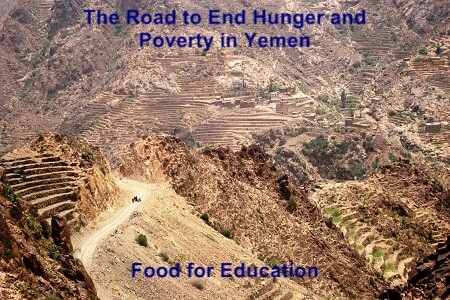
The WFP Food for Education plan, which distributed take-home rations to schoolchildren, was suspended in 2010 and did not resume until May of 2011. Then it was a limited distribution, not even close to the previous levels of about 115,000 students. These rations benefited the children and their families. It’s food for the body and the mind as it keeps children in school and learning reading, math, science, and writing.

As significant as Germany’s recent donation is, it will be able to help revive Food for Education only to almost half of what it once reached in terms of students.

Lubna Alaman, director of WFP Yemen, says “The Food for Girls’ Education [program] is targeting only 53,000 girls and their families, and the food will be distributed for three school terms in 2012.”

So there is a long way to go to get all these hunger relief plans fully active again.

The choice with Yemen is simple. Invest now and avert an epic disaster like Somalia faced. We can save a generation of children in Yemen from the malnutrition that damages or even kills them in the first years of life.

Or drift along, pretending that Yemen will somehow turn out OK with an average response to humanitarian needs. It won’t, because no nation can have peace, political stability, and development on empty stomachs and malnourished bodies and minds.

Article first published as How a Silent Guest Can Help Save Hungry Yemen on Blogcritics.

Leave a comment

Filed under global hunger

Building the Future in Ivory Coast with School Meals

WFP has resumed school feeding in Ivory Coast. But will the funding pipeline be maintained by donors for the program to continue? (file photo by WFP/Ramin Rafirasme)

Secretary of State Hillary Clinton traveled to the Ivory Coast (Côte d’Ivoire) this week and spoke of hope for the future. Hope was something not often talked about when this African nation was embroiled in violence last year over a disputed election.

The fighting is now over. A chance for Ivory Coast to build a promising future has begun. Clinton said, “I am inspired by how quickly not only the government but the people have moved from the violence and conflict of last spring to successful legislative elections in December and to a commitment that is in the air to build a better future for all Ivoirians and particularly for the next generation.”

Hunger, though, is still a major threat in the Ivory Coast. A report from the UN Food and Agriculture Organization (FAO) said, “In spite of the improved security situation, food security remains a major concern. Access to food for many households is being constrained by the disruption of their livelihoods.”

Catherine Bragg, of the UN Office for the Coordination of Humanitarian Affairs (OCHA), told IRIN news, “I don’t want the world to move on and say everything in Côte d’Ivoire is fine.”

Humanitarian aid is critical for this country traveling the road to peace. A whole generation of children in the Ivory Coast needs nutrition and education, something many had to go without during the months of fighting and displacement. In January, the UN World Food Programme (WFP) started to provide school feeding to 600,000 children in 3,400 schools around the country. The initiative also provides food for about 25,000 voluntary teachers.

The school feeding gives these children a very important meal, which includes rice, of about 700 calories. Providing food at school boosts attendance rates not to mention class performance. So two key areas of Ivory Coast’s recovery are addressed with this program.

This free meal is of the utmost importance for so many impoverished families that lost so much during the conflict. Funding, though, is the critical issue going forward. WFP relies on voluntary donations from the international community. Food to reinforce peace depends on keeping the donor pipeline moving.

WFP says that the Ivory Coast school feeding program is only 11 percent funded. The program can run for the time being. However, by April supplies will be needed to maintain the school feeding. Donations now are critical because it can take several months for a donation to translate into delivered food. If no action is taken there is the the risk of children facing reduced rations or even losing their school meal come spring. This would impact the recovery process and the health and education of children.

As Clinton said while in the Ivory Coast, “Families need good schools to send their children to attend, everyone needs good healthcare, and I am very hopeful that the president’s agenda will help revitalize this dynamic, very important country at a time when we all need to do more to set a positive vision for the future.”

School meals are a vital building block for this vision. So it’s important that this program be supported and evolve into a national school feeding program for the Ivory Coast. Such a vision need not be too far off in the future, if the will exists now.

Article first published as Building the Future in Ivory Coast with School Meals on Blogcritics.

Leave a comment

Filed under global hunger

Sahel Food Crisis: Race Against Time to Save Lives

A mother attends to her severely malnourished child at an inpatient feeding centre in Mao, Chad. Credit: UNICEF Chad/2011/ Esteve

In the Sahel region of Africa millions of people are caught in a severe hunger crisis. Niger, Mauritania, Chad, Burkina Faso and Mali are primarily the countries affected right now.

Drought has reduced food production, and high prices reign over the existing food supply. For families living in poverty, food is out of reach. UNICEF says more than a million children under five years of age will need to be treated for severe malnutrition in the region.

If the international community does not act now, the situation will get much worse. Action has to be taken well before the lean season between harvests, which could start as early as February or March. The UN World Food Programme (WFP) says, “food security problems in the lean season lead to significant peaks in acute malnutrition and mortality, taking it beyond critical levels.”

It can take months for a donation to translate into food on the ground. So donors need to come forward quickly to help avert a disaster in the Sahel.

Navyn Salem of Edesia, whose organization produces plumpy’nut food aid, points out that if donors wait until the ultimate disaster strikes, it leads to very expensive airlifts of emergency food aid. That is money that could have been used to purchase more food and shipped at lower cost months earlier.

Right now WFP is facing a tough time funding its relief operations as hunger is on the rise in many parts of the globe. In Niger, WFP had to increase its funding requirements to feed over 3 million people, one million higher than previous estimates. So far, less than half of the required funding has been received to provide the food aid.

Denise Brown, WFP country director, warns “Unusually high food prices are affecting needy people who are facing growing difficulties as they struggle to feed themselves and their children. I am deeply worried about the food situation deteriorating in the coming months and we cannot sit back and wait for the worst to come.”

The US Food for Peace program, started by Dwight Eisenhower, has been able to send some funds for Niger relief. However, the US Congress has been threatening to reduce future funding for Food for Peace despite the massive global hunger crisis now unfolding.

In Chad, cereal production in 2011 decreased 50 percent compared to 2010, according to the Food and Agriculture organization. Who becomes the most vulnerable when such a food crisis hits? It’s the smallest children under five years of age.

A WFP report says, levels of acute malnutrition were at a “critical” level in 6 out of 11 regions surveyed in Chad. Other areas were categorized as having “Serious” levels of malnutrition. The smallest infants in this danger zone run the risk of lifetime physical and mental damage unless food aid can reach them in time.

UNICEF says, “What is going to be required to save lives is the sweet, peanut-based therapeutic food known as ‘Plumpy Nut’, enough nutrition professionals in the field to work the feeding centres, and a string of other interventions that bring more food into communities.”

The Sahel region is in need though of more than emergency food aid. There has to be a way to build up the resilience of the region to future droughts, and gradually reduce the need for outside assistance. When the current crisis stabilizes, investments in the small farmer will need to move forward. Only this food security investment can prevent another hunger crisis of this magnitude.

Article first published as Sahel Food Crisis: Race Against Time to Save Lives on Blogcritics.

Leave a comment

Filed under global hunger

Big East Basketball to Shine Light on War-torn and Hungry Sudan

By 1 June, about 40,000 people displaced from Abyei after the town's takeover by Sudan Armed Forces had been registered in the Abyei area, Unity State and the greater Bahr El-Ghazal region and were receiving humanitarian assistance. Photos: UNMIS/Issac Gideon.

This Wednesday, when Villanova University squares off against Seton Hall, you can expect another competitive Big East Conference basketball game. This game will differ from others in that it will seek to build support for Peace in Sudan.

Villanova and Seton Hall are partnering with Catholic Relief Services (CRS) in “Playing for Peace” to help bring an end to conflict, hunger and suffering in Sudan and South Sudan. Sudan and South Sudan fought a decades-long civil war that ended in 2005 with a peace agreement. However, violence has continued and the agreement has not been fully implemented.

Peace activism will take place throughout the game. Students will be handed a flyer showing how they can help by contacting the White House and urging the administration to support the peace process.

South Sudan became the world’s newest country last July, gaining independence from Sudan. However, peace in the region remains elusive as conflict and border tensions continue. It is critical that UN peacekeeping missions be supported and fully funded to protect civilians, and help establish conditions to build a lasting peace and development.

A peacekeeping mission called UNISFA was deployed to Abyei, which is a disputed territory on the border between Sudan and South Sudan. This oil rich region is claimed by both Sudan and South Sudan, and fighting has taken place there for years despite the 2005 agreement. UNISFA is there to make sure the area is demilitarized and made safe for civilians.

The threats go beyond the guns. Hunger and poverty still dominate the countryside. Drought often harms food production efforts and malnutrition is a major threat to children. Displacement from conflict makes this situation even more desperate. Conflict exists not only between South Sudan and Sudan, but also between rival tribes.

At this very moment, aid agencies are trying to help 50,000 displaced persons in the Jonglei State of South Sudan. CRS reports that the ethnic conflict between the Lou Nuer and Murle tribes has claimed an estimated 1,000 lives in the past six months. One of the driving forces behind this internal conflict is the lack of resources. Hunger and poverty feed desperation and violence.

Isaac Boyd of CRS Sudan says, “After nearly four decades of working in Sudan and South Sudan, CRS recognizes that sustainable development and peace are tightly interwoven. To contribute to a lasting improvement in the level of basic services and economic opportunities available to people throughout South Sudan, it is imperative to support communities to find meaningful, concrete ways to resolve their differences and put an end to destructive conflict. Simultaneously, tensions between groups are often exacerbated by the scarcity of basic services like access to water, schools, or health clinics. Development and peace have to happen at the same time.”

Will there be enough resources for aid agencies to reinforce the drive for peace? CRS is sponsoring emergency aid as well as long-term food security projects. The UN World Food Programme (WFP) is reporting that its 2012 relief operation for South Sudan is short 179 million dollars. WFP relies entirely on voluntary donations from governments and the public.

Without food, children in Sudan will suffer lasting physical and mental damage, thereby stunting the next generation. Without food for schoolchildren, education will suffer. A national school lunch program still needs to be established.

Playing for Peace is part of a series of events about Sudan sponsored by Villanova University. For more information, please visit the CRS newswire.

Article first published as Big East Basketball to Shine Light on War-Torn and Hungry Sudan on Blogcritics.

Leave a comment

Filed under global hunger, peace

Remembering the Horn of Africa This Holiday Season

The UN World Food Programme and CARE team up to provide food to refugees who have fled Somalia (WFP/Mariko Hall). Both of these agencies are accepting donations for East Africa.

President Obama issued a statement last week thanking Americans who had donated to relief efforts in the Horn of Africa this year. He also cautioned that much more needs to be done to overcome the humanitarian tragedy of 2011.

Obama said, “As we enter the season of giving and renewal, more than 13.3 million people in Ethiopia, Kenya, and Somalia remain in urgent need of humanitarian assistance amid the worst drought the region has seen in 60 years. The heartbreaking accounts of lives lost and of those struggling to survive remind us of our common humanity and the need to reach out to people in need.”

The U.S. has a great tradition of leading the fight against famine wherever it occurs. In 1946, just a year after World War II ended, the threat of massive famine loomed over the globe as food supplies were running low. In this case, the paths of the U.S., Somalia, and Ethiopia crossed briefly.

Herbert Hoover, who was appointed food ambassador during this crisis, first reviewed the food supply of as many nations as possible. In this report were listed Somaliland and Ethiopia. Hoover writes “of self-sufficient nations in Africa, we classified Egypt, Ethiopia, Liberia, and Somaliland, with a total population perhaps of 35,000,000 people.”

There were no reports of drought that year in East Africa. Of course, any country not in food deficit at that time was a huge relief with the impending worldwide famine. It was going to be enough of a challenge to meet the food needs of the war-devastated countries.

Whether or not there is a drought is all about luck. In 1946 there was luckily none in East Africa. This year a different story–a huge drought.

What does not depend on luck though is how well nations are prepared to deal with drought. Many actions can be taken by the international community to help build up the resilience of farmers in developing countries so that when drought does hit, it is not catastrophic. Food reserves can also be in place to prevent a year of setbacks from drought and keep a country moving toward food security.

So, this is one of the lessons of this year. Invest in farmers today to avoid the famine of tomorrow.

Article first published as Remembering the Horn of Africa this Holiday Season on Blogcritics.

Leave a comment

Filed under global hunger, History