Tag Archives: UNICEF

UNICEF starts relief fund for children in Yemen

UNICEF USA has started a relief fund to help the suffering children of Yemen. You can donate to the fund here.

Children are suffering the effects of malnutrition and displacement after a year of political instability, as well as fighting between the government and militant groups. Some families are even living in caves after fleeing violence.

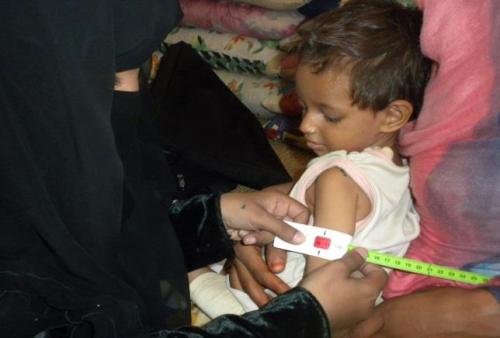
“Don’t be afraid, we are not going to harm you, we are here to take care of you,” says Hana to the little girl who clutches her doll, afraid of the strangers who have come to her house. Do they want to take her away from her mom? But Hana and her colleague are enumerators and are here to see if little Fatima is malnourished, if she needs treatment. Sadly a quick measurement of her arm with a special tape shows she is much thinner than she should be at her age. “Fatima has severe malnutrition,” says Hana. “We have to refer her immediately to the outpatient therapeutic center so she can get appropriate care.” Rasha Al-Ardi/UNICEF Hodeidah/2011

The latest UNICEF report showed that “58,338 severely acute malnourished children were treated… in the past 11 months.”

However, countrywide it is estimated that 4 million children suffer from severe malnutrition. Many more resources such as plumpy’nut are needed for UNICEF to treat these children.

Read more about UNICEF’s response to the crisis in Yemen in my interview with director Geert Cappelaere.

first published at Global Hunger Examiner.

Leave a comment

Filed under global hunger

Interview: Geert Cappelaere of UNICEF on the Humanitarian Crisis in Yemen

“Don’t be afraid, we are not going to harm you, we are here to take care of you,” says Hana to the little girl who clutches her doll, afraid of the strangers who have come to her house. Do they want to take her away from her mom? But Hana and her colleague are enumerators and are here to see if little Fatima is malnourished, if she needs treatment. Sadly a quick measurement of her arm with a special tape shows she is much thinner than she should be at her age. “Fatima has severe malnutrition,” says Hana. “We have to refer her immediately to the outpatient therapeutic center so she can get appropriate care.” Rasha Al-Ardi/UNICEF Hodeidah/2011

Most of the spotlight on Yemen is focusing on whether embattled President Ali Abdullah Saleh should be given medical treatment in the United States. Tragically lost in this debate are millions of Yemenis who are suffering from hunger, malnutrition, and disease.

The UN World Food Programme (WFP) estimates that over 7 million Yemenis (1/3 of the population) suffer from hunger. This figure is believed to be even higher considering the past year of unrest and violence in the country. Malnutrition rates among children are high, causing stunted physical and mental growth or even leading to death.

This year of political turmoil and protests against long-time president Saleh has led to shortages of basic goods and increased food prices. Aid agencies, who are low on funding, are struggling to keep up with the increasing calls for help.

Yemen is on the verge of a humanitarian disaster and little is being done to heed the warnings. The level of human suffering has the potential to plunge the country into complete chaos which would easily destroy hopes for peace and strengthen the Al-Qaida branch there.

As President Obama’s counterterrorism advisor John Brennan says, “As we have seen from Afghanistan in the 1990s to Yemen, Somalia and the tribal areas of Pakistan today, al-Qa’ida and its affiliates often thrive where there is disorder.”

UNICEF is trying desperately to provide aid to the most vulnerable segment of Yemen’s population: Children. In the following interview Geert Cappelaere, director of UNICEF in Yemen, discusses the fast-developing humanitarian crisis and how we can take action.

The recent United Nations report revealed a 31.7% Global Acute Malnutrition in Yemen’s Hodeidah Governorate. Isn’t that a malnutrition rate similar to the worst areas of starvation inside Somalia? Could Yemen be the next Somalia?

Yemen, unfortunately, has the highest rate of chronic malnutrition in the world with close to 60% of children reported as stunted. In some parts of Yemen, global acute malnutrition rates are indeed equal than in parts of drought and famine struck Horn of Africa, with 30% of those under 5 years of age being wasted (globally acute malnourished). Severely acute malnutrition levels are approaching 10% in certain pockets of the country. So the levels of chronic and acute malnutrition amongst Yemeni children are unprecedented in most part of the world.

Certainly, Yemen could be the next Somalia and very soon, if the world keeps watching with no action. UNICEF has been ringing the bell very loudly that we do not want the situation of children to turn into a humanitarian disaster.

Do UNICEF and other aid agencies have a full picture what is happening with hunger and malnutrition especially in rural, more isolated areas? Could the Hodeidah malnutrition findings tragically be the tip of the iceberg in Yemen?

UNICEF and humanitarian workers on the ground have made it clear that Yemen, which is already chronically underdeveloped, is on the verge of a humanitarian disaster. The situation is much worse than what people could imagine. Also our collective response has not been up to the challenge. Limited funding has led to a reduction in assistance, negatively impacting the nutrition and food security status of families already facing protracted displacement.

The recent findings of the UNICEF survey coming from Hodeidah are consistent with those findings coming from Hajja, for instance, and other parts of the country. Nearly one third of children surveyed suffer from either moderate or severe acute malnutrition – of which nearly 10 percent were severe cases. Wherever we go, wherever we survey, wherever we assess, we come to the same conclusions: levels of acute malnutrition in Yemen are incredibly high.

Yemen has suffered through war in the North between the government and rebels and recent fighting in the South with militants. This on top of tremendous political instability and violence this year. What kind of psychological toll is this taking on children growing up amid such displacement and violence?

Yemen is a country where children represent more than half of the population, which means more than 12 million. They bear the brunt of underdevelopment and a looming disaster. UNICEF is very concerned about the impact on children of years of underdevelopment, multiple wars and more recently a deep political crisis.

Even after intensive efforts by UNICEF, government and partners to bring children back to schools, nearly a quarter of a million children across Yemen face difficulties attending school. More than 180 schools in different parts of the country have been occupied or attacked by armed forces and armed groups, or are occupied by displaced communities.

The situation has significantly impacted the psychosocial well-being of children. In the conflict-affected northern governorates, one in three children reported feeling unsafe, sad or frustrated, suffered from diminished hope, fear, anger and hatred as well as experiencing difficulty sleeping. One in four experienced difficulties concentrating, and establishing trustful relationships. A household bi-weekly survey shows a sharply increased level of fear in places like Hodeidah when violence erupted in Sanaa – asserting that conflict affects all children throughout the country in some way or another.

How is UNICEF planning to aid children in Yemen during 2012? Do you have the needed resources?

Our humanitarian action plan for 2012 focuses on mainly relief operation giving a top priority to the fight against malnutrition. We have extended investments in WASH (water, sanitation and hygiene for schools), Education, Health and Child Protection. While keeping the focus on immediate relief operations, we shall not miss a single opportunity for re-engaging on mid- and longer term development.

UNICEF doubled its funding requirement in 2012 from that of last year to USD 49.6 million. We need all possible assistance to have it funded in a timely manner.

Tell us about the significance of plumpy’nut for Yemeni children.

It is one of the Ready-to-Use-Therapeutic Food (RUTF) life-saving food products that are designed to address the therapeutic needs of severely malnourished children. The fact that it does not need any preparation when giving it to children has tremendously been instrumental to reach out to remote areas where there are no health facilities and high rate of illiteracy among parents. Any adult can feed a malnourished child with ease, however, health workers need to follow on the progress and recovery to prevent any relapse.

How can people reach out and help UNICEF aid children Yemen? Can someone get involved?

Any possible help is welcome. I am glad to announce that individuals and organizations can make donation to Yemeni children online through this link.

We need also that the voice of Yemeni children is heard and that media is taking the lead to inform donors about the dire humanitarian needs in this country.

Is there a certain story or family in Yemen that stands out in your mind when you think of the plight of the country?

Well. They are numerous, and stories are generally similar. I would rather focus on the entire cohort of under-five children- who are about 4 million – who all need equal attention and care.

You can donate to help Yemen at UNICEF USA.

Article first published as Interview: Geert Cappelaere of UNICEF on the Humanitarian Crisis in Yemen on Blogcritics.

Leave a comment

Filed under global hunger

Budget Debates in Congress Loom Over Yemen Crisis

Budget decisions made by the U.S. Congress in the coming weeks will have their effect on Yemen. Proposals for reducing international food aid would limit the U.S. ability to respond to the humanitarian crisis escalating in Yemen, already the poorest country in the Middle East.

Congress has proposed reducing funding for the U.S. Food for Peace plan, which in 2011 supported the UN World Food Programme’s (WFP) relief operation in Sana’a City and Northern Yemen. In addition, Food for Peace funded Save the Children’s voucher initiative, also in the North. This program showed promising results and if enough funding were available could be continued and expanded.

Currently, the UN World Food Programme and UNICEF are facing funding shortages for their relief programs in Yemen. The prospect of the U.S. decreasing its food aid budget is a forerunner of disaster for an already distressed humanitarian operation.

Before this year’s political unrest and violence unfolded, Yemen was already suffering a humanitarian crisis with high rates of child malnutrition. The year’s events have made this situation worse with prices of food and other basic goods on the increase. Food is becoming out of reach.

UNICEF recently reported “food security & nutrition indicators continue to be alarmingly low. Protein intake continues to decline, with increasing numbers of households reporting no consumption of meat (74.2%), fish (65.0%), chicken (34.2%), and eggs (43.3%).”

UNICEF, which surveys households in the Sana’a, Amran, and Hodeida governorates, highlights the alarming child malnutrition crisis. UNICEF says, “More households reported decreased number of meals among children <5yrs (33.6%) compared with the previous round (22.6%), with children in rural households being the most vulnerable to meal reduction (40.4%) compared with urban households (28.6%).”

The World Food Program USA is rallying support for increasing U.S. international food aid so there can be a stronger response for the crisis in Yemen and other countries.

WFP USA states, “Despite the fact that cuts to these critically important international programs cannot possibly make a meaningful contribution to reducing the debt or balancing the budget, unfortunately they are under threat this week as the Senate debates International Affairs accounts.”

A take action page has been set up to help citizens contact their representatives in Congress to oppose the budget cuts to international food aid.

Article first published as Budget Debates in Congress Loom over Yemen Crisis at Blogcritics.


Leave a comment

Filed under global hunger

On Halloween Remember the World’s Hungry

This Halloween please remember the world's hungry (photo courtesy USA.gov)

It’s Halloween 2011 and time for the Wolfman, Dracula, and other monsters and ghosts to have their one night of the year. And let’s not forget Egypt’s famous Halloween contribution, the Mummy, and a couple of creatures that have appeared in this column when they helped with fundraisers, the Mothman and the Yeti.

Halloween means lots of candy too! In fact billions of dollars are spent on Halloween festivities. But this year please take a silent guest with you when trick or treating, or at your Halloween party. You can help one of the world’s nearly one billion hungry who on Halloween, or any other day, will hope to get maybe one meal if they are lucky.

There are many ways that Halloween can be combined with fighting hunger. In fact, in 1947 students used Halloween not to collect treats but to collect canned goods for the Friendship Train that fed the hungry in war-torn Europe.

On Halloween night, maybe in place of one of the treats, you could ask for a dollar to buy a week’s worth of meals for a hungry child. You can send the dollar to food aid agencies like the World Food Programme, Save the Children, Feeding America, UNICEF, Catholic Relief Services and others.

Or perhaps take a few minutes after coming home from trick or treating to play a few rounds of the online game Free Rice. For every correct answer you get, rice is donated to the hungry in developing countries.

There are many ways you can combine Halloween and fighting hunger. For this night is one of imagination. So the best ideas are to come: from you.

Article first published as On Halloween Remember the World’s Hungry on Blogcritics.

Leave a comment

Filed under global hunger, History

Emergency Child Malnutrition Rates in Yemen

Children in Yemen are wasting away as conflict and a struggle for power continue in the beleaguered country. UNICEF just released findings from a nutrition study in the Abyan governorate in Southern Yemen. They found a shocking Global Acute Malnutrition rate among 18.6 percent of the children. The emergency threshold number is considered 15 percent.

When children do not receive proper nutrition, their growth is stunted in body as well as mind. They became more susceptible to illness.

While the South is suffering with malnutrition, so too is the North. In this area years of conflict between the government and rebels has taken its toll on the population. UNICEF says that “In Sa’ada, high malnutrition rates continue to be identified and children referred for treatment.

Out of a total of 234 children screened, 47 were referred to a therapeutic feeding center, while 128 were enrolled in outpatient therapeutic care (75% admission rate for severe acute malnutrition).”

A number of households in Yemen are reporting family members going to bed hungry. UNICEF says the capital Sana’a reported the highest percentage of household members going to bed hungry due to lack of food (67.5%) compared (to) Amran (45%) and Hodeida (25%). Food prices have risen steeply in recent months putting an extra crushing burden on the poor.

Even before this year of political unrest, hunger was a crisis in Yemen. This year had deepened this catastrophe to the highest levels of emergency.

Funding remains low for hunger relief missions by the UN World Food Programme and UNICEF. These agencies depend entirely on voluntary funding from the international community.

Supplies of the miracle food plumpy’nut, which can stave off malnutrition, are not available to all children. Funding for UNICEF and WFP would need to be increased. Without this supply, another generation of children will be burdened with long-term physical and mental impairment.

Leave a comment

Filed under global hunger

Over 1 Million in Yemen Denied Emergency Food Rations

Aisha is an internally displaced Yemeni girl in Southern Yemen living in an elementary school. She is one of many Yemeni children who are suffering from hunger and displacement. WFP and other aid agencies need support in order to carry out child feeding and rehabilitation programs. (WFP/Abeer Etefa)

Over one million Yemenis did not receive emergency food rations in September because of low funding for the UN World Food Programme (WFP). The UN food agency depends on voluntary donations from the international community.

As food prices have risen dramatically in 2011, impoverished families have been pushed deeper into hunger. Reports have shown families resorting to skipping meals.

In late 2010 WFP drew up a plan to distribute emergency food rations to around 1.8 million Yemenis who were struggling to afford basics like bread. The idea was a safety net for vulnerable families to prevent malnutrition and disease from gaining strength.

Back in February, I wrote a letter in the New York Times urging acceptance and funding of the plan by the U.S. and international community. As 2011 evolved into a year of protests, instability, and skyrocketing prices, this food aid took on even more urgency.

However, funding has been so limited that seven food-insecure governorates (around 700,000 people) were not able to receive any distributions this year. The cuts deepened as 500,000 more Yemenis were left off the most recent round of food distributions in September.

About 1.2 million Yemenis who should have been receiving food rations from WFP last month did not. But this has been the reality of food assistance programs for Yemen. They have been underfunded as the hunger crisis continues to deepen.

In addition, WFP’s Food for Education program for children has only had two distributions in the last two years. Both of them have been limited and able to reach only part of the intended recipients.

This initiative gives children food rations to take home from school. It’s a great plan for eliminating hunger and keeping kids in class. However, this year’s WFP Food for Education distribution reached only 59,000 of 115,000 planned beneficiaries. The ration size also shrank from two items to one. A program that should be expanded to reach hundreds of thousands of additional children has been getting by on relative scraps for years now.

UNICEF also is suffering from severe funding shortages as they try to help Yemen tackle the crushing child malnutrition crisis. I have reported on these funding shortages on numerous occasions as children lacking in nutrition are at risk of lasting physical and mental damage. It’s clear that no favorable outcome for Yemen will come about unless child nutrition is made a priority.

Anthony Lake, UNICEF’s director, said this week, “Malnutrition rates were alarmingly high in the country even before the current violence broke out, and its impact on the poorest people has only been compounded by rising food prices and collapsing basic health services. Of 3.6 million children under five years of age in Yemen, at least 43 per cent are underweight and 58 per cent are stunted.”

Imagine if a generation of Yemenis were not malnourished. They could solve many of their societal and governmental problems on their own.

What if we gave them that chance? We could do that almost right away with a full supply of plumpy’nut to knock out all existing cases of child malnutrition. A food for education system would do wonders because school feeding promotes nutrition and learning.

If we take action on these fronts, Yemen has a chance for a prosperous and peaceful future. The alternative is to continue to ignore the cries of hunger, and children stunted in growth and mind. That road, we know, is full of peril for all.

Article first published as Over 1 Million in Yemen Denied Emergency Food Rations on Blogcritics.

Leave a comment

Filed under global hunger

Articles on Fighting Hunger in Yemen- by William Lambers

Interview in Yemen Times

Hunger in Yemen: An Activist Spotlight

Food for Education is the Great Hope for Yemen (Yemen Post)

Fighting Hunger in Yemen (New York Times letter)

Interview: Rajia Sharhan of UNICEF Yemen

Interview: Geert Cappelaere of UNICEF on the Humanitarian Crisis in Yemen

Plotting the 2012 War Against Hunger in Yemen

Budget Debates in Congress Loom over Yemen Crisis

WFP Director Warns of Hunger Threat Stalking Yemen

Over 1 Million in Yemen Denied Emergency Food Rations

Inside Yemen: Hunger from Conflict, High Food Prices

Without Nutrition and Education Yemen Cannot Thrive

Yemen Nears Breaking Point, Humanitarian Crisis Could Worsen

U.S. Increases Drone Attacks in Yemen, Hunger Relief Remains Low on Funding

In Yemen’s Arab Spring, Crucial to Look Beyond Al Qaeda

Yemen: Food for Peace Plan Low on Funding

Yemen’s Future is Being Made Now

Could Yemen be the Next Somalia?

Crisis in Yemen: Children Suffering from Malnutrition

1000 Days of Peril in Yemen: The Children Must Be Fed

Rapidly Deteriorating Humanitarian Crisis in Yemen

U.S.- Yemen Partnership Can Mean Food for Peace

For Yemen it’s Bread, Fuel or Chaos

Hunger in Yemen Expanding at Alarming Rate

Yemen Undergoing Its Worst Humanitarian Crisis Ever

U.S. Strategy in Yemen Should Fight Hunger

Underfunded Hunger Relief Mission Resumes in Yemen, but Thousands Displaced

Street Battles in Yemen

Plumpynut to the Rescue in Yemen

Yemen: What Can Be Done to Help Now

Yemen: Low Funding Limits Hunger Relief Operation

Yemen: When a “CARE Package” Brings Education and Hope

Osama bin Laden Dead, Al Qaeda Lives on in Food Insecure Yemen

Yemen: Recovering Livelihoods in Conflict-Torn North

Yemen: Children Echo Timeless Call for Peace

U.S. Wants Change in Yemen, But Where Is the food?

Food to Reinforce Peace Process in Yemen

For Yemen There Is No Alternative To Peace

Yemen: Protests, Chaos and Hunger

Protests in Food-Insecure Yemen

London, Yemen, and Plumpy’nut

Like Egypt, Yemen Suffers from High Food Prices

Yemen Hunger Relief Mission Underfunded by Nearly $70 Million

Clinton in Yemen as Humanitarian Crisis Reaches Tipping Point

What Matters to the People of Yemen

More Powerful Than Al Qaeda: Hunger in Yemen

Malnourished Children in Yemen Need Plumpy’nut

Yemen: hunger relief mission remains woefully underfunded

Petition to President Obama and the Senate on fighting hunger in Yemen

WFP, Yemen launch emergency operation

Fighting Al-Qaeda, Hunger, and Poverty in Yemen

U.S. and Allies Ignoring Child Hunger Crisis in Yemen

Friends of Yemen can restart vital Food for Education program

Obama’s MDG Speech Will Test Yemen Policy

Civilians need aid after Yemen offensive against Al Qaeda

Food for Education critical for Yemen and the Millennium Development Goals

Feed Those Displaced by the War in Yemen

What’s troubling about the Pentagon’s plan for Yemen

Against Hunger, Poverty, Desperation and Chaos in Yemen

Senate needs to back Yemen resolution with food aid

Al Qaeda, War, Hunger, and Poverty

Relief Fund Created for Victims of Conflict and Hunger in Yemen

Food For Education Is The Great Hope For Yemen

Yemen Needs Its Own Roadmap to End Hunger

White House says UN relief plan for Yemen woefully underfunded

Obama’s Feed the Future Should Include Food for Education in Yemen

Stopping the Hunger and Despair in Yemen

World Food Programme provides aid to Somali refugees in Yemen

Remembering Hoover’s child feeding message as we face hunger crisis in Yemen

Unrest in Yemen Over Food Shortages: U.S. and Allies Need to Take Action

World Food Programme provides aid to Somali refugees in Yemen

Obama’s Policy Toward Yemen is Failing on Food

Hunger crisis escalates in Yemen, World Food Programme appeals for help

Hunger crisis escalates in Yemen, U.S. needs to show leadership

Low funding for World Food Programme causes ration cuts for victims of conflict in Yemen

Low Funding for WFP Threatens Vital Child Feeding Programs in Yemen

Interview with Andrew Moore of Save the Children in Yemen

Clinton’s Call for Development in Yemen Cannot Go Forward Without Food for Education

“The best way to really get at some of these underlying problems that exist is through an effective development strategy.” — Hillary Clinton

Humanitarian aid critical for peace process in Yemen

President Obama must lead to stop hunger crisis in Yemen

Sounding the alarm on hunger in Yemen

Conflict, hunger and the suffering of women in Yemen

U.S. Policy Toward Yemen Missing Key Component: Food

Hunger, Conflict, and the Suffering of Women in Yemen

150 Million in Military Aid for Yemen, Still No Funding for School Feeding

Jennifer Mizgata of the UN World Food Programme on the Hunger Crisis in Yemen

Hunger the Worst Enemy of Peace in Yemen

Lack of Funding for School Feeding in Yemen Not a Sound Strategy for Peace

Interview: Salman Omer of the World Food Programme in Yemen

Leave a comment

Filed under global hunger, malnutrition, Middle East, peace, plumpy'nut, Save the Children, School feeding, The Roadmap to End Global Hunger, Uncategorized, UNICEF, World Food Programme, Yemen

Crisis in Yemen: Children Suffering from Malnutrition

UNICEF Nutrition Officer Dr. Rajia Sharhan holds a young child at a therapeutic feeding centre in Sana’a, the Yemeni capital. (UNICEF Yemen/2011/Halldorsson)

In my recent article, “1000 days of peril in Yemen,” I talked about the great threat facing the children in that embattled Middle East country. If these infants do not get proper nutrition, they suffer lasting physical and mental damage. They are scarred for life.

Tragically, this is often the case in Yemen, the poorest country in the Middle East.

This week Hedinn Halldorsson of UNICEF profiles one of the physicians on the front line of the struggle to save Yemen’s children. Dr. Rajia Sharhan is UNICEF’s nutrition officer running therapeutic feeding centres. Families are so poor in Yemen, they are even forced to do the unthinkable.

Dr. Sharhan says, “For poor families, letting a child die is, sadly, one of the options they sometimes resort to.” Sharhan also explains how crucial it is for Yemen’s physicians to be properly trained to treat malnutrition.

The article is also full of warnings that policymakers must heed. Halldorsson writes, “At the therapeutic feeding centre at a large hospital in the capital, Sana’a, the mothers and grandmothers of six young patients all tell the same story. They say recent months have been particularly difficult due to Yemen’s political conflict, that they have no source of income or food.” An impoverished country like Yemen is not well-suited to absorb this prolonged political strife.

Dr. Sharhan says, “I often feel that I am in a vicious cycle. We treat one child and then watch new ones being brought in.” This is the struggle facing Yemen that often misses the headlines and news bytes. But children suffering is unacceptable and we have to do something about it.

The international community can help. The rehabilitation of malnourished children is a top priority in order to save a generation of youth. The future of Yemen is impacted by the rampant malnutrition and poverty in the population. In my previous article I mentioned how plumpy’nut supplies for all children in Yemen could make a huge difference. It would not even cost that much for the international community to come through.

There was once a time when one could buy a CARE package and send it to a country where children were suffering so much. I think people would like to do that today with Yemen. Maybe it’s this kind of initiative that would move the government leaders to follow.

This is an area where we can actually help Yemen relatively quickly. We have UNICEF, the World Food Programme, Save the Children, and others on the ground ready to work with Yemen and solve this crisis. They just need the support of the international community. All it takes is for a few in power to decide to take action to save the children and save Yemen.

Article first published as Crisis in Yemen: Children Suffering from Malnutrition on Blogcritics.


Leave a comment

Filed under global hunger, Uncategorized