Tag Archives: South Sudan

Ceasefire gives hope to the hungry in South Sudan

The UN World Food Programme (WFP) said today it hopes the ceasefire in South Sudan will allow desperately needed aid to reach the hungry. Nearly 600,000 people have been displaced since fighting broke out in December between the government and opposition forces.

Read the full article at Examiner.com

Leave a comment

Filed under global hunger

Emergency malnutrition rates among children in South Sudan

The United Nations reported today of soaring malnutrition rates in conflict-torn South Sudan. In Mingkaman, Awerial County 965 children were screened and 13.6 percent were found with severe acute malnutrition and 17.5 percent had moderate acute malnutrition.

Read the full article at Examiner.com

Leave a comment

Filed under global hunger

Thousands of children malnourished in war-torn South Sudan

The United Nations, in a report released today, said that child malnutrition is escalating in conflict-torn South Sudan.

Fighting between the government and opposition forces has displaced almost 400,000 people. Many have sought refuge at UN compounds or with communities in safer parts of the country.

Read the full article at Examiner.com

Leave a comment

Filed under global hunger

Hunger and insecurity escalate in South Sudan

The United Nations, in a report released today, said that “access to food remains limited” for those who have fled the wave of violence in South Sudan.

There is fear of a malnutrition crisis emerging in the conflict-torn country, and this could claim more lives than the combat itself.

Read the full article at Examiner.com

Leave a comment

Filed under global hunger

Save the Children, WFP bring food to conflict victims in South Sudan

The UN World Food Programme (WFP) said today it’s feeding around 30,000 civilians who have fled violence between the government and opposition forces. Save the Children is aiding the food distributions.

Civilians have taken refugee in UN peacekeeping compounds in Juba, the capital of South Sudan, and Bentiu. The food aid will expand throughout this week to reach other locations.

Read the full article at Examiner.com

Leave a comment

Filed under global hunger

In Search of Food and Peace in South Sudan

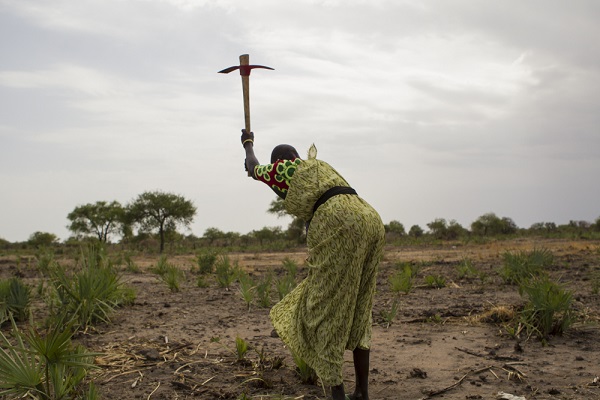
Clearing land for farming in project supported by UNMISS Disarmament, Demobilization and Reintegration Unit in Pariak, Jonglei State. (UNMISS/Martine Perret)

Clearing land for farming in project supported by UNMISS Disarmament, Demobilization and Reintegration Unit in Pariak, Jonglei State. (UNMISS/Martine Perret)

When Gabriel Gai, a state minister for South Sudan, visited Uror county he was on a mission for peace. There were violence and cattle raiding in the area, things that have been ongoing throughout South Sudan’s Jonglei state for years.

He asked the people to put down their weapons and not to fight. What did the community ask of him? They asked for food.

Hunger has resulted from years of conflict in South Sudan, starting with the war with its northern neighbor Sudan. More recently it has come from the internal conflict that has killed and displaced thousands of people.

The Lou Nuer and Murle tribes have fought vicious battles, each one leading to another conflict. As Confucius once said, “Before you embark on a journey of revenge, dig two graves.” Such is the story of war in South Sudan.

There is a cycle of hunger, poverty and violence that holds South Sudan back, particularly in Jonglei, the largest state.

Each week reports come in of more violence and suffering among the population. The UN said last week, “The security situation remained tense in Jonglei during the week. Several incidents of armed hostilities between the South Sudan armed forces and non-state armed actors were reported in and around Pibor town.” Thousands of people have been displaced by fighting there this year.

Catholic Relief Services (CRS) is on a mission to end hunger and build peace in South Sudan. As an aid agency they know that this puzzle must ultimately be solved by the citizens themselves. That answer lies in producing food, unleashing the potential of the farmlands of South Sudan.

With funding from the U.S. government, CRS started the Jonglei Food Security program. The idea is to develop the power of small farmers and take them through “the process of moving from subsistence farming to harvesting for market.”

The plan is to make South Sudan less dependent on international food aid. This means education and training in agriculture.

Sara Fajardo of CRS listened to what the people had to say. They want to farm. They just need a little help to recover from the ruins of war to get started.

Adhuom Achiek Buol, a farmer, says, “Farming will stop hunger. We, the people of Jonglei, were created to farm. It is in our culture. It is what we were born to do.”

Buoi Machiek, a livestock health worker, stated, “We need peace. People are afraid to walk to town because they might be shot. When we go to the bush to hunt, we get attacked. Insecurity causes hunger. Once we have peace, we can cultivate. This will prevent hunger.”

Mary Ngok, a farmer, says, “Peace among the communities will stop hunger in Jonglei. When other tribes stop raiding our cattle, we will have milk production and cattle to sell.”

Gabriel Kuereng, a CRS field coordinator, explains, “The war left us in bad shape. We still think that this community did this or this community did that. We need the government to intervene and help us forgive each other. We need to build an identity of nationhood where we all say we are South Sudanese -not ‘I am a Dinka or I am Nuer.’ When we reconcile, cattle raiding will stop, because we will not blame others.”

Uror County is one area benefiting from the CRS food security program. Getting people to put down their guns and focus on farming is the key to peace. The United Nations Mission has disarmament programs that also focus on farming to help reintegrate former soldiers and their families back into society. You can’t build a society on guns, but you can with farming and food.

The children are the ones who can then get the basic rights they deserve. The UN heard from 15-year-old Peter Puok Majuc, who said, “It is my right to education. It is my right to be taken care of by my parents…with food and clothes.”

The UN World Food Programme is helping South Sudan build a nationwide school lunch program. What could be better than having South Sudan’s own farms provide the food for these school meals?

The road to peace in South Sudan means people coming together to farm and not to fight. Fajardo writes what one farming group leader, Zakariah, said: “Working together, we’ve realized we produce more as a group. We can produce something that can be taught to many people. We have a saying in Dinka: ‘If you have one stick, it is easy to break. But if you have a bundle of sticks, it is hard to break.’ That means when you bring a group of people together, you become very strong. It is hard to break a group.”

Read more from the voices of South Sudan talking about ending hunger.

Leave a comment

Filed under global hunger

Civilians Suffering from Sudan, South Sudan Conflict

A Sudanese man (right) in Upper Nile grieves the loss of his two daughters after an airstrike on his town in Blue Nile, Sudan (UNHCR).

A Sudanese man (right) in Upper Nile grieves the loss of his two daughters after an airstrike on his town in Blue Nile, Sudan (UNHCR).

South Sudan and Sudan creating a demilitarized border zone is welcome news. But it must be followed quickly by more action. Lives depend on it.

There is tremendous suffering among innocent civilians from this conflict, particularly in South Kordofan and Blue Nile states in Sudan. There Sudan’s army is fighting rebels who sided with South Sudan during years of civil war.

Many thousands are starving; some trying to live on roots and leaves from the forest. Sudan won’t allow the UN World Food Programme to bring aid to parts of these states not under their control. Earlier this year Save the Children-Sweden screened about 17,000 small children in South Kordofan and found that over 2000 of them had either severe or moderate malnutrition. The lack of nutrition can cause lasting physical or mental damage.

Some civilians are fleeing Blue Nile and South Kordofan to refugee camps across the border in South Sudan. Just recently a group of nearly 900 refugees, including 175 children, walked for five days escaping shelling and aerial attacks in their village in Blue Nile. Four died during the journey from exhaustion and others had to be left behind.

Even for those who reach the refugee camps the struggles are not over. There is the risk of disease. The refugee overflow has caused great strain on the impoverished host community. In some cases this has led to fighting, including cattle raids. Aid agencies also need funding to continue to feed and shelter the war victims.

There is such great humanitarian needs even aside from those caused by the conflicts. Drought and long-standing poverty also take their toll, leaving many children malnourished.

Internal conflict in South Sudan, many times over scarce resources, make this crisis even worse. Roads are so bad that aid agencies have to station food at strategic points before they become impassable during the rainy season.

South Sudan’s only hope for overcoming these challenges rests with its children. The UN World Food Programme (WFP) is helping to build that future with school meals. This depends though on voluntary funding from governments and the public. The more resources committed to war the less for building the future.

Amor Alogro of WFP says the agency fed 560,261 schoolchildren in Darfur during January and hopes to continue this for the rest of the year. WFP depends on voluntary funding for its operations but its school feeding is short of about $US 33 million dollars.

In South Sudan WFP officer George Fominyen says the agency is going to feed 424,000 children with school meals plus an additional 40,000 girls will receive take-home rations.

WFP provides the meals in the areas where hunger is greatest but they cannot reach all hungry children. The goal is for South Sudan to build a national school feeding program, a difficult task given the constant setbacks from drought and conflict.

Sudan and South Sudan cannot advance their society through endless war and military expense. There is massive distrust between the states, which is not going away any time soon. The new demilitarized zone, once fully implemented, is at least a ray of hope.

We know from our own history that sometimes these agreements can help build peace. The Rush-Bagot agreement disarmed British and American warships on the Great Lakes following years of warfare and when border disputes from Maine to Oregon still existed.

South Sudan and Sudan need to realize that the swords have to be dropped and disputes resolved at the conference table rather than on the battlefield.

Article first published as Civilians Suffering from Conflict Between Sudan and South Sudan on Blogcritics.

Leave a comment

Filed under global hunger

Saving the Children in South Sudan

Save the Children is treating severely malnourished infants at its nutrition centers in Eastern Equatoria and Jonglei, two states in South Sudan suffering from hunger emergencies. (Save the Children photo)

Save the Children is treating severely malnourished infants at its nutrition centers in Eastern Equatoria and Jonglei, two states in South Sudan suffering from hunger emergencies. (Save the Children photo)

Save the Children staff knew something was wrong. It was last November in Eastern Equatoria of South Sudan, just after the harvest, when it was less likely for families to need food assistance. Malnourished children were still being brought to Save the Children nutrition centers at an alarming rate, though.

Crops had failed because of “low and erractic rainfall” according to the United Nations. Families were running out of their usual food supply and were starting to resort to using wild fruits to survive.

Fact-finding missions sent by the UN into parts of Eastern Equatoria confirmed the increasing levels of hunger. It could get much worse too. The upcoming “lean season” between harvests is generally when food supply is at its lowest.

At its Kapoeta nutrition center during January, Save the Children saw 114 infants with severe malnutrition and another 210 children with more moderate malnutrition. Severely malnourished children are given a nutritious peanut paste called Plumpy’nut.

Without the right nutrition infants can suffer lasting physical and mental damage or death. Having enough stock of a food like Plumpy’Nut is essential to humanitarian aid operations. For no long-term solution to ending hunger or building peace can be found with malnourished and stunted children.

Save the Children is also responding to another hunger emergency in South Sudan. Cattle raids in Jonglei, the largest state in South Sudan, have killed or displaced thousands of people who are in need of aid.

These cattle raids in Jonglei took place in Akobo County and are the latest in a series of internal conflicts within the state.

Save the Children is providing aid in Akobo East. This is an area that struggles with food security. Helen Mould of Save the Children points out that the internal conflict has escalated deadly malnutrition in this area. People fleeing violence in Akobo West head toward the east. Mould says, “Host communities are sharing food stocks, but this is adding pressure on an already stressed situation. As a coping mechanism it appears many children are eating just one meal a day and families are relying on wild fruits for their food.”

The effect of this violence drives communities deeper into hunger. Displaced farmers, for instance, will not be able to plant crops in 2013.

The humanitarian tragedy continues. There is such poverty in South Sudan so there is little resistance to shocks such as drought or even flooding. When you add the conflict, often over scarce resources, you add another dimension driving the hunger crisis. South Sudan desperately needs food and peace.

Save the Children has a crisis fund set up to save lives in South Sudan.

Article first published as Saving the Children in South Sudan on Blogcritics.

Leave a comment

Filed under global hunger

South Sudan’s Jonglei State Suffering from Conflict, Flooding

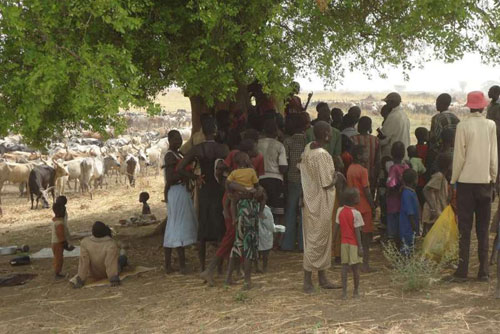
file photo of members of the Lou Nuer gather under the shade of a tree in Ethiopia after fleeing from South Sudan’s Jonglei state. (Credits: UNHCR/S.Tessema)

Jonglei, the largest state in South Sudan, has been hard hit by recent flooding with over 201,000 people impacted. The flooding has resulted in destruction of homes and farmland in Jonglei and other areas of South Sudan. Loss of farmland is devastating in a region that has long suffered from severe hunger and malnutrition.

Access to the flooded areas remains a significant challenge according to a United Nations report. Roads are poor in the area making it more difficult to move supplies.

Jonglei is not only suffering from floods but also continuing fighting between South Sudan’s army and a rebel group in Pibor County’s Likuangole town. The UN reports that fighting is also taking place in nearby Gumuruk town. In Pibor town people are fleeing as they anticipate the violence spreading.

The UN also reports that humanitarian aid groups are not able to access those in need in Likuangole and Gumuruk because of insecurity. Around 90,000 people cannot receive medical care.

South Sudan has been plagued by internal violence, particularly in Jonglei as rival tribes have continually launched attacks against each other. The government launched a disarmament program earlier this year to try and quell the violence.

The United Nations Mission in South Sudan says its “particularly concerned by the apparent emergence in Jonglei of an armed insurgency group linked to the militia leader David Yau Yau, which is believed to be acting in concert with groups of armed youths who have evaded the civilian disarmament operation in the state.”

Leave a comment

Filed under global hunger

Flooding, Conflict Victims Need Aid in Jonglei, South Sudan

file photo of members of the Lou Nuer gather under the shade of a tree in Ethiopia after fleeing from South Sudan’s Jonglei state. (Credits: UNHCR/S.Tessema)

The United Nations reports that heavy rains and flooding have affected 125,000 people in Jonglei, the largest state in South Sudan. The flood victims are in desperate need of food, medicine and other aid but roads are impassable preventing the delivery of supplies. The UN says it will use a helicopter to access the hardest-to-reach areas.

Meanwhile, 4500 people have been displaced from Likuangole town after fighting between South Sudan’s army and a rebel group. Aid groups have yet to reach the victims according to the latest report from the UN.

In the past year Jonglei has suffered through natural disasters of flooding and drought in addition to conflict among rival tribes. Major fighting has take place between the Lou Neur and Murle tribes. The government launched a disarmament campaign earlier this year but the latest fighting shows this initiative is a long way from completion.

The recent disasters will escalate the hunger crisis in the already devastated country. The UN World Food Programme has estimated that at least 4.7 million could suffer from hunger in South Sudan this year.

Leave a comment

Filed under global hunger