Tag Archives: malnutrition

Emergency malnutrition rates among children in South Sudan

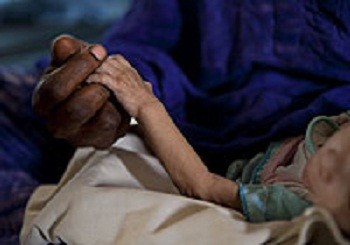
The United Nations reported today of soaring malnutrition rates in conflict-torn South Sudan. In Mingkaman, Awerial County 965 children were screened and 13.6 percent were found with severe acute malnutrition and 17.5 percent had moderate acute malnutrition.

Read the full article at Examiner.com

Leave a comment

Filed under global hunger

Thousands of children malnourished in war-torn South Sudan

The United Nations, in a report released today, said that child malnutrition is escalating in conflict-torn South Sudan.

Fighting between the government and opposition forces has displaced almost 400,000 people. Many have sought refuge at UN compounds or with communities in safer parts of the country.

Read the full article at Examiner.com

Leave a comment

Filed under global hunger

Hunger and insecurity escalate in South Sudan

The United Nations, in a report released today, said that “access to food remains limited” for those who have fled the wave of violence in South Sudan.

There is fear of a malnutrition crisis emerging in the conflict-torn country, and this could claim more lives than the combat itself.

Read the full article at Examiner.com

Leave a comment

Filed under global hunger

The Granola Bar that Saves Children’s Lives


This Bar Saves Lives

This Bar Saves Lives

Halloween is sneaking up on us. The holidays are not far behind. These days come with plenty of snacks with chocolate, vanilla and many other kinds of flavors.

What if you could buy a snack and save a life at the same time? What if on Halloween or Thanksgiving you could share the joy and feed a “silent guest,” a starving child a world away?

There actually is a way with This Bar Saves Lives, a new granola bar with chocolate, vanilla and wild blueberry flavors. Each purchase of this bar means a donation of the miracle food Plumpy’Nut, a peanut paste fed to children suffering from severe malnutrition.

Ryan Devlin, Todd Grinnell and Ravi Patel started This Bar Saves Lives when they witnessed the devastating effects of child malnutrition. When you buy one of these bars the donation gets sent to Edesia, a Plumpy’Nut producer in Providence, Rhode Island. Edesia makes the Plumpy’Nut and sends it to Save the Children, which uses this food in their relief missions around the world. Save the Children says “more than 150 million children in developing countries are malnourished.”

Malnutrition can cause lasting physical and mental damage in small children under the age of five. If the malnutrition become severe children may perish. In many developing countries afflicted by war, disasters or extreme poverty, small children are vulnerable to malnutrition. When food supply systems break down in a country, families can be forced into desperation with little rations. They look to humanitarian aid agencies for help. Plumpy’Nut can rescue the smallest children, if there is enough supply on hand for aid groups.

Within the last year Save the Children has been fighting child malnutrition in South Sudan. In Eastern Equatoria, a state in South Sudan, crops had failed and families were resorting to wild fruits to survive. More cases of malnutrition had to be treated at Save the Children health centers there. Plumpy’Nut was used for the most severe cases.

Conflict in Jonglei, South Sudan also has escalated malnutrition among children thus increasing the need for Plumpy”nut.

When funding is low aid groups like Save the Children may be forced to cut back on this life-saving food. The consequences are devastating. Opportunities like This Bar Saves Lives gives people a world away a chance to help.

Just as after World War II when Americans fed “silent guest” at their Holiday meals, you can be doing the same in the coming weeks and months. Your “silent guest” might be a child in drought-stricken West Africa, or in war-devastated Syria or Mali. You can help them get the Plumpy’Nut that will save their lives.

Visit their web site at www.thisbarsaveslives.com

A note from This Bar Saves Lives: “Whether it’s setting up Hunger Awareness Campaigns on your campus, holding a This Bar Saves Lives community event, or connecting us with your company, there are a number of ways to get involved. Jump in!

Leave a comment

Filed under global hunger

Special Foods Fight Malnutrition in Syria

Plumpy'Doz is being used to treat malnutrition in Syria (Wolrd Food Programme)

Plumpy’Doz is being used to treat malnutrition in Syria (World Food Programme)

As the war continues in Syria, so does the risk of deadly malnutrition for children. Special-nutrient rich foods, like those being distributed by the UN World Food Programme (WFP) can save their lives.

Spokesperson Laure Chadraoui told me last week that WFP is distributing “Plumpy’Doz for children, 6-59 months, residing in collective centers and Nutributter in the North east of Syria to children 6-23 months for the prevention of micro-nutrient deficiencies.”

Plumpy’Doz is a nutritional supplement designed for children most at risk of malnutrition. The Nutributter is described by one its producers as being like a “daily multi-vitamin in a peanut paste” for children 6 months to 2 years of age.

Both the Plumpy’Doz and the Nutributter are ready-to-eat foods specifically designed for areas suffering from conflict, disaster or extreme poverty. No cooking or special storage is required for this food to be eaten, making their distribution easier. A system of factories, including Providence-based Edesia, produce these miracle foods.

These foods prevent children from suffering malnutrition. Children under the age of five will suffer lasting physical and mental damage if they become malnourished. So this concept of prevention is so vital in terms of planning a humanitarian response in distressed parts of the globe.

Around 300,000 children in Syria will benefit from the Plumpy’Doz and Nutributter provided by WFP. The Nutributter is being donated by the United States as part of a continuing relief effort.

It’s critical that aid agencies maintain the pipeline of this food, especially in a crisis as desperate as the one in Syria. The hunger facing Syria is so severe that the needs of the population will grow as the conflict continues. With access to parts of Syria being restricted by the government it remains an unknown as to the extent of malnutrition in these areas. Much more food aid may be required.

It’s also less costly to bring in Plumpy’Doz and Nutributter earlier rather than having to resort to Plumpy’nut which is used to treat the most severe cases of malnutrition.

WFP relies on voluntary funding and needs around U.S. $30 million dollars a week to feed Syrian war victims. Decisions made by the U.S. Congress on food aid budgets will have a major impact on Syria and other war and disaster afflicted nations.

Plumpy’Doz and high energy biscuits are also being provided to Syrian refugee children in Iraq. Save the Children is also operating a large-scale infant and young child feeding program in Jordan.

originally published at the Huffington Post.

Leave a comment

Filed under global hunger

This Mother’s Day, Help Save a Child’s Life

A mother attends to her severely malnourished child at an inpatient feeding centre in Mao, Chad. Plumpy'Nut is used to treat this potentially deadly condition (UNICEF Chad/2011/ Esteve)

A mother attends to her severely malnourished child at an inpatient feeding centre in Mao, Chad. Plumpy’Nut is used to treat this potentially deadly condition (UNICEF Chad/2011/ Esteve)

For Mother’s Day we can make a difference for the millions of hungry children around the world who struggle to survive the first 1000 days of life. As Herbert Hoover once said about the tragedy of hunger, it “sits beside every anxious mother three times each day.”

Infants caught in war, disaster and poverty zones in Afghanistan, Haiti, Yemen, Syria, Mali, South Sudan, Pakistan and other nations often do not get access to the nutrition that they need.

When this happens, they suffer lasting physical or mental damage, or even death.

UNICEF said in a recent report, “Globally, about one in four children under five years old are stunted.” Generation after generation in these countries are stunted in growth and mind.

If the hunger-afflicted nations had enough supply of the miracle food Plumpy’Nut we could stabilize the malnutrition emergency, and save a generation. Only then, with healthy children, can a nation develop the longer-term solutions to hunger and poverty.

On this Mother’s Day remember the millions of infants around the world who just need these 33- cent packets of food to avoid the potential catastrophe in those early years.

Providence-based Edesia, UNICEF and Save the Children are some of the charities that need donations to buy Plumpy’Nut. Millions of children and their mothers can be spared the tragedy of hunger and malnutrition.

That is the gift they need most of all.

Originally published at Cincinnati.com

Leave a comment

Filed under global hunger

Saving the Children in South Sudan

Save the Children is treating severely malnourished infants at its nutrition centers in Eastern Equatoria and Jonglei, two states in South Sudan suffering from hunger emergencies. (Save the Children photo)

Save the Children is treating severely malnourished infants at its nutrition centers in Eastern Equatoria and Jonglei, two states in South Sudan suffering from hunger emergencies. (Save the Children photo)

Save the Children staff knew something was wrong. It was last November in Eastern Equatoria of South Sudan, just after the harvest, when it was less likely for families to need food assistance. Malnourished children were still being brought to Save the Children nutrition centers at an alarming rate, though.

Crops had failed because of “low and erractic rainfall” according to the United Nations. Families were running out of their usual food supply and were starting to resort to using wild fruits to survive.

Fact-finding missions sent by the UN into parts of Eastern Equatoria confirmed the increasing levels of hunger. It could get much worse too. The upcoming “lean season” between harvests is generally when food supply is at its lowest.

At its Kapoeta nutrition center during January, Save the Children saw 114 infants with severe malnutrition and another 210 children with more moderate malnutrition. Severely malnourished children are given a nutritious peanut paste called Plumpy’nut.

Without the right nutrition infants can suffer lasting physical and mental damage or death. Having enough stock of a food like Plumpy’Nut is essential to humanitarian aid operations. For no long-term solution to ending hunger or building peace can be found with malnourished and stunted children.

Save the Children is also responding to another hunger emergency in South Sudan. Cattle raids in Jonglei, the largest state in South Sudan, have killed or displaced thousands of people who are in need of aid.

These cattle raids in Jonglei took place in Akobo County and are the latest in a series of internal conflicts within the state.

Save the Children is providing aid in Akobo East. This is an area that struggles with food security. Helen Mould of Save the Children points out that the internal conflict has escalated deadly malnutrition in this area. People fleeing violence in Akobo West head toward the east. Mould says, “Host communities are sharing food stocks, but this is adding pressure on an already stressed situation. As a coping mechanism it appears many children are eating just one meal a day and families are relying on wild fruits for their food.”

The effect of this violence drives communities deeper into hunger. Displaced farmers, for instance, will not be able to plant crops in 2013.

The humanitarian tragedy continues. There is such poverty in South Sudan so there is little resistance to shocks such as drought or even flooding. When you add the conflict, often over scarce resources, you add another dimension driving the hunger crisis. South Sudan desperately needs food and peace.

Save the Children has a crisis fund set up to save lives in South Sudan.

Article first published as Saving the Children in South Sudan on Blogcritics.

Leave a comment

Filed under global hunger

Hunger and Fear in the Sahel of Africa

A drought-ravaged field in the Keyes region of southwestern Mali. Already impoverished families lost their food supply and source of income because of the drought. Credits: WFP/ Daouda Guirou

There is a struggle for survival ongoing for millions of people suffering from hunger in the Sahel region of Africa. The UN World Food Programme (WFP) says that “one child in five in the Sahel dies before the age of five – malnutrition is an associated cause of more than 30% of these deaths.”

The Sahel includes the countries of Mali, Niger, Mauritania, Burkina Faso, Chad, Cameroon, the Gambia, and Senegal.

Drought and conflict have caused food shortages, and families can survive only with humanitarian aid as they await the next harvest. There have been some good rains recently to encourage the growing of food. These same rains have also produced flooding that has impacted over a million people in the Sahel.

Refugee Crisis from Mali Conflict

The Sahel food crisis is also complicated because of a massive flow of refugees from Mali. In Northern Mali there has been fighting between the government and armed extremist groups. As one victim told the director of the UN refugee agency (UNHCR), “Fear pushed me to leave my home. I saw people being killed in front of me when Gossi was taken over by armed groups at the end of June. I did not want to wait for my turn.”

The US State Department is alarmed by the increasing violence in Northern Mali and is urging a resolution to the conflict, stating, “We repeat the call on armed groups in northern Mali to renounce any connection with terrorist groups and enter into legitimate political negotiations on the basis of Mali’s territorial integrity.” There is significant fear of what may lie ahead should the chaos and hunger continue to proliferate in Mali and throughout the region.

The World Food Programme says it is feeding over 200,000 refugees in the surrounding countries. This includes Mauritania which is hosting over 100,000 refugees while struggling with its own hunger crisis.

The charity Save the Children is urging support for the refugees to prevent malnutrition in the camps. The children need food aid and also psychological and educational support to help them deal with the trauma.

Nutrition for Small Children Critical

Nutritional support for the smallest children is crucial in this crisis The lack of food for children under five years of age causes severe and irreversible physical and mental damage. Surveys being conducted right now by aid workers show high acute malnutrition rates in Senegal, Chad, Niger, and Mauritania.

Save the Children says that throughout the Sahel over one million children are at risk of severe malnutrition. A special food called Plumpy’Nut can save the children from the lifetime damage of malnutrition. Save the Children estimates that 1.5 million cartons of Plumpy’Nut are needed in the Sahel but funding is the issue. Aid agencies are voluntarily funded.

School Feeding to Help Communities

Providing food for children at school is a way to boost recovery for entire communities. The food offers an incentive for parents to send children back to school so it accomplishes both nutritional and educational objectives.

The World Food Programme hopes to resume school meals in the coming weeks in several Sahel nations. But will the funding and food supplies be there to allow these important programs to be carried out? In Mauritania, WFP is reporting a slight delay in its school feeding program due to food supply difficulties.

WFP is planning a major expansion of its school feeding in Mali. Aboubacar Guindo of WFP says the expansion will mean doubling the number of students it feeds in the Southern part of the country. He adds that the funding has yet to be secured.

Funding a Key Issue

Aid agencies need support from both governments and the public. What could be more devastating than not enough resources being dedicated to saving lives? WFP reports “a funding shortfall of US$ 300 million” for the region. Also a special operation for logistics in Mauritania remains completely underfunded, which could harm the delivery of aid.

WFP provides not only food but also logistical and technological support to improved aid delivery. The WFP Emergency Telecommunications cluster, for instance, has developed a radio system which will be implemented in Northern Mali to help improve coordination for the relief effort.

Recovery from one major drought is difficult enough. In the Sahel there have been a succession of droughts and the low resistance levels of the communities involved is a major reason for the crisis. Aid agencies are trying to find a way to provide emergency aid but also plant the seed for future food security.

Relief Funds for the Sahel Food Crisis:

Sahel Food Crisis Fund – World Food Programme

Mali Hunger Crisis Fund – Save the Children

West Africa/ Sahel Hunger Crisis Fund – Save the Children

Sahel Food Crisis Fund – Catholic Relief Services

Article first published as Hunger and Fear in the Sahel of Africa on Blogcritics

1 Comment

Filed under global hunger

Families in Mali Running Out of Food

An archive picture of a little girl receiving food assistance at one of the WFP projects around the city of Timbuktu in northern Mali. (WFP/Shannon Hayes)

Families in Mali are running out of food with some reportedly eating meals “only made of cooked leaves” according to the UN World Food Programme. Mali, located in West Africa’s Sahel region, is one of the countries caught in a severe food crisis.

The World Food Programme (WFP) says there are 4.6 million people at risk of hunger in Mali. Drought has struck the country but so too has internal strife with a military coup earlier this year followed by increased rebellion in the Northern part of the country.

Secretary of State Hillary Clinton says, “Mali was, by most indicators, on the right path until a cadre of soldiers seized power a little more than a month before national elections were scheduled to be held. By some estimates, this could set back Mali’s economic progress by nearly a decade. It certainly created a vacuum in the North in which rebellion and extremism have spread, threatening not only people’s lives and the treasures of the past, but the stability of the region.”

The conflict has displaced 174,000 people within Mali and they need humanitarian aid. Even more Malians have been displaced to neighboring countries including Burkina Faso and Mauritania.

UNHCR High Commissioner António Guterres says, “We have now 257,000 refugees from Mali who are going through an enormous level of suffering and deprivation. They had to cross the borders of very poor countries that have very dramatic food security problems: Niger, Mauritania and Burkina Faso.”

WFP says it needs 55 million dollars to fund its relief work for those displaced inside Mali and the surrounding countries.

Within Mali, WFP has reached over 100,000 children with nutritional help including the food Plumpy’Sup. This peanut paste keeps small children from suffering devastating physical and mental damage from malnutrition.

Katie Seaborne of Save the Children says the charity is providing nutritional support in Mali, Niger and Burkina Faso. In Burkina Faso, where child malnutrition rates have increased this year, Save the Children is using both Plumpy’Sup and Plumpy’Nut, the latter generally used to treat the most severe cases of malnutrition.

Throughout the entire Sahel region of Africa, WFP is reporting a shortage of $320 million dollars in funding to provide food aid.

Where you can donate to hunger relief in the Sahel:

Sahel Food Crisis Fund- World Food Programme

Mali Hunger Crisis Fund- Save the Children

West Africa/ Sahel Hunger Crisis Fund- Save the Children

Sahel Food Crisis Fund- Catholic Relief Services

1 Comment

Filed under global hunger

This Easter, Let’s Remember the World’s Hungry

Imagine Easter with no chocolate or candy or egg hunts. In 1947 in Europe, this was just the case in countries struggling in the ruins of World War II. Newspapers reported a scarcity of everything but faith.

This Easter there will be nearly 1 billion people worldwide suffering from hunger. They are in earthquake-recovering Haiti, war-torn countries Afghanistan, Sudan,  and in the drought hit areas of the Sahel and East Africa.

Developing countries need school feeding programs to fight malnutrition and give their children an education. Not enough emphasis is placed on these vital programs. (WFP/Ramin Rafirasme)

All too often in the discussion of world affairs, the basic needs of food and agriculture are forgotten. Then strategy makers and analysts ponder over how to solve the crisis, often ignoring the obvious. Food supply and accessibility are the foundation all nations need to thrive and have peace.

What needs to change? World leaders need to get more involved in the fight against hunger. Many times their efforts are piecemeal. It’s very important that citizens write their representatives in government about fighting hunger both at home and abroad.

Internet technology offers several ways for people to get involved too. If you visit the sites of the World Food Programme, Save the Children, Feeding America, Catholic Relief Services and others, you will find all kinds of tools and information that you can use to take action against hunger. These agencies want you to get involved and bring your talents and expertise to the table.

What may look dark today can turn around. For Europe’s 1947 Easter, the situation looked quite desperate. But fast forward to the Easter of 1949 and you will find a different tale. Newspapers reported joyful celebrations in Western Europe “from their own labor and the efforts of the European Recovery Program,” known as the Marshall Plan.

This Easter remember the hungry and suffering, and see what you can do to help them.

Article first published as This Easter, Let’s Remember the World’s Hungry on Blogcritics.

Read a newspaper article about the Argosy Easter Ship that help feed children in Belgium during the First World War.

Leave a comment

Filed under global hunger, History