Tag Archives: Catholic Relief Services

Special delivery of food for children in Guatemala

Many families are struggling in Guatemala. Poverty has worsened because of the coffee rust. This is a fungus which infects and destroys coffee leaves. Small farmers are not able to grow as much of the staple crop. Their incomes are lower, and this is very difficult considering the already existing poverty levels.

Read the full article at Examiner.

Leave a comment

Filed under global hunger

Dr. Carolyn Woo of CRS Talks Impact Investing to End Poverty

Lots of people invest their money one way or another. It’s in one’s self-interest to build their own financial security. Some people do very well at it.

Read the full article at The Huffington Post.

Leave a comment

Filed under global hunger

Support Pope’s Plan With Food for Peace

Pope Francis has been outspoken about ending world hunger, and getting the church more involved. This has to be done. What, though, are some ways citizens can help in terms of advocacy?

Read the full article at the Huffington Post.


Leave a comment

Filed under global hunger

Pope to Launch Plan to End World Hunger

Pope Francis can unite the world in ending hunger

Pope Francis can unite the world in ending hunger

Catholic Relief Services announced that Pope Francis would be leading a major initiative to end world hunger.

A global wave of prayer will start at noon on Tuesday, December 10th on the Pacific island of Samoa. The prayer will move through each time zone for the next 24 hours.

The public is asked to become a voice for the hungry. There are 842 million people worldwide who suffer from hunger. Children perish each day because they cannot get food, even though there is enough on the planet.

Catholic Relief Services (CRS), in its 70th year, will play a leading role along with Caritas International in the campaign.

CRS emerged during the darkest hours of World War II, when civilization had seen the greatest level of devastation. They lit a candle with caring and generosity to light others and change the world.

The mission was clear. From the Philippines to Austria, there was widespread suffering from the war. Relief had to come quickly. There was also the need to rebuild as millions were left hungry and homeless long after the guns of World War II fell silent. The catholic community came up with a plan called, “Give Thanks by Giving.”

When the holidays came, churches were not just for services, but also collection points for canned goods and monetary donations. Supplies were then shipped overseas to the starving.

CRS, then known as War Relief Services or Catholic Welfare Conference, got its start. During the Korean war CRS aided refugees. Ever since that time, CRS has been coming to rescue those in need.

At this very moment, CRS is providing aid in the Philippines following Typhoon Haiyan. They are putting up emergency shelters for those who lost their homes to the high winds and flooding.

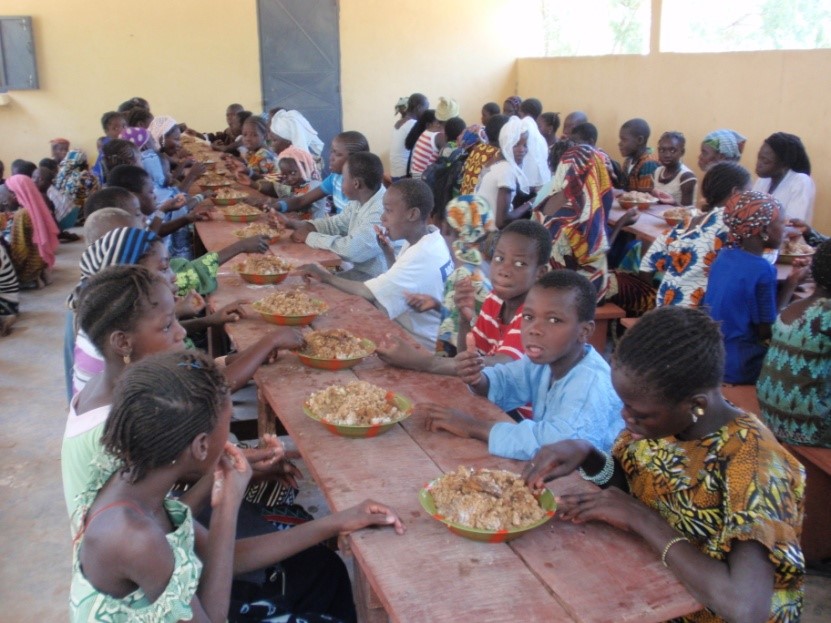
In Mali, CRS is feeding children with meals at school, thanks to a grant from the US McGovern-Dole Food for Education program. Mali has been through drought and conflict just within the last year.

In Burkina Faso, CRS is also using grants from the McGovern-Dole and Food for Peace programs to provide school meals. CRS looks at the long-term. Local production of food is an element of the Mali and Burkina Faso programs. In the long run communities must be able to stand on their own. That is the right approach to ending hunger.

Both Food for Peace and McGovern-Dole need funding on the coming Farm Bill legislation. It is absolutely critical to support these U.S. government programs to end world hunger. The public can make this loud and clear to their elected officials.

Food for Peace is the largest support of the UN World Food Programme (WFP), which is the largest hunger relief organization. WFP is providing food to Syrian war victims and millions of others around the world. In the Democratic Republic of the Congo, they are feeding the hungry. This may soon tragically stop because of lack of funding.

To end hunger you must build peace. And to preserve peace you must end hunger. This is an area CRS specializes in. In South Sudan, CRS has a food security program in the state of Jonglei, a region that has been through immense conflict and hunger.

Gabriel Kuereng, a CRS field coordinator, explains, “The war left us in bad shape. We still think that this community did this or this community did that. We need the government to intervene and help us forgive each other. We need to build an identity of nationhood where we all say we are South Sudanese — not ‘I am a Dinka or I am Nuer.’ When we reconcile, cattle raiding will stop, because we will not blame others.”

There is far more that binds religions and faiths than divides them. All share the goal of feeding the hungry. The famous European Relief Council following World War One was made up of many different religious groups.

It’s all about coming together. If that happens, hunger can be defeated. If that happens, then weapons of war can be put down and people can be fed. But only if people remain united behind this cause.

Sara Fajardo of CRS talked to a farmer in South Sudan, Zakariah, who said, “Working together, we’ve realized we produce more as a group. We can produce something that can be taught to many people. We have a saying… ‘If you have one stick, it is easy to break. But if you have a bundle of sticks, it is hard to break.’ That means when you bring a group of people together, you become very strong. It is hard to break a group.”

True for South Sudan and true for the world, as we embark on the quest to defeat man’s ancient enemy of hunger.

originally published at The Huffington Post

Leave a comment

Filed under global hunger

Filipinos and Syrians Desperately Need Food and Shelter

Imagine, for a moment, losing your home and having to flee to another state or country. When natural disasters or war strike, these worst fears become reality.

As this holiday season approaches, there are millions of people in the Philippines and the Middle East who just want the basics of food, water and shelter.

Last week heavy fighting in Syria sent at least 8,000 people running for their lives into neighboring Lebanon.

“The majority of them are women and children and some of them reported shelling and clashes along displacement routes on the way to Arsal,” UN World Food Programme spokesperson Laure Chadraoui told me.

The World Food Programme (WFP) is bringing them aid packages. Some of these refugees had already been displaced once within Syria before now finally being forced out of their home country.

Once in Lebanon, Syrian refugees are not completely safe. Cold and hunger threaten them. The UN Refugee Agency says many “live in poor accommodation in informal settlements, unfinished buildings, garages, worksites and warehouses that are not properly insulated against the cold climate.”

Francine Uenuma of Save the Children, says, “when I was in Lebanon last February, when it was extremely cold, and many of the kids were outside in sandals. Many also had coughs — the sub-zero temperatures mean many face chest infections, not to mention other health problems like hypothermia and frostbite.”

Syrians have also fled to Jordan, Iraq, Egypt and Turkey. Throughout the Middle East there are over two million Syrian refugees. Aid groups and host governments are facing a huge task to help these war victims, many who have lost everything.

In Iraq, WFP is providing Plumpy’Doz to small Syrian children who are at risk of severe malnutrition. This special peanut paste can save their lives. The WFP is also providing extra food to children at schools to bolster class attendance and performance.

While this massive relief operation is ongoing in the Middle East, a world away is an emergency in the Philippines following Typhoon Haiyan. More than 11 million Filipinos were impacted by the high winds, flooding and destruction caused by the storm.

The World Food Programme, UNICEF and other aid groups are rushing to bring them food, water, and medicine. The storm victims need shelter quickly. More rain and storms may be on the way. Aid is needed fast to save lives and to prevent the situation from getting worse.

Consider this: If children, especially, do not get enough nutrients it can cause lasting physical and mental damage. The lack of food or clean water can cause the spread of disease.

As the holidays come before us there is a great tradition called Black Friday, which marks the start of the holiday shopping season. Stores and individuals could donate at least a portion of their sales or purchasing funds toward relief of the suffering people in the Philippines and the Middle East.

Here are lists of some aid agencies with relief funds for the Philippines and for Syria. Some individuals have donated already. It is deeply appreciated too as Jen Hardy of Catholic Relief Services tells us from the Philippines.

Originally published at The Huffington Post.

Leave a comment

Filed under global hunger

You Can Help Save the Philippines

Nearly half a million people have been left homeless by the typhoon, like this family from the storm-battered city of Tacloban.  (WFP/Praveen Agrawal)

Nearly half a million people have been left homeless by the typhoon, like this family from the storm-battered city of Tacloban. (WFP/Praveen Agrawal)

It’s critical to build the pipeline of aid to the Philippines, to prevent the situation from deteriorating even further after last week’s massive typhoon. Save the Children’s Cat Carter says, “The lack of shelter, lack of food and bottled water is only making things worse as children suffer under such brutal conditions.”

That is where you come in. Even though reading those details can make you feel helpless, there is something you can do. Whether it’s a fundraiser, a letter, or doing Charity Miles you can help speed relief.

Recently, I caught up with Elizabeth Tromans of Catholic Relief Services (CRS) , who is coordinating relief from Manila. Back in 2010, Tromans was a humanitarian hero feature in my global hunger column.

Tromans says it’s essential “to secure funds and make sure our goods are arriving and getting into the hands of those who need it.”

For CRS and other charities to make this happen they need a chain of events from a donor thousands of miles away, to logistics and IT staff, to the aid workers themselves. The end result is help for storm victims. So everyone has a part to play to make that happen. If you are reading this you can spread the word and start the life-saving pipeline.

The United Nations says 11.5 million people are affected by the Typhoon and 544,606 people are displaced. Food, clean water, medicine and shelter are desperately needed.

Hunger, malnutrition and disease will escalate among the population unless aid arrives in time. The storm’s impact can last long past the event itself.

CRS is helping with two of these vital needs, emergency shelter and water purification. Many people lost their homes from the high winds of the storm. The UN says that, “ground water supplies are contaminated in many affected areas. Need for immediate and on-site water testing and treatment to establish water quality.”

The UN World Food Programme (WFP) says it will be feeding 2.5 million people. Although these estimates can quickly change. WFP has brought high-energy-biscuits and rice to storm victims but so much more needs to be done. The U.S. Food for Peace program has sent more biscuits and rice on the way for WFP to distribute.

UNICEF is setting up child feeding centers where they will be providing Plumpy’Nut, which a doctor called “The Magic Food.” This special peanut paste saves children from potentially deadly malnutrition. So it’s vital that UNICEF have enough funding for a supply of Plumpy’Nut.

What’s important to remember is that aid groups are already stretched thin by prior disasters in the Philippines as well as the war in Syria. They need the support as the Philippines emergency response kicks in.

Amid all the devastation is hope. Tromans says,”The Filipino people are so strong and resourceful.”

You can donate to Catholic Relief Services, UNICEF, the World Food Programme, Save the Children and many other great organizations.

Leave a comment

Filed under global hunger

School Meals for Peace in Mali and Burkina Faso

School feeding in Mali provided by Catholic Relief Services (CRS photo)

School feeding in Mali provided by Catholic Relief Services (CRS photo)

As Congress gets back to work on the Farm Bill, it’s vital they support the Food for Peace and McGovern-Dole programs. Both initiatives fund school meals around the world in partnership with charities like Catholic Relief Services.

From World War II to conflict and drought recovery today in West Africa, Catholic Relief Services (CRS) has been providing aid.

In Austria, after World War II, CRS teamed with the U.S. Army and UNICEF to give school meals to children. More recently CRS has been organizing school feeding in Mali and Burkina Faso, two nations suffering from extreme poverty in West Africa.

Mali has been struck by conflict in the North and a nationwide drought. Food production is reduced across the country. The UN World Food Programme says, “69 percent of the population lives below the national poverty line, and according to 2010 National Statistics, more than one-fifth of school-aged children do not attend school.”

A report from the Famine Early Warning System shows that “north of Kayes and in some parts of the Mopti, Koulikoro, Ségou, and Timbuktu regions, rain shortages have affected crop development, which will likely reduce yields at these locations.” Hunger is a growing problem in Mali and aid is desperately needed.

CRS provides school meals in the Mopti and Koulikoro regions to help families cope with the crushing strain of poverty. The meals are funded by the U.S. Dept. of Agriculture’s McGovern-Dole program, named after former U.S. senators George McGovern and Bob Dole.

CRS is reaching around 80,000 children in Mali with this food. Children can count on a hot meal of rice, peas and vegetable oil every day at school. When your family is struggling for food, this is an absolute treasure.

Kristina Brayman of CRS Mali says,

Without that food, many students would not eat a square meal at all. It motivates parents to send their children to school, especially girls, and means the children are able to grow, develop, and maximize their learning potential. It really is essential.

In Mali, CRS also has an initiative where local farmers provide the school meals. This is key because the goal is for each country to be able to run its own school feeding. CRS helps form School Management Committees. Fairs are established where farmers can bring their crops, which are inspected to ensure quality. The School Management Committees then purchase foods from the farmers to use for the meals.

CRS says,

Students and parents were very pleased with the taste and content of the local school meals, and the School Management Committees’ capacity and sense of ownership increased significantly.

In Burkina Faso CRS is also providing school meals using McGovern-Dole funding. Anne Sellers of CRS says McGovern-Dole is “a huge help,” as Burkina Faso tries to develop a national school feeding program. They need help along this road.

McGovern-Dole and CRS are feeding 145,000 children in 688 schools and 28 preschools. Take-home rations and de-worming are also provided. Burkina Faso has suffered from drought and also the strain of hosting refugees from the war in Mali. The country has high poverty and very low literacy rates. Support for education is extremely vital.

The U.S. Food for Peace program is also funding CRS to feed another 40,000 children in primary school. There are also 700 children in preschool who receive meals. Take-home rations are given to 4500 girls with rates of attendance. The food is a powerful incentive for attending school. The Food for Peace plan is to help Burkina Faso as it develops more capacity to take over the school feeding.

Local production of food is also part of the Burkina Faso plan. CRS and the U.S. Dept. of Agriculture combined on a local purchase project that fed 58,000 children. Cornell University helped with monitoring and evaluation.

The future of these school feeding projects will rely on funding that will be determined, in large extent, in the next Farm Bill. It’s important citizens let their representatives in Congress know about funding the Food for Peace and McGovern-Dole programs.

Originally published at The Huffington Post

Leave a comment

Filed under world hunger

The World Needs More School Meals

Emergency school feeding in Mali through the World Food Programme. Cuts by Congress to food aid could harm this program. (WFP/Daouda Guirou)

Emergency school feeding in Mali through the World Food Programme. Cuts by Congress to food aid could harm this program. (WFP/Daouda Guirou)

A child in the war-torn African nation of Mali just wrote a letter to the UN World Food Programme (WFP). Emergency school meals are being provided by the WFP in Northern Mali.

“Our parents are poor and tired,” the child wrote. “Thank you WFP who gave us food so we could work hard in school. We always count on God and you. With WFP it’s okay. The school in Barize thanks you.”

This food is nutrition for their mind and body. But also for their spirit and soul. Food is hope. WFP’s plan is to feed children but at the same time get them back in school and learning. It’s a strategy that is proven to work.

They are going full steam ahead at providing these meals through the rest of this year. Right now 120,771 students in Northern Mali get two meals a day: an enriched breakfast and a lunch. Volunteer cooks also receive take home rations.

It’s common sense that school meals are important, especially for a nation trying to find that road to peace after a war. Tragically, that does not always translate into funding for school meals. When international relations is discussed it seldom revolves around humanitarianism, the very thing people around the world need most.

For Syrian refugee children school feeding is one of the few things they can count on during this time of upheaval in the Middle East. The WFP is providing 2,000 children right now with school feeding at refugee camps in Jordan. They hope to expand to 30,000 by the end of the year. In Iraq over 4500 refugee children have received high-energy biscuits at school and summer camps.

WFP needs funding to make sure school meals continue the rest of this year and into next year. The UN food agency relies entirely on voluntary donations. That means budget decisions by the U.S. Congress have a dramatic effect. If funding disappears so too will the school meals. That is a silent tragedy that goes unseen.

In Mali, WFP has a homegrown school feeding project in the Southern part of the country. By helping small farmers become the providers of the meals, it helps build the future of the country, one where they can sustain themselves.

Catholic Relief Services (CRS) also has a school feeding program in Mali which is set to resume in October. Kristina Brayman of CRS reports the program will operate in 310 schools with an end goal of feeding 80,000 children.

The U.S. McGovern-Dole school lunch program supports this CRS initiative in Mali. The Congress will be deciding in the coming weeks how much funding to give McGovern-Dole. This will have a big impact on the future of school meals in U.S. foreign policy.

Some members of Congress want these budgets made responsibly and are desperately trying to get the fight against hunger at the top of the foreign policy agenda. Representative Betty McCollum (MN) recently introduced the Global Food Security Act. This would create a White House level coordinator to improve the U.S. response to world hunger.

The Act quotes a U.S. Intelligence report which states, ”Growing food insecurity in weakly governed countries could lead to political violence and provide opportunities for existing insurgent groups to capitalize on poor conditions, exploit international food aid, and discredit governments for their inability to address basic needs.”

It’s in everyone’s interests that we fight hunger and provide school meals around the world. A child who received school meals in Germany wrote after World War II, “If every people will help the other, like you does, we should have a lasting peace soon.”

That is what the world needs most of all now.

Leave a comment

Filed under global hunger

In Search of Food and Peace in South Sudan

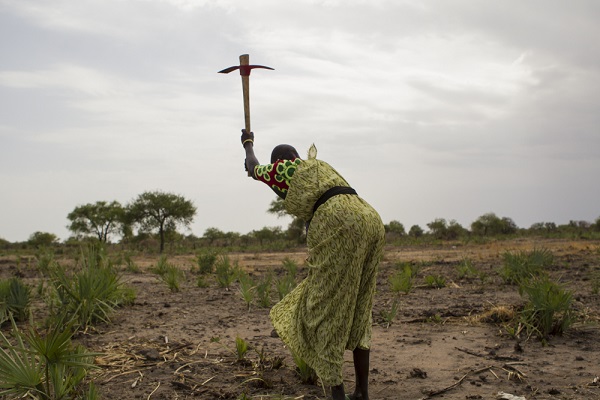
Clearing land for farming in project supported by UNMISS Disarmament, Demobilization and Reintegration Unit in Pariak, Jonglei State. (UNMISS/Martine Perret)

Clearing land for farming in project supported by UNMISS Disarmament, Demobilization and Reintegration Unit in Pariak, Jonglei State. (UNMISS/Martine Perret)

When Gabriel Gai, a state minister for South Sudan, visited Uror county he was on a mission for peace. There were violence and cattle raiding in the area, things that have been ongoing throughout South Sudan’s Jonglei state for years.

He asked the people to put down their weapons and not to fight. What did the community ask of him? They asked for food.

Hunger has resulted from years of conflict in South Sudan, starting with the war with its northern neighbor Sudan. More recently it has come from the internal conflict that has killed and displaced thousands of people.

The Lou Nuer and Murle tribes have fought vicious battles, each one leading to another conflict. As Confucius once said, “Before you embark on a journey of revenge, dig two graves.” Such is the story of war in South Sudan.

There is a cycle of hunger, poverty and violence that holds South Sudan back, particularly in Jonglei, the largest state.

Each week reports come in of more violence and suffering among the population. The UN said last week, “The security situation remained tense in Jonglei during the week. Several incidents of armed hostilities between the South Sudan armed forces and non-state armed actors were reported in and around Pibor town.” Thousands of people have been displaced by fighting there this year.

Catholic Relief Services (CRS) is on a mission to end hunger and build peace in South Sudan. As an aid agency they know that this puzzle must ultimately be solved by the citizens themselves. That answer lies in producing food, unleashing the potential of the farmlands of South Sudan.

With funding from the U.S. government, CRS started the Jonglei Food Security program. The idea is to develop the power of small farmers and take them through “the process of moving from subsistence farming to harvesting for market.”

The plan is to make South Sudan less dependent on international food aid. This means education and training in agriculture.

Sara Fajardo of CRS listened to what the people had to say. They want to farm. They just need a little help to recover from the ruins of war to get started.

Adhuom Achiek Buol, a farmer, says, “Farming will stop hunger. We, the people of Jonglei, were created to farm. It is in our culture. It is what we were born to do.”

Buoi Machiek, a livestock health worker, stated, “We need peace. People are afraid to walk to town because they might be shot. When we go to the bush to hunt, we get attacked. Insecurity causes hunger. Once we have peace, we can cultivate. This will prevent hunger.”

Mary Ngok, a farmer, says, “Peace among the communities will stop hunger in Jonglei. When other tribes stop raiding our cattle, we will have milk production and cattle to sell.”

Gabriel Kuereng, a CRS field coordinator, explains, “The war left us in bad shape. We still think that this community did this or this community did that. We need the government to intervene and help us forgive each other. We need to build an identity of nationhood where we all say we are South Sudanese -not ‘I am a Dinka or I am Nuer.’ When we reconcile, cattle raiding will stop, because we will not blame others.”

Uror County is one area benefiting from the CRS food security program. Getting people to put down their guns and focus on farming is the key to peace. The United Nations Mission has disarmament programs that also focus on farming to help reintegrate former soldiers and their families back into society. You can’t build a society on guns, but you can with farming and food.

The children are the ones who can then get the basic rights they deserve. The UN heard from 15-year-old Peter Puok Majuc, who said, “It is my right to education. It is my right to be taken care of by my parents…with food and clothes.”

The UN World Food Programme is helping South Sudan build a nationwide school lunch program. What could be better than having South Sudan’s own farms provide the food for these school meals?

The road to peace in South Sudan means people coming together to farm and not to fight. Fajardo writes what one farming group leader, Zakariah, said: “Working together, we’ve realized we produce more as a group. We can produce something that can be taught to many people. We have a saying in Dinka: ‘If you have one stick, it is easy to break. But if you have a bundle of sticks, it is hard to break.’ That means when you bring a group of people together, you become very strong. It is hard to break a group.”

Read more from the voices of South Sudan talking about ending hunger.

Leave a comment

Filed under global hunger

Catholic Relief Services Wants McGovern-Dole Expanded to Fight World Hunger

McGovern-Dole funding is allowing CRS to provide school meals in war-devastated Mali, where poverty rates are high. (Kristina Brayman/CRS)

McGovern-Dole funding is allowing CRS to provide school meals in war-devastated Mali, where poverty rates are high. (Kristina Brayman/CRS)

Catholic Relief Services (CRS) has a long history of supporting school meals around the world, dating back to the World War II era. Now CRS is calling on Congress to fund the McGovern-Dole global school meals program at $250 million this year. Previous funding levels are around $205 million.

School meals make foreign policy sense. Sean Callahan of CRS recently stated before Congress, “Education and nutrition are inextricably linked to future economic growth.”

That is why CRS wants to see the McGovern-Dole initiative expanded. Haiti, Afghanistan and many other countries need support for school feeding. In Mali, where conflict and drought have devastated the lives of millions, school meals are a big part of aiding children.

CRS received a McGovern-Dole grant for Mali and it’s making a difference. At last report, CRS is “currently serving 310 schools in two regions and approximately 58,000 beneficiaries.” CRS provides meals as well as vitamins and medications to the school children.

Callahan adds, “The program has helped to increase school enrollment for girls by 41% and for boys by 22%. On average, students attended school 95% of the days classes were held.”

The CRS Mali program also has elements of local food production for providing the meals. This is key. Where possible, the food for school meals needs to come from local sources. This helps communities and furthers the stability of the program so that continued aid is not needed.

The UN World Food Programme (WFP) also is providing school meals in Mali. The UN food agency relies on voluntary funding but often struggles to receive it. Expanding McGovern-Dole, for instance, could allow an opportunity to support WFP and its school feeding in Mali.

The Congress will have an opportunity to increase the McGovern-Dole funding in the upcoming Farm Bill legislation.

Article first published as Catholic Relief Services Wants McGovern-Dole Expanded to Fight World Hunger on Blogcritics.

Leave a comment

Filed under global hunger