MSJ Charity Miles Interviews

msjI have conducted interviews with several members of the Mount St. Joseph University Charity Miles team (MountMiles). These interviews have been published online at Huffington Post, Examiner and some have appeared in the Cincinnati Enquirer print edition.

I have compiled a list of the published interviews and other features here with links. It’s a great way to learn about Charity Miles, how it works, and the people that make it go. This information can also serve as a model for other schools in setting up their own Charity Miles programs.

Interview: Tristan Chaput on Charity Miles for College

Interview with Aaron Bloemer- the student leader for Charity Miles

Interview: LeeAnne Reinert, Charity Miler at Mount St. Joseph

Huffington Post feature on Cross Country Runner Amanda Shelby

College student Kelly Burger featured at Huffington Post on 30-hour famine

Interview: Matthew Kohlmorgen about Charity Miles and Hemingway

MSJ runner Kelleen Scott logs charity miles to fight cancer

Fox19 segment on Mount Miles event

College Student Becca Heizer Excels at Charity Miles and Service Learning

MSJ Impact Group to Host Charity Miles Walkathon

MSJ Student Leader Making an Impact

MSJ Student Inspired by Charity Miles

Cincinnati Enquirer Good News Profile on Aaron Bloemer

Runner gives holiday gift of Plumpy’Nut to starving children

Cincinnati Authors Class Helps Feed the Hungry with Charity Miles

Linking Hunger Fighting and Service Learning

Small College Captured Spirit of the Marshall Plan

Author William Lambers on Charity Miles

MSJ Athletes Pursue National Title in Charity Miles

Leave a comment

Filed under Charity

Ohio Farm Feeds the Hungry, Prevents Food Waste

Burwinkel Farms donates food to the Holy Family Church Food Pantry in Price Hill, an agency part of the Freestore FoodBank network fighting hunger in the Cincinnati area.

Burwinkel Farms donates food to the Holy Family Church Food Pantry in Price Hill, an agency part of the Freestore FoodBank network fighting hunger in the Cincinnati area.

For Burwinkel Farms of Hamilton, Ohio the work day starts early picking corn in the fields. The “corn is as high as an elephant’s eye” is the famous lyric from the musical Oklahoma. Karen Burwinkel, the manager of the farm, says they cannot quite confirm this for they have never had an elephant visit.

What Burwinkels can say for certain is they have delicious corn and other yummy fruits and vegetables. Each summer morning, trucks are loaded with food to be taken to its locations across the Cincinnati area.

Burwinkel Farms is a summer tradition, one that has been operating since 1918.

Very quietly too Burwinkels is helping fight hunger in the community. Hunger is a silent, but serious crisis in the Cincinnati area. Feeding America says that 18.5 percent of the county’s population suffers from hunger. Among children the “food insecurity” rate skyrockets to 21.1 percent.

Burwinkels is helping out. For produce not sold, they make sure it is not wasted. Once a week, Burwinkels donates food to the Holy Family Church Food Pantry in Price Hill.

Diana Penick, who manages the pantry, says they have helped 7,170 families in need during the past year. She says, “In the past year we served 20,366 people. Not bad for a small church pantry!” The pantry is part of the Cincinnati Freestore Foodbank system.

Burwinkels makes these donations during the summer months, which is most critical. Donations to food pantries often drop off during this time period compared to the holiday season. Also, during the summer many children lose access to the federal school lunch and breakfast programs. Summer feeding is available in some locations but has not reached anywhere near the coverage provided during the school year.

Burwinkel Farms makes its donation to Holy Family through its Delhi location on Sundays. This has been ongoing since last year. You can even stop by and “purchase” food to be added to the donation each week.

Hunger in America is a growing crisis, with more than 50 million people impacted. Tough economic times are here and the Congress is threatening to reduce the food stamp program (SNAP) which will place even more pressure on already overstretched food banks.

Following Burwinkels example is to waste no food, and do what you can to support hunger relief. That great summer delight of corn is something more than a nutritious food, but also brings hope to those in need.

For more information visit www.burwinkelfarms.com and also their Facebook page.

originally published at Cincinnati.com.

Leave a comment

Filed under Hunger in America

McCollum Introduces Act to Strengthen U.S. Response to Global Hunger

Humanitarian aid agencies want the U.S. to appoint a leader to direct the fight against global hunger. When you see hunger emergencies the size of the one facing Syria you see exactly what they mean.

The Global Food Security Act (H.R. 2822), introduced Thursday by Rep. Betty McCollum (D-Minn.), would appoint a White House Coordinator for Food, Nutrition, and Agricultural Development. It’s a “food ambassador” of sorts. It will be someone who would be in charge of the U.S. response against hunger which is currently spread out among a number of agencies.

Most important though is to bring the issue of hunger to the top of the foreign policy agenda, where it needs to be. Right now food aid programs are something many members of Congress look to cut, showing the disconnect with this issue. That needs to change.

Look at Syria, Afghanistan, Haiti, Yemen, South Sudan, Somalia and other countries facing massive levels of hunger and malnutrition. The Syria emergency is so large it spreads outside its borders to at least five neighboring countries hosting refugees. All these countries need emergency aid but also longer term solutions so they can grow their own food.

McCollum says, “870 million people around the world suffer from chronic food insecurity. This is wrong, and it makes the United States less secure. This bill fights food insecurity by working with the world’s most vulnerable people to enable them to produce their own food and improve their families’ livelihoods.”

Rep. Jim McGovern (D-Mass.) adds, “”The United States has a long and proud tradition of supporting global hunger and nutrition programs. That tradition can and must continue. Hunger is a political condition. We have the means to end it; what we need is the political will to make it happen. I am proud to support this important legislation.”

There are 33 humanitarian aid agencies that support this bill including the World Food Program USA, Catholic Relief Services, Church World Service, U.S. Fund for UNICEF and Save the Children.

Aid agencies are telling us this is the right strategy. So does history. After World War II when winning of the peace was crucial, a famine threatened Europe and Asia. Herbert Hoover was appointed by President Truman as the food ambassador. This was essential for coordinating the U.S. and international response to the largest hunger crisis ever at that time. Had the issue of hunger not been made a priority at that time it would have spelt disaster for the recovery of the war devastated nations. Remember the famous Marshall Plan of 1948? Food was the necessary foundation for this plan to succeed.

Hunger exists all over the world, but what limits the response? It’s when the issue of hunger is not given enough attention. It’s when the cries for help are not heard. People who can help are often far away and if they don’t hear about what is going on they won’t respond. Then you have a Congress or White House that won’t give hunger the attention it needs. It’s all about communication.

That communication is needed at all levels. Take for instance the relief operation in Syria where the World Food Programme had been forced recently to reduce the size of rations for war victims. Why? It was because funding was not timely enough to allow the food to reach its destination. A “food ambassador” would be responsible for preventing disasters like this. That can only happen through communication to all levels of the U.S. government, to other governments and to the public.

Then there is the issue of child malnutrition in the first 1000 days of life. A food called plumpy’nut is often used to save children’s lives from this deadly condition. More children could be treated and saved, at less cost, with earlier detection of malnutrition and the use of plumpy’sup or plumpy’doz.

It’s all about efficiency and good foreign policy. As Rep. Schock (R-Ill.) says, “The Global Food Security Act is a comprehensive approach to tackling the food insecurity epidemic that plagues more than 870 million people worldwide by better coordinating U.S. assistance and making accountability a priority to assess progress and the efficient use of foreign aid funding.”

Hunger has traditionally been an area of bipartisan cooperation. In fact, Democrat George McGovern (S.D.) and Republican Bob Dole (Ks.) cooperated for years on fighting hunger both here at home and abroad. We should expect no less now from the current elected officials.

originally published as “We need a leader in global hunger fight” at The Hill

Leave a comment

Filed under global hunger

Interview: LeeAnne Reinert, Charity Miler at Mount St. Joseph

LeeAnne Reinert is the President of the College of Mount St. Joseph Student Nurse Association. While starting her career in the medical field, LeeAnne has also been fundraising for many charitable causes.

She is a member of the Mount’s Charity Miles team (MountMiles), organized by the Campus Activities Board. Charity Miles is a free app you download onto your smartphone that allows you to raise money for Feeding America, Autism Speaks, Stand Up To Cancer, the World Food Program and many other charities.

When you start your workout, you select which organization to sponsor. Then for each mile you run, walk or bike, a donation is made to the charity of your choice, paid out of a sponsorship pool.

LeeAnne recently took time to discuss Charity Miles.

Tell us about your first experience with Charity Miles, as part of extra credit for a class.

I was very excited when I was told about the Charity Miles opportunity for my Cincinnati Authors Literature class. It was perfectly timed with Lent and connected my two Lenten goals into one since my Lenten goals were to make healthier choices and dedicate my time to a worthy cause. Running for good causes gave me all the motivation I needed to lace up my running shoes and head to the track.

I was also excited that if I completed the required number of miles by the end of the semester I would not have to write the final paper for my Lit class. (What college student doesn’t love getting out of writing a paper?) This opportunity ended up being a blessing that allowed me to focus on my nursing classes and raise my grades that ultimately helped me earn a 4.0 last semester!

How many Charity Miles have you run so far?

During school I ran about 30 miles. Since the beginning of summer vacation I have run about 40 miles. (The heat and work have slowed me down.)

What are some of the charities that you are helping?

The two charities that I run for the most are Stand Up To Cancer and Wounded Warriors Project.

Do you have a personal connection with any of the Charity Miles causes?

The Wounded Warriors Project has a special place in my heart. My father, mother, and brother are all in the military (or are retired from it) so all my life I have been surrounded by the dedicated men and women of our armed forces. Running for them makes me feel like I am doing my part to say thank you for their sacrifices. They received the care they more than earn as they continue to put themselves in harm’s way.

Stand Up To Cancer is another organization that is near and dear to me. I have had too many friends and family members fight or lose the battle to cancer. As a future nurse, cancer is going to surround me and knowing that the miles I run could help that fight always makes me want to push a little harder during each workout.

Can someone follow your Charity Miles workouts?

All of my Facebook friends can see my see my miles. My hope though is that my friends will be inspired to follow my lead and participate as well. I always know that some of my fellow Charity Miles runners/walkers will like the post and I always try to return the favor to them.

originally published at Cincinnati.com

Leave a comment

Filed under Charity

In Search of Food and Peace in South Sudan

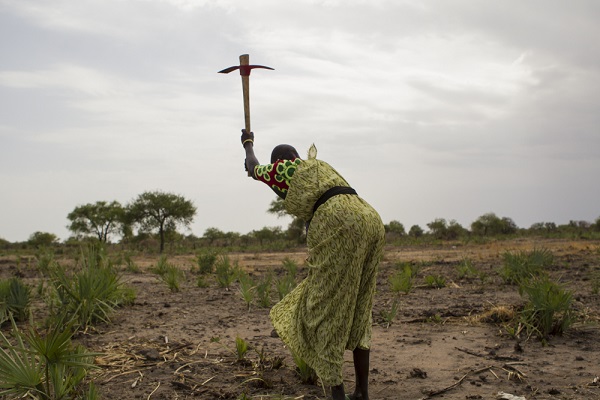
Clearing land for farming in project supported by UNMISS Disarmament, Demobilization and Reintegration Unit in Pariak, Jonglei State. (UNMISS/Martine Perret)

Clearing land for farming in project supported by UNMISS Disarmament, Demobilization and Reintegration Unit in Pariak, Jonglei State. (UNMISS/Martine Perret)

When Gabriel Gai, a state minister for South Sudan, visited Uror county he was on a mission for peace. There were violence and cattle raiding in the area, things that have been ongoing throughout South Sudan’s Jonglei state for years.

He asked the people to put down their weapons and not to fight. What did the community ask of him? They asked for food.

Hunger has resulted from years of conflict in South Sudan, starting with the war with its northern neighbor Sudan. More recently it has come from the internal conflict that has killed and displaced thousands of people.

The Lou Nuer and Murle tribes have fought vicious battles, each one leading to another conflict. As Confucius once said, “Before you embark on a journey of revenge, dig two graves.” Such is the story of war in South Sudan.

There is a cycle of hunger, poverty and violence that holds South Sudan back, particularly in Jonglei, the largest state.

Each week reports come in of more violence and suffering among the population. The UN said last week, “The security situation remained tense in Jonglei during the week. Several incidents of armed hostilities between the South Sudan armed forces and non-state armed actors were reported in and around Pibor town.” Thousands of people have been displaced by fighting there this year.

Catholic Relief Services (CRS) is on a mission to end hunger and build peace in South Sudan. As an aid agency they know that this puzzle must ultimately be solved by the citizens themselves. That answer lies in producing food, unleashing the potential of the farmlands of South Sudan.

With funding from the U.S. government, CRS started the Jonglei Food Security program. The idea is to develop the power of small farmers and take them through “the process of moving from subsistence farming to harvesting for market.”

The plan is to make South Sudan less dependent on international food aid. This means education and training in agriculture.

Sara Fajardo of CRS listened to what the people had to say. They want to farm. They just need a little help to recover from the ruins of war to get started.

Adhuom Achiek Buol, a farmer, says, “Farming will stop hunger. We, the people of Jonglei, were created to farm. It is in our culture. It is what we were born to do.”

Buoi Machiek, a livestock health worker, stated, “We need peace. People are afraid to walk to town because they might be shot. When we go to the bush to hunt, we get attacked. Insecurity causes hunger. Once we have peace, we can cultivate. This will prevent hunger.”

Mary Ngok, a farmer, says, “Peace among the communities will stop hunger in Jonglei. When other tribes stop raiding our cattle, we will have milk production and cattle to sell.”

Gabriel Kuereng, a CRS field coordinator, explains, “The war left us in bad shape. We still think that this community did this or this community did that. We need the government to intervene and help us forgive each other. We need to build an identity of nationhood where we all say we are South Sudanese -not ‘I am a Dinka or I am Nuer.’ When we reconcile, cattle raiding will stop, because we will not blame others.”

Uror County is one area benefiting from the CRS food security program. Getting people to put down their guns and focus on farming is the key to peace. The United Nations Mission has disarmament programs that also focus on farming to help reintegrate former soldiers and their families back into society. You can’t build a society on guns, but you can with farming and food.

The children are the ones who can then get the basic rights they deserve. The UN heard from 15-year-old Peter Puok Majuc, who said, “It is my right to education. It is my right to be taken care of by my parents…with food and clothes.”

The UN World Food Programme is helping South Sudan build a nationwide school lunch program. What could be better than having South Sudan’s own farms provide the food for these school meals?

The road to peace in South Sudan means people coming together to farm and not to fight. Fajardo writes what one farming group leader, Zakariah, said: “Working together, we’ve realized we produce more as a group. We can produce something that can be taught to many people. We have a saying in Dinka: ‘If you have one stick, it is easy to break. But if you have a bundle of sticks, it is hard to break.’ That means when you bring a group of people together, you become very strong. It is hard to break a group.”

Read more from the voices of South Sudan talking about ending hunger.

Leave a comment

Filed under global hunger

Interview: Shanon Chaput, Mason Food Pantry Volunteer

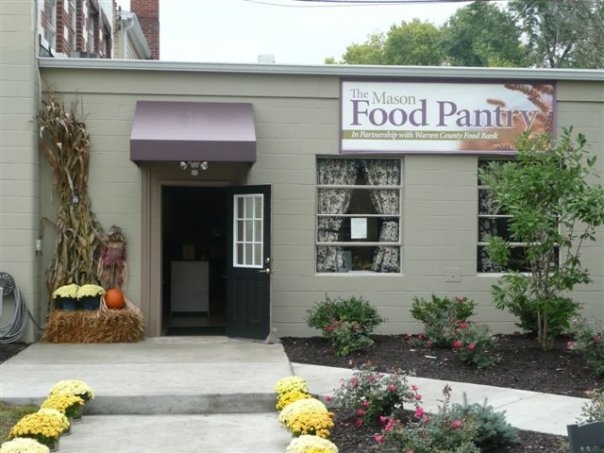
The Mason Food Pantry in Ohio has seen increased demand for food assistance in recent years. (Mason Food Pantry)

The Mason Food Pantry in Ohio has seen increased demand for food assistance in recent years. (Mason Food Pantry)

Hunger may be closer to your doorstep than you think. There are over 50 million Americans who suffer from hunger according to Feeding America.

This crisis can show up in any community. Volunteers play a large role in helping food pantries cope with the increasing need for help.

In the following interview, Shanon Chaput, a volunteer at the Mason Food Pantry in Southwest Ohio, shares her story about getting involved in the fight against hunger.

Tell us about the community where your food pantry is located.

The Mason Food Pantry is located at 406 Fourth Avenue in Mason, Ohio. People think of Mason as a very wealthy town and are surprised that the city actually has people in need of food assistance.

What is the level of hunger in the Mason area?

Quoting the Mason Food Pantry website: “In December 2008 the pantry served 247 people. In December of 2012 the pantry served 667 people.” These numbers represent the month of December, not the calendar year.

How did you decide to become a volunteer at the Pantry?

I chose to be a volunteer at the Mason Food Pantry because my kids were in high school and had their driver’s licenses and really didn’t need me to drive them around as much as I did when they were younger.

Tell us about some of the people who rely on the Pantry. What is their story?

Unfortunately some of the people who come to the food pantry are victims of their own poor decisions. Many more however are desperate for help because they have been fighting cancer and other ailments and have prescription medications that sap every spare penny. There are a lot of elderly people who frequent the pantry and I often wonder if their families know about their predicament.

How can someone help the Mason Food Pantry?

There are a variety of ways people can assist the food pantry. A food drive through their place of employment or church is most typical. Others donate overflow from their summer gardens or prefer to make cash donations. For more information on holding a food drive or making a donation you can contact the director Gina Brown by phone at 513-754-0333 or by email at info@masonfoodpantry.org

Leave a comment

Filed under Hunger in America

Summer Meals Should be for all Children

The Dept. of Agriculture is trying to expand summer feeding throughout the country (courtesy USDA)

The Dept. of Agriculture is trying to expand summer feeding throughout the country (courtesy USDA)

Summer is here and time for relaxation. But for millions of needy children across the United States, it is the summer months when they are most vulnerable to hunger.

During the school year children have access to the federal school lunch and breakfast programs. This is a major safety net for families who need a little to help to get by during tough times. When school is out these meals sadly disappear for many.

The Food Research and Action Center states, “for every seven low-income students who depended on the National School Lunch Program during the regular 2011-2012 school year, only one child received summer meals in July 2012.”

Some U.S. counties do not even have a summer feeding site. So there is a huge gap in the U.S. child feeding program that will need innovation from both the public and the government to fix. In Cincinnati, Ohio, for example, public libraries are helping out as locations for distributing summer meals. More summer feeding sites, or other delivery methods, need to be established and there has to be adequate funding.

Summer meals for children are also missing in Haiti, where food is desperately needed. A series of storms and drought have damaged food production in an already impoverished country. The UN World Food Programme, which depends on voluntary funding, did not receive enough to provide summer feeding in Haiti nor a program for take home rations to help needy families.

The U.S. McGovern-Dole global school meals program is helping in Haiti as well as other countries including Mali and Afghanistan, but it needs to be expanded. Unfortunately, funding for McGovern-Dole is at risk as members of Congress are threatening cuts to food aid. This despite the fact that food aid makes up less than one tenth of one percent of the federal budget.

The program was named after the two former senators, George McGovern and Bob Dole, who during World War II witnessed the devastating effect of hunger on children and understood the importance of these initiatives in the global scene.

We should expect our representatives in Congress to make feeding the hungry overseas a top foreign policy priority.

Summer meals, both here at home and abroad, should be for all children. It’s a real test of our character as a society, do we care for the next generation and give them a helping hand.

In the United States you can call 1-866-3-HUNGRY or 1-877-8-HAMBRE (for Spanish speakers) to find the closest summer feeding sites or visit www.whyhunger.org/findfood.

Leave a comment

Filed under global hunger

Food Security is Security

School meals are an important part of WFP's emergency response to the conflict in Mali. They give children like these an added reason to attend school while providing them with the calories and nutrition they need to be healthy. (WFP/Daouda Guirou)

School meals are an important part of WFP’s emergency response to the conflict in Mali. They give children like these an added reason to attend school while providing them with the calories and nutrition they need to be healthy. (WFP/Daouda Guirou)

Last week Ertharin Cousin, the director of the UN World Food Programme, said “food security is security.” If you are responsible for food aid budgets, such as our elected officials, these words are what you need to know.

Any country’s well being rests first and foremost on food. Without it you cannot have a functioning economy and your children will be stunted in growth and mind. When hunger escalates, it can lead to violence further setting back the society. Food means peace.

Yet, time and time again members of Congress take to cutting food aid budgets. Some even propose amendments to abolish entire food aid programs. They might as well just eliminate American foreign policy, for you cannot have one unless you fight hunger.

As George Marshall once wrote, “Hunger and insecurity are the worst enemies of peace.” He knew what nations in distress needed as their foundation for recovery and peace. Marshall’s plan was indeed a successful approach. We know that today Afghanistan, Yemen, Haiti, Syria and other nations will not have peace or development without the basics of food.

When Cousin made her statement she was in the Middle East. She added, “Food security is a vital component for sustained peace across the region.” Palestine, Syria, Yemen, Egypt and other parts of the region are facing a severe hunger crisis.

Right now as the Congress considers the Farm Bill they have to think in terms of our foreign policy as a whole. We need a strong Food for Peace program. This initiative is the largest supporter of the World Food Programme, which is the agency on the frontline of hunger everyday.

We need a strong international school lunch program as well. When you can mix food with education it is a powerful tool. Food aid reforms need to pass to improve the efficiency of these programs.

It’s not a matter of political sides either. Democrats, Republicans and Independents can all back the fight against hunger. That is the way it’s been done before. That is how it should be now.

Remember after World War One, what a young lieutenant from the American Relief Administration said after being told a food aid mission was practically impossible. He said, “Yes, we can.” No politics there. He was doing his duty, not just as a soldier but as a human being.

We should expect no less from our elected officials when they are making decisions that impact the lives of millions of people worldwide and our own national security.

Leave a comment

Filed under global hunger

Where are the School Meals?

Emergency school feeding in Mali through the World Food Programme. Cuts by Congress to food aid could harm this program. (WFP/Daouda Guirou)

Emergency school feeding in Mali through the World Food Programme. Cuts by Congress to food aid could harm this program. (WFP/Daouda Guirou)

We know that globally there is a huge need for school lunch programs to fight child hunger. Yet, it’s the middle of June and there’s still no word on which countries will receive grants from the U.S. McGovern-Dole school lunch program. Last year the announcement took place in April and the previous year in May.

The McGovern-Dole program is run by the U.S. Dept. of Agriculture (USDA). However, the program is constantly under stress from potential funding cuts by Congress.

Bread for the World reported earlier this year that “234,000 children will have reduced or denied access to school feeding programs under the McGovern-Dole program” as a result of the sequestration cuts. It is believed that the sequestration is causing the delay in the announcement of the school feeding grants. The longer the delay, the longer hungry and malnourished children have to wait for the meals.

Aid groups, including Catholic Relief Services and the World Food Program USA, want funding for McGovern-Dole increased. They see the positive effects this program has in countries that are suffering from disasters, war, or long-standing poverty. This year’s Farm Bill legislation is the perfect opportunity to increase the level of funding and allow for more school meals in Afghanistan, Mali, Haiti and other countries where needs are massive.

WFP USA says it “has included an ask for McGovern-Dole of $300 million for FY14 in our overall global hunger and nutrition recommendations. Providing $300 million a year for McGovern-Dole would allow this program to reach 10% of the hungry school-aged children in need, increasing their nutritional status and increasing school attendance, especially for girls.” Recent funding levels for McGovern-Dole are around the $200 million mark.

Here in the United States the National School Lunch program is meant to fight off child hunger.

But what happens when summer arrives and schools close? The lunches are disappearing for many children. The Food and Research Action Center (FRAC) just released a report showing a huge gap in feeding coverage during the summer months.

The report says, “for every seven low-income students who depended on the National School Lunch Program during the regular 2011-2012 school year, only one child received summer meals in July 2012.”

Tom Vilsack, head of the U.S. Dept. of Agriculture (USDA), emphasizes, “We must do all we can to ensure that children get nutritious food year-round, so that they are ready to learn during the school year and have a greater chance to succeed.” Efforts by USDA and the public have slightly improved summer feeding participation but the gap in coverage is still huge.

Jim Weill, the president of FRAC, says, “USDA is providing strong leadership with its emphasis on improving summer meals, but Congress will need to fix some of the underlying problems in the programs in the 2015 Child Nutrition Reauthorization to truly repair the Summer Nutrition Programs. Congress must take a fresh look at the Summer Nutrition Programs and consider ways to improve this faltering program so it more effectively addresses hunger and obesity.”

The struggle to defeat hunger at home and abroad depends on school meals. Leaders, both from the government and the public, need to ensure these vital food programs are strengthened.

Leave a comment

Filed under global hunger

Interview: Tristan Chaput on Charity Miles for college

Charity Miles, the free smartphone app that lets you raise money to support causes while exercising, is taking the world by storm. Colleges is one of the places where this technological breakthrough in charity is happening.

At the College of Mount St. Joseph in Ohio students are using the app. Tristan Chaput, the president of the Campus Activities Board there, talks about Charity Miles on her campus. She hopes that the school will be “national champs” in this charity sport.

How did you decide to get MSJ involved in Charity Miles?

It was really a spur of the moment thing! I was first introduced to Charity Miles through author William Lambers after winning a contest that he put together. I downloaded the app and used it when I was walking around campus from class to class and then I realized that the miles were really adding up. Bill mentioned making it a school-wide event. I am on the Campus Activities Board (CAB) at the Mount, so I brought it to the executive board. Everybody seemed excited about the idea of it, so it really took off. Some of our executive members are the ones who have collected the most miles so far. To get the campus involved, we decided to have a summer contest and see who can collect the most miles (the winner gets a prize). So far Mount students have collected 64.805 miles.

What kinds of charities are benefiting from your workouts?

Lately I have been working out for She’s the First, an organization that seeks to give girls in developing countries an education, since they are new to Charity Miles. I also do workouts for Wounded Warrior Project, Feeding America, and World Food Programme.

How many Charity Miles have you collected so far this summer?

19.602 miles

Do you think MSJ could be the leading college in terms of Charity Miles, even national champs?

I really think we could! Unlike larger campuses where you have to take shuttle buses from one side of campus to the other, MSJ is so small we walk everywhere! I know from experience that this is a great way to earn some Charity Miles! We also have a campus that is full of people who are always doing service, whether it’s service hours for a class or simply volunteering during his/her free time.

How does someone get involved with Charity Miles at your school and in the community?

For the community, it’s easy. All you have to do is download the free app Charity Miles on your iPhone or Android. Before your workout begins decide whether you want to walk, run, or bike. Then simply select the charity you want to help and press start. Students have one extra step they need to complete. At the end of the workout they need to either “share” their workout on CAB’s Facebook page (Campus Activities Board – MSJ) or on CAB’s Twitter page (@CAB_MSJ). When they do this they are automatically entered to win prizes.

article originally published at Cincinnati.com

Leave a comment

Filed under global hunger