Category Archives: Hunger in America

Cincinnati Freestore Foodbank Starts Tornado Relief Fund

A house leveled by the tornadoes that struck the Tri-State of Ohio, Kentucky and Indiana (Freestore Foodbank photo)

The Cincinnati Freestore Foodbank has started a relief fund in response to the devastating tornadoes last week in Kentucky, Indiana and Ohio.

The Freestore, a member of the Feeding America network, is the largest food aid provider in the Greater Cincinnati area. Some of the member agencies the Freestore partners with were impacted by the storms.

The Freestore has been providing food aid to communities struck by the tornadoes, including a distribution yesterday in Moscow, Ohio. That town saw around 80 percent of its homes damaged in the storm.

You can donate to the relief fund at their web site. The Freestore says the donated funds “will be evenly distributed to our member agencies in devastated areas, and used to purchase items they need to bring comfort and stability back into the lives of the people in our communities.”


The Cincinnati Freestore Foodbank's Mobile Food Pantry is bringing food to families affected by the massive tornadoes in the Tri-State area of Ohio, Kentucky and Indiana. (Freestore Foodbank photo)

Leave a comment

Filed under Hunger in America

Freestore Foodbank Deploys Mobile Pantry for Tornado Relief

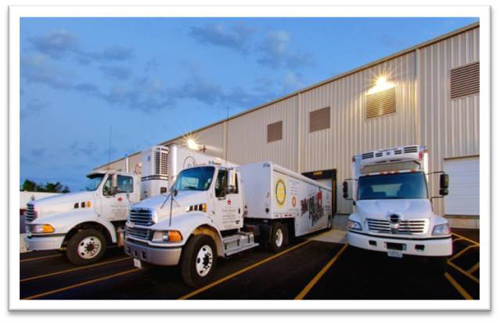
The Cincinnati Freestore Foodbank's Mobile Pantry

The Freestore Foodbank of Cincinnati is distributing relief supplies to tornado devastated communities in the Tri-State area of Ohio, Kentucky and Indiana.

Last Friday tornadoes ripped through numerous towns, destroying homes and leaving many people with a severe shortage of basic supplies.

The Freestore, a member of the Feeding America network, is using its Kraft Mobile Food Pantry to get supplies to storm victims. The Pantry was in Crittenden, Kentucky on Wednesday bringing food to the Northern Kentucky Community Action Commission disaster relief area.

On Friday, March 9th the pantry will be at the Grant Memorial Church in Moscow, Ohio, a town which saw around 80 percent of its homes damaged by the tornadoes. On March 13th the mobile pantry will bring food to Pendleton County storm victims at the Flower Creek Community Center. The Freestore is also helping distribute soap, toothpaste and other personal hygiene items.

Kelloggs is donating a truckload of cereal to the Freestore to use for this relief mission.

You can donate to the Freestore’s tornado relief fund at their web site. Spokesperson Anna Hogan says, “we will split the donated funds between our member agencies in the affected areas to purchase supplies.”

Leave a comment

Filed under Hunger in America

Matthew 25: Ministries ready to aid Midwest towns leveled by massive storms

The "Doorway to Helping the Needy of the World" located in the Matthew 25: Ministries processing center (photo courtesy Matthew 25: Ministries)

Matthew 25: Ministries, a humanitarian aid agency in Cincinnati, is collecting food, first aid, blankets and other supplies for communities devastated by tornadoes on Friday.

The Tri-State area of Ohio, Indiana and Kentucky saw one its most destructive storms in its history. Early reports say at least 17 people have been killed in Indiana and Kentucky by tornadoes.

Large parts of the town of Holton, Indiana have been leveled and fatalities reported according to WLWT news. The Cincinnati Enquirer reports that 80 percent of homes in the town of Moscow, Ohio were damaged.

In Kenton County in Northern Kentucky tornadoes tore through residential areas and caused 3 deaths. The Cincinnati Enquirer also reports that multiple homes were destroyed, trees uprooted and cars and trucks were lifted and thrown by the powerful winds.

Matthew 25: Ministries says it’s working to assess the damage and needs of the victims. For information on how to donate visit their web site at www.m25m.org. Matthew 25 Ministries says it accepts donations of cash or goods for disaster aid and humanitarian relief programs. They also welcome volunteers to their 132,000 square foot facility in Cincinnati.

Update from Matthew 25: Ministries — We expect to begin disaster relief next week for areas in the Tri-state damaged by yesterday’s tornadoes. Matthew 25’s Assessment Team, led by Disaster Relief Coordinator Tim Mettey, will personally deliver initial supplies, identify the most urgent needs, work with partners to establish distribution centers and develop operational templates for ongoing aid. Matthew 25 is currently requesting first response support including monetary donations, non-perishable food, personal care products, cleaning supplies, paper products, baby supplies, and first aid items.

Leave a comment

Filed under Hunger in America

Ozarks Food Harvest Ready To Aid Storm Relief Effort

Ozarks Food Harvest collects and distributes more than 1 million pounds of food monthly to a Network of 300 agencies across 28 southwest Missouri counties. (Ozarks Food Harvest)

Storms tore through the Ozarks region of Missouri this week.  In Branson, Missouri a tornado struck causing heavy damage. The Ozarks Food Harvest, a member of the Feeding America network, is on standby to provide supplies to storm victims.

The Food Harvest is the leading agency in the area helping feed needy families, the homeless, or those struck by disaster.

Denise Gibson, communications director of the Foodbank says, “we will work through our network of agency partners that reside in each community affected and provide whatever additional assistance they need. We have been in contact with all of them to make sure that they are up and running and to determine how we can be of immediate help.”

You can learn more about the Ozarks Food Harvest at their web site.


Leave a comment

Filed under Hunger in America

Fighting Hunger in America and the Penny Lunch Tradition

Hunger is on the rise in America. The Conference of Mayors recently reported that 86 percent of surveyed cities have seen increases in the need for emergency food aid. These findings coincide with a United States Department of Agriculture report that 20 percent of children in the United States are hungry.

To turn the tide, we need to rekindle the passion and innovation of those who started the fight to end hunger in America more than a century ago.

In 1908 a Cincinnati school teacher, Ella Walsh, saw that her students were struggling. They looked pale. The students were not getting enough to eat. This obviously had serious health as well as educational repercussions. They could not learn on an empty stomach.

Walsh could see malnutrition before her eyes. But she did not just “file it and forget it.” She took action. She got some cooking materials together, found a room, arranged a table, and started serving what came to be known as the “penny lunch.”

This was one of the first attempts to provide school feeding for children. When the school superintendent stopped by to see Walsh’s program in action, he called it a major breakthrough in solving the “problem of the underfed child.”

And it caught on. A doctor quoted in the Cincinnati Post said the penny lunch programs were “like the measles: started, you cannot stop them.” Educators around the United States and even other countries started penny lunch programs. During the Great Depression, these meals were an ever-so-vital safety net.

Over the years, these early efforts at school feeding were strengthened, and in 1946 Harry Truman signed into law the National School Lunch program. Upon signing the legislation, Truman said, “No nation is any healthier than its children.”

Today millions of school children receive free or low price meals because of this initiative that had its earliest roots in the penny lunch. But just enacting this legislation was not enough. Congress had to make improvements when needed.

In 1968, for instance, Senators Bob Dole and George McGovern, who had witnessed the effect of child hunger in war-torn Europe, started a committee to bolster the existing national school lunch program so more needy children could take part. Their work added millions of children to a new national breakfast program and expanded summer feeding initiatives.

But despite these efforts the journey to end child hunger is far from complete. There are still huge gaps in participation in the national school breakfast and summer feeding; and when summer comes and schools close the drop in participation is dramatic.

In 2010, according to Feeding America, 20.6 million low-income children received free or reduced-price meals through the National School Lunch Program, but just 2.3 million participated in summer feeding. When schools close for the summer distribution of food becomes a huge problem.

Fixing this problem requires a combination of innovation, like Ella Walsh showed, and government support, as demonstrated by McGovern and Dole.

For instance, communities can help set up sites for summer feeding. If enough people volunteer and help spread the word about summer feeding, the problem of food distribution can largelybe solved at the local level. Mobile food pantries for summer are another option, but need support.

In Cincinnati, the tradition of school feeding started by Walsh continues with the universal free breakfast program for public schools. It’s called “Grab and Go,” and it gives every student a free meal in the morning. The program is supported by the U.S. Department of Agriculture, school boards, and donations by businesses and organizations. If more school systems adopted this program across the country, it would mean significant health and educational benefits for students.

Lisa Hamler-Fugitt of Second Harvest Foodbanks of Ohio says governments at all levels should do their part in “implementing universal free breakfast programs as the cornerstone of true education reform.”

When Ella Walsh kicked off the penny lunch to combat hunger, she said, “It is wonderful to watch the improvement in the children who have heretofore been underfed. Their little faces are rounded out and they are healthy, active human beings, interested in their work, progressing rapidly, a contrast to the pale, listless child of a few months before.”

The effect of this meal is just as important today. We know what a difference school feeding can make. Now there must be action to ensure that no child goes hungry and we that we continue America’s quest to end hunger.

Originally distributed by the History News Service.

Leave a comment

Filed under History, Hunger in America

Fighting Hunger: An Interview with Joodi Archer of Matthew 25: Ministries

The "Doorway to Helping the Needy of the World" located in the Matthew 25: Ministries processing center (photo courtesy Matthew 25: Ministries)

Cincinnati, Ohio has historically been at the forefront of the fight against hunger, this tradition starting with “penny lunch” programs in the early 1900s and more recently with universal free breakfast for public schools.

Since its founding in 1991, Matthew 25: Ministries has been a big part of this tradition, fighting hunger both in the United States and other countries. Based in Blue Ash, Ohio the charity is dedicated to helping those in need, whether it is disaster victims in Joplin, Missouri or earthquake-devastated Haiti.

Matthew 25: Ministries even has its own food processing center which makes a special rice/soy blend. Around 1 million meals of this food were sent to Japan to help victims of the earthquake and tsunami that struck there last year.

Matthew 25: Ministries recently completed a Fighting Hunger Food Drive in Cincinnati which was kicked off by a 5K Road Race.

In the United States one in 6 people are suffering from hunger according to studies by Feeding America. Matthew 25: Ministries is on the front lines taking on this growing hunger crisis. Let’s find out how in this interview with Joodi Archer, the organization’s media relations director.

How many food pantries does your agency support year round?

We work with the majority of our food pantries during our Fighting Hunger 5K. Last year, we served approximately 40 pantries and shelters during that time. We do work with some pantries and shelters on an ongoing basis throughout the year depending on the quantities and types of food we have donated to us – most of these pantries would also benefit from our Fighting Hunger Food Drive. Matthew 25: Ministries is committed to serving the needs of Greater Cincinnati during the holiday season and throughout the year.

Is most of your support to the pantries in the form of canned goods or rice/soy blend you produce?

For our 2011 Fighting Hunger Food Drive, approximately 20,000 pounds of the 60,000 total pounds of distributed food consisted of our rice/soy blend. Throughout the year, approximately 25% of the total pounds of locally distributed food could be our rice/soy blend.

Are you seeing a greater need for assistance from food pantries in the area?

The need for assistance is escalating at a significant pace, mirroring the downturn in the economy and continuing high unemployment rates. Pantries are reporting double and triple the requests for assistance and are struggling to meet the needs of recipients. The pantries we provide for often serve hard-to-reach, non-mobile populations, and they are struggling to meet the increasing requests for assistance.

How can someone get involved with Matthew 25?

People of all ages and financial means can get involved with Matthew 25: Ministries. Here are some suggestions:

Volunteer: Matthew 25: Ministries is always in need of volunteers at our 132,000 square foot warehouse in Blue Ash, Ohio. Opportunities exist for individuals, families, and groups of any size. (Please see our volunteer guidelines for more information.) For groups located outside of the Greater Cincinnati area, Matthew 25: Ministries provides a great opportunity for day-long volunteer trips or overnight multiple-day trips. Please call 513-793-6256 for more information and for help with scheduling your visit.

Contribute: More than 99% of Matthew 25: Ministries’ cash and in-kind donations go towards programs. In 2011, for every $1 donated, Matthew 25 distributed $64 in humanitarian aid. That means that even a small gift will have an enormous impact on the lives of those in need.

Collections: Collect products and goods for the poorest of the poor. This is a great way for groups such as schools, businesses, clubs, etc. to help. We are always in need of clothing, personal care items, non-perishable food, medical supplies, and educational materials. Contact Matthew 25: Ministries for suggestions of critically needed items.

Fundraise: Host a spaghetti dinner,auction, or concert. Make Matthew 25: Ministries a part of your church’s mission budget, mission Sunday, or special collection. Raise money as a general donation or to support a specific project. For example, a small but sturdy house in Nicaragua costs about $1,300. One M25M donor spearheaded enough fundraising activities to pay for the construction of twenty-two houses-each with a cement floor, solid door, shuttered windows, and waterproof roof! Ask M25M for assistance on fundraising ideas or promotional materials.

Pallet to the Poor: Sponsor a pallet of goods to send to the poor. A four-foot by four-foot pallet costs $192 and typically contains about $4,200 in products and supplies. Each pallet is labeled with the name of the sponsoring individual, group, or organization. A letter of acknowledgment and thanks lets the donor know where the pallet of products is going. Contact Joodi Archer for more information on the Pallet to the Poor Program.

Connect: Introduce a potential corporate donor to Matthew 25: Ministries. Your phone call or e-mail connecting Matthew 25: Ministries to the correct contact individual can save weeks or months of research to establish a connection. Corporate donors receive many benefits from partnering with Matthew 25: Ministries including substantial tax benefits. See our Corporate Partners section for more information.

Visit Matthew 25:Ministries to learn more.

Article first published as Fighting Hunger: An Interview with Joodi Archer of Matthew 25: Ministries on Blogcritics.

Leave a comment

Filed under Hunger in America