Category Archives: global hunger

Sahel Food Crisis: School Meals Needed in Chad as Hunger Deepens

The African nation of Chad is in the middle of a hunger crisis as drought has struck, ruining the country’s food supply. Chad is part of the Sahel region of Africa which in recent months has seen poor crop production. Hunger and malnutrition are growing, and the international community needs to act fast to avert a massive humanitarian disaster. (see Sahel Food Crisis: Race Against Time To Save Lives.)

Many families have less food, and what food is available on the market has gone up in price significantly. Many of these families are already living on fewer than 2 dollars a day so any increase in food prices is extremely serious.

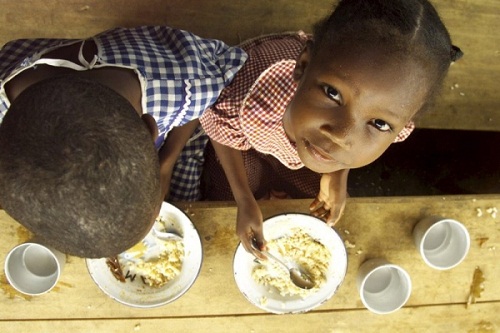
The United Nations World Food Programme (WFP) is providing school feeding in Chad as part of its response to the crisis. These meals not only save children from hunger but also keep them in school and learning.

When a hunger crisis hits a community, children often drop out of school to help earn wages for the family. This negative coping strategy denies children education and may even put them in danger.

Critical for Chad will be ensuring that school feeding is continued through the upcoming months when the food shortages will be at their worst. Malek Triki, WFP information officer, provides us an update on the school feeding response in Chad.

How many children are currently receiving school meals through WFP in Chad?

Currently, 205,000 schoolchildren (of which 45% are girls) are receiving schools meals in 790 primary schools across Chad. WFP plans to assist more than 250,000 school children in 2012 and around 265,000 in 2013.

Are the schools in communities impacted by high food prices and/or drought?

Yes, most of the schools assisted by WFP are located in areas affected by high food prices and the drought, especially in the Sahelian zone. The poor harvest means that the food availability is highly reduced, which translates into high food prices on local markets. Schoolchildren will depend more and more on school meals as their main source of food.

What are the latest reports of nutrition levels among school children?

Schoolchildren are in the age category of 7 to 14 years, which falls out of the age category targeted by nutrition surveys in Chad (under 5). However, the global acute malnutrition levels stand at 16% – beyond the emergency threshold rate of 15%.

Does WFP have enough resources to carry out school meals in the coming months?

If the current level of funding doesn’t improve, WFP will not be able to carry out school meals in the coming months. Out of about US$ 10 million required for the year 2012, only US$ 2 million have been secured. There is an urgent need to have funds to purchase over 5000 Mt of assorted commodities including MML, pulses, oil and salt.

For more information visit the World Food Programme.

Article first published as Sahel Food Crisis: School Meals Needed in Chad as Hunger Deepens on Blogcritics.

Leave a comment

Filed under global hunger

Top Foreign Policy Goal for 2012: Feeding the Children of Drought and Conflict

As the State of the Union is upon us for 2012, let’s look briefly at history to tell us what should be atop the foreign policy agenda.

When the fighting of World War One came to an end on November 11th, 1918, there still was an “enemy” who remained on the offensive. The war had ruined agriculture and food supply systems, thereby unleashing the most unrelenting of foes–hunger and malnutrition.

Lieutenant Harwood Stacy saw in Poland such terrible conditions with infants that “looked terribly emaciated.” He said a basic item like milk “was as precious as gold.” A Polish hospital director pleaded for food for children “so we may supply the needs of these little ones who cannot comprehend why they are not fed.”

The American Relief Administration, backed by Congressional funding as well as donations from citizens, came to the rescue. Millions of children were spared a lifetime sentence from malnutrition that damages both mind and body. Without this aid World War One, which leveled enough suffering, would have led to millions more lives being lost.

All it took was providing the children meals, even similar to the “penny lunch” programs that had been pioneered in Cincinnati, Ohio in the early 1900s by teacher Ella Walsh. Another Cincinnati “penny lunch” organizer, Alice Wheatley, was also a supporter of the Red Cross during World War One. It was the Red Cross which provided school meals to thousands of children in France during the World War One years.

Now, nearly 100 years later, a different hunger crisis is unfolding that demands to be the top foreign policy priority. For hunger has started a new powerful offensive against the poor and vulnerable. Last year a massive drought occurred in East Africa placing over 13 million people at risk of starvation. That crisis is still ongoing and humanitarian aid has to keep flowing. However, there is also drought striking large parts of West Africa as well.

People in Niger, Chad, Mauritania and other parts of the Sahel region of Africa are feeling the effects of reduced harvests and high food prices. A massive humanitarian disaster waits around the corner if we do not act now.

In some parts of Yemen, a country known in the U.S. as a haven for Al Qaeda, child malnutrition rates rival those of famine-ravaged Somalia. Aid agencies, who rely on voluntary donations, cannot keep up with the growing tragedy.

In the new nation of South Sudan, conflict among tribes continues to leave many people hungry and displaced. Peace has not yet been achieved with neighboring Sudan. To add to this, drought has struck. In North Darfur, the UN World Food Programme says the “overall food security situation has considerably deteriorated compared to November 2010.” Poor harvests and high food prices now strike at a population trying to build peace.

In Afghanistan, a country devastated by years of conflict, drought hit 14 provinces last year. Low funding for aid agencies led to a reduction in food and agricultural assistance to the needy population. Food for peace therefore has a limited reach when it’s most needed.

In 2012 America’s top foreign policy objective should be to rehabilitate the children of drought and conflict across the globe. For if we do not, we give up on peace and stunt the future of so many suffering countries.

This is not an insurmountable challenge. It is far less expensive than war. But it needs to get on the agenda of our leaders in Washington and in the public conscience as it did after World War One, World War II and the Korean War. Feeding the children of “drought and conflict” is the U.S. foreign policy mission for this new year.

Article first published as Top Foreign Policy Goal for 2012: Feeding the Children of Drought and Conflict on Blogcritics.

Leave a comment

Filed under global hunger

Building the Future in Ivory Coast with School Meals

WFP has resumed school feeding in Ivory Coast. But will the funding pipeline be maintained by donors for the program to continue? (file photo by WFP/Ramin Rafirasme)

Secretary of State Hillary Clinton traveled to the Ivory Coast (Côte d’Ivoire) this week and spoke of hope for the future. Hope was something not often talked about when this African nation was embroiled in violence last year over a disputed election.

The fighting is now over. A chance for Ivory Coast to build a promising future has begun. Clinton said, “I am inspired by how quickly not only the government but the people have moved from the violence and conflict of last spring to successful legislative elections in December and to a commitment that is in the air to build a better future for all Ivoirians and particularly for the next generation.”

Hunger, though, is still a major threat in the Ivory Coast. A report from the UN Food and Agriculture Organization (FAO) said, “In spite of the improved security situation, food security remains a major concern. Access to food for many households is being constrained by the disruption of their livelihoods.”

Catherine Bragg, of the UN Office for the Coordination of Humanitarian Affairs (OCHA), told IRIN news, “I don’t want the world to move on and say everything in Côte d’Ivoire is fine.”

Humanitarian aid is critical for this country traveling the road to peace. A whole generation of children in the Ivory Coast needs nutrition and education, something many had to go without during the months of fighting and displacement. In January, the UN World Food Programme (WFP) started to provide school feeding to 600,000 children in 3,400 schools around the country. The initiative also provides food for about 25,000 voluntary teachers.

The school feeding gives these children a very important meal, which includes rice, of about 700 calories. Providing food at school boosts attendance rates not to mention class performance. So two key areas of Ivory Coast’s recovery are addressed with this program.

This free meal is of the utmost importance for so many impoverished families that lost so much during the conflict. Funding, though, is the critical issue going forward. WFP relies on voluntary donations from the international community. Food to reinforce peace depends on keeping the donor pipeline moving.

WFP says that the Ivory Coast school feeding program is only 11 percent funded. The program can run for the time being. However, by April supplies will be needed to maintain the school feeding. Donations now are critical because it can take several months for a donation to translate into delivered food. If no action is taken there is the the risk of children facing reduced rations or even losing their school meal come spring. This would impact the recovery process and the health and education of children.

As Clinton said while in the Ivory Coast, “Families need good schools to send their children to attend, everyone needs good healthcare, and I am very hopeful that the president’s agenda will help revitalize this dynamic, very important country at a time when we all need to do more to set a positive vision for the future.”

School meals are a vital building block for this vision. So it’s important that this program be supported and evolve into a national school feeding program for the Ivory Coast. Such a vision need not be too far off in the future, if the will exists now.

Article first published as Building the Future in Ivory Coast with School Meals on Blogcritics.

Leave a comment

Filed under global hunger

Sahel Food Crisis: Race Against Time to Save Lives

A mother attends to her severely malnourished child at an inpatient feeding centre in Mao, Chad. Credit: UNICEF Chad/2011/ Esteve

In the Sahel region of Africa millions of people are caught in a severe hunger crisis. Niger, Mauritania, Chad, Burkina Faso and Mali are primarily the countries affected right now.

Drought has reduced food production, and high prices reign over the existing food supply. For families living in poverty, food is out of reach. UNICEF says more than a million children under five years of age will need to be treated for severe malnutrition in the region.

If the international community does not act now, the situation will get much worse. Action has to be taken well before the lean season between harvests, which could start as early as February or March. The UN World Food Programme (WFP) says, “food security problems in the lean season lead to significant peaks in acute malnutrition and mortality, taking it beyond critical levels.”

It can take months for a donation to translate into food on the ground. So donors need to come forward quickly to help avert a disaster in the Sahel.

Navyn Salem of Edesia, whose organization produces plumpy’nut food aid, points out that if donors wait until the ultimate disaster strikes, it leads to very expensive airlifts of emergency food aid. That is money that could have been used to purchase more food and shipped at lower cost months earlier.

Right now WFP is facing a tough time funding its relief operations as hunger is on the rise in many parts of the globe. In Niger, WFP had to increase its funding requirements to feed over 3 million people, one million higher than previous estimates. So far, less than half of the required funding has been received to provide the food aid.

Denise Brown, WFP country director, warns “Unusually high food prices are affecting needy people who are facing growing difficulties as they struggle to feed themselves and their children. I am deeply worried about the food situation deteriorating in the coming months and we cannot sit back and wait for the worst to come.”

The US Food for Peace program, started by Dwight Eisenhower, has been able to send some funds for Niger relief. However, the US Congress has been threatening to reduce future funding for Food for Peace despite the massive global hunger crisis now unfolding.

In Chad, cereal production in 2011 decreased 50 percent compared to 2010, according to the Food and Agriculture organization. Who becomes the most vulnerable when such a food crisis hits? It’s the smallest children under five years of age.

A WFP report says, levels of acute malnutrition were at a “critical” level in 6 out of 11 regions surveyed in Chad. Other areas were categorized as having “Serious” levels of malnutrition. The smallest infants in this danger zone run the risk of lifetime physical and mental damage unless food aid can reach them in time.

UNICEF says, “What is going to be required to save lives is the sweet, peanut-based therapeutic food known as ‘Plumpy Nut’, enough nutrition professionals in the field to work the feeding centres, and a string of other interventions that bring more food into communities.”

The Sahel region is in need though of more than emergency food aid. There has to be a way to build up the resilience of the region to future droughts, and gradually reduce the need for outside assistance. When the current crisis stabilizes, investments in the small farmer will need to move forward. Only this food security investment can prevent another hunger crisis of this magnitude.

Article first published as Sahel Food Crisis: Race Against Time to Save Lives on Blogcritics.

Leave a comment

Filed under global hunger

Big East Basketball to Shine Light on War-torn and Hungry Sudan

By 1 June, about 40,000 people displaced from Abyei after the town's takeover by Sudan Armed Forces had been registered in the Abyei area, Unity State and the greater Bahr El-Ghazal region and were receiving humanitarian assistance. Photos: UNMIS/Issac Gideon.

This Wednesday, when Villanova University squares off against Seton Hall, you can expect another competitive Big East Conference basketball game. This game will differ from others in that it will seek to build support for Peace in Sudan.

Villanova and Seton Hall are partnering with Catholic Relief Services (CRS) in “Playing for Peace” to help bring an end to conflict, hunger and suffering in Sudan and South Sudan. Sudan and South Sudan fought a decades-long civil war that ended in 2005 with a peace agreement. However, violence has continued and the agreement has not been fully implemented.

Peace activism will take place throughout the game. Students will be handed a flyer showing how they can help by contacting the White House and urging the administration to support the peace process.

South Sudan became the world’s newest country last July, gaining independence from Sudan. However, peace in the region remains elusive as conflict and border tensions continue. It is critical that UN peacekeeping missions be supported and fully funded to protect civilians, and help establish conditions to build a lasting peace and development.

A peacekeeping mission called UNISFA was deployed to Abyei, which is a disputed territory on the border between Sudan and South Sudan. This oil rich region is claimed by both Sudan and South Sudan, and fighting has taken place there for years despite the 2005 agreement. UNISFA is there to make sure the area is demilitarized and made safe for civilians.

The threats go beyond the guns. Hunger and poverty still dominate the countryside. Drought often harms food production efforts and malnutrition is a major threat to children. Displacement from conflict makes this situation even more desperate. Conflict exists not only between South Sudan and Sudan, but also between rival tribes.

At this very moment, aid agencies are trying to help 50,000 displaced persons in the Jonglei State of South Sudan. CRS reports that the ethnic conflict between the Lou Nuer and Murle tribes has claimed an estimated 1,000 lives in the past six months. One of the driving forces behind this internal conflict is the lack of resources. Hunger and poverty feed desperation and violence.

Isaac Boyd of CRS Sudan says, “After nearly four decades of working in Sudan and South Sudan, CRS recognizes that sustainable development and peace are tightly interwoven. To contribute to a lasting improvement in the level of basic services and economic opportunities available to people throughout South Sudan, it is imperative to support communities to find meaningful, concrete ways to resolve their differences and put an end to destructive conflict. Simultaneously, tensions between groups are often exacerbated by the scarcity of basic services like access to water, schools, or health clinics. Development and peace have to happen at the same time.”

Will there be enough resources for aid agencies to reinforce the drive for peace? CRS is sponsoring emergency aid as well as long-term food security projects. The UN World Food Programme (WFP) is reporting that its 2012 relief operation for South Sudan is short 179 million dollars. WFP relies entirely on voluntary donations from governments and the public.

Without food, children in Sudan will suffer lasting physical and mental damage, thereby stunting the next generation. Without food for schoolchildren, education will suffer. A national school lunch program still needs to be established.

Playing for Peace is part of a series of events about Sudan sponsored by Villanova University. For more information, please visit the CRS newswire.

Article first published as Big East Basketball to Shine Light on War-Torn and Hungry Sudan on Blogcritics.

Leave a comment

Filed under global hunger, peace

American Epic Highlights War, Peace, and Child Hunger

This child in Sudan is receiving food aid from the Norwegian Refugee Council (NRC). Many more children in the world are in need of food safety nets. (NRC Sudan photo)

Herbert Hoover’s book American Epic Volume Four gives a country-by-country breakdown of the siege of hunger after World War II. Detailed reports reveal the crisis of child hunger and the desperate race to find solutions.

The book is a great history of the World War II era and the fight to save millions from starvation after the fighting had ended. It tells a story not often covered in the histories of this time period.

But I think the book represents more than an outstanding history. It’s something we can learn from in today’s struggle to win peace.

When I saw Hoover’s book a few years ago, I asked: Why not have something like this today? Why not have a country-by-country look at all-important child feeding? I felt this was not being covered enough in the news. The “silent tsunami” of high food prices had struck and the number of hungry children worldwide was fast growing.

So I contacted Jennifer Parmelee of the UN World Food Programme (WFP) in Washington, D.C. I presented my idea and it took off from there. It led to the creation of an interview series covering school feeding programs worldwide and then the book Ending World Hunger.

Laura Sheahen of Catholic Relief Services/Caritas also was very instrumental in helping develop the series. The feature continues online at Blogcritics today with its most recent update including the Norwegian Refugee Council providing school meals in the Democratic Republic of the Congo.

The idea is to bring the issue of child hunger into the spotlight and talk about solutions, and to connect the issues of hunger and nutrition to the pursuit of peace and development. This is something American Epic does.

A school meal program for Germany saved that country after World War II and it can do the same for others today.

Yet hunger has not been made enough of a priority and low funding plagues relief operations in Afghanistan, Yemen, Ivory Coast, Haiti, Sudan, and other nations. In East Africa, critical months lie ahead in saving the region after the massive drought last year.

In Sudan food is vital to the peace process. Whether it’s the nutritious peanut paste plumpy’nut (or plumpy’sup for malnourished infants), food for school age children, or agricultural development, it can mean the difference between peace and conflict.

Currently, low funding for the United Nations World Food Programme (WFP) has led to reductions in its school feeding for Afghan children. In Benin, WFP is able to feed only 64 percent of children in the school feeding program. The funding shortages again limit the reach of the program.

There is a lot more that can be done to fight hunger around the globe.

Hoover’s American Epic showed what a food ambassador could do to rally cooperation, both domestically and internationally, for fighting hunger, and why it’s so important that child feeding programs get the support they need. Nutrition matters.

As Hoover said, “Civilization marches forward upon the feet of healthy children. We cannot have recovery of civilization in nations with a legacy of stunted bodies or distorted and embittered minds.”

I think the Congress needs to think of this when they are drawing up the new budget. Think of what the consequences will be of reducing U.S. international food aid – what that will mean for future generations, and what it will mean for our prospects for peace.

I think that is a key lesson to take from Hoover’s American Epic.

Article first published as American Epic Highlights War, Peace, and Child Hunger on Blogcritics.

Leave a comment

Filed under global hunger, History

Interview: Rajia Sharhan of UNICEF Yemen

UNICEF Nutrition Officer Dr. Rajia Sharhan holds a young child at a therapeutic feeding centre in Sana'a, the Yemeni capital. (UNICEF Yemen/2011/Halldorsson)

In my interview with Geert Cappelaere of UNICEF, we see the widescale crisis of child health and malnutrition in Yemen. Dr. Rajia Sharhan witnesses this crisis unfold daily as a nutrition specialist for UNICEF Yemen.

Dr. Sharhan works at a health clinic and also trains other medical care workers throughout the country. She recently took time to answer some questions about her work at the clinic. Her insight gives us at least some idea of the challenges facing Yemeni families, and also some solutions.

How far do people travel to the clinic?

It depends on the district distance from their village to the health center. Sometimes they need two hours by car to reach it.

Is accessibility a problem for families trying to get medical care?

Yes it is, especially in the last few months when fuel increased in price so families’ priority was food not health.

What if a medical condition is not able to be treated at your clinic?

The child has to be referred to the therapeutic feeding center and gets medical attention in the same hospital.

Do you see a lot of children who are underweight for their age?

Yes, a lot, around 50%.

What is the most common ailment you see in children at the clinic? Is it something that is preventable?

Many suffer from diarrhoea. It’s preventable by ensuring that the water given to the child is clean and hygiene is promoted.

How much does literacy play a role in how parents care for their children?

It plays a role, as many illiterate mothers don’t know the proper feeding practices and importance of breast feeding and proper complementary feeding. Maybe we use the media (radio) because all mothers everywhere listen to it while cooking, and this may help in increasing the awareness.

Can you describe the use in Yemen of plumpy’nut (the special peanut paste that rescues children from malnutrition).

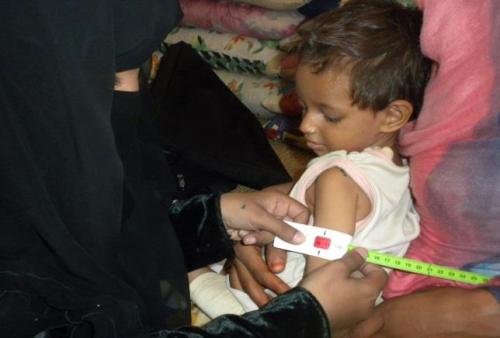
The volunteers at the village level in Abbs go to identify children with malnutrition. During the regular biweekly work of a volunteer in a village, using Mid Upper Arm Circumference (MUAC), when a child is identified with a MUAC of 11 cm, the volunteer gives a referral card and advises the mother or the caretaker to immediately refer that child the nearest Outpatient Therapeutic Care (OTP) program, which in Abbs is the district rural health center.

The mother has to go there by car so they rent one. The mother and child arrive at the waiting area of the health clinic and give the referral card. Then the child is weighed and the height is measured and if the Z score is -3 standard deviations according to the table chart for malnutrition, the child is admitted to the OTP after an appetite test for plumpy’nut is done to make sure there are no complications (fever, loss of appetite, or any disease causing deterioration of the consciousness of the child).

If the child passes the appetite test then a further clinical checkup is done and the child is given a one-week ration of plumpy’nut which is around 21-28 sachets per week (3 to 4 sachets per day), according to the child’s weight and height. The child then returns to the village but has to go the health center every week to get weighed and to be given the ration of plumpy’nut. Because of the constraints of transportation sometimes the child is given a two-week ration. The volunteers continue their screening and follow up with the children enrolled in the program.

The child is cured after eight weeks.

You can donate to help Yemen at UNICEF USA.

Article first published as Interview: Rajia Sharhan of UNICEF Yemen on Blogcritics.

Leave a comment

Filed under global hunger

UNICEF starts relief fund for children in Yemen

UNICEF USA has started a relief fund to help the suffering children of Yemen. You can donate to the fund here.

Children are suffering the effects of malnutrition and displacement after a year of political instability, as well as fighting between the government and militant groups. Some families are even living in caves after fleeing violence.

“Don’t be afraid, we are not going to harm you, we are here to take care of you,” says Hana to the little girl who clutches her doll, afraid of the strangers who have come to her house. Do they want to take her away from her mom? But Hana and her colleague are enumerators and are here to see if little Fatima is malnourished, if she needs treatment. Sadly a quick measurement of her arm with a special tape shows she is much thinner than she should be at her age. “Fatima has severe malnutrition,” says Hana. “We have to refer her immediately to the outpatient therapeutic center so she can get appropriate care.” Rasha Al-Ardi/UNICEF Hodeidah/2011

The latest UNICEF report showed that “58,338 severely acute malnourished children were treated… in the past 11 months.”

However, countrywide it is estimated that 4 million children suffer from severe malnutrition. Many more resources such as plumpy’nut are needed for UNICEF to treat these children.

Read more about UNICEF’s response to the crisis in Yemen in my interview with director Geert Cappelaere.

first published at Global Hunger Examiner.

Leave a comment

Filed under global hunger

Interview: Geert Cappelaere of UNICEF on the Humanitarian Crisis in Yemen

“Don’t be afraid, we are not going to harm you, we are here to take care of you,” says Hana to the little girl who clutches her doll, afraid of the strangers who have come to her house. Do they want to take her away from her mom? But Hana and her colleague are enumerators and are here to see if little Fatima is malnourished, if she needs treatment. Sadly a quick measurement of her arm with a special tape shows she is much thinner than she should be at her age. “Fatima has severe malnutrition,” says Hana. “We have to refer her immediately to the outpatient therapeutic center so she can get appropriate care.” Rasha Al-Ardi/UNICEF Hodeidah/2011

Most of the spotlight on Yemen is focusing on whether embattled President Ali Abdullah Saleh should be given medical treatment in the United States. Tragically lost in this debate are millions of Yemenis who are suffering from hunger, malnutrition, and disease.

The UN World Food Programme (WFP) estimates that over 7 million Yemenis (1/3 of the population) suffer from hunger. This figure is believed to be even higher considering the past year of unrest and violence in the country. Malnutrition rates among children are high, causing stunted physical and mental growth or even leading to death.

This year of political turmoil and protests against long-time president Saleh has led to shortages of basic goods and increased food prices. Aid agencies, who are low on funding, are struggling to keep up with the increasing calls for help.

Yemen is on the verge of a humanitarian disaster and little is being done to heed the warnings. The level of human suffering has the potential to plunge the country into complete chaos which would easily destroy hopes for peace and strengthen the Al-Qaida branch there.

As President Obama’s counterterrorism advisor John Brennan says, “As we have seen from Afghanistan in the 1990s to Yemen, Somalia and the tribal areas of Pakistan today, al-Qa’ida and its affiliates often thrive where there is disorder.”

UNICEF is trying desperately to provide aid to the most vulnerable segment of Yemen’s population: Children. In the following interview Geert Cappelaere, director of UNICEF in Yemen, discusses the fast-developing humanitarian crisis and how we can take action.

The recent United Nations report revealed a 31.7% Global Acute Malnutrition in Yemen’s Hodeidah Governorate. Isn’t that a malnutrition rate similar to the worst areas of starvation inside Somalia? Could Yemen be the next Somalia?

Yemen, unfortunately, has the highest rate of chronic malnutrition in the world with close to 60% of children reported as stunted. In some parts of Yemen, global acute malnutrition rates are indeed equal than in parts of drought and famine struck Horn of Africa, with 30% of those under 5 years of age being wasted (globally acute malnourished). Severely acute malnutrition levels are approaching 10% in certain pockets of the country. So the levels of chronic and acute malnutrition amongst Yemeni children are unprecedented in most part of the world.

Certainly, Yemen could be the next Somalia and very soon, if the world keeps watching with no action. UNICEF has been ringing the bell very loudly that we do not want the situation of children to turn into a humanitarian disaster.

Do UNICEF and other aid agencies have a full picture what is happening with hunger and malnutrition especially in rural, more isolated areas? Could the Hodeidah malnutrition findings tragically be the tip of the iceberg in Yemen?

UNICEF and humanitarian workers on the ground have made it clear that Yemen, which is already chronically underdeveloped, is on the verge of a humanitarian disaster. The situation is much worse than what people could imagine. Also our collective response has not been up to the challenge. Limited funding has led to a reduction in assistance, negatively impacting the nutrition and food security status of families already facing protracted displacement.

The recent findings of the UNICEF survey coming from Hodeidah are consistent with those findings coming from Hajja, for instance, and other parts of the country. Nearly one third of children surveyed suffer from either moderate or severe acute malnutrition – of which nearly 10 percent were severe cases. Wherever we go, wherever we survey, wherever we assess, we come to the same conclusions: levels of acute malnutrition in Yemen are incredibly high.

Yemen has suffered through war in the North between the government and rebels and recent fighting in the South with militants. This on top of tremendous political instability and violence this year. What kind of psychological toll is this taking on children growing up amid such displacement and violence?

Yemen is a country where children represent more than half of the population, which means more than 12 million. They bear the brunt of underdevelopment and a looming disaster. UNICEF is very concerned about the impact on children of years of underdevelopment, multiple wars and more recently a deep political crisis.

Even after intensive efforts by UNICEF, government and partners to bring children back to schools, nearly a quarter of a million children across Yemen face difficulties attending school. More than 180 schools in different parts of the country have been occupied or attacked by armed forces and armed groups, or are occupied by displaced communities.

The situation has significantly impacted the psychosocial well-being of children. In the conflict-affected northern governorates, one in three children reported feeling unsafe, sad or frustrated, suffered from diminished hope, fear, anger and hatred as well as experiencing difficulty sleeping. One in four experienced difficulties concentrating, and establishing trustful relationships. A household bi-weekly survey shows a sharply increased level of fear in places like Hodeidah when violence erupted in Sanaa – asserting that conflict affects all children throughout the country in some way or another.

How is UNICEF planning to aid children in Yemen during 2012? Do you have the needed resources?

Our humanitarian action plan for 2012 focuses on mainly relief operation giving a top priority to the fight against malnutrition. We have extended investments in WASH (water, sanitation and hygiene for schools), Education, Health and Child Protection. While keeping the focus on immediate relief operations, we shall not miss a single opportunity for re-engaging on mid- and longer term development.

UNICEF doubled its funding requirement in 2012 from that of last year to USD 49.6 million. We need all possible assistance to have it funded in a timely manner.

Tell us about the significance of plumpy’nut for Yemeni children.

It is one of the Ready-to-Use-Therapeutic Food (RUTF) life-saving food products that are designed to address the therapeutic needs of severely malnourished children. The fact that it does not need any preparation when giving it to children has tremendously been instrumental to reach out to remote areas where there are no health facilities and high rate of illiteracy among parents. Any adult can feed a malnourished child with ease, however, health workers need to follow on the progress and recovery to prevent any relapse.

How can people reach out and help UNICEF aid children Yemen? Can someone get involved?

Any possible help is welcome. I am glad to announce that individuals and organizations can make donation to Yemeni children online through this link.

We need also that the voice of Yemeni children is heard and that media is taking the lead to inform donors about the dire humanitarian needs in this country.

Is there a certain story or family in Yemen that stands out in your mind when you think of the plight of the country?

Well. They are numerous, and stories are generally similar. I would rather focus on the entire cohort of under-five children- who are about 4 million – who all need equal attention and care.

You can donate to help Yemen at UNICEF USA.

Article first published as Interview: Geert Cappelaere of UNICEF on the Humanitarian Crisis in Yemen on Blogcritics.

Leave a comment

Filed under global hunger

Remembering the Horn of Africa This Holiday Season

The UN World Food Programme and CARE team up to provide food to refugees who have fled Somalia (WFP/Mariko Hall). Both of these agencies are accepting donations for East Africa.

President Obama issued a statement last week thanking Americans who had donated to relief efforts in the Horn of Africa this year. He also cautioned that much more needs to be done to overcome the humanitarian tragedy of 2011.

Obama said, “As we enter the season of giving and renewal, more than 13.3 million people in Ethiopia, Kenya, and Somalia remain in urgent need of humanitarian assistance amid the worst drought the region has seen in 60 years. The heartbreaking accounts of lives lost and of those struggling to survive remind us of our common humanity and the need to reach out to people in need.”

The U.S. has a great tradition of leading the fight against famine wherever it occurs. In 1946, just a year after World War II ended, the threat of massive famine loomed over the globe as food supplies were running low. In this case, the paths of the U.S., Somalia, and Ethiopia crossed briefly.

Herbert Hoover, who was appointed food ambassador during this crisis, first reviewed the food supply of as many nations as possible. In this report were listed Somaliland and Ethiopia. Hoover writes “of self-sufficient nations in Africa, we classified Egypt, Ethiopia, Liberia, and Somaliland, with a total population perhaps of 35,000,000 people.”

There were no reports of drought that year in East Africa. Of course, any country not in food deficit at that time was a huge relief with the impending worldwide famine. It was going to be enough of a challenge to meet the food needs of the war-devastated countries.

Whether or not there is a drought is all about luck. In 1946 there was luckily none in East Africa. This year a different story–a huge drought.

What does not depend on luck though is how well nations are prepared to deal with drought. Many actions can be taken by the international community to help build up the resilience of farmers in developing countries so that when drought does hit, it is not catastrophic. Food reserves can also be in place to prevent a year of setbacks from drought and keep a country moving toward food security.

So, this is one of the lessons of this year. Invest in farmers today to avoid the famine of tomorrow.

Article first published as Remembering the Horn of Africa this Holiday Season on Blogcritics.

Leave a comment

Filed under global hunger, History