Tag Archives: school feeding

The Power of Film and Ending Child Hunger

This Sunday was the Global Hunger Summit in London hosted by British Prime Minister David Cameron. With the eyes of the world focused on the London Olympics, the idea was to shift some of that attention toward the global hunger crisis afflicting nearly one billion people.

Adrian Lovett, Europe Executive Director of ONE, says: “The Prime Minister and the Vice-President of Brazil deserve real credit for seizing this moment to insist on the same ambition in the race to end extreme hunger and malnutrition. For too long, this scourge has failed to receive the global attention it deserves. Efforts to provide children the nutrients they need to grow and thrive have been under-funded and under-resourced.”

But now that the summit is over, the action must begin with child feeding for infants and meals for school-age children.

First priority is to secure life-saving food for children under five years of age. At that age the children are most vulnerable to physical and mental damage from malnutrition. Then for children over five you start providing feeding programs at school to help them grow physically and mentally.

If every nation has a comprehensive school lunch program we could drastically reduce child hunger and poverty while giving every child a chance to learn or even become an Olympian. Interestingly, the last time the Olympics were held in London was in 1948 when Europe was struggling to recover from World War II. School meals played a big role in helping rebuild from the destruction

Back in 2008, I wrote a short film called “Ending Child Hunger: School Lunches for Kids Around the World.” The film premiered at the College of Mount St. Joseph in February of that year. Now today, the film has been updated with more material about why school lunches are so important. World leaders need to align their foreign policy in support of child feeding.

So sit back and enjoy the film. You will hear from lots of people including Dwight Eisenhower, Herbert Hoover as well as correspondents from the World Food Programme discussing school meals in developing countries. You will hear from those who benefit from the feeding programs the most: children and their families.

Ending Child Hunger: School Lunches for Kids Around the World from William Lambers on Vimeo.

Ending Child Hunger: School Lunches for Kids Around the World from William Lambers on Vimeo.

Article first published as The Power of Film and Ending Child Hunger on Blogcritics.

Leave a comment

Filed under global hunger, History

Olympic Torchbearer: Games Can Highlight Global Hunger Crisis

Vadsana Sinthavong carrying the Olympic Torch (WFP/Caroline Hurford)

The Olympic Torch Relay is underway in the United Kingdom leading up to the opening ceremonies of the Games in London. One of the Olympic torchbearers is Vadsana Sinthavong, who represents the largest hunger fighting organization, the UN World Food Programme (WFP).

Nearly one billion people worldwide suffer from hunger and malnutrition and WFP is active in over 70 countries. Vadsana works with the school meals program that fights child hunger in her home country of Laos.

Vadsana recently took a few moments to talk about her experience being part of this Torch Relay. She also talks about her mission trying to end global hunger and how she thinks the Olympics can play a role.

Tell us your reaction when you found out you were going to be the WFP representative at the Olympic Torch Relay?

I was in Vietnam, on vacation, and didn’t have access to the internet. All my colleagues started calling me — eventually they reached me to tell me the news. I thought it was so amazing. I couldn’t believe it — I was thrilled, just so happy. It’s a great honour for my family and for my country, too. I was very proud I would be able to represent WFP and our work with people watching from all over the world..

Are you experienced in running and relay races?

Not really. I never ran a relay before, and our sport lessons in school didn’t really include running. But when I was younger I walked a lot – to school, of course, but also many other trips were made on foot. One time when I was 11, I walked 40km in one day to bring a buffalo that was a present for my older brother on his wedding day. There were very few trucks at the time and our family could not afford one, so I had to walk.

But even though I didn’t run much before, I started preparing myself when I heard of my selection to carry the Olympic Flame. Even when I went to remote villages to do trainings and assessments for our school meals programme, I always found some time to train a little.

How important do you think school feeding is for any country to have a strong Olympic Team?

Well, first of all, with the daily nutritious snack we provide, children have more energy and they can concentrate better in school, and be more active during breaks. They have more opportunity to build their brains and bodies, and to become good sports people, or do anything else they want to achieve in life.

But I think the real impact is much more long term. In Laos, for example, every second child in rural areas is chronically malnourished. These children don’t grow up as tall or strong as they could be, and of course that also impacts their ability to be competitive in sports.

Studies have shown that educated children grow into men and women who produce and earn more, and who are less likely to have malnourished children. So school meals help prevent chronic malnutrition in future generations, and those kids will have a better chance to participate and succeed in the Olympics than their parents and grandparents did.

(Note: There is an interesting correlation between stunting rates in a country and Olympic performance; if broken down to per head of population, nations with high stunting rates are significantly underrepresented in regards to medal scores and team sizes at Olympic Games. You can find more information about this here: Banerjee, Abhijit and Esther Duflo (2011): Poor Economics. A Radical Rethinking of the Way to Fight Global Poverty. Chapter 2)

What role do you think yourself and the London Olympics can play in furthering the cause of ending child hunger?

The Olympics are one of those events that focus the attention of the world on one place. Even the Torch Relay leading up to the Games really engages people, both locally and from all over the world.

When I ran my portion of the relay early in the morning on a Sunday, but still so many people came to watch and cheer me on.

So the Olympics are a great opportunity to highlight the problem of child hunger and show how WFP fights hunger all over the world. I was so proud to be the one who represents WFP’s work in front of the eyes of the world.

Here in Laos, the main focus of my work is to cooperate closely with the Ministry of Education to assist them in building their own National School Meals Programme. The Lao Government recognizes the value of school meals in bringing children to school and keeping them in class longer, and they plan to ultimately provide school meals to every student in the country. I am very happy to be part of WFP’s effort to help Laos achieve this goal.

How far was your part of the torch relay? 

I ran quarter of a mile, or 300 meters, but it felt much shorter. This was such a special moment for me! I felt proud and happy to represent WFP, and was overwhelmed with the support from the people along the road who had come to see the Olympic Flame travel through Birmingham, even though it was so early in the morning on a Sunday. I could have run a lot farther – the moment was over much too soon.

What were some of the landmarks along your route? 

I started in front of Bullring Shopping Centre, and on my stretch of the relay I noticed a lot of Indian restaurants and shops. I was surprised, I didn’t know the UK is such a diverse country!

For more information about the World Food Programme visit their home page.

Article first published as Olympic Torchbearer: Games Can Highlight Global Hunger Crisis on Blogcritics.

 

Leave a comment

Filed under global hunger

The Challenge of Getting Food to Afghan Schoolchildren

Imagine you have been given a special assignment: to make sure every child in Afghanistan is able to receive school meals. If you are successful, you can save Afghan children from hunger and malnutrition. The meals will help children have the energy and strength to come to school and learn. In essence, you will be playing a huge role in building Afghanistan’s future.

Your mission begins. You line up funding, of course, or you won’t get anywhere. Once you have funding to purchase the food for the school feeding, can you buy it locally and help out Afghan farmers and food producers? Maybe you can, maybe not. You might need to mix local production with some imported food.

Then there is the transportation of the food. This is a decent challenge no matter where you are in the world. In Afghanistan though it is especially difficult as the road system is not well-developed. Weather can wreak havoc in parts of Afghanistan. There is also the issue of security for your food transport in a country plagued by conflict and unrest.


Stuck In The Mud in Afghanistan: Drivers have to dig trucks out of the mud or shovel dry dirt onto the roads in order to get vehicles moving again. (WFP / Hukomat Khan)

In a nutshell, these are some of the challenges facing the UN World Food Programme (WFP) as it tries to provide food for schoolchildren in Afghanistan. WFP is the largest food aid organization in the world and it is entirely voluntarily funded by governments and the public. WFP’s goal is to work with the Afghan government to provide meals for every child at school as well as take-home rations. This food also serves as an incentive for parents to send their children to school. The stronger the school feeding program, the stronger the enrollment and class performance.

Back in April WFP sent out a convoy of trucks to bring 200 tons of school meals to the remote Daykundi province of central Afghanistan. The mission had to be delayed briefly when violence flared up around the country. But WFP was determined to get the food there.


High Climbers: The unpaved roads – some at an altitude of more than 2,000 metres – become impassable in the winter months, and are left muddy and slippery in the spring. (WFP / Hukomat Khan)

Shershah Wahidi, the Senior Logistics Assistant, said, “The roads in this part of Afghanistan don’t usually reopen until late May. But we had to send food to these villages early this year because this region remains without food during winter. We wanted to make sure that supplies for the schools were in place in good time to convince students to start attending classes as early as possible.”


On The Edge: Many of the drivers working for WFP in Afghanistan have been driving these routes for more than 20 years. (WFP / Hukomat Khan)

A week-long trek, through rain, mud, and sometimes snow, followed. It was Afghanistan’s version of Mr. Toad’s Wild Ride, but WFP made the deliveries of high-energy biscuits and vegetable oil to the school feeding program.

Another convoy in June was not as fortunate. WFP reports: “On 4 June, a WFP convoy carrying food – 15 light trucks clearly marked with WFP logos – was attacked by anti-government elements in Parwan province. Although the drivers escaped unharmed, three trucks were burned, with their cargo of High Energy Biscuits lost.”

Funding for Afghan hunger relief continues to be an issue as WFP has “received less than one fifth of its 2012 funding needs so far” for its country operation. This includes the school feeding program as well as nutrition and food for work programs.

This shortage of food aid funding becomes a critical topic for debate as the US plans to reduce its Food for Peace program (Title II). The US makes donations through Food for Peace to countries around the world suffering from hunger. The less funding Food for Peace has, the less potential for donations to Afghanistan and other countries. The McGovern-Dole international school meals program is another US aid program whose funding is also being considered by Congress.

The World Food Program USA said last week that “recent congressional budget cuts reduce the impact of emergency funding by limiting both short- and long-term assistance programs. At a time when the need for food assistance is greater than ever, Title II programs should be fully-funded to improve the lasting success of the U.S. and recipient countries.”

It’s a daunting challenge getting food to Afghan schoolchildren. When one obstacle is cleared, another one is sure to present itself. What’s at stake is the future of every Afghan child as well as their country. If the children are fed and educated, Afghanistan can build a future of prosperity.


Biscuit Power: When distributed regularly to schoolchildren, high energy biscuits (HEBs) can act as an incentive for students to attend class regularly, as well as help to combat micronutrient deficiencies. WFP plans to give HEBs to nearly one million schoolchildren in Afghanistan this year. (WFP / Assadullah Azhari)


Buying Domestically: Most of the biscuits distributed by WFP in Afghanistan are imported from India, but WFP is working to build local capacity in order to buy more locally in future. (WFP/Silke Buhr)

Article first published as The Challenge of Getting Food to Afghan Schoolchildren on Blogcritics.

Leave a comment

Filed under global hunger

School Feeding Vital to Ethiopia As Drought Revisits Region

It is critical that the U.S. and international community ensure that child feeding programs are provided during this time of great drought and conflict throughout East Africa (WFP photo)

Lack of rainfall is placing Ethiopia at risk of a severe hunger crisis in the coming months. This development comes on the heels of last year’s massive drought which struck East Africa.

What is called the “Belg” rains in parts of Ethiopia were late in arriving this year. Crops have not been able to get planted in time.

A report from the UN World Food Programme (WFP) says in Amhara region “the area covered with Belg crops so far is less than 10 percent of the planned area….In view of the very late arrival of the rains and the associated limited planting so far, there is high probability for near total failure of Belg production in most Belg dependent areas of the country, especially those in Tigray, Amhara, and central and eastern Oromia regions.”

Coinciding with crop failures in these areas is an increase in food prices. A report from the U.S. Famine Early Warning System (FEWSNET) says, “Staple food prices have started rising again in many parts of the country, possibly due to the late start of the Belg. Prices typically do not start to seasonally rise until May.”

Ethiopia, which is also hosting refugees who fled the famine in Somalia, will need food assistance in the coming months. The school feeding program becomes urgent because this not only feeds hungry children but keeps them in school.

The World Food Programme (WFP) helps provide school meals in Ethiopia. WFP just earned a grant of 26 million dollars for Ethiopia from the U.S. Dept. of Agriculture’s (USDA) McGovern-Dole school meals program. However, these supplies can take as much as 6 months to arrive.

So WFP needs help covering the interim period until the McGovern-Dole “cavalry” gets there. With the drought and high food prices taking hold, the USDA and WFP will be working to ensure McGovern-Dole supplies arrive as soon as possible, and finding key interim sources of funding. WFP relies entirely on voluntary donations whether from the public or governments.

Judith Schuler, WFP information officer in Ethiopia, provides us an update on where WFP’s school meals program currently stands.

WFP is reaching 689,000 students currently. Do you hope to expand the program?

Currently WFP’s “Food-for-Education” programme is operational in 1186 schools in 6 regions. Because of resource constraints, there is no plan to expand school meal programme at the moment.

What is the funding shortage that you are currently facing?

The funding requirement for 2012 is US$ 28.5 million and the shortfall for 2012 is about US$ 17.4 million.

Is the school feeding a lunch/breakfast ration? Is there a take home ration aspect?

The school meal is provided either as a breakfast or a mid morning snack. But in schools where there are two shifts , the morning shift students receive the meal mid morning and the afternoon shift students receive the meal at mid-day before they start classes in the afternoon. A take home ration of vegetable oil is provided to girls to encourage attendance in the pastoralist areas of the country and where girls attendance is lower due to economic and cultural reasons. Currently 127,000 girls in pastoral areas are benefitting from the programme.

What percentage of the school feeding is for refugees and what is for the population of Ethiopia?

The School Meal programme for refugees is a separate programme and is run as part of the Refugee Operation. Currently, 35,000 refugee children in all refugee camps benefit from the programme. The regular School Meal programme targets 3 percent of the primary school children in the country.

Article first published as School Feeding Vital to Ethiopia As Drought Revisits Region on Blogcritics.

Leave a comment

Filed under global hunger

School Meals Vital for Kenya’s Recovery from Drought

School feeding can break the cycle of undernutrition. Children of parents who have spent more time in formal education are often less stunted and live longer. (WFP/Guillaume Bonn)

In my recent Cincinnati Enquirer oped I talked about how school breakfast makes a difference for hungry and malnourished children in Kenya. This extra meal, in addition to the school lunch, is pivotal for keeping children from suffering malnutrition at a time of national crisis.

As Kenya struggles to recover from the massive East Africa drought of 2011, school feeding is playing a critical role.

Enrollment surged last year in Kenyan schools where the UN World Food Programme (WFP) was providing meals. WFP has a program feeding 630,000 school children in support of Kenya’s national program. After the drought struck in 2011 parents were desperate to find a source of food for their children.

WFP found itself taking on about 200,000 more children and to keep the school feeding going they sometimes resorted to reduced rations. Funding is the issue. WFP relies on voluntary donations from the international community. With enough support WFP can reach more children and help stabilize a hunger crisis.

Funds are limited for the current drought relief mission in Kenya.

Charles Njeru of WFP Kenya says, “with additional funding we could do much more, and even become more innovative. For example, the school feeding impact evaluation of 2009 recommended that we pilot a midmorning snack in a selected district but this has not been possible due to funding constraints.”

WFP Kenya has benefited in recent years from funding by the U.S. McGovern-Dole program which sponsors international school feeding. But will McGovern-Dole support continue to help Kenya overcome this drought emergency?

Njeru says “we have just received our last mcgovern-dole funding this year. we are hopeful that the program will continue supporting (WFP Kenya)…. without these funds, our programme will definitely be adversely affected.”

WFP says rains have improved food security in some parts of Kenya. This encouraging development, coupled with enough support for food aid programs like school feeding, gives Kenya a chance to recover from one of the worst droughts in history.

Article first published as School Meals Vital for Kenya’s Recovery from Drought on Blogcritics.

In my recent Cincinnati Enquirer oped I talked about how school breakfast makes a difference for hungry and malnourished children in Kenya. This extra meal, in addition to the school lunch, is pivotal for keeping children from suffering malnutrition at a time of national crisis.

As Kenya struggles to recover from the massive East Africa drought of 2011, school feeding is playing a critical role.

Enrollment surged last year in Kenyan schools where the UN World Food Programme (WFP) was providing meals. WFP has a program feeding 630,000 school children in support of Kenya’s national program. After the drought struck in 2011 parents were desperate to find a source of food for their children.

WFP found itself taking on about 200,000 more children and to keep the school feeding going they sometimes resorted to reduced rations. Funding is the issue. WFP relies on voluntary donations from the international community. With enough support WFP can reach more children and help stabilize a hunger crisis.

Funds are limited for the current drought relief mission in Kenya.

Charles Njeru of WFP Kenya says, “with additional funding we could do much more, and even become more innovative. For example, the school feeding impact evaluation of 2009 recommended that we pilot a midmorning snack in a selected district but this has not been possible due to funding constraints.”

WFP Kenya has benefited in recent years from funding by the U.S. McGovern-Dole program which sponsors international school feeding. But will McGovern-Dole support continue to help Kenya overcome this drought emergency?

Njeru says “we have just received our last mcgovern-dole funding this year. we are hopeful that the program will continue supporting (WFP Kenya)…. without these funds, our programme will definitely be adversely affected.”

WFP says rains have improved food security in some parts of Kenya. This encouraging development, coupled with enough support for food aid programs like school feeding, gives Kenya a chance to recover from one of the worst droughts in history.

Article first published as School Meals Vital for Kenya’s Recovery from Drought on Blogcritics.

Leave a comment

Filed under global hunger

Sahel Food Crisis: An Interview with Célestine Ouédraogo of WFP in Burkina Faso

School feeding opens new opportunities for children in developing countries. (WFP/Anne Poulsen)

With the food crisis escalating in the Sahel region of Africa, it’s urgent that children be protected from hunger and kept in school.

In Burkina Faso, one of the affected Sahel countries, the UN World Food Programme (WFP) provides school feeding for impoverished children. These meals take on even more importance during the current hunger emergency.

When drought strikes, families are more likely to remove their kids from school and keep them home to work. However, If there is food available at the school then parents are more likely to keep their children enrolled.

In this interview Célestine Ouédraogo of WFP updates us on the status of school feeding in Burkina Faso as the Sahel food crisis unfolds.

How many children are receiving WFP school meals in Burkina Faso?

Each year 90,019 children enrolled in 691 schools in the Sahel Region benefit daily from a flour-based fortified breakfast and couscous-based lunch. In addition to the meals served in schools, 9,510 girls enrolled in the last two grades are receiving a take-home ration of 10 kg of cereals per month, which encourages parents to keep the girls in school and enable them to complete the primary school cycle.

Are these schools in the areas affected by the drought?

Yes, all these schools are in the areas affected by the drought.

The Sahel region is one of the most food-insecure regions, and has among the highest rates of malnutrition.

Does WFP intend to expand school feeding in Burkina Faso?

No.

Does WFP have enough resources to provide school meals for at
least the rest of the year?

YES, thanks to the generosity of 2/3 donors, we have been able to secure funding up to end of 2012, which is essential if we want to ensure that children can pursue their education despite the food insecurity that the country is facing this year.

For more information please visit the World Food Programme.

Article first published as Sahel Food Crisis: An Interview with Calestine Ouedraogo of WFP in Burkina Faso on Blogcritics.

Leave a comment

Filed under global hunger

Sahel Food Crisis: An Interview with Aboubacar Guindo of WFP in Mali

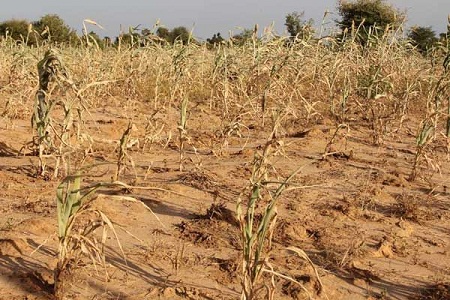
A field of withered crops in the Mali’s Kayes region. Drought has ruined food supplies in the Sahel region of Africa, which includes the countries of Mali, Niger, Mauritania, Burkina Faso, Cameroon, Senegal, and Chad. (WFP/Daouda Guirou)

Almost nine million people urgently need food assistance in the Sahel region of Africa following a severe drought. And time is running out to prevent a massive humanitarian disaster.

Josette Sheeran, the director of UN World Food Programme, says, “The needs of the millions affected by drought in the Sahel are enormous, and the time to act is now.”

Mali is one of the countries caught in the crisis. Mali is not only contending with drought but also conflict in the North between a rebel group and the government. The fighting is creating additional displacement and hunger.

WFP runs school feeding in Mali to save children from hunger and malnutrition and keep them in class. But will there be enough support to keep the program going during this food crisis? WFP depends on voluntary donations to fight hunger around the globe.

Aboubacar S. Guindo, a WFP school feeding officer, talks about where Mali’s program stands now as we head into critical months of this hunger emergency.

How many children are receiving WFP school meals in Mali? Is this a breakfast or lunch ration?

Actually, we are feeding 156,666 kids in 729 schools in the country. They do receive hot meals generally served at midday. In addition to that, the Government undertook under the national budget to cover an additional 651 schools (117.000 children) who are also benefiting from hot meals.

Are these schools in the areas affected by the drought conditions?

Yes, most of the schools are based in the area affected by the drought that results in communities’ increasing vulnerability. The government through the Early Warning System identified 159 communities that are the most affected by this crisis. To respond to this, WFP elaborated an Emergency Operation (EMOP) with a School Feeding component to avoid important drop-outs that schools used to face in this type of crisis. The EMOP will also include nutrition, food for work, and cash components.

In the affected communes all the assisted schools from both government and WFP programs will receive a complimentary meal made of enriched cereals (supercereal) as breakfast. We are planning to assist 150,000 kids under this initiative.

Does WFP intend to expand the program?

For now, the extension WFP will do concerns the coverage of the schools affected by the drought. We are more likely to reinforce government abilities to develop and implement a National SF programme.

Does WFP have enough resources to continue providing the school meals?

Funding is the biggest challenge. We have been obliged last year to reduce the numbers of meals in the northern region due to reductions in funding. In addition to food insecurity, WFP is assessing the needs of the internally displaced due to conflict in the north. This assessment may show in an increase in needs.

We hope to have more contributions from local and international donors in order to continue to provide our support to communities as well as the government so that hunger does no longer constitutes a barrier to the education of any children in Mali.

For more information please visit the World Food Programme.

Article first published as Sahel Food Crisis: An Interview with Aboubacar Guindo of WFP in Mali on Blogcritics.

Leave a comment

Filed under global hunger

Save the Children Starts School Meals for Somali Refugees

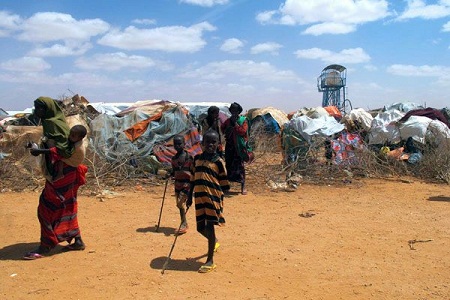
Scene from a refugee camp in Ethiopia where Somalis fled to when food supplies ran out in their homeland. What future do these children face? (WFP/Natasha Scripture)

Imagine if you were a child living in the Gebo and Bay regions of Somalia last summer. Instead of having the opportunity to go to school in the fall you were trapped in a massive drought zone. With food supplies low your family would be forced to flee the region as a matter of survival.

Starting in the summer of 2011 streams of hungry Somalis fled Gebo, Bay and other crisis areas. Some parts of Southern Somalia were declared in famine as starvation had set in. The drought, combined with conflict, placed over 13 million people were put at risk of starvation in Somalia and other countries in East Africa.

Thousands of residents of Gebo and Bay are now in the Kobe and Hilaweyn refugee camps in Ethiopia and depending on relief from aid agencies. Save the Children is helping kids within these camps by providing emergency education and school meals. The meal will be a porridge, made of a corn-soy blend, served as a breakfast at school.

In addition Save the Children wants to provide school meals to children in the Melkadida and Bokolmayo camps, also in Ethiopia.

Save the Children hopes to provide meals to 8,037 children who are currently receiving emergency education in these four refugee camps.  And they want to expand the program to reach more children. There are 43,966 school age children in the four camps.

Save the Children is also working on the construction of schools to expand educational opportunities.

The school meal program, with supplies from the UN World Food Programme, will improve child nutrition. It’s also expected to improve enrollment and enhance the teaching and learning process.

Funding though is critical. Save the Children says resources for the program is expected to run out later this year. That is where the public can help by supporting Save the Children’s East Africa appeal.

Article first published as Save the Children Starts School Meals for Somali Refugees on Blogcritics.

Leave a comment

Filed under global hunger

Mauritania School Meals Run Out as Drought, High Prices Strike

Impact of Drought in Mauritania: The recent rain deficit in Mauritania has had a severe impact on the land. Many animals have died due to lack of fodder and water leaving families without livestock. (Jacqueline Seeley/WFP)

The hunger emergency in the Sahel region of Africa is fast escalating. Drought and high food prices are taking their toll among millions of already impoverished people across several nations.

Mauritania is one of the countries trapped in this crisis. The UN Food and Agriculture Organization (FAO) reports, “Dry spells and poor rainfall distribution during the growing period (July to October) resulted in a sharp decline in cereal production. The 2011 cereal output was estimated…about 53 percent below last year and 39 percent below the previous five years average.”

The ranks of the hungry in Mauritania are rapidly increasing. FAO says there could be over one million people now “food insecure” out of a population of three million. These are families that are already living in poverty and not able to cope with dramatic price increases.

At a time of low crop production and high food prices, the safety net of school meals for children becomes ever so valuable. However, the UN World Food Programme (WFP) is so low on funding that supplies are about to run out for the breakfast and lunch it has been providing to schoolchildren throughout Mauritania.

At a time when school feeding should be expanded, in Mauritania it is days away from coming to an end. WFP relies on voluntary donations from the international community.

Jacqueline Seeley, WFP information officer, provides us with more details in the following interview.

How many children are currently taking part in the WFP school feeding program in Mauritania?

145,633 children.

Are the schools in areas impacted by the drought and high food prices?

Yes, greatly. There is presently no funding in the pipeline for the school feeding and given the current crisis, the school feeding programme ensures that children at least receive two meals per day. This takes a large burden off of vulnerable families…as of the end of February families will be forced with the challenge of finding ways to feed their children.

Does WFP have enough resources to continue the meals program?

No. Food in the pipeline lasts until end of February, but after that, there will be nothing. No financing is foreseen given the urgency of the crisis as all donors prefer to finance the emergency response.

Are there more children who need these meals?

This caseload of 145,633 is the maximum caseload we planned for 2012; however the need of children who are hungry is higher, yes, especially with the food crisis.

How can someone get involved with helping WFP Mauritania?

Through wfp.org, money can be sent to WFP to support its operations. For direct contributions to Mauritania, contact jacqueline.seeley@wfp.org.

Article first published as Mauritania School Meals Run Out as Drought, High Prices Strike on Blogcritics.

Leave a comment

Filed under global hunger

Sahel Food Crisis: School Meals Needed in Chad as Hunger Deepens

The African nation of Chad is in the middle of a hunger crisis as drought has struck, ruining the country’s food supply. Chad is part of the Sahel region of Africa which in recent months has seen poor crop production. Hunger and malnutrition are growing, and the international community needs to act fast to avert a massive humanitarian disaster. (see Sahel Food Crisis: Race Against Time To Save Lives.)

Many families have less food, and what food is available on the market has gone up in price significantly. Many of these families are already living on fewer than 2 dollars a day so any increase in food prices is extremely serious.

The United Nations World Food Programme (WFP) is providing school feeding in Chad as part of its response to the crisis. These meals not only save children from hunger but also keep them in school and learning.

When a hunger crisis hits a community, children often drop out of school to help earn wages for the family. This negative coping strategy denies children education and may even put them in danger.

Critical for Chad will be ensuring that school feeding is continued through the upcoming months when the food shortages will be at their worst. Malek Triki, WFP information officer, provides us an update on the school feeding response in Chad.

How many children are currently receiving school meals through WFP in Chad?

Currently, 205,000 schoolchildren (of which 45% are girls) are receiving schools meals in 790 primary schools across Chad. WFP plans to assist more than 250,000 school children in 2012 and around 265,000 in 2013.

Are the schools in communities impacted by high food prices and/or drought?

Yes, most of the schools assisted by WFP are located in areas affected by high food prices and the drought, especially in the Sahelian zone. The poor harvest means that the food availability is highly reduced, which translates into high food prices on local markets. Schoolchildren will depend more and more on school meals as their main source of food.

What are the latest reports of nutrition levels among school children?

Schoolchildren are in the age category of 7 to 14 years, which falls out of the age category targeted by nutrition surveys in Chad (under 5). However, the global acute malnutrition levels stand at 16% – beyond the emergency threshold rate of 15%.

Does WFP have enough resources to carry out school meals in the coming months?

If the current level of funding doesn’t improve, WFP will not be able to carry out school meals in the coming months. Out of about US$ 10 million required for the year 2012, only US$ 2 million have been secured. There is an urgent need to have funds to purchase over 5000 Mt of assorted commodities including MML, pulses, oil and salt.

For more information visit the World Food Programme.

Article first published as Sahel Food Crisis: School Meals Needed in Chad as Hunger Deepens on Blogcritics.

Leave a comment

Filed under global hunger