Tag Archives: nuclear arms control

G-7 Urges Treaty Ending Nuclear Testing

The G-7 nations issued a declaration on nuclear weapons this week. Canada, France, Germany, Italy, Japan, the United Kingdom, and the United States called for a world without nuclear weapons.

To help achieve nuke disarmament the G-7 is urging passage of the Comprehensive Nuclear Test Ban Treaty (CTBT). This treaty would end all types of nuclear test explosions. Prior treaties had placed limitations on nuke tests, but not a complete ban. Ending nuke testing is an essential step toward establishing the conditions where disarmament can take place.

The declaration reads, “Early entry into force and universalization of the Comprehensive Nuclear-Test-Ban Treaty (CTBT) is in the security interests of every nation. States that have yet to sign or ratify the Treaty should do so without waiting for others.”

There are currently eight nations who have yet to ratify the treaty, and thus preventing it from taking effect. These countries include the United States, China, North Korea, Israel, Iran, Egypt, India and Pakistan.

The U.S. Senate rejected the treaty in a 1999 vote. President Obama supports the CTBT, but has not resubmitted to the Senate. Many believe passage by the Senate is more possible now than before. There is increasing confidence in the science behind the maintenance of nuclear arsenals without test explosions. This was a major concern when the Senate voted against the CTBT.

The G-7 is also urging nations to support the Treaty’s international monitoring system for detecting nuclear explosions. Hundreds of detection stations have been set up around the world. This system is critical for making sure other nations do not cheat the treaty and conduct test explosions in secret. However, the system will not be fully functional until the treaty has taken effect.

The declaration also reads, “We also welcome the establishment of the Group of Eminent Persons and support its activities, which will inject new energy and dynamics into the push for entry into force.”

What is needed to get the CTBT approved is active public support across all nations. Groups with a strong following like Global Zero, the Ploughshares Fund and others may hold the key to gaining that support.

The alternative is frightening. The resumption of nuclear testing would heighten international tensions, end disarmament hopes and increase the already expensive burden of nuclear arsenals. Other nations will be encouraged to build nuclear weapons, should the current powers resume testing.


Leave a comment

Filed under nuclear weapons

Building the Case for the Comprehensive Nuclear Test Ban Treaty

To achieve global nuclear disarmament, a treaty banning nuclear weapons testing needs to be in place. However, there are currently eight nations who have yet to ratify the Comprehensive Nuclear Test Ban Treaty (CTBT): China, North Korea, Egypt, India, Iran, Israel, Pakistan and the United States.

There is strong support for this treaty, but not everyone is on board yet, especially in the United States Senate. Yet, the consequences of returning to nuclear weapons testing would be a disaster. More nations would test their weapons and others would be encouraged to develop them. It would be almost impossible to gain further cuts in nuclear arsenals under those conditions.

The focus is gaining the confidence of those who are unsure of the treaty. Concerns over the ability to detect nuclear explosions in violation of the CTBT is one issue. Another is the ability to maintain current arsenals without testing.

A report from the National Research Council in 2012 showed that the U.S. did not need nuclear test explosions to maintain its nuclear weapons arsenal.

Ellen D. Williams, who led the committee that authored the report said, “So long as the nation is fully committed to securing its weapons stockpile and provides sufficient resources for doing so, the U.S. has the technical capabilities to maintain safe, reliable nuclear weapons into the foreseeable future without the need for underground weapons testing.”

The report also verified that the detection system for nuclear explosions has improved and is reliable. The capability to detect nuclear explosions has been developed little-by-little really since the Cold War. This research has improved and built the international monitoring system that the CTBT now uses. That monitoring system will improve even more once the treaty takes full effect. More detection stations will come online.

Ratification of the treaty by the Senate is huge because U.S. leadership is so vital for building nuclear security and peace worldwide. It’s hard to imagine at this time other nations approving this treaty if the U.S. does not.

The idea of ending nuclear weapons testing has been one historically shared by Democrats and Republicans. It was their cooperation that forged the first limited treaty that banned nuclear weapons testing in the atmosphere, underwater and outer space. In fact, both Dwight Eisenhower and John Kennedy championed the idea of ending all nuclear testing.

That same cooperation could again rise to the challenge. If it does we would achieve an important step toward reducing the nuclear danger and the massive cost of these weapons. The Comprehensive Nuclear Test Ban Treaty is that hurdle that must be cleared first.


Leave a comment

Filed under nuclear weapons

Nuclear Peace Emerging in the Middle East

Last year ended with some momentum toward ending the standoff over Iran’s nuclear program. If a comprehensive agreement can be forged this year, it will be a major step toward freeing the world of the costly and dangerous burden of nuclear weapons.

Iran has suffered from sanctions for failing to live up to obligations under the Nuclear Non-Proliferation Treaty. A report from the International Federation of Human Rights stated the consequences for the Iranian people:

Read the full article at The Huffington Post

Leave a comment

Filed under nuclear weapons

My Oped in the Des Moines Register on Nuclear Weapons

When President Obama and Mitt Romney take to the stage for a foreign policy debate on Oct. 22, nuclear weapons are sure to come up, especially Iran’s ambitions for the bomb. But the debate should also focus on the countries that actually have nukes, including Russia, China, North Korea and rivals India and Pakistan.

Read the article at the Des Moines Register


Leave a comment

Filed under History

Petition Calls on Senate to Ratify Comprehensive Nuclear Test Ban Treaty

Nuclear Weapons Test during the 1950s. (National Archives photo)

A new petition at CARE2 calls on the Senate to ratify the Comprehensive Nuclear Test Ban Treaty (CTBT). The treaty bans all nuclear weapons test explosions.

The Senate has to ratify the treaty for the U.S to join. Nine countries, including the United States, still need to ratify the treaty for it to enter into force. The other eight countries include China, Egypt, India, Indonesia, Iran, Israel, North Korea and Pakistan. Russia has already ratified the CTBT.

Ellen Tauscher, Undersecretary for Arms Control, says, “The CTBT is central to leading nuclear weapons states toward a world of diminished reliance on nuclear weapons and reduced nuclear competition.”

The petition reads:

We the undersigned ask you to ratify the Comprehensive Nuclear Test Ban Treaty (CTBT). A global ban of nuclear test explosions benefits U.S. national security.

The CTBT is a step toward nuclear disarmament. The treaty is a step away from a costly arms race which new nuclear test explosions would certainly invoke.

Nuclear weapons spending drains our society of resources better spent on domestic and international priorities. Ratification of the CTBT will be vital for moving forward on further agreements related to worldwide nuclear disarmament.

Our Stockpile Stewardship Program can maintain our current nuclear arsenal. The CTBT international monitoring system will ensure there is compliance with the treaty globally.

The threat of nuclear war, nuclear terrorism and the massive cost of nuclear arsenals make the CTBT very much in our interest. We ask that you support ratification of the Comprehensive Nuclear Test Ban Treaty (CTBT).

Thank you for reading this petition.

You can sign the petition at CARE2

Leave a comment

Filed under nuclear weapons

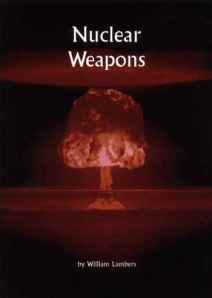
Nuclear Weapons

This concise book traces the history of nuclear weapons from World War II through the Cold War to the present day. You will also read about issues such as the proliferation of nuclear weapons, nuclear testing, the Comprehensive Test Ban Treaty and nuclear terrorism. This book also examines efforts to use nuclear energy for peaceful purposes as proposed by President Dwight Eisenhower in his “Atoms for Peace” speech. This edition includes a report prepared by the U.S. Strategic Bombing Survey titled “The Effects of the Atomic Bombings of Hiroshima and Nagasaki.”

Table of Contents
Chapter One: The Atomic Bomb
Chapter Two: Nuclear Weapons and the Cold War
Chapter Three: Atoms For Peace and Open Skies
Chapter Four: Nuclear Weapons and the Public
Chapter Five: The Cuban Missile Crisis and the Limited Test Ban Treaty
Chapter Six: Nuclear Proliferation
Chapter Seven: The Comprehensive Test Ban Treaty
Chapter Eight: Nuclear Terrorism
Chapter Nine: Conclusion
Appendix -The Effects of the Atomic Bombings of Hiroshima and Nagasaki
Memorandum by the Chief of Staff, U.S.
Air Force to the Secretary of Defense on
Long Range Detection of Atomic Explosions
Memorandum of Conference with the President
Documents on Nuclear Test Ban Negotiations
Facts About Fallout
Worldwide Reaction to Communist China’s Third Nuclear Explosion
Joint Statement of the Fourth Round of the Six Party Talks Beijing, September 19, 2005
An Antarctic Solution for the Koreas
Index

Nuclear Weapons is available from

Amazon.com

Google Ebookstore

Barnes and Noble

1 Comment

Filed under Books, History, nuclear weapons

Nuclear Test Ban Treaty Negotiations

The Road to a Treaty Ending Nuclear Weapons Testing

The Comprehensive Nuclear Test Ban Treaty (CTBT)  bans all nuclear weapons test explosions.  The treaty has not yet entered into force as eight countries: China, Egypt, India, Iran, Israel, North Korea, Pakistan and the United States, have yet to ratify the CTBT.

Efforts to achieve a treaty ending nuclear weapons testing go back to the Cold War. Here is video footage and documents of test ban treaty efforts leading up to the present day.

President Dwight Eisenhower’s Statement on the Suspension of Nuclear Testing on August 22nd, 1958

Read an article in the Cincinnati Enquirer about the power of the hydrogen bomb (March 18, 1957)

Read a memorandum of a meeting in which President Eisenhower and British Prime Minister Macmillan discuss the importance of a nuclear test ban treaty. (courtesy Eisenhower Library)

Short Video of President Eisenhower Talking About a Letter He Wrote to Nikita Khrushchev in Which He Proposed a Limited Nuclear Test Ban.

Books on the history of nuclear weapons and the test ban treaty

The Road to Peace

Nuclear Weapons

Leave a comment

Filed under History, nuclear weapons