Category Archives: Yemen

Enter Plumpy’nut: The Life-Saving Food So Desperately Needed in Yemen

Yemen is living in peril with dangerous political instability, and violence in the south between the government and suspected Al-Qaeda militants.

UNICEF Nutrition Officer Dr. Rajia Sharhan holds a young child at a therapeutic feeding centre in Sana'a, the Yemeni capital. (UNICEF Yemen/2011/Halldorsson)

But for a newborn child in Yemen, the greatest danger lies in lack of nutrition, for their future hinges on whether they can receive it.

The first 1000 days of life are the critical window for children. If they do not receive the right foods, they can suffer lasting physical and mental damage. If this irreversible damage occurs, it will mean stunted growth, increased health problems, and an inability to learn. If you have this occurring in a country, you cannot progress.

The United Nations World Food Programme (WFP) reports: “Half of Yemen’s children are chronically malnourished and 1 out of 10 does not live to reach the age of five. Such emergency levels of chronic malnutrition – or stunting – are second globally only to Afghanistan, the proportion of underweight children is the third highest in the world after India and Bangladesh.”

Enter Plumpy’nut. This is a special peanut paste that if given to children can rescue them from the potentially deadly malnutrition. It is desperately needed in Yemen. But not enough funding is provided to aid agencies for this to happen. Child hunger issues are often the victims of policy planning by the international community. Not enough emphasis is given.

If you want to help Yemen, send them Plumpy’nut. UNICEF is trying to provide “Plumpy” to as many malnourished Yemeni children as possible.

Dr. Wisam Al-timimi of UNICEF says: “We are planning to reach 36,000 severely acute malnourished children” at a cost of US$ 4.6 million. But there are 90,000 such cases of severely malnourished children in the country. More funding and resources would be needed to reach all of them. These are the most severe cases. Many other children are suffering from malnutrition.”

There are 450,000 children under five suffering from acute malnutrition and another 360,000 suffering from moderate acute malnutrition. These are different levels of the basic threat of malnutrition.

In short, small children are desperately in need of life-saving and life-changing food in Yemen. This takes on even more urgency when you consider that food prices have gone up in recent months in Yemen. There is more displacement in the south due to fighting, so the numbers of small children at risk is likely to increase in the coming months.

Dr. Al-timimi explains: “Cases of malnutrition is piling up now and soon we’ll be in a real humanitarian crisis; the same is applied as that group of very young children (that cohort who is enduring the political turmoil and absorbing the shocks) are currently at different stages of malnutrition and at the same time not receiving their routine vaccines…… unvaccinated children and malnutrition is a ticking time bomb.”

The best way the international community can help Yemen is through nutrition/health. These are the foundations of peace and progress in Yemen. It starts with plumpynut and health care for the youngest of children. It means supporting underfunded food aid programs run by the World Food Programme. It continues with building longer-term food security so foods like Plumpy’nut will no longer be needed.

It means looking down the road in Yemen, and staying ahead of the disaster of hunger and malnutrition. Acting now will be relatively inexpensive as opposed to waiting for a massive disaster to occur.

Article first published as 1000 Days of Peril in Yemen: The Children Must Be Fed on Blogcritics.

Tune in to NBC Nightly News on September 1st at 6:30 to see a story on plumpy’nut producer Edesia.
2 Comments

Filed under Edesia, malnutrition, Middle East, plumpy'nut, UNICEF, World Food Programme, Yemen

Could Yemen be the Next Somalia?

UNICEF Nutrition Officer Dr. Rajia Sharhan holds a young child at a therapeutic feeding centre in Sana'a, the Yemeni capital. (UNICEF Yemen/2011/Halldorsson)

With months of political unrest layered upon an already hungry and impoverished population, a humanitarian catastrophe is unfolding in Yemen. The suffering is taking place on many fronts.

Recent fighting in southern Yemen between the government and suspected Al Qaeda militants is causing displacement and malnutrition, particularly among children. There are also hundreds of thousands of displaced persons from a conflict in the North who need humanitarian assistance. Many Yemenis are impacted by high food prices.

Add this together and you have a Somalia-size humanitarian disaster potentially in the offing – that is, if no action is taken. In an IRIN News story Geert Cappelaere of UNICEF says, “Yemen could become the next Somalia as child malnutrition is as big as it is in the Horn of Africa.”

Even before the political unrest began, aid agencies like the World Food Programme and UNICEF were short on funding and unable to reach all those in need. Hunger and malnutrition were severe problems. Food prices were high .

Instability has resulted in a shortage of fuel, electricity and other basic services. Food prices have skyrocketed even higher. Families have skipped meals or cut back on certain food items needed for a healthy diet.

A gradual breakdown of public services is taking place. When this happens, it creates a devastating domino effect that is often silent and potentially deadly. You have the most dreaded scenario unfolding: unvaccinated and malnourished children.

A recent UNICEF report states, “Governorates continue to report an average of 20% non-operational vaccinating facilities, either because health workers are unable to travel to the health facilities or cold chain refrigeration is disrupted due to lack of electricity and gas.”

Dr Rajia Ahmed Sharhan of UNICEF says, “Families are finding it difficult to go to health facilities due to the high cost of transport especially when they are from villages and are far from health centers.” The result is fewer visits by families to get what they most desperately need.

When health interventions can be applied, they are enormously successful. Take for instance the miracle food plumpy’nut, which needs to be in full supply in Yemen to treat child malnutrition.

Dr. Sharhan says, “Children who have received plumpy’nut were cured from malnutrition within 45 days maximum…some get cured very fast within 30 days. You can see the results immediately.” Plumpy’nut rescues children from lifelong physical and mental damage that can occur early in life from lack of nourishment. Imagine what long-term change could occur in Yemen if a whole generation of children could be saved from the damaging malnutrition.

UNICEF should be provided with a full supply of plumpy’nut to treat all the cases of malnutrition. It would be an inexpensive investment for the international community to make. Ultimately, it is the most important.

A coalition of nations could intervene now and ease the humanitarian crisis taking place in Yemen. This means full support of UNICEF , the World Food Programme and other aid agencies operating there.

Now is the time for this intervention, rather than waiting till you have an epic-scale humanitarian disaster. Enough warnings have been sounded.

Article first published as Could Yemen be the Next Somalia? on Blogcritics.

Leave a comment

Filed under malnutrition, plumpy'nut, Somalia, UNICEF, Yemen

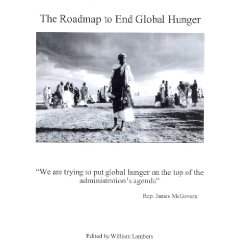
The Roadmap to End Global Hunger

During 2009 the global hunger crisis escalated with the number of people suffering from hunger climbing over one billion. This great humanitarian crisis calls for action on the part of world leaders. In countries like Afghanistan, Yemen, Iraq, Pakistan, Somalia and Sudan hunger threatens hopes for peace. This book includes press releases, interviews and perspective on The Roadmap to End Global Hunger legislation in Congress. This bill (H.R. 2817) was introduced during 2009 by U.S. Representatives Jim McGovern (D-Mass.) and Jo Ann Emerson (R-Mo.). The legislation is based on the recommendations made by groups such as Save the Children, Catholic Relief Services, Mercy Corps, Friends of the World Food Program, World Vision and others. Inside you will hear from offiicials from these organizations as they discuss the Roadmap and its importance in fighting hunger. Also you will see how you can get involved to support the Roadmap to End Global Hunger. Also included in the book is a special historical perspective section on Fighting Hunger and World War II.

The Roadmap to End Global Hunger is available from:

Amazon.com

Google Ebookstore

Leave a comment

Filed under Afghanistan, Catholic Relief Services, drought, East Africa, global hunger, History, Ivory Coast, Kenya, malnutrition, Mercy Corps, Save the Children, School feeding, Somalia, Sudan, The Roadmap to End Global Hunger, West Africa, World Food Programme, World Vision, World War II, Yemen

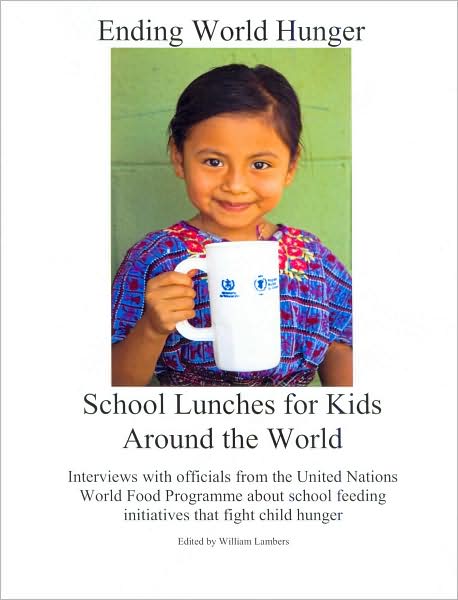
Ending World Hunger: School Lunches for Kids Around the World

The book Ending World Hunger: School Lunches for Kids Around the World features over 50 interviews with officials from the United Nations World Food Programme, Catholic Relief Services, World Vision, the Barefoot Foundation and ChildsLife International. Each interview shows the status of these critical child feeding programs and the potential for expanding them to achieve universal school feeding. The interviews also focus on the impact school meals have for children in developing countries as well as how people can help these programs. Some of the countries profiled are Afghanistan, Sudan, Colombia, Somalia and Pakistan. The interviews published in the book originally appeared online at Blogcritics magazine. The interviews were arranged by William Lambers in conjunction with the UN World Food Programme office in Washington DC.

Ending World Hunger is available at:

Amazon.com

Google Ebookstore

Barnes and Noble

View the short film Ending Child Hunger: School Lunches for Kids Around the World from William Lambers on Vimeo.

1 Comment

Filed under Afghanistan, Books, Catholic Relief Services, East Africa, Ivory Coast, Kenya, malnutrition, School feeding, Somalia, Sudan, West Africa, World Food Programme, World Vision, Yemen

Humanitarian Aid Needed Long After Guns Fall Silent

10-month old Sara has been found to be malnourished, and will receive treatment to make her strong and healthy again. Even before the conflict, already one in three children under 5 years old in Côte d'Ivoire was suffering from chronic malnutrition (Photo: Annie Bodmer-Roy/Save the Children)

Earlier this year I wrote several stories about the conflict in the Ivory Coast. A disputed presidential election led to violence which displaced hundreds of thousands of people in the West African nation. While the post election violence has subsided, the scars remain. Hunger is still on the attack.

Annie Bodmer-Roy of Save the Children says, “The international perception is that because levels of violence have died down and the country has a president, the crisis is now resolved. This is not the case. Our teams are on the ground, speaking to children and their families and witnessing the horrible conditions that these people are still living in – we know that the humanitarian crisis is far from over.”

As we honor World Humanitarian Day , this is an important concept to note, not just for the Ivory Coast but for any conflict-affected area. Hunger and sickness are the companions of warfare. These scourges last much longer than the actual fighting itself. The Ivory Coast is one of these examples.

Think of your own community and how daily life plays itself out. And then imagine the unthinkable, a war striking. Basic things that you see every day, like food deliveries and shopping at stores, would cease. Housing would be destroyed, leaving many trying to find basic shelter. Imagine large-scale displacement, on foot mostly, as fuel deliveries have stopped. Farms that produce food may be damaged. Health clinics may be destroyed or unable to get deliveries because transportation systems are not functioning. Medical care would decline.

Once a war ends, these repairs to basic life must begin. It’s bad enough for any community to go through such a rebuilding process, but imagine areas that were already impoverished. Their resiliency would be far less. The same reconstruction pains often take place with recovery from natural disasters. In East Africa, for instance, recovery from the massive drought there will take years.

The key is maintaining focus on areas once the headline-grabbing conflict ends. For example, in Yemen very little coverage is given to the hundreds of thousands of displaced persons from the Sa’ada War in the northern part of the country. The fighting there too has subsided, but great suffering remains. In Southern Sudan, many are still struggling to recover from conflict with the North. Fighting earlier this year displaced hundreds of thousands of people. But you hear little of their plight in the headlines.

World Humanitarian Day is to honor the dedication of those helping in the many crisis points around the globe. It’s also a time to remember that humanitarian aid is still needed even long after the guns fall silent in a war zone. Just because news coverage wanes in an area does not mean the suffering does as well. It’s important to support humanitarian efforts in conflict or disaster zones to finish the job of reconstruction.

Coming soon, an interview with Annie Bodmer-Roy as she gives the latest on the situation in the Ivory Coast. She will discuss how Save the Children is helping communities fight hunger and overcome the effects of conflict. You can donate to Save the Children’s relief mission in the Ivory Coast here.

(Listen to Annie  Bodmer-Roy of Save the Children discuss the post-conflict humanitarian crisis in the Ivory Coast in an interview in May with the BBC. )

Sara receives a supply of plumpy'nut: Genevieve, 34, heads home from the local health clinic with her son Komène and her daughter Sara, 10 months, asleep wrapped up against her mother’s back in the town of Guezon, western Ivory Coast. Genevieve has just received a bag full of plumpy’nut, a peanut paste packed with vitamins and minerals, designed to help babies like Sara recover from malnutrition. (photo: Annie Bodmer-Roy/Save the Children)

Plumpy'nut is a special peanut paste used to treat severe child malnutrition in small children. Countries suffering from conflict, natural disasters, or poverty need adequate supplies of plumpy'nut to combat child malnutrition. The plumpy'nut requires no cooking and can be easily stored and distributed. Children who suffer malnutrition in the first 1,000 days will have lasting physical and mental damage. (Photo: Annie Bodmer-Roy/Save the Children)

Article first published as Humanitarian Aid Needed Long After Guns Fall Silent on Blogcritics.

Leave a comment

Filed under Ivory Coast, malnutrition, Save the Children, Sudan, West Africa, Yemen