Category Archives: World Food Programme

Enter Plumpy’nut: The Life-Saving Food So Desperately Needed in Yemen

Yemen is living in peril with dangerous political instability, and violence in the south between the government and suspected Al-Qaeda militants.

UNICEF Nutrition Officer Dr. Rajia Sharhan holds a young child at a therapeutic feeding centre in Sana'a, the Yemeni capital. (UNICEF Yemen/2011/Halldorsson)

But for a newborn child in Yemen, the greatest danger lies in lack of nutrition, for their future hinges on whether they can receive it.

The first 1000 days of life are the critical window for children. If they do not receive the right foods, they can suffer lasting physical and mental damage. If this irreversible damage occurs, it will mean stunted growth, increased health problems, and an inability to learn. If you have this occurring in a country, you cannot progress.

The United Nations World Food Programme (WFP) reports: “Half of Yemen’s children are chronically malnourished and 1 out of 10 does not live to reach the age of five. Such emergency levels of chronic malnutrition – or stunting – are second globally only to Afghanistan, the proportion of underweight children is the third highest in the world after India and Bangladesh.”

Enter Plumpy’nut. This is a special peanut paste that if given to children can rescue them from the potentially deadly malnutrition. It is desperately needed in Yemen. But not enough funding is provided to aid agencies for this to happen. Child hunger issues are often the victims of policy planning by the international community. Not enough emphasis is given.

If you want to help Yemen, send them Plumpy’nut. UNICEF is trying to provide “Plumpy” to as many malnourished Yemeni children as possible.

Dr. Wisam Al-timimi of UNICEF says: “We are planning to reach 36,000 severely acute malnourished children” at a cost of US$ 4.6 million. But there are 90,000 such cases of severely malnourished children in the country. More funding and resources would be needed to reach all of them. These are the most severe cases. Many other children are suffering from malnutrition.”

There are 450,000 children under five suffering from acute malnutrition and another 360,000 suffering from moderate acute malnutrition. These are different levels of the basic threat of malnutrition.

In short, small children are desperately in need of life-saving and life-changing food in Yemen. This takes on even more urgency when you consider that food prices have gone up in recent months in Yemen. There is more displacement in the south due to fighting, so the numbers of small children at risk is likely to increase in the coming months.

Dr. Al-timimi explains: “Cases of malnutrition is piling up now and soon we’ll be in a real humanitarian crisis; the same is applied as that group of very young children (that cohort who is enduring the political turmoil and absorbing the shocks) are currently at different stages of malnutrition and at the same time not receiving their routine vaccines…… unvaccinated children and malnutrition is a ticking time bomb.”

The best way the international community can help Yemen is through nutrition/health. These are the foundations of peace and progress in Yemen. It starts with plumpynut and health care for the youngest of children. It means supporting underfunded food aid programs run by the World Food Programme. It continues with building longer-term food security so foods like Plumpy’nut will no longer be needed.

It means looking down the road in Yemen, and staying ahead of the disaster of hunger and malnutrition. Acting now will be relatively inexpensive as opposed to waiting for a massive disaster to occur.

Article first published as 1000 Days of Peril in Yemen: The Children Must Be Fed on Blogcritics.

Tune in to NBC Nightly News on September 1st at 6:30 to see a story on plumpy’nut producer Edesia.

2 Comments

Filed under Edesia, malnutrition, Middle East, plumpy'nut, UNICEF, World Food Programme, Yemen

Josette Sheeran of WFP Ranked 30th Most Powerful Woman by Forbes

Josette Sheeran, the director of the United Nations World Food Programme (WFP), has been ranked by Forbes as the 30th most powerful woman in the world. The Forbes rankings were just released this week. Others on the list include Angela Merkel (1), Hillary Clinton (2), Oprah Winfrey (14) and Queen Rania Al Abdullah (54). You can view the complete list at Forbes Magazine .

Sheeran has emerged in recent years as the lead “food ambassador” in the struggle to fight global hunger. As the head of WFP, Sheeran runs the largest agency fighting the hunger that afflicts nearly one billion people worldwide. WFP relies on voluntary donations from governments and the public to fund its relief activities in over 70 countries. The agency constantly seeks to elevate the issue of global hunger in the public consciousness and in the halls of government.

During Sheeran’s tenure numerous challenges have emerged, including the “silent tsunami” of high food prices, the earthquake in Haiti, flooding in Pakistan, unrest and hunger in the Middle East, and this summer’s massive drought and famine in East Africa. Sheeran has rallied support for life-saving missions in each of these disasters, while also pressing for long-term solutions to hunger and poverty.

WFP, for instance, has programs aimed at boosting the production of small farmers in developing countries. WFP’s Fill the Cup campaign calls for school meals for every child. Food for children at school wards off malnutrition and increases class attendance and performance.

Sheeran’s accomplishments continue a family tradition. Her father James, a paratrooper during World War II, organized food aid for a town in France after World War II.

The coming months will be extremely challenging for Sheeran and WFP. Food aid is needed for over 11 million people in East Africa. There is also drought in Afghanistan putting millions more at risk of hunger and malnutrition. Unrest in the Middle East is escalating the hunger crisis in Yemen and other countries. Focus must also be kept on building food security in Haiti.

WFP faces funding shortages for these operations and will need to rally enough support to meet the massive, escalating global hunger crisis.

You can learn more about the World Food Programme and how you can get involved on their website .

Article first published as Josette Sheeran Ranked 30th Most Powerful Woman by Forbes on Blogcritics.

Leave a comment

Filed under Afghanistan, drought, East Africa, East Africa drought, global hunger, Josette Sheeran, malnutrition, School feeding, The Roadmap to End Global Hunger, World Food Programme

A New Friendship Train to Fight Global Hunger

When hunger ravaged Europe after World War II how did Americans respond? They started a Friendship Train to feed the hungry and help win the peace after the war.

Let’s start a New Friendship Train today to reach the hungry overseas starting first with East Africa which is suffering from famine and a severe drought. Then the train will move to provide relief to drought afflicted Afghanistan. Yemen, Haiti, the Ivory Coast and many other countries also need support.

Start the New Friendship Train. You can donate at these aid agencies……
 

First Destination: East Africa…To Feed the Hungry and Malnourished…..

Train images courtesy of Shortlines of Chicago Historical Society. Crossing lights image courtesy of Amazing Animations.

Leave a comment

Filed under Afghanistan, Catholic Relief Services, drought, East Africa, East Africa drought, global hunger, History, malnutrition, plumpy'nut, Save the Children, School feeding, Somalia, The Roadmap to End Global Hunger, UNICEF, World Food Programme, World Vision

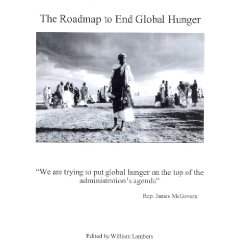
The Roadmap to End Global Hunger

During 2009 the global hunger crisis escalated with the number of people suffering from hunger climbing over one billion. This great humanitarian crisis calls for action on the part of world leaders. In countries like Afghanistan, Yemen, Iraq, Pakistan, Somalia and Sudan hunger threatens hopes for peace. This book includes press releases, interviews and perspective on The Roadmap to End Global Hunger legislation in Congress. This bill (H.R. 2817) was introduced during 2009 by U.S. Representatives Jim McGovern (D-Mass.) and Jo Ann Emerson (R-Mo.). The legislation is based on the recommendations made by groups such as Save the Children, Catholic Relief Services, Mercy Corps, Friends of the World Food Program, World Vision and others. Inside you will hear from offiicials from these organizations as they discuss the Roadmap and its importance in fighting hunger. Also you will see how you can get involved to support the Roadmap to End Global Hunger. Also included in the book is a special historical perspective section on Fighting Hunger and World War II.

The Roadmap to End Global Hunger is available from:

Amazon.com

Google Ebookstore

Leave a comment

Filed under Afghanistan, Catholic Relief Services, drought, East Africa, global hunger, History, Ivory Coast, Kenya, malnutrition, Mercy Corps, Save the Children, School feeding, Somalia, Sudan, The Roadmap to End Global Hunger, West Africa, World Food Programme, World Vision, World War II, Yemen

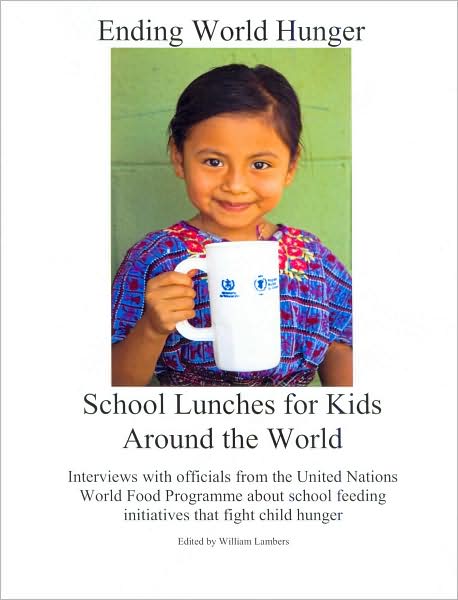
Ending World Hunger: School Lunches for Kids Around the World

The book Ending World Hunger: School Lunches for Kids Around the World features over 50 interviews with officials from the United Nations World Food Programme, Catholic Relief Services, World Vision, the Barefoot Foundation and ChildsLife International. Each interview shows the status of these critical child feeding programs and the potential for expanding them to achieve universal school feeding. The interviews also focus on the impact school meals have for children in developing countries as well as how people can help these programs. Some of the countries profiled are Afghanistan, Sudan, Colombia, Somalia and Pakistan. The interviews published in the book originally appeared online at Blogcritics magazine. The interviews were arranged by William Lambers in conjunction with the UN World Food Programme office in Washington DC.

Ending World Hunger is available at:

Amazon.com

Google Ebookstore

Barnes and Noble

View the short film Ending Child Hunger: School Lunches for Kids Around the World from William Lambers on Vimeo.

1 Comment

Filed under Afghanistan, Books, Catholic Relief Services, East Africa, Ivory Coast, Kenya, malnutrition, School feeding, Somalia, Sudan, West Africa, World Food Programme, World Vision, Yemen

School Meals Lifeline At Risk in Drought-Ravaged Kenya

The World Food Programme works with the Kenyan government to provide school meals for children. A massive drought has caused food shortages making children vulnerable to dangerous malnutrition. (file photo provided by WFP/Francesco Broli)

Schools are just days away from opening here in the United States. In newspapers and on local access channels, you might soon start to see school lunch menus appear. It’s a very important, albeit seemingly routine, part of the school year.

But a world away in Kenya right now, that school lunch is literally a lifeline for families trapped in the massive drought that has hit East Africa.

Many families are unable to support themselves, following the loss of crops and livestock. Imagine losing your livelihood, and your sources of food start to dwindle. Where do you turn for help?

In Kenya the UN World Food Programme (WFP) provides school meals for children. This is a vital safety net that families are counting on; but this source is under severe strain.

Charles Njeru of the World Food Programme in Kenya told me Monday: “The situation has drastically changed since the last time we communicated…. Our school feeding programme has been severely affected by the drought. We have seen an increased influx into schools, especially as more children are attracted to school by the food.”

WFP is currently feeding 678,000 children under its Kenya school feeding mission. Even though schools are closed in August, they have kept the meals program running because of the urgency of the crisis. But the need is more widespread, and WFP wants to scale up its school meal response in Kenya.

Njeru says: “WFP requires funding to provide meals for approximately 200,0000 additional children in arid areas of the country affected by the drought. This figure is likely to continue rising as the drought intensifies through the months of August and September which are traditionally the driest months of the year.” This additional funding would total $6 million for 12 months of feeding.

The children are in some of the areas hardest hit by the drought, including Turkana, Moyale, Marsabit, Wajir, Garissa, and Mandera districts.

Throughout East Africa, WFP needs to expand its school meal reach and sustain it over an extended period. Now is the time to act to keep an already tragic situation from becoming much worse.

You can donate to the East Africa Relief Fund at the World Food Programme.

Article first published as School Meals Lifeline At Risk in Drought-Ravaged Kenya on Blogcritics.

For background on school feeding in Kenya see:

Leave a comment

Filed under East Africa drought, Kenya, School feeding, Uncategorized, World Food Programme