Category Archives: History

A New Friendship Train to Fight Global Hunger

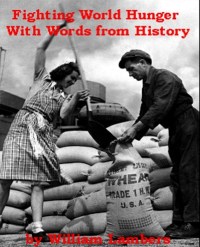
When hunger ravaged Europe after World War II how did Americans respond? They started a Friendship Train to feed the hungry and help win the peace after the war.

Let’s start a New Friendship Train today to reach the hungry overseas starting first with East Africa which is suffering from famine and a severe drought. Then the train will move to provide relief to drought afflicted Afghanistan. Yemen, Haiti, the Ivory Coast and many other countries also need support.

Start the New Friendship Train. You can donate at these aid agencies……
 

First Destination: East Africa…To Feed the Hungry and Malnourished…..

Train images courtesy of Shortlines of Chicago Historical Society. Crossing lights image courtesy of Amazing Animations.

Leave a comment

Filed under Afghanistan, Catholic Relief Services, drought, East Africa, East Africa drought, global hunger, History, malnutrition, plumpy'nut, Save the Children, School feeding, Somalia, The Roadmap to End Global Hunger, UNICEF, World Food Programme, World Vision

The Road to Peace: From the Disarming of the Great Lakes to the Nuclear Test Ban Treaty

At a press conference President Eisenhower stated, “the concept of atomic war is too horrible for man to endure and to practice, and he must find some way out of it.” In “The Road to Peace” read about President Eisenhower and President Kennedy’s pursuit of a nuclear test ban treaty, a first step in nuclear arms control with the Soviet Union. The attempt to control nuclear weaponry came at a time when the Soviet Union and the United States were engaged in the Cold War. Tensions were running high.

A lesser-known arms control measure is also discussed in the book, how the Soviet Union and the United States actually agreed to ban nuclear weapons from at least one part of the globe in 1959. Also read how a diplomat from Mexico led the struggle to create a nuclear weapons free zone in Latin America in the aftermath of the Cuban Missile Crisis.

“The Road to Peace” includes the struggles between America and Britain over the Great Lakes and the Oregon territory. The now peaceful border of the United States and Canada did not come about easily. Read about diplomatic initiatives after World War I when the great hope of mankind was an end to warfare. Also, there is a concluding section on the INF and Open Skies treaties. Featured in “The Road to Peace” are notable peace efforts by extraordinary statesmen who served in government here and abroad from 1812 to the 20th century. Lessons of diplomacy and cooperation between countries are applicable to today’s conflicts.

Table of Contents
Introduction
1. War and Peace on the Great Lakes
2. The Oregon Treaty
3. Peace After the Great War?
4. Eisenhower, Kennedy and the Nuclear Test Ban Treaty
5. The First Nuclear Weapon Free Zones
Epilogue- The INF and Open Skies Treaties
Notes
Index

The Road to Peace is available from

Amazon.com

Google ebookstore

Barnes and Noble

1 Comment

Filed under History, nuclear weapons

The Roadmap to End Global Hunger

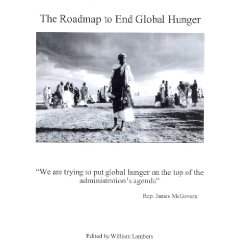
During 2009 the global hunger crisis escalated with the number of people suffering from hunger climbing over one billion. This great humanitarian crisis calls for action on the part of world leaders. In countries like Afghanistan, Yemen, Iraq, Pakistan, Somalia and Sudan hunger threatens hopes for peace. This book includes press releases, interviews and perspective on The Roadmap to End Global Hunger legislation in Congress. This bill (H.R. 2817) was introduced during 2009 by U.S. Representatives Jim McGovern (D-Mass.) and Jo Ann Emerson (R-Mo.). The legislation is based on the recommendations made by groups such as Save the Children, Catholic Relief Services, Mercy Corps, Friends of the World Food Program, World Vision and others. Inside you will hear from offiicials from these organizations as they discuss the Roadmap and its importance in fighting hunger. Also you will see how you can get involved to support the Roadmap to End Global Hunger. Also included in the book is a special historical perspective section on Fighting Hunger and World War II.

The Roadmap to End Global Hunger is available from:

Amazon.com

Google Ebookstore

Leave a comment

Filed under Afghanistan, Catholic Relief Services, drought, East Africa, global hunger, History, Ivory Coast, Kenya, malnutrition, Mercy Corps, Save the Children, School feeding, Somalia, Sudan, The Roadmap to End Global Hunger, West Africa, World Food Programme, World Vision, World War II, Yemen

Nuclear Weapons

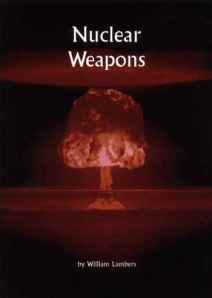
This concise book traces the history of nuclear weapons from World War II through the Cold War to the present day. You will also read about issues such as the proliferation of nuclear weapons, nuclear testing, the Comprehensive Test Ban Treaty and nuclear terrorism. This book also examines efforts to use nuclear energy for peaceful purposes as proposed by President Dwight Eisenhower in his “Atoms for Peace” speech. This edition includes a report prepared by the U.S. Strategic Bombing Survey titled “The Effects of the Atomic Bombings of Hiroshima and Nagasaki.”

Table of Contents
Chapter One: The Atomic Bomb
Chapter Two: Nuclear Weapons and the Cold War
Chapter Three: Atoms For Peace and Open Skies
Chapter Four: Nuclear Weapons and the Public
Chapter Five: The Cuban Missile Crisis and the Limited Test Ban Treaty
Chapter Six: Nuclear Proliferation
Chapter Seven: The Comprehensive Test Ban Treaty
Chapter Eight: Nuclear Terrorism
Chapter Nine: Conclusion
Appendix -The Effects of the Atomic Bombings of Hiroshima and Nagasaki
Memorandum by the Chief of Staff, U.S.
Air Force to the Secretary of Defense on
Long Range Detection of Atomic Explosions
Memorandum of Conference with the President
Documents on Nuclear Test Ban Negotiations
Facts About Fallout
Worldwide Reaction to Communist China’s Third Nuclear Explosion
Joint Statement of the Fourth Round of the Six Party Talks Beijing, September 19, 2005
An Antarctic Solution for the Koreas
Index

Nuclear Weapons is available from

Amazon.com

Google Ebookstore

Barnes and Noble

1 Comment

Filed under Books, History, nuclear weapons

Ending Hunger: When You Feed a Child You Feed the Future

U.S. Air Force plane dropping food into the Nazi-occupied Netherlands in 1945 (National Archives)

U.S. Air Force plane dropping food into the Nazi-occupied Netherlands in 1945 (National Archives)

In May 2010, I published an article about the historical airlift of food into the Nazi-occupied Netherlands at the end of World War II. Truck convoys of food for the hungry followed these missions which continued throughout the liberation.

Think of what the food meant to each individual child: an opportunity — a future. Take, as an example, one young girl living in the Netherlands at that time. Many children of her generation were lost because of the war and the food shortages that came with it. In the case of the Nazi-occupied Netherlands, this became a tragedy known as the hunger winter of 1944-1945.

This girl was one of those suffering from malnutrition as the war was drawing to an end. Fortunately, she and many others would benefit from the food brought in by the Allies. Subsequent to this relief would come aid from the United Nations Relief and Rehabilitation Administration (UNRRA).

The young girl, upon growing up, said, “A child is a child in any country, whatever the politics… there is no complicated diplomacy, when a child is starving. It’s simple. And we better do something about it. For our sakes too. That is if we want to continue to call ourselves human.”

Her name was Audrey Hepburn. The food made a great difference in her life, an example of the magic that can happen when a child is fed. Hepburn, late in her life, worked as an ambassador for UNICEF. This organization was created in the aftermath of World War II because of the crisis facing so many children. The Marshall Plan is known as the reconstruction of Europe. Well, UNICEF was a Marshall Plan for the rehabilitation of children after the war, and forever changed those war-devastated countries.

There is a whole generation of children today who deserve the same opportunity to find what treasures they possess. Today, the cries of children are coming from East Africa, Democratic Republic of the Congo, Yemen, Haiti, Sudan, Afghanistan, and many other countries. This is why it is so imperative that universal child feeding programs be developed through an international alliance.

The goal would be for each country to have a self -sufficient national school meal and infant feeding program. No single initiative could do more to save lives, prevent disease, and build peace in today’s world.

A whole generation could be fed for a relatively minimal cost. A whole generation could write the history of their country through educational achievement, progress, and development, all because we decided today their bodies and minds should be fed.

Article originally published as When You Feed A Child You Feed the Future at Blogcritics

A message from UNICEF:
UNICEF Goodwill Ambassador Audrey Hepburn holds a severely malnourished child at a UNICEF-assisted feeding centre in Baidoa. “For many it’s too late, but for many, many more we can still be on time,” said Ms. Hepburn, after witnessing the impact of famine on Somalia’s children in 1992.Nineteen years later, famine is again spreading, and over a million children urgently require aid.The Horn of Africa’s children need our help. You can join UNICEF’s effort by visiting Horn of Africa Crisis Page.

You can receive more UNICEF photos from the Horn of Africa on your iPhone by visiting: http://www.unicef.org/phot​​​​ography


(photos courtesy of UNICEF)

Leave a comment

Filed under Afghanistan, drought, East Africa, History, School feeding, UNICEF, World War II

Canada Fighting Famine from World War II to East Africa

A convoy of trucks of Allied food supplies moving into German-occupied territory along the road from Wageningen to Rhenan, Netherlands, 3 May 1945. Credit: Credits: (Credit: Capt. Alex M. Stirton / Canada. Dept. of National Defence / Library and Archives Canada / PA-13441

Determination. We hear that word often in sports and in business. But what does it mean when it comes to saving lives? Amid harsh, rainy weather conditions on April 29, 1945 on an airfield in Great Britain, we found out.

It was World War II. A flight crew of seven boarded a Royal Air Force plane on a mission. Five of the men were from Ontario, Canada. One of them, the pilot, Robert Upcott of Windsor, made final preparations for take-off.

Only these men were not taking part in an enemy raid. They were on a mission to bring food to starving people in Nazi-occupied Netherlands. Millions of Dutch citizens were enduring what is known as “The Hunger Winter” of 1944-1945, as they awaited the final defeat of Nazi Germany by the Allied Forces.

Read the full article at Yahoo! Associated Content

Leave a comment

Filed under East Africa drought, History, World War II

Nuclear Weapons: Our nation has a responsibility, which no American should shirk

At the time this photo was made, smoke billowed 20,000 feet above Hiroshima while smoke from the burst of the first atomic bomb had spread over 10,000 feet on the target at the base of the rising column, 08/06/1945 (National Archives)

On August 6th, 1945 the atomic bomb was dropped on Hiroshima, Japan. The United States government later published a report titled “The Effects of the Atomic Bombings of Hiroshima and Nagasaki.” A telling final conclusion outlines the moral obligations of the United States with regards to nuclear weapons in the future.

“No more forceful arguments for peace and for the international machinery of peace than the sight of the devastation of Hiroshima and Nagasaki have ever been devised. As the developer and exploiter of this ominous weapon, our nation has a responsibility, which no American should shirk, to lead in establishing and implementing the international guarantees and controls which will prevent its future use.”

For more information about today’s efforts to control nuclear weapons visit Global Zero.

Leave a comment

Filed under History, Uncategorized

Nuclear Test Ban Treaty Negotiations

The Road to a Treaty Ending Nuclear Weapons Testing

The Comprehensive Nuclear Test Ban Treaty (CTBT)  bans all nuclear weapons test explosions.  The treaty has not yet entered into force as eight countries: China, Egypt, India, Iran, Israel, North Korea, Pakistan and the United States, have yet to ratify the CTBT.

Efforts to achieve a treaty ending nuclear weapons testing go back to the Cold War. Here is video footage and documents of test ban treaty efforts leading up to the present day.

President Dwight Eisenhower’s Statement on the Suspension of Nuclear Testing on August 22nd, 1958

Read an article in the Cincinnati Enquirer about the power of the hydrogen bomb (March 18, 1957)

Read a memorandum of a meeting in which President Eisenhower and British Prime Minister Macmillan discuss the importance of a nuclear test ban treaty. (courtesy Eisenhower Library)

Short Video of President Eisenhower Talking About a Letter He Wrote to Nikita Khrushchev in Which He Proposed a Limited Nuclear Test Ban.

Books on the history of nuclear weapons and the test ban treaty

The Road to Peace

Nuclear Weapons

Leave a comment

Filed under History, nuclear weapons