Category Archives: global hunger

You Can Help Save the Philippines

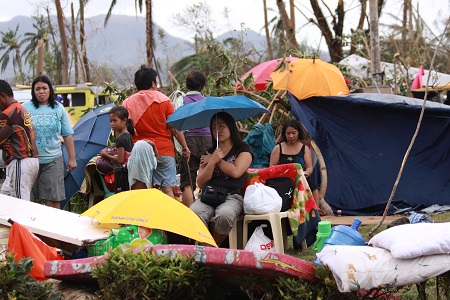
Nearly half a million people have been left homeless by the typhoon, like this family from the storm-battered city of Tacloban.  (WFP/Praveen Agrawal)

Nearly half a million people have been left homeless by the typhoon, like this family from the storm-battered city of Tacloban. (WFP/Praveen Agrawal)

It’s critical to build the pipeline of aid to the Philippines, to prevent the situation from deteriorating even further after last week’s massive typhoon. Save the Children’s Cat Carter says, “The lack of shelter, lack of food and bottled water is only making things worse as children suffer under such brutal conditions.”

That is where you come in. Even though reading those details can make you feel helpless, there is something you can do. Whether it’s a fundraiser, a letter, or doing Charity Miles you can help speed relief.

Recently, I caught up with Elizabeth Tromans of Catholic Relief Services (CRS) , who is coordinating relief from Manila. Back in 2010, Tromans was a humanitarian hero feature in my global hunger column.

Tromans says it’s essential “to secure funds and make sure our goods are arriving and getting into the hands of those who need it.”

For CRS and other charities to make this happen they need a chain of events from a donor thousands of miles away, to logistics and IT staff, to the aid workers themselves. The end result is help for storm victims. So everyone has a part to play to make that happen. If you are reading this you can spread the word and start the life-saving pipeline.

The United Nations says 11.5 million people are affected by the Typhoon and 544,606 people are displaced. Food, clean water, medicine and shelter are desperately needed.

Hunger, malnutrition and disease will escalate among the population unless aid arrives in time. The storm’s impact can last long past the event itself.

CRS is helping with two of these vital needs, emergency shelter and water purification. Many people lost their homes from the high winds of the storm. The UN says that, “ground water supplies are contaminated in many affected areas. Need for immediate and on-site water testing and treatment to establish water quality.”

The UN World Food Programme (WFP) says it will be feeding 2.5 million people. Although these estimates can quickly change. WFP has brought high-energy-biscuits and rice to storm victims but so much more needs to be done. The U.S. Food for Peace program has sent more biscuits and rice on the way for WFP to distribute.

UNICEF is setting up child feeding centers where they will be providing Plumpy’Nut, which a doctor called “The Magic Food.” This special peanut paste saves children from potentially deadly malnutrition. So it’s vital that UNICEF have enough funding for a supply of Plumpy’Nut.

What’s important to remember is that aid groups are already stretched thin by prior disasters in the Philippines as well as the war in Syria. They need the support as the Philippines emergency response kicks in.

Amid all the devastation is hope. Tromans says,”The Filipino people are so strong and resourceful.”

You can donate to Catholic Relief Services, UNICEF, the World Food Programme, Save the Children and many other great organizations.
Leave a comment

Filed under global hunger

Feed a “Silent Guest” from the Philippines

The UN World Food Programme and other aid groups are rushing aid to those displace by the typhoon. World Food Programme. (WFP/Praveen Agrawal)

The UN World Food Programme and other aid groups are rushing aid to those displace by the typhoon. (WFP/Praveen Agrawal)

Right now there are millions of people suffering from hunger in the Philippines after the super typhoon. There is no food, water or electricity in storm hit areas. Humanitarian agencies are rushing to get aid to the suffering.

What can you do to help? You can follow the great American tradition of feeding a “silent guest” at your next meal.

Set an extra plate or just use your imagination. Figure out how much it would cost to feed a “silent guest” at your next meal and send that amount to a charity. You could send it to Save the Children or Catholic Relief Services, two charities that were providing aid when the “Silent guest” program was first active after World War II.

You could donate to UNICEF or the World Food Programme, Or any charity of your choice.

There is another way you can feed a “silent guest” from the Philippines. This comes by way of a free app called Charity Miles and Lifeway Foods. You download the Charity Miles app, select World Food Programme as your charity. Then you just run, walk or bike and funds are raised for WFP, paid for out of a corporate sponsorship pool.

Lifeway Foods, in response to the Philippines disaster, is increasing its sponsorship of Charity Miles and offering an incentive. Whenever you use the app Lifeway will donate an additional 25 cents per mile (up to $20,000) to the World Food Programme.

Charity Miles is a free an easy way you can feed a “silent guest.” Just bring your smartphone and your heart.

The “silent guest” tradition got its start in 1947 when the fate of war-devastated Europe rested upon food for the hungry. A one-time aspiring actress, Iris Gabriel, proposed the plan to Governor Robert Bradford of Massachusetts. It took off around Thanksgiving time and it led to people buying “CARE packages” to feed the hungry in Europe.

Governors around the country mobilized their respective states. Today, we are seeing a similar development. Governor Bob McDonnell of Virginia issued a statement today encouraging citizens to donate what they can.

You can help build the pipeline of food that WFP is going to need for some time. A shipment from the U.S. Food for Peace program just left Miami with high energy biscuits to be distributed by WFP. We also need to make sure the Congress increases Food for Peace funding in the upcoming Farm Bill legislation.

Let’s all take in a “silent guest” and help feed the storm victims in the Philippines.

originally published at the Huffington Post.

Leave a comment

Filed under global hunger

Veterans Day and Fighting World Hunger

This Memorial Day we can remember the World War One Legacy of Humanitarianism (National World War I Memorial)

This Memorial Day we can remember the World War One Legacy of Humanitarianism (National World War I Memorial)

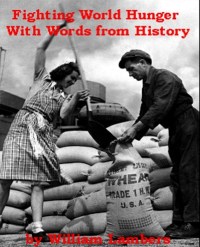
They were 150 Navy officers on a mission. Yet, their task fell after the Armistice of November 11, 1918, which ended the fighting of World War One. Their objective was to help defeat the enemy “that knows no Armistice:” hunger.

War destroys food production. Farmlands, factories and roads, all the things you need to produce and move food can be leveled by just one battle. These cannot be fixed overnight. Even if all guns go silent, hunger can continue to attack a population. The consequences of malnutrition, particularly for children, can be deadly.

This was certainly the case in Northern France, which had suffered through years of German occupation and fighting during World War One. When the Armistice came civilians, who had been forced to flee, now wanted to return to their homes.

What would be left of them? As Herbert Hoover described in his memoirs there was tragically little remaining of these homes and villages. There was very little food supply as well.

Then came the Navy to save the day for the refugees. These were 150 volunteers under Admiral Thomas Craven. They came ready to work. Hoover and newspaper accounts describe how almost overnight these men put up barracks near the French villages that had been destroyed. Next they put beds and kitchens inside these structures.

Imagine a family trekking along a road toward their home, tired and hungry. Thanks to the Navy they could find food and a place to rest. This aid would be needed in the weeks and months ahead as they tried to rebuild their lives and towns.

The Commission for Relief in Belgium (CRB) had provided aid to Northern France during the war. A lot of the American staff though had joined the U.S. Army. Once the armistice came, these officers returned to their duties with the CRB to fight hunger. In the coming years CRB and American Relief Administration officers, with support from people back home, fed millions of people.

These are lesser known tales of heroism from those who have served in our military, but for the greatest of causes. This humanitarian tradition continued into the Second World War. So many tales of heroics from the 1945 airlift to the starving Dutch in Nazi-occupied Holland to U.S. Army led school lunch programs for Austrian and German children.

All these stories, great or small, are noble. Last month I told a UN Development Goals class at the College of Mount St. Joseph about an Army major who once lived not too far from the school. Major Charles Arnold headed a UN Civil Assistance Team that fed refugee children during the Korean War. The Cincinnati Enquirer reported, “After only a few weeks of this milk-and-rice diet you could actually see the children’s cheeks fill out and a healthy sparkle come to their eyes.”

The U.S. Air Force also evacuated Korean war orphans who were trapped by the fighting. They flew them to safety on an island away from the approaching enemy. The Air Force made a return visit later to the orphans bringing food and gifts from the American people.

These meals can save and change a life forever.

In President Woodrow Wilson’s proclamation of Veterans Day he said America has the great opportunity “to show her sympathy with peace and justice in the councils of the nations…” That is our best hope to for spreading peace across the globe.

We know that hundreds of millions of hungry and sick people around the world is not peace. It is certainly not the peaceful world that veterans of World War One hoped to see come about. Yet as we speak people are starving and displaced from wars in Syria, Central African Republic, South Sudan, Sudan, Afghanistan and many other parts of the globe.

On this Veterans Day we can remember the many who have served in the armed forces and built a great humanitarian tradition. A tradition that carries on.

Originally published at The Huffington Post.

Leave a comment

Filed under global hunger

Halloween Can Feed the Hungry

This Halloween please remember the world's hungry (photo courtesy USA.gov)

This Halloween please remember the world’s hungry (photo courtesy USA.gov)

There is more to Halloween than you might think. Yes, it’s about monsters and ghouls, and the fear of the unseen. Do not let Halloween ‘trick” you though. Halloween is also the season of charity and feeding the hungry.

Where I live in Cincinnati is an old ghost legend at a cemetery near the Ohio River. A mysterious light would shine from this graveyard at night along with the eerie tune of a fiddler. No one dared to check it out.

A professor from the nearby College of Mount St. Joseph, Cecil Hale, did some “digging” and found out this “ghost” first appeared at the time of the Underground Railroad. This was the secret network which guided slaves to freedom in the north before the Civil War.

The strange light was likely a signal meant to guide slaves across the Ohio River. The creation of a ghost was meant to keep people away from the cemetery. This scary story was actually a cover for the most noble act of charity, giving the oppressed a light to freedom. This meant sending them to their next safe house on the Underground Railroad. The travelers on this Railroad were hungry and these stops along the route gave them food and renewed their strength to keep going.

Today, the ghosts and creatures of Halloween are huge business, with billions spent yearly on candy and costumes. The amount spent each year on Halloween could finance hunger relief missions in many countries around the world.

Since 1950, Halloween has added an extra surprise for those receiving trick or treaters. Many thousands of children have appeared at the door with a Halloween bag, not just for candy, but one to collect change for UNICEF. It all started when the Reverend Clyde Allison and his wife Mary Emma had an idea to turn Halloween into a night of charity.

Since that time more than 170 million dollars has been raised for UNICEF and its operations providing food, medicine and education to children in impoverished countries. Trick-or-Treat for UNICEF is a Halloween tradition that saves lives.

Think about this. On Halloween night you could collect donations to feed starving children in Syria, South Sudan, Mali, Afghanistan, Yemen, Democratic Republic of the Congo and other countries suffering from war.

Small children die every day because they cannot get the nutrition they need. UNICEF uses a miracle food called Plumpy’Nut to save their lives, but only if they have enough supply. Funding is often low for humanitarian aid missions because it’s not made a high enough priority.

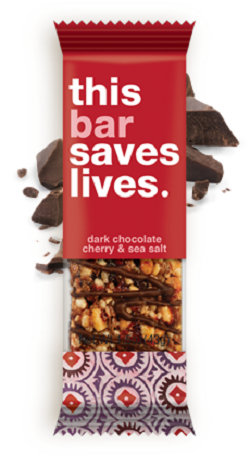
That is where individuals can take the lead and the responsibility. There is even now chocolate and vanilla flavored bars you can purchase that lead to donations for Plumpy’Nut. The company This Bar Saves Lives makes a donation for each bar sold so Save the Children can distribute more Plumpy’Nut.

So on this Halloween night, you can make a change. You can experience the other side of Halloween, the one of charity. The College of Mount St. Joseph is hosting trick or treat events as well. Yes, there will be ghost stories, but also a canned good collection for the local Delhi Food Pantry. The school’s Campus Ministry, Student Nurses Association and the Activities Board are all pitching in to collect the donations.

It turns out this Halloween food drive is extra timely as food stamps are being reduced in the United States. The strain on food pantries is going to be enormous. The coming scare for America is going to be a further escalation of hunger in an already suffering economy.

Things are not always what they appear to be. Sometimes though you decide what something is to be. Your actions make the difference. Your ideas can give power to charity. On Halloween you can add an extra surprise to this “fright night,” making it a special event that helps the world.

Originally published at the Huffington Post.

Leave a comment

Filed under global hunger

The Granola Bar that Saves Children’s Lives


This Bar Saves Lives

This Bar Saves Lives

Halloween is sneaking up on us. The holidays are not far behind. These days come with plenty of snacks with chocolate, vanilla and many other kinds of flavors.

What if you could buy a snack and save a life at the same time? What if on Halloween or Thanksgiving you could share the joy and feed a “silent guest,” a starving child a world away?

There actually is a way with This Bar Saves Lives, a new granola bar with chocolate, vanilla and wild blueberry flavors. Each purchase of this bar means a donation of the miracle food Plumpy’Nut, a peanut paste fed to children suffering from severe malnutrition.

Ryan Devlin, Todd Grinnell and Ravi Patel started This Bar Saves Lives when they witnessed the devastating effects of child malnutrition. When you buy one of these bars the donation gets sent to Edesia, a Plumpy’Nut producer in Providence, Rhode Island. Edesia makes the Plumpy’Nut and sends it to Save the Children, which uses this food in their relief missions around the world. Save the Children says “more than 150 million children in developing countries are malnourished.”

Malnutrition can cause lasting physical and mental damage in small children under the age of five. If the malnutrition become severe children may perish. In many developing countries afflicted by war, disasters or extreme poverty, small children are vulnerable to malnutrition. When food supply systems break down in a country, families can be forced into desperation with little rations. They look to humanitarian aid agencies for help. Plumpy’Nut can rescue the smallest children, if there is enough supply on hand for aid groups.

Within the last year Save the Children has been fighting child malnutrition in South Sudan. In Eastern Equatoria, a state in South Sudan, crops had failed and families were resorting to wild fruits to survive. More cases of malnutrition had to be treated at Save the Children health centers there. Plumpy’Nut was used for the most severe cases.

Conflict in Jonglei, South Sudan also has escalated malnutrition among children thus increasing the need for Plumpy”nut.

When funding is low aid groups like Save the Children may be forced to cut back on this life-saving food. The consequences are devastating. Opportunities like This Bar Saves Lives gives people a world away a chance to help.

Just as after World War II when Americans fed “silent guest” at their Holiday meals, you can be doing the same in the coming weeks and months. Your “silent guest” might be a child in drought-stricken West Africa, or in war-devastated Syria or Mali. You can help them get the Plumpy’Nut that will save their lives.

Visit their web site at www.thisbarsaveslives.com

A note from This Bar Saves Lives: “Whether it’s setting up Hunger Awareness Campaigns on your campus, holding a This Bar Saves Lives community event, or connecting us with your company, there are a number of ways to get involved. Jump in!

Leave a comment

Filed under global hunger

The School Lunch That Saved Cincinnati

Cincinnati,  Ohio (author photo)Cincinnati, Ohio has a very special place in the celebration of National School Lunch week (October 14-18). For it was teacher Ella Walsh who, in the early 1900’s, started one of the nation’s earliest school feeding programs.

Walsh, who taught at Cincinnati’s Jackson School, saw children coming to class hungry. Times were tough. She knew they needed help. So Walsh and her assistants set up a lunchroom. The “penny lunch” program was started.

Children who could afford it would pay a penny and get a lunch. Most could not afford, but still would receive the meal. Soup, spaghetti, rice, beans and fruit made up an early menu of the “penny lunches.”

The “penny lunches” spread to more parts of the city and even other cities. Dr. John Withrow was quoted as saying “started, you cannot stop them.” These were meals children and their families could count on, no matter what the circumstances. And there were rough times they had to face.

During World War One, many breadwinners were overseas with the Army and malnutrition became a bigger crisis according to a Cincinnati Enquirer report. Having “penny lunches” was vital for families facing this strain. The Cincinnati Post reported in 1933 that these school meals saved the lives of children during the Great Depression.

Then there are the little unsung heroes of Cincinnati. During World War II, the Cincinnati Times Star told the story of 10 year-old Charles Graff Jr., who collected sales tax stamps. He gave the stamps to his school so they could be redeemed and pay for school lunches for children in need. Graff had to study at home because he had the disease hemophilia. But he kept collecting the stamps and encouraging others to contribute. His father worked at the Red Top Brewing Company and got co-workers to give their stamps. Graff grew the school’s lunch fund.

Little by little the nation was building a national school lunch program, culminating in the law signed by President Harry Truman in 1946. When West Virginia had a hunger crisis during the Eisenhower and Kennedy administrations the school lunch and milk programs were safety nets.

The idea is simple common sense. Children should be spared from hunger. The food allows children to concentrate on learning. That is how a community and a nation succeeds. This is a lesson we must remember today and take care of our national school feeding.

I think we should resist cuts to school meals in the federal budget. The recent proposal by the House of Representatives to cut foods stamps also eliminates school meals for 210,000 children. What politicians and other leaders need to be doing is strengthening our hunger relief programs, especially in bad economic times.

The economy is struggling and the government shutdowns and other problems are certainly not helping the average citizen. Hunger can escalate in the presence of lack of leadership and cooperation in Washington, D.C. Food safety nets for children are especially important during these times.

School meals mean a lot to children here and across the world. I recently spoke to a man from Kenya who received school meals from the United Nations World Food Programme (WFP). They changed his life. In fact, the meals allowed him to become a world record holder in the marathon. His name is Paul Tergat, one of the fastest runners ever. Without the meals at school he never could have reached his potential.

That is something to remember with National School Lunch Week. These meals matter and we should do what we can so every child can receive them. Every child deserves that chance to reach their potential.

originally published at The Huffington Post.

Leave a comment

Filed under global hunger, History

Marathon Champ Paul Tergat Says School Meals Changed His Life

Paul Tergat (World Food Program USA photo)

Paul Tergat (World Food Program USA photo)

Paul Tergat raced to victory in the 2003 Berlin Marathon. Then again he took first in the 2005 New York City Marathon. Tergat held the world record in the Marathon for years. He has won countless races including Cross Country titles and two Olympic Silver Medals.

How did he achieve all this? Training and hard work, yes. But something more than that. Tergat credits the school meals he received as a child growing up in Kenya. These were meals provided by the UN World Food Programme (WFP), the largest organization fighting global hunger.

I interviewed Paul on Thursday, one of the nicest people you can talk with, and a great sense of humor. Earlier he was stuck in the Washington, D.C. traffic, which unlike the government is not shut down. He wished his running shoes were with him, it would have been quicker to get around.

Tergat is in D.C. this week advocating for school meals for children around the world. Tergat knows best. He says without these meals he could never have achieved this amazing career as a runner, or as spokesperson and leader. He has become all those things because someone cared.

When Tergat was just seven WFP started bringing meals to his school, which was in an impoverished area of Kenya. The food was cornmeal as he recalls. It made such a difference to him and the other students. In fact, some of his classmates have gone on to become doctors and teachers.

With meals at school, it can give children a chance to fend off hunger and the opportunity to concentrate on learning. Tergat and his class are proof of that. So it’s no secret Tergat is advocating for school meals for children around the world.

He has met with members of Congress this week calling for more funding for the McGovern-Dole school meals program. This program currently is helping Kenya and other nations with school meals using relatively little funding. Food aid overall makes up less than one tenth of one percent of the federal budget.

Tergat is speaking at American University and George Washington University this week before winding up Friday with an event called The Role of School Feeding. This event will be hosted by the World Food Program USA and Catholic Relief Services. Both organizations are supporting school meals in Mali, another country devastated by poverty and war.

Tergat encourages students to find ways to support the work of the World Food Programme, and contribute what they can. Tergat is also supporting racing opportunities for children back in Kenya including competitions between towns.

We also discussed Charity Miles, a great way to run and support the World Food Programme using this free app.

I think what people can do, seeing his example, is to continually advocate for feeding children at school. So many times this basic meal gets lost in the shuffle with everything that is happening in government and around the world. Sometimes members of Congress even vote to cut school meals. That should never happen.

We all benefit if children get the opportunity they deserve. For children living in hunger and poverty, just getting some food at school changes their lives.

How many great runners and stories of inspiration never come to be because of hunger and poverty? This is something Paul Tergat realizes and carries with him. He made it. A helping hand was there to give him food which became the foundation of his success.

When WFP asked Paul to be an Ambassador Against Hunger in 2004 he jumped at the opportunity. He has never stopped running in a sense to achieve this goal of school meals for every child in the world.

Originally published at the Huffington Post.

Leave a comment

Filed under global hunger

Special Foods Fight Malnutrition in Syria

Plumpy'Doz is being used to treat malnutrition in Syria (Wolrd Food Programme)

Plumpy’Doz is being used to treat malnutrition in Syria (World Food Programme)

As the war continues in Syria, so does the risk of deadly malnutrition for children. Special-nutrient rich foods, like those being distributed by the UN World Food Programme (WFP) can save their lives.

Spokesperson Laure Chadraoui told me last week that WFP is distributing “Plumpy’Doz for children, 6-59 months, residing in collective centers and Nutributter in the North east of Syria to children 6-23 months for the prevention of micro-nutrient deficiencies.”

Plumpy’Doz is a nutritional supplement designed for children most at risk of malnutrition. The Nutributter is described by one its producers as being like a “daily multi-vitamin in a peanut paste” for children 6 months to 2 years of age.

Both the Plumpy’Doz and the Nutributter are ready-to-eat foods specifically designed for areas suffering from conflict, disaster or extreme poverty. No cooking or special storage is required for this food to be eaten, making their distribution easier. A system of factories, including Providence-based Edesia, produce these miracle foods.

These foods prevent children from suffering malnutrition. Children under the age of five will suffer lasting physical and mental damage if they become malnourished. So this concept of prevention is so vital in terms of planning a humanitarian response in distressed parts of the globe.

Around 300,000 children in Syria will benefit from the Plumpy’Doz and Nutributter provided by WFP. The Nutributter is being donated by the United States as part of a continuing relief effort.

It’s critical that aid agencies maintain the pipeline of this food, especially in a crisis as desperate as the one in Syria. The hunger facing Syria is so severe that the needs of the population will grow as the conflict continues. With access to parts of Syria being restricted by the government it remains an unknown as to the extent of malnutrition in these areas. Much more food aid may be required.

It’s also less costly to bring in Plumpy’Doz and Nutributter earlier rather than having to resort to Plumpy’nut which is used to treat the most severe cases of malnutrition.

WFP relies on voluntary funding and needs around U.S. $30 million dollars a week to feed Syrian war victims. Decisions made by the U.S. Congress on food aid budgets will have a major impact on Syria and other war and disaster afflicted nations.

Plumpy’Doz and high energy biscuits are also being provided to Syrian refugee children in Iraq. Save the Children is also operating a large-scale infant and young child feeding program in Jordan.

originally published at the Huffington Post.

Leave a comment

Filed under global hunger

A Historic TV speech in the Fight Against Hunger

President Harry Truman (photo courtesy of the Truman Library)

President Harry Truman (photo courtesy of the Truman Library)

These days what we see on TV, especially about the government shutdown, is not very inspiring. A glance back in time though gives us something we can treasure. On October 5, 1947 a historic television event took place, one that helped fight world hunger.

President Harry Truman delivered the first ever televised presidential address from the White House. His speech was about saving lives from the one enemy that remained from World War II: hunger.

At the time Europe, still reeling from the war, was suffering from a severe drought. Food was in short supply. Truman asked Americans to conserve food. The Citizens Food Committee was formed to rally America behind this effort.

President Truman said, The nations of Western Europe will soon be scraping the bottom of the food barrel. They cannot get through the coming winter and spring without help-generous help-from the United States and from other countries which have food to spare.

“I know every American feels in his heart that we must help to prevent starvation and distress among our fellow men in other countries…. Their most urgent need is food. If the peace should be lost because we failed to share our food with hungry people, there would be no more tragic example in all history of a peace needlessly lost.”

What happened after this TV address was amazing. Americans came together to donate food to Europe via the Friendship Train which crossed most of the country that fall. The “Silent Guest” program was started during the holidays to buy a CARE package for a hungry person overseas. Catholic Relief Services sponsored a nationwide Thanksgiving Week campaign to collect food at churches.

The post-war years saw Americans take action to make sure hungry children overseas received the food they needed to grow and learn.

The Congress followed with passage of the Interim Aid bill that provided food for Austria, Italy and France that winter. This food aid led up to passage of the Marshall Plan in 1948 and the reconstruction of Europe.

World hunger had a high profile in America’s foreign policy at that time. President Truman, Secretary of State George Marshall and other leaders routinely talked about the importance of fighting hunger. The October 5th television address being one example of this outreach. Marshall also addressed the nation about fighting hunger on October 5th.

In order to maintain a steady program of international food aid and development, you need to keep the issue front and center within the halls of government and the public.

Making world hunger a top priority is what Representative Betty McCollum (MN) is trying to accomplish with the Global Food Security Act. This bill would create a White House level coordinator for world hunger relief. Aid agencies want this bill passed. It has go through Congress and there is some support. More is needed.

We are now facing one of the largest hunger emergencies of our time with the war in Syria. This conflict has caused millions to be displaced and hungry. Afghanistan, Yemen, Haiti, Mali and so many other areas are also suffering from severe hunger. It’s clear that action must be taken. We need a sense of urgency.

Food need to be a foreign policy priority for as George Marshall once said, “hunger and insecurity are the worst enemies of peace.”

originally published at the Huffington Post

Leave a comment

Filed under global hunger, History

Food and Education Can Change the World

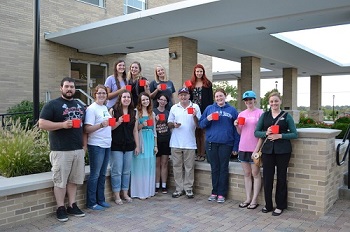
The UN Development Goals Class at the College of Mount St. Joseph (Dr. Jim Bodle)

The UN Development Goals Class at the College of Mount St. Joseph (Dr. Jim Bodle)

Last month I spoke to a unique class at the College of Mount St. Joseph in Ohio, one dedicated to ending hunger and poverty through the UN Development Goals. The class had attended Ban Ki-moon’s Youth Day presentation at the General Assembly.

As I prepared for the class a surprise came to me via twitter! It was a letter from a child in Mali, a country in Africa that has suffered through conflict and drought. The UN World Food Programme (WFP), which is providing school meals in Mali, forwarded a translation of the letter:

Hello papa et maman. After 11 months of occupation in North Mali by armed bandits we’re today on the path to school. Our parents are poor and tired.

Thank you WFP who gave us food so we could work hard in school. We always count on God and you. With WFP it’s okay. The school in Barize thanks you.

These school meals take on even more urgency in Mali with recent findings that show three out of every four households in the northern part of the country suffer from hunger. Both WFP and Catholic Relief Services are providing food for schoolchildren in Mali. Funding though is always an issue.

Food and education for children is something that clearly does not get enough attention, yet it’s one of our most important pathways to peace.

Ban Ki-moon told the Youth Day audience in August about his experiences growing up in war-time Korea. When it rained there were no classes because those were held outdoors. The school buildings had been destroyed during the fighting.

The Secretary General said the Korean children were hungry for food, but also hungry for knowledge. “It’s not only bread and butter” he said, “you need to have knowledge and education.” Getting children food and education is a top priority worldwide.

What better example than South Korea? During and after the war food was provided to children through the United Nations, CARE and other organizations. The U.S. Food for Peace program was founded after the Korean War. Millions of Korean children received school meals through Food for Peace.

History provides us even more advice. It was October 1st, 1947 when Secretary of State George Marshall said, “Hunger and insecurity are the worst enemies of peace.” He knew that peace after World War II stood no chance unless the enemy of hunger was defeated. Europe’s recovery was only possible under a foundation of food. School meals were a huge part of this recovery. That is a lesson we need to remember today.

It was a great opportunity to speak to the UN Development Goals class about food and education for children. Everyone in the class even received a Red Cup which is the World Food Programme’s symbol of school meals.

The school meals mean a lot to every country, from the United States to Yemen. The United States has its own national school lunch program, building upon years of effort. Now the U.S. Congress ironically is trying to undo that by eliminating some free school meals as part of its food stamp cuts.

That is why it’s so important that people advocate for what should be a basic right for children: school meals. The UN Development Goals class, with its emphasis on service learning, is well-equipped to carry on this message.

Next year Yemen will be starting their own national school lunch program with the help of WFP, a potential major turning point for a country mired in conflict and poverty.

Erin Koepke of the World Food Program USA said to me, “I love how there is a class dedicated to the Millennium Development Goals. If only all colleges and universities had a similar class.” I agree.

originally published at the Huffington Post

Leave a comment

Filed under global hunger